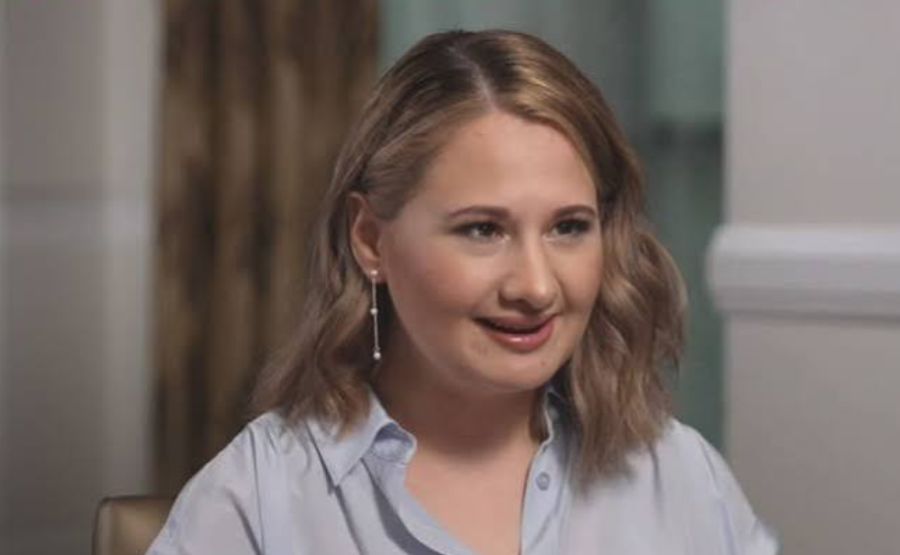
Gypsy Rose Blanchard: A Life Invented, Then Reclaimed
The story of Gypsy Rose Blanchard unsettles us not because it is extraordinary, but because it exposes the extraordinary ease with which a child’s entire reality can be constructed, sustained, and enforced by the one person the world trusts most to protect her.
Quick Facts
| Detail | Information |
| Full Name | Gypsy Rose Blanchard |
| Born | July 27, 1991, Golden Meadow, Louisiana |
| Nationality | American |
| Known For | Survivor of medical child abuse (factitious disorder imposed on another); convicted of second-degree murder in the death of her mother |
| Parents | Clauddine “Dee Dee” Blanchard (mother); Rod Blanchard (father) |
| Education | Largely withheld by mother; no formal schooling beyond elementary years |
| Criminal Conviction | Second-degree murder, pleaded guilty July 5, 2016 |
| Sentence | 10 years (Missouri statutory minimum); incarcerated at Chillicothe Correctional Center |
| Released | December 28, 2023, on parole |
| Marriages | Ryan Scott Anderson (married July 21, 2022; divorced December 9, 2024) |
| Current Partner | Ken Urker (father of her daughter) |
| Child | Aurora Raina Urker (born December 28, 2024) |
| Published Works | My Time to Stand (memoir, December 2024); Released: Conversations on the Eve of Freedom (e-book) |
| Media Projects | The Prison Confessions of Gypsy Rose Blanchard (Lifetime, 2024); Gypsy Rose: Life After Lock Up (Lifetime, 2024) |
| Key Milestone | Her case prompted national conversations on medical child abuse, factitious disorder, and failure of institutional safeguards |
The Child Who Never Was
On July 27, 1991, Gypsy Rose Blanchard was born in Golden Meadow, Louisiana, to Rod and Clauddine “Dee Dee” Blanchard.Rod was eighteen at the time and had been dating Dee Dee — who was in fact twenty-three, though she had told him she was twenty-one — for only three months. The marriage dissolved quickly. Rod would later describe Dee Dee as controlling from the start, and recall that the fabricated illness claims began almost immediately after Gypsy’s birth.
Dee Dee told Rod that their infant daughter had sleep apnea. It was the first of a cascade of diagnoses that would define the next two decades of Gypsy’s life. None of them were real.
By the time Gypsy was eight years old, Dee Dee had added leukemia, muscular dystrophy, hearing impairment, and visual problems to the list. Gypsy used a wheelchair she did not need and wore a feeding tube inserted through unnecessary surgical intervention. Dee Dee shaved her daughter’s head and presented her as a child in perpetual medical crisis. The performance was convincing. Dee Dee had received some nursing training. She could describe symptoms with clinical precision and knew when to change doctors before contradictions accumulated into accusations.
Factitious disorder imposed on another — previously called Munchausen syndrome by proxy — is a pattern in which a caregiver manufactures, exaggerates, or induces illness in a dependent person to attract attention, admiration, and sympathy. Its hallmarks precisely matched Dee Dee’s behavior: doctor-shopping when skepticism arose, isolating the child from independent relationships, and mining the caregiving role for social and financial benefit. The family received a Habitat for Humanity home in Springfield, Missouri, in 2008 — specially fitted with a wheelchair ramp — along with charity-funded concert tickets, a Make-A-Wish trip to Walt Disney World, and ongoing donations from a community that believed Dee Dee was a saint raising a dying child.
Professor Beatrice Yorker, who has researched Munchausen syndrome by proxy extensively, noted in an interview that Gypsy Rose Blanchard is the only documented case of an FDIA victim who killed her perpetrator in order to escape. That distinction speaks to how completely the ordinary avenues of escape — disclosure, intervention, rescue — had failed her.
See aslo “Martin Luther King Jr.: Prophet of the Possible“
Inside the Prison Before the Prison
Gypsy’s childhood was, in the most literal sense, manufactured. She could walk, but Dee Dee told her she could not. She could eat, but Dee Dee told her she could not. She was told she would die without her mother’s care. As a small child processing a world filtered entirely through Dee Dee’s narration, Gypsy had no framework for distinguishing the constructed reality from the actual one.
She attended school only briefly, because Dee Dee feared that teachers might notice inconsistencies or encourage independent thought. Without school, Gypsy had almost no contact with children her age. She later recalled craving the company of other kids, watching her cousins play on trampolines and understanding, without having words for it, that something was wrong with her situation.
As she grew older, cracks appeared. Gypsy knew she could walk. She would sometimes stand up when Dee Dee left the room. She began to understand that at least some of her diagnoses were false, even if she couldn’t yet name the scale of the deception. Dee Dee countered by reinforcing psychological control — threatening to harm Gypsy if she revealed the truth, warning that no one would believe her, and falsifying her daughter’s birth certificate to make Gypsy appear younger and less capable of independent judgment than she actually was.
When law enforcement eventually dealt with Gypsy’s case, early court documents listed three different ages for her. She was twenty-three. She was just four feet, eleven inches tall from years of poor nutrition. Her lawyer later revealed she had been so undernourished that she gained fourteen pounds during her first year in county jail — the opposite of the typical incarceration experience.
In 2005, Dee Dee used Hurricane Katrina as a pretext to leave Louisiana, claiming they had lost everything. The move was not about disaster relief. It was relocation. In Springfield, Missouri, no one knew them. Dee Dee could begin again with a fresh audience and an unchallenged story.
At fourteen, Gypsy saw a neurologist who privately concluded she was likely a victim of Munchausen syndrome by proxy. He did not report it. He later said he doubted authorities would believe him without stronger evidence. In 2009, an anonymous caller reported to the Springfield Police Department that Gypsy might not be as ill as her mother claimed. Two caseworkers visited the Blanchard home. Dee Dee convinced them nothing was wrong. The visit ended. The door closed.
These institutional failures — the doctor who stayed silent, the caseworkers who were turned away, the charity organizations that asked no hard questions — are not incidental to Gypsy’s story. They are the story’s scaffolding.

The Only Exit She Could Find
Gypsy discovered the internet and found in it a window to a world Dee Dee could not completely control. In 2011, she met a man at a science fiction convention and attempted to leave with him. After finding her and bringing her home, Dee Dee chained her to a bed and broke her phone as punishment.
By 2012, Gypsy had found her way to a Christian dating website, where she connected with Nicholas Godejohn, a twenty-one-year-old from Big Bend, Wisconsin. Godejohn would later be characterized by his own defense attorneys as a man with autism spectrum disorder and below-average cognitive functioning who was susceptible to manipulation. Prosecutors countered that he had carried out the plan willingly and with premeditation. Both framings contain elements of documented fact.
Gypsy and Godejohn maintained a secret online relationship for three years. They met in person for the first time in March 2015, staging an encounter at a local movie theater as though it were coincidental. Dee Dee discovered the relationship and forbade it.
The couple had discussed at least three possible ways for Gypsy to escape. Gypsy later testified under oath that she had also considered poison, arson, and a firearm before the plan they settled on. On June 10, 2015, Godejohn traveled by bus to Springfield. He entered the Blanchard home at night. Dee Dee, forty-eight years old, was asleep. Gypsy was in a nearby bathroom with her ears covered. Godejohn stabbed Dee Dee seventeen times.
The two left together. They took cash from the house. They mailed the murder weapon to Godejohn’s Wisconsin address. They traveled by bus back to his home state.
The following day, from Dee Dee’s Facebook account, they posted: “That Bitch is dead.” It was intended to draw attention to the house so the body would be found. It also led investigators directly to them. On June 14, 2015, a neighbor entered the Blanchard home and discovered Dee Dee’s body. On June 15, police arrested Gypsy and Godejohn at his family’s Wisconsin residence.
Neighbors who had known Gypsy for years as a wheelchair-bound, terminally ill young woman watched in disbelief as surveillance footage showed her walking without assistance. The image that had defined her for nearly two decades evaporated in a single day.
The Law’s Imperfect Reckoning
The murder of Dee Dee Blanchard had a unique legal consequence, much like the case that before it. Greene County Prosecutor Dan Patterson publicly acknowledged that he believed a first-degree murder conviction against Gypsy was achievable. He also acknowledged that pursuing it would not be just.
Gypsy’s public defender, Michael Stanfield, had assembled her medical records from Louisiana, documenting years of unnecessary procedures and fabricated diagnoses. He argued that Dee Dee had constructed a prison around her daughter that was invisible to everyone who should have seen it. Gypsy entered a guilty plea to second-degree murder on July 5, 2016. She received the Missouri statutory minimum: ten years.
Godejohn’s path diverged sharply. He declined a plea offer and went to trial in November 2018, with his defense emphasizing his autism diagnosis and arguing he lacked the cognitive capacity to deliberate.He was found guilty by the jury of armed criminal action and first-degree murder. He received life without the possibility of parole. He has continued to appeal, most recently in 2025, without success.
At Godejohn’s trial, Gypsy took the stand and said plainly that she had talked him into the killing. She expressed no ambiguity on that point. What she did express — then and repeatedly afterward — was the impossibility of articulating, to people who had never lived it, how a person arrives at the decision that murder is the only remaining option.
“I wanted to be free of her hold on me,” she testified.
The sentence she received satisfied virtually no one. Some critics argued it was too lenient for a murder. Others argued it was too severe for a woman who had been tortured for twenty-three years. The prosecutor called the case “one of the most extraordinary and unusual we have ever seen,” and the legal outcome was correspondingly unusual: a sentence calibrated to acknowledge that the law’s standard categories did not quite fit.
Prison, Relationships, and the Discovery of Herself
Gypsy once told ABC’s 20/20, in a statement that attracted both sympathy and skepticism, that she felt freer in the Chillicothe Correctional Center than she had in her mother’s home. The remark is easier to dismiss than to actually sit with. Nobody was creating her identity for her for the first time in her life. She could walk. She could eat. She could choose, within narrow institutional limits, who to speak to.
She pursued correspondence with several men during her incarceration. One was Ken Urker, who became her fiancé in October 2018 before the engagement dissolved in August 2019. Another was Ryan Scott Anderson, a Louisiana teacher who began corresponding with her after she and Urker separated. Anderson and Gypsy married in a ceremony at the Chillicothe Correctional Center on July 21, 2022. In a Lifetime documentary produced around the time of her release, Anderson described himself as the partner Gypsy had always deserved.
It lasted less than a year in practice. Gypsy was released on parole on December 28, 2023 — eight and a half years into her ten-year sentence. She moved into Anderson’s home and almost immediately began giving the kind of interviews that turned her into a full media presence: Good Morning America, CNN, The View, and the Lifetime docuseries The Prison Confessions of Gypsy Rose Blanchard, which premiered January 5, 2024.
By March 2024, she had announced a separation from Anderson, moved in with her father, and filed for divorce in April. She later described the marriage as one where she had been “settling,” adding that she had realized during a serious argument that she had not yet learned what a real relationship looked like. The divorce was finalized December 9, 2024.
By then, she had already rekindled her relationship with Ken Urker. In July 2024, she announced an unplanned pregnancy. On December 28, 2024 — exactly one year after her prison release — she gave birth to a daughter, Aurora Raina Urker.
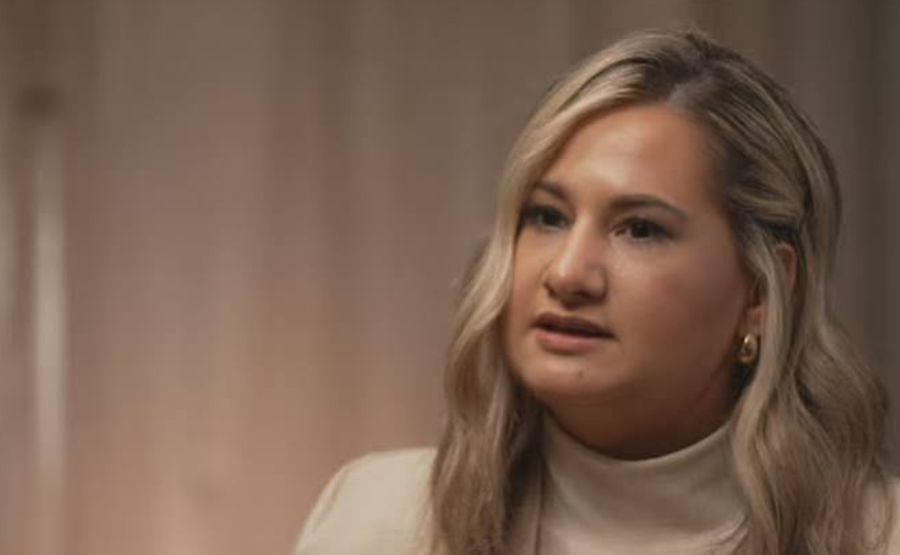
The Weight of Being a Public Story
Gypsy Rose Blanchard did not choose to become a public figure. That process began in June 2015 and has never stopped. A 2016 BuzzFeed News investigation titled “Dee Dee Wanted Her Daughter To Be Sick, Gypsy Wanted Her Mom Murdered” introduced the case to a national audience. HBO’s documentary Mommy Dead and Dearest followed in 2017. Hulu’s dramatized limited series The Act arrived in 2019, with Patricia Arquette as Dee Dee and Joey King as Gypsy, earning Arquette a Golden Globe and an Emmy.
Gypsy herself has said she has not watched The Act and does not intend to. “I lived it,” she told one interviewer. “I don’t feel like I have to go back and watch it play out.”
What she has done instead is insert herself into the narrative machinery. She published her memoir, My Time to Stand, in December 2024, co-written with Melissa Moore and Michele Matrisciani. She has maintained active social media accounts, occasionally deleted them in frustration, and returned to them. In December 2025, she announced a podcast, Our Time to Stand: Beyond Survival, though as of mid-2026, the project remains in development as she and her producers seek a distribution platform.
The tension that follows her is genuine and unresolvable by public relations. She pleaded guilty to conspiring to commit murder. She was also a victim of sustained, documented, medically abetted abuse that lasted over two decades. Both things are true. Public opinion has never comfortably held both simultaneously.
In March 2024, she told a podcast audience that she did not “identify as a murderer,” a statement that drew swift criticism. Critics argued the framing minimized her role in Dee Dee’s death. Supporters argued she was articulating something psychologically coherent about identity and trauma. Neither interpretation is without merit.
In March 2026, she participated in a TikTok collaboration widely perceived as trivializing the circumstances of the case, sparking another wave of public backlash. The cycle of rehabilitation and controversy has become, for her, a defining feature of post-prison life.
Legacy and What the Case Revealed
The enduring significance of the Blanchard case is not the murder itself. It is the infrastructure that allowed the abuse to continue undetected and uninterrupted for more than two decades.
Medical professionals saw contradictions and stayed silent. Social workers visited and left. Charitable organizations provided support without scrutiny. Neighbors and community members built an emotional investment in the narrative Dee Dee constructed and, when the truth emerged, some chose betrayal rather than recalibration. The academic journal of the American Academy of Psychiatry and the Law noted that a “compelling aspect” of the case was how many lay people felt “duped” once the truth surfaced — prioritizing their own sense of having been misled over Gypsy’s experience of having been imprisoned.
The case catalyzed broader conversations in medical and child welfare communities about how factitious disorder imposed on another is identified, reported, and addressed. It raised specific questions about mandatory reporting thresholds — and why multiple clinicians who suspected abuse did not act. Healthcare professionals have cited the case in training materials about FDIA warning signs, including the pattern of frequent doctor changes, resistance to independent evaluation, and escalating diagnoses without clinical confirmation.
For advocates of abuse survivors and criminal justice reformers, Gypsy’s case illustrated the absence of legal frameworks adequate to her situation. She was charged under statutes designed for conventional murder. Nothing in Missouri law, at the time, offered a charge that explicitly accounted for the relationship between prolonged coercive abuse and a victim’s eventual, lethal act of self-preservation. That gap has not been fully addressed by legislation, though her case has been cited in discussions about how the law ought to reckon with coercive control.
The Black Lives Matter co-founder Patrisse Cullors and prison reform advocate Kim Kardashian, who met Gypsy after her release, have pointed to cases like hers as evidence that incarceration outcomes must account for the full biographical context of a crime — not merely the act itself.
Final Words
Gypsy Rose Blanchard is thirty-four years old, a mother as of late 2024, and navigating a life that has no established template. She spent her childhood in a fiction her mother maintained. She spent the years after as a convicted felon whose circumstances defied ordinary moral categories. She is now building something that resembles, haltingly, an ordinary life — with the added burden of doing so in public, under the sustained scrutiny of people who have fixed opinions about what she deserves.
The honest accounting of her life requires holding two things that resist coexistence. She participated in the planning of her mother’s death. She also endured an abuse that was prolonged, systematic, medically inflicted, and wholly invisible to the systems built to detect exactly such things. The court that sentenced her chose to hold both.
What her story actually demands of the rest of us is more challenging than assigning villain or hero status. It demands an honest look at how caregiving can become captivity, how institutional trust can be exploited, and how those tasked with protecting children can fail them not through malice but through insufficient imagination.
The systems that missed Gypsy Rose Blanchard are still running. Her case is valuable precisely to the extent that it prompts those systems to ask whether they would see her now.
FAQs
1. Where and when was Gypsy Rose Blanchard born?
She was born July 27, 1991, in Golden Meadow, Louisiana, to Clauddine “Dee Dee” Blanchard and Rod Blanchard. Her parents’ relationship was brief; Rod was eighteen and Dee Dee was twenty-three at the time of her birth.
2. What is factitious disorder imposed on another (FDIA)?
FDIA, formerly called Munchausen syndrome by proxy, is a condition in which a caregiver fabricates, exaggerates, or induces illness in a person under their care — typically a child — in order to attract attention, sympathy, and validation. The disorder’s recognition as a clinical entity dates to around 1977. It is distinct from ordinary malingering in that the motivation is primarily psychological rather than financial, though financial benefits often result.
3. What illnesses did Dee Dee falsely claim Gypsy had?
Over the years, Dee Dee claimed Gypsy had sleep apnea, leukemia, muscular dystrophy, epilepsy, hearing impairment, vision problems, and developmental delay. She enforced these illnesses by placing Gypsy in a wheelchair, fitting her with a feeding tube, shaving her head, and administering medications that induced or mimicked symptoms. Dee Dee’s nursing background helped her present these claims convincingly to medical providers.
4. Did any doctors or authorities suspect the abuse and fail to act?
Yes. At least one neurologist who examined Gypsy when she was fourteen concluded there was a strong probability of Munchausen syndrome by proxy. He did not report it to authorities, stating he doubted the evidence was strong enough to be believed. In 2009, an anonymous caller reported concerns to Springfield police. Investigators visited the Blanchard home and left without taking action after Dee Dee provided a plausible explanation. These failures are now considered central to the case’s significance in child welfare discussions.
5. How did Gypsy meet Nicholas Godejohn?
She met him in 2012 on a Christian dating website while secretly accessing the internet against Dee Dee’s prohibitions. They maintained a long-distance online relationship for approximately three years before meeting in person. Their first in-person meeting in March 2015 was staged to appear coincidental, as Dee Dee did not approve of Gypsy dating.
6. What happened on the night of Dee Dee Blanchard’s murder?
On June 10, 2015, Godejohn traveled from Wisconsin to Springfield, Missouri. He entered the Blanchard home at night while Dee Dee slept. Gypsy was in a bathroom with her ears covered during the attack. Godejohn stabbed Dee Dee seventeen times. The two then left together, took cash, and bused to Wisconsin, mailing the knife separately to Godejohn’s address.
7. How was Gypsy Rose arrested?
After arriving in Wisconsin, the pair posted a message on Dee Dee’s Facebook account intended to draw attention to the house. It also led police to trace the account’s IP address directly to Godejohn’s home. On June 15, 2015, police arrested both Gypsy Rose and Godejohn there. Five days after the murder, on June 14, Dee Dee’s body was found.
8. What was Gypsy’s criminal conviction and sentence?
On July 5, 2016, Gypsy pleaded guilty to second-degree murder in Greene County, Missouri. She received a ten-year sentence, the statutory minimum for that charge in Missouri. She served her sentence at the Chillicothe Correctional Center and was released on parole on December 28, 2023, after serving approximately eight and a half years.
9. What happened to Nicholas Godejohn?
Godejohn refused a plea deal and went to trial in November 2018. His defense argued he had diminished capacity due to autism spectrum disorder.He was found guilty by the jury of armed criminal action and first-degree murder. He was sentenced to life in prison without the possibility of parole, plus a concurrent twenty-five-year term for armed criminal action. He has continued to file appeals, including one filed in late 2025 that remains pending.
10. Who was Ryan Anderson and what happened to their marriage?
Ryan Scott Anderson was a Louisiana schoolteacher who began corresponding with Gypsy during her incarceration. They married in a prison ceremony on July 21, 2022. After Gypsy’s release in December 2023, the couple separated by March 2024. She filed for divorce in April 2024, citing a sense of personal loss in the relationship. The divorce was finalized December 9, 2024.
11. Who is Ken Urker and what is their relationship now?
Urker was the first man Gypsy became romantically connected with during her incarceration, beginning through prison correspondence. They became engaged in October 2018 before separating in August 2019. After her divorce from Anderson in 2024, Gypsy rekindled the relationship with Urker in April of that year. In July 2024, she announced an unplanned pregnancy. On December 28, 2024, she gave birth to their daughter, Aurora Raina Urker.
12. What media has been produced about her story?
2017 saw the premiere of the documentary Mommy Dead and Dearest on HBO. Hulu produced the scripted limited series The Act in 2019, starring Joey King as Gypsy and Patricia Arquette as Dee Dee; Arquette won both a Golden Globe and an Emmy. Lifetime released The Prison Confessions of Gypsy Rose Blanchard in January 2024 and Gypsy Rose: Life After Lock Up later that year. Gypsy has also appeared on Good Morning America, The View, CNN, and various podcasts, and published her memoir My Time to Stand in December 2024.
13. Has Gypsy expressed remorse for her mother’s death?
Yes, repeatedly and with evident complexity. She has stated publicly that she does not know whether, given the chance, she would make different choices at different moments — including earlier childhood disclosure or going to police rather than proceeding with the plan. She has said that whatever she might have done differently, she wants others in abusive situations to know that murder is not the answer and that other avenues exist. She has also said she does not “identify as a murderer,” a remark that generated controversy.
14. What has Gypsy said about becoming a mother?
During her 2024 pregnancy announcement, she described feeling a “shift” in herself and said the pregnancy rendered most of the surrounding public drama irrelevant. She has stated explicitly that she wants to give her daughter everything she did not have: honest love, freedom of movement, and a mother who is not the architecture of a fiction. She and Urker have said they are committed to raising Aurora Raina together.
Every story matters—discover them all with Daily Narrative.
The case is widely studied in medical child abuse contexts as an example of how FDIA can persist for decades when medical providers, social workers, and community institutions fail to question a caregiver’s narrative. It has contributed to training materials on FDIA warning signs and to discussions about mandatory reporting thresholds. It has also been cited in legal reform conversations about how the criminal justice system ought to account for sustained coercive abuse in prosecuting victims who use violence to escape — a gap in the law that remains incompletely addressed.
Every story matters—discover them all with Daily Narrative.