Chandi Heffner: The Spiritual Seeker Who Became America’s Most Controversial Heiress
Few American lives of the late twentieth century so thoroughly collapsed the boundaries between private belief, extraordinary wealth, and public spectacle as that of Chandi Heffner — a woman born Charlene Gail Heffner in Baltimore who, through a combination of genuine spiritual conviction, complicated human attachment, and remarkable circumstance, found herself at the epicenter of one of the largest inheritance disputes in American legal history.
Quick Facts
| Full Birth Name | Charlene Gail Heffner |
| Known As | Chandi Duke Heffner |
| Born | August 26, 1953, Baltimore, Maryland, USA |
| Nationality | American |
| Parents | William J. Heffner (lawyer/banker); Barbara “Bunny” Heffner (nurse) |
| Siblings | Claudia Heffner Peltz (model; wife of billionaire Nelson Peltz); Holly Heffner; Arden Cromwell |
| Notable Family Connection | Aunt of actress Nicola Peltz Beckham (wife of Brooklyn Beckham) |
| Primary Roles | Philanthropist; animal welfare advocate; foundation president |
| Key Relationship | Legally adopted by tobacco heiress Doris Duke in 1988; adoption revoked circa 1991 |
| Legal Milestone | Settled lawsuit against Duke estate for approximately $65 million (December 1995–1996) |
| Foundation | CDHIF USA (founded 1998) and CDHIFI India — serving over 80,000 human patients and 50,000 animal patients annually |
| Equestrian Connection | Part-owner of the show-jumping horse Authentic, whose rider won gold for Team USA at the 2004 Athens Olympics |
| Current Residence | Waimea, Hawaii (ranch); divides time with India |
| Estimated Net Worth (2025) | Approximately $20 million |
From Baltimore to Shangri-La: An Unlikely Origin
Chandi Heffner’s story begins far from the world of inherited billions. She grew up in Baltimore during the 1950s and 1960s as one of four children in a Catholic household shaped by the professional discipline of her father, William J. Heffner — a University of Maryland-educated attorney who also worked in commercial banking — and the practical compassion of her mother, Barbara, a nurse. The family’s values were grounded and traditional. Nothing in this background forecast the decades of wealth, legal combat, and tabloid notoriety that lay ahead.
The trajectory of Heffner’s life shifted decisively in the early 1970s. She left Baltimore and relocated to Hawaii, where she became deeply involved with the Hare Krishna movement, joining a communal farming community. The experience was more than religious experimentation. She formally renounced her birth name and adopted “Chandi,” a Sanskrit term connoting divine feminine power or sacred female energy. This was not a casual gesture. The name was her declaration of a wholly different self — one defined not by Catholic convention or middle-class aspiration, but by meditation, devotion, and service.
During this Hawaiian period she also studied belly dancing with genuine dedication. That discipline, acquired in the context of an intensely spiritual life, would prove to be the unlikely mechanism through which her life would change.
See aslo “Jayne Posner: The Quiet Woman Behind a Defining Chapter in American Music History“
The Meeting That Changed Everything
In the early 1980s, Heffner and Doris Duke — the tobacco heiress whose father James Buchanan Duke had founded the American Tobacco Company and endowed Duke University — were introduced via Bobby Farrah, a shared belly dance instructor.The encounter occurred in the orbit of Duke’s legendary Honolulu estate, Shangri-La, an Islamic art-filled compound the heiress had built on a clifftop above the Pacific.
The introduction deepened when Heffner sustained a knee injury and Duke invited her to recover at Shangri-La. Proximity led to affinity. Duke, then in her early seventies, was a figure defined by contrasts: one of the wealthiest human beings alive, yet profoundly lonely; an art collector and jazz pianist and surf pioneer who had never quite recovered from the death of her only biological child, a daughter named Arden, who survived just one day after her premature birth in Honolulu on July 11, 1940.
Duke came to believe — and eventually stated openly — that Chandi Heffner was the reincarnation of little Arden. Whether or not this belief represented sincere spiritual conviction or the projection of grief onto a willing recipient is a question that neither courts nor commentators have resolved cleanly. What is clear is that Duke’s attachment was genuine and profound. By the mid-1980s, Heffner had become Duke’s constant companion, traveling between her estates and participating meaningfully in Duke’s philanthropic and domestic life.
The Adoption: A Singular Act
On March 31, 1988, Doris Duke — then 75 years old — formally adopted Chandi Heffner, then 35, in Hawaii. The act was legally unusual: adult adoptions, while not impossible, are rare, particularly between individuals who are neither biologically connected nor in a conventional guardian-dependent relationship. Duke bought Heffner a ranch worth over a million dollars. She introduced her in social settings as her daughter. She included her in estate decisions.
The adoption stunned elite society. Some viewed it as the natural expression of a late-life maternal bond. Others interpreted it through darker lenses: manipulation, spiritual delusion, or a calculated positioning by a young woman near a dying fortune. These characterizations were never proven, and the historical record resists easy answers. Those who observed the relationship closely tended to describe a genuine mutual warmth — two solitary women who had found, in each other, something resembling family.
For Duke’s part, the emotional stakes were extraordinarily high. Her father James Buchanan Duke had left her an astonishing fortune when she was twelve years old, advising her on his deathbed to “trust no one.” She had taken that warning seriously for six decades, navigating two failed marriages, numerous strained friendships, and a public life defined by wariness. Chandi Heffner was perhaps the person Doris Duke trusted most in her final years.
Collapse: The Fracture of an Unconventional Family
The relationship had started to fall apart by 1990.The precise causes remain partly opaque due to confidentiality clauses and the deaths of many principal witnesses. What is documented is a constellation of competing pressures. Duke’s butler, Bernard Lafferty — an Irishman who had entered the Duke household partly through Heffner’s own social circle — grew increasingly influential with the aging heiress. Allegations circulated, most of them unproven, suggesting that Lafferty worked to position himself as Duke’s most trusted confidant by undermining Heffner’s standing. Duke also took issue with Heffner’s close relationship with James Burns, a bodyguard in the household.
Duke mysteriously fell ill at her Hawaiian estate in the winter of 1990.A subsequent fall left her unconscious. These events heightened existing tensions and accelerated Duke’s psychological retreat from Heffner. By 1991, Duke had legally revoked the adoption and removed Heffner from any position in her estate plans. The final will, which Duke signed on April 5, 1993, at her Beverly Hills home while frail and ailing, contained unusually personal language. Duke wrote that she was “confident” her father “would not want Chandi Heffner to have any interest” in his trusts. On another page she expressed regret about the adoption itself.
The document exposed the severity of the rupture. Whatever warmth had defined those years at Shangri-La, it had curdled into something closer to suspicion and disavowal.
The Legal Battle: Courts, Credibility, and $65 Million
When Duke died on October 28, 1993, at age 80 at her Falcon Lair estate in Los Angeles, Heffner found herself cut entirely from a fortune then estimated at approximately $1.2 billion. The bulk of Duke’s estate was directed to the Doris Duke Charitable Foundation. Control fell to Lafferty, whom Duke had named co-executor despite his lack of formal legal or financial credentials — a decision that itself became a source of separate litigation.
Heffner responded by filing suit. Her legal arguments operated on two tracks. First, she challenged the validity of Duke’s final will, contending that Duke lacked sufficient testamentary capacity when she signed the document — that she did not fully understand the extent of her property or the consequences of her decisions. Second, she pursued a breach-of-contract action, alleging that Duke had made explicit promises to support her financially for life.
The litigation was protracted and public. It generated headlines for two years, exposing intimate details of Duke’s final decline and the fractious competition for influence within her household. Heffner’s attorney, David Keyko, negotiated a settlement signed in New York in late December 1995. The terms required Heffner to drop all claims against the $1.2 billion estate. In exchange, the estate paid her approximately $65 million — a figure that, expressed as a proportion of Duke’s total fortune, represented roughly five cents on every dollar.
The settlement also ended a separate breach-of-contract suit. It was accompanied by a confidentiality clause, which prevented Heffner from discussing internal details of the relationship or the negotiations. What the settlement did not provide was vindication of either party’s account.
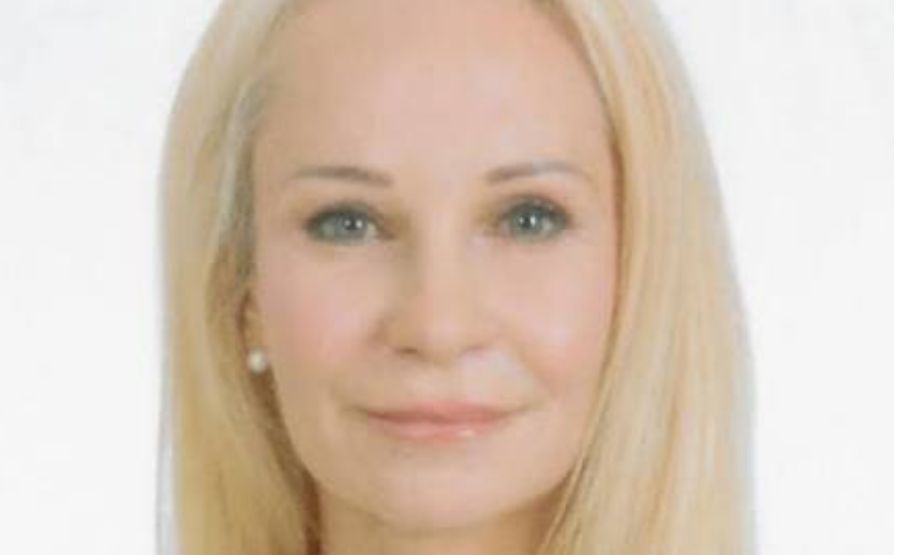
Personal Life: Complexity Behind the Headlines
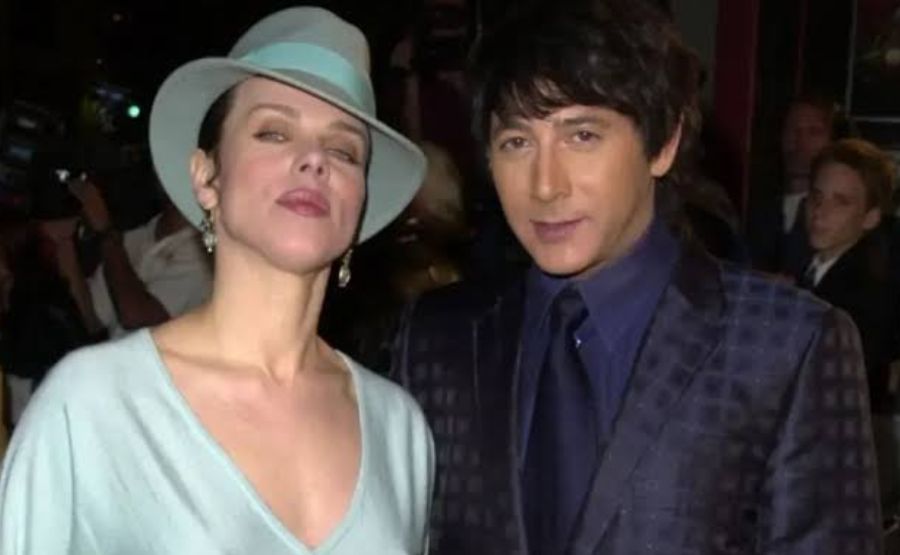
Heffner’s personal life during and after the Duke years was as layered as her public profile. In 1989, she and actor Paul Reubens — best known as Pee-wee Herman — participated in what multiple sources describe as a mock wedding ceremony at a dinner party. The event was widely misreported as a legal marriage. It was not. The two shared a friendship, and the theatrical ceremony appears to have been a product of that particular social circle’s fondness for the performative gesture.
Heffner was also romantically involved with James Burns, Duke’s former bodyguard, whose presence in the household had contributed to the deterioration of Duke’s relationship with Heffner. That relationship later generated its own legal dispute over financial support. It was subsequently resolved.
She has been married and divorced, carries no children, and has lived for decades in a manner that those familiar with her describe as genuinely unpretentious. Her sister Claudia, who pursued a career as a fashion model before marrying billionaire activist investor Nelson Peltz, represents a parallel family trajectory: conventional success pursued through the world’s standard channels. Chandi’s path was always more oblique.
Through Claudia’s marriage to Nelson Peltz, Chandi became the aunt of Nicola Peltz Beckham, the actress and heiress who married Brooklyn Beckham in 2022. This genealogical connection has periodically refreshed public interest in Chandi’s story, drawing younger audiences to an episode they might otherwise have encountered only in archival news coverage.
The Quiet Redemption: Philanthropy on Two Continents
In 1998, three years after her legal settlement and five years after Duke’s death, Heffner founded CDHIF USA, a 501(c)(3) nonprofit organization headquartered in Waimea, on Hawaii’s Big Island. The organization’s operational mandate extends to CDHIFI — the CDH International Foundation India — an Indian-registered charitable entity that deploys the American foundation’s funding in rural communities across India.
The scale of CDHIF’s operations is significant and, given Heffner’s public profile, surprisingly under-discussed. The organization now serves more than 80,000 human patients and approximately 50,000 animal patients every year. The work is hands-on and multidimensional: free medical and veterinary treatment, food distribution (both cooked and uncooked), emergency shelter, wheelchairs, clothing, and a dedicated program for preserving disappearing traditional artisan crafts. Trustees — including Heffner herself — accept no pay or reimbursement.
At her ranch in Waimea, Heffner maintains a sanctuary for rescued animals: horses, donkeys, birds, pigs, and others. Her connection to horses has extended to competitive equestrian sport. She served as a part-owner of the show-jumping horse Authentic, whose rider brought home a gold medal for Team USA at the 2004 Athens Olympic Games.
The foundation does not publicize itself aggressively. Heffner rarely gives interviews. Her profile on about.me — spare and factual — stands as one of the few direct public statements she has made about her current work. That reticence, in a culture that rewards self-promotion, is itself telling.
Legacy: What Chandi Heffner Actually Represents
Heffner’s cultural significance runs deeper than any single headline. Her story maps a collision between several distinctly American phenomena: the myth of inherited wealth as a form of happiness; the sincerity (and vulnerability) of late-life emotional need; the legal ambiguities around adult adoption and estate contestation; and the peculiar endurance of spiritual pursuits in a materialist society.
The media’s treatment of Heffner across three decades illustrates how narratives about women and money calcify into stereotype. In the early 1990s, she was almost universally characterized as a manipulator: a Hare Krishna devotee who had beguiled an elderly woman of diminished capacity and positioned herself for a windfall. This framing was convenient, dramatically satisfying, and largely unexamined. It ignored the documented warmth of the relationship’s early years. It ignored Duke’s own agency. It ignored the fact that Duke had, herself, altered her will repeatedly across her entire adult life, as if indecision were a habit rather than a sign of manipulation by any single person.
More recent assessments have corrected some of this distortion. Heffner’s sustained and unglamorous philanthropic work — not the work of a person who acquired wealth to spend it on herself — has forced a revision of the simpler story. The CDHIF’s operational scope, its focus on the rural poor of India rather than on socially prestigious American causes, suggests a woman whose values predated and postdated the Duke episode, not a person whose identity was solely constructed by proximity to a billionaire.
That said, the full truth of what passed between Doris Duke and Chandi Heffner between 1984 and 1991 remains irreducibly private. The confidentiality clause of the 1995 settlement effectively sealed the interior of the relationship. What we have are depositions, public filings, will language, and the biographical trajectories of both women — sufficient for a credible sketch, insufficient for certainty.
Final Words
Chandi Heffner’s life resists the neat moral of a parable. She is neither villain nor saint, neither cynical opportunist nor blameless victim. She was a woman of genuine spiritual conviction who found an unlikely family inside one of America’s most gilded households, participated in the kind of intimate human messiness thatseldom withstands the scrutiny of solicitors and eventually leaves with enough money to create something enduring and unique, but not a billion dollars.
The $65 million settlement is not the measure of her significance. The measure is the CDHIF operation in rural India, the rescued horses in Waimea, and the arc of a life that began in a Baltimore Catholic household, passed through a Hare Krishna commune, entered the inner sanctum of American plutocracy, survived a legal battle of historic proportions, and arrived — in the woman’s seventies — at something that looks, in its quietness, like peace.
The Doris Duke story will always be refracted through the lens of wealth and eccentricity. But Heffner’s half of it asks a different question: what does a person do with themselves after extraordinary events have receded? Her answer has been, consistently, to serve.
That answer, unannounced and quietly sustained for nearly three decades, may be the most consequential thing about her.
FAQs
1. Who is Chandi Heffner?
She is an American philanthropist born Charlene Gail Heffner on August 26, 1953, in Baltimore, Maryland. She is best known for being legally adopted as an adult by tobacco heiress Doris Duke in 1988 and for the subsequent inheritance dispute that followed Duke’s death in 1993.
2. Why did Doris Duke adopt Chandi Heffner?
Duke stated she believed Heffner was the reincarnation of her only biological child, Arden, who died one day after a premature birth in 1940. Beyond this spiritual conviction, contemporaries also described the relationship as a genuine late-life maternal bond between two lonely, spiritually inclined women.
3. How did Chandi Heffner and Doris Duke meet?
They were introduced in the early 1980s through a mutual belly dance instructor named Bobby Farrah. The friendship deepened when Heffner, recovering from a knee injury, was invited by Duke to convalesce at her Honolulu estate, Shangri-La.
4. Was the adoption legally valid?
Yes. The adoption was formalized in Hawaii in 1988 when Heffner was approximately 35 and Duke was 75. Adult adoptions, while uncommon, are legally recognized. Duke subsequently revoked the adoption, approximately in 1991, citing a breakdown in the relationship.
5. What happened to Chandi Heffner’s inheritance?
Duke’s final will, signed April 5, 1993, explicitly excluded Heffner and expressed regret about the adoption. After Duke died in October 1993, Heffner sued the estate. In late December 1995, she settled for approximately $65 million and dropped all remaining claims to the broader estate.
6. How large was the Doris Duke estate?
Her estimated net worth at the time of Duke’s passing was $1.2 billion.The majority was directed to the Doris Duke Charitable Foundation.
7. What was Bernard Lafferty’s role?
Lafferty was Duke’s Irish-born butler, who was named co-executor of Duke’s estate in her final will. He became a central figure in the contested administration of Duke’s fortune and faced separate accusations of using estate funds for personal benefit. He died in 1996.
8. Was Chandi Heffner ever legally married?
She has been married and subsequently divorced, but not to Paul Reubens. Heffner and the actor participated in a mock wedding ceremony at a dinner party in 1989, which was widely misreported as a legal marriage. It was not.
9. Did Chandi Heffner have a romantic relationship with James Burns?
Burns served as a bodyguard in Duke’s household and was romantically linked to Heffner. Duke’s disapproval of their relationship was cited as one factor in the deterioration of the Duke-Heffner bond. A later palimony dispute between Heffner and Burns was resolved separately.
10. What is the CDHIF USA Foundation?
CDHIF USA is a 501(c)(3) nonprofit founded by Heffner in 1998 and based in Waimea, Hawaii. It funds CDHIFI (CDH International Foundation India), which provides free medical treatment, veterinary care, food, shelter, and artisan preservation programs to rural communities in India. The combined operation serves more than 80,000 human patients and 50,000 animal patients annually.
11. What is Chandi Heffner’s estimated net worth?
As of recent estimates, her net worth is approximately $20 million, substantially derived from the 1995–1996 Duke estate settlement. She has directed significant funds toward philanthropy rather than personal accumulation.
12. How is Chandi Heffner related to Nicola Peltz Beckham?
Heffner’s sister Claudia Heffner is married to billionaire activist investor Nelson Peltz. Nicola Peltz Beckham, the actress and heiress who married Brooklyn Beckham in April 2022, is Claudia and Nelson’s daughter — making Chandi Nicola’s aunt.
13. Did Chandi Heffner have any involvement in equestrian sport?
Yes. She was a part-owner of the show-jumping horse Authentic. The horse’s rider won a gold medal in show jumping for Team USA at the 2004 Summer Olympic Games in Athens. Heffner has described polo and show jumping as her favorite equestrian disciplines.
14. Where does Chandi Heffner live today?
She divides her time between her ranch in Waimea, Hawaii — where she cares for rescued horses, donkeys, birds, pigs, and other animals — and India, where she maintains a connection to both spiritual practice and her foundation’s operational work.
15. How has public perception of Chandi Heffner shifted over time?
In the early 1990s, media coverage framed her primarily as a suspect figure who had exploited an elderly billionaire. Over subsequent decades, as the scale and sincerity of her philanthropic work became better known, and as the complexity of the Duke relationship was better understood, public perception shifted toward a more nuanced view of her as a resilient and genuinely compassionate figure.
Every story matters—discover them all with Daily Narrative.