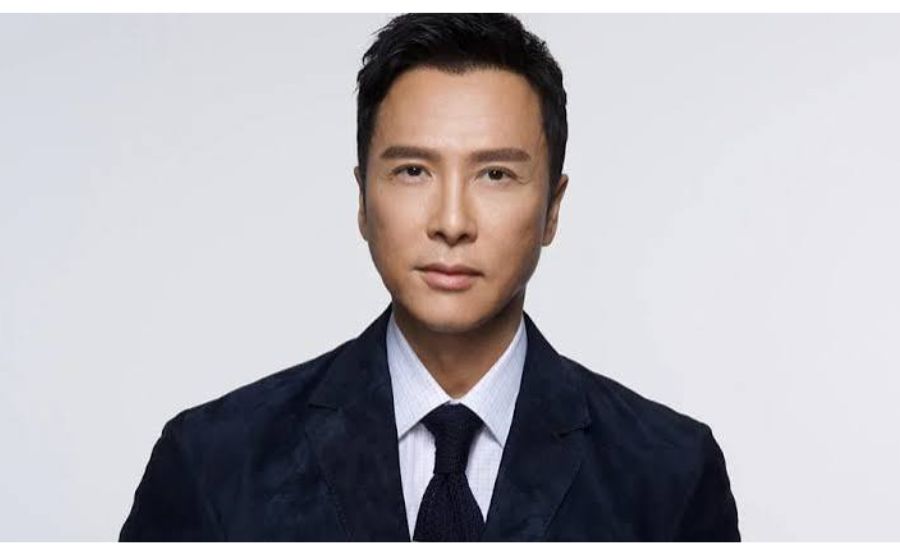
Donnie Yen Filmography: The Long Fight for the Screen
Few actors have spent forty years turning bruises into a career, but Donnie Yen has never stopped proving that pain, patience, and precision can outlast fame’s usual shortcuts.
Quick Facts
| Category | Details |
| Full name | Yen Chi-tan (Zhen Zidan), known professionally as Donnie Yen |
| Born | July 27, 1963, in Guangzhou, Guangdong, China |
| Nationality | Chinese; formerly a naturalized U.S. citizen (renounced circa 2009) |
| Primary roles | Actor, martial artist, action choreographer, film director, producer |
| Signature role | Ip Man in the Ip Man film series (2008–2019) |
| Martial arts background | Wushu, tai chi, taekwondo (reportedly 6th-degree black belt), judo, Brazilian jiu-jitsu, boxing, kickboxing, Wing Chun, and more |
| Major awards | Three Golden Horse Awards; five Hong Kong Film Awards, largely for Best Action Choreography |
| Key mentor | Action choreographer Yuen Woo-ping, who discovered Yen in Hong Kong at age 18 |
| Key collaborator | Director Wilson Yip, partner on SPL, Flash Point, and the Ip Man series |
| Spouses | Leung Zing-ci (married 1993, divorced 1994); Cissy Wang (married 2003) |
| Children | Jeff (from first marriage); Jasmine (b. 2004) and James (b. 2007), with Wang |
| Notable Hollywood credits | Blade II (2002), Rogue One: A Star Wars Story (2016), Mulan (2020), John Wick: Chapter 4 (2023) |
| Recent milestone | Directing and starring in the John Wick spinoff Caine, filming began in 2026 |
An Immigrant Kid Who Learned to Fight Before He Learned to Belong
Yen’s mother, Bow-sim Mark, ran a martial arts school that eventually became a fixture of Boston’s Chinese American community. His father, Klyster Yen, edited a newspaper and played the violin. Between them, they raised a son fluent in two disciplines that rarely mix: combat and music.
The family left Guangzhou for Hong Kong when Yen was two, then crossed the Pacific to Boston when he was eleven. He struggled to fit the mold his parents had built for him. He gravitated instead toward the street, joining an informal Chinatown gang and spending nights in the notorious Combat Zone, Boston’s red-light and brawling district of the 1970s.
His mother’s solution was drastic. She sent him, still a teenager, to train with the Beijing Wushu Team, the same government-sponsored program that produced Jet Li. Two years of state-level discipline reshaped him. On his way back to Boston, an 18-year-old Yen made a stopover in Hong Kong. There, he auditioned for Yuen Woo-ping, the choreographer who had already made Jackie Chan a star. Yuen signed him on the spot.
See also”Ken Siu (Siu Wai-Keung): The Invisible Architect Behind Cinema’s Most Beloved Action Films“
The Long, Uneven Climb Before Stardom
Yen’s first starring role came in Drunken Tai Chi (1984), a kung fu comedy that showcased his acrobatic kicking but did not make him famous. A shoulder injury sustained the following year on Mismatched Couples would quietly plague him for decades, a detail rarely mentioned in the highlight reels of his career.
Yen worked continuously under Yuen’s D&B series contract through the late 1980s, making appearances in In the Line of Duty 4 and the Tiger Cage series.His breakout moment arrived in 1992, when he played the villainous General Nap-lan opposite Jet Li in Once Upon a Time in China II. Their duel, filmed with whip-fast wire work, became a genre touchstone.
Then came a slump. By the mid-1990s, film offers dried up as Hong Kong’s industry contracted under piracy, the 1997 handover jitters, and competition from Hollywood blockbusters. Yen pivoted to television, starring as Chen Zhen in the 1995 series Fist of Fury, and to directing, launching his own production company, Bullet Films, and helming Legend of the Wolf (1997). He turned down deposit money from a major producer rather than star in projects he didn’t believe in, a decision that cost him steady work but preserved his creative independence.
Hollywood offered a partial escape. Yen choreographed and appeared in Highlander: Endgame (2000) and Blade II (2002), directed by Guillermo del Toro. He spent stretches in Los Angeles absorbing new disciplines: Brazilian jiu-jitsu, wrestling, Muay Thai. It was less a triumphant crossover than an actor quietly rebuilding his toolkit while his home industry struggled to place him.
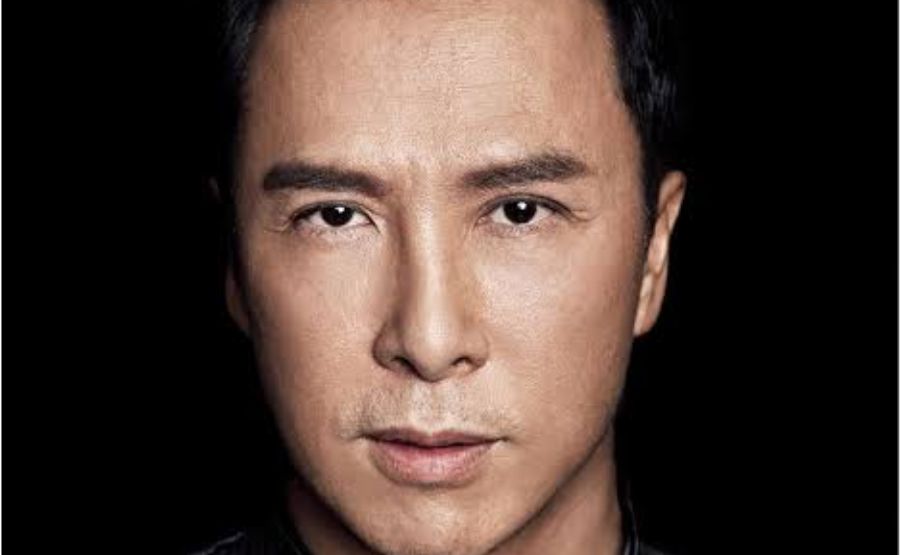
Hero, Then the Long Road to SPL
Jet Li personally recommended Yen to director Zhang Yimou for Hero (2002), a decision that returned Yen to prestige Chinese cinema. The film, nominated for the Academy Award for Best Foreign Language Film, reintroduced him to international audiences as a spear-wielding warrior facing off against Li’s nameless swordsman.
The real inflection point came in 2005. Director Wilson Yip cast Yen in SPL: Sha Po Lang, a bruising crime drama co-starring Sammo Hung and Simon Yam. Yen choreographed the film himself, folding mixed martial arts into Hong Kong’s traditional wire-and-form choreography for the first time at this scale. Critics and fans still cite his final duel with Hung as one of the genre’s defining sequences.
Yip and Yen repeated the formula with Dragon Tiger Gate (2006) and Flash Point (2007), the latter earning Yen Best Action Choreography honors at both the Golden Horse and Hong Kong Film Awards. The MMA-inflected style he pioneered here would influence action cinema well beyond Hong Kong’s borders.
Ip Man: The Role That Made Him Untouchable
By 2008, Yen had spent over two decades working steadily without ever becoming the singular face of Hong Kong action cinema. Ip Man changed that in a matter of weeks.
Producer Raymond Wong pitched Yen the idea of playing Ip Man, the real-life Wing Chun grandmaster who later taught Bruce Lee. Yen initially resisted shaving his head for the part, a small act of vanity that made it into industry lore. Directed by Wilson Yip, the film dramatized Ip’s life in 1930s Foshan under Japanese occupation, balancing quiet domestic scenes with explosive confrontations. It grossed HK$25 million in Hong Kong and roughly 100 million yuan in mainland China, numbers that reestablished period martial arts films as commercially viable.
Three sequels followed: Ip Man 2 (2010), Ip Man 3 (2015), and Ip Man 4: The Finale (2019), the last of which brought Yen into a widely publicized on-screen exchange with retired boxer Mike Tyson. By the time the series wrapped, worldwide grosses for the fourth installment alone approached $239 million, making it the franchise’s biggest earner and cementing Yen, at 56, as one of the highest-paid actors in Asia.
He has since described Ip Man 4 as his final traditional kung fu film, a statement that reads less like retirement and more like an artist closing one chapter before opening another.
Building a Second Career in Hollywood
Yen’s Hollywood arc looks less like a single breakthrough and more like a series of calculated reentries. He turned down a long list of roles across the 2000s and early 2010s, including parts in Rush Hour 2, The Forbidden Kingdom, and The Expendables 2, generally because the roles felt reductive or the material weak.
Rogue One: A Star Wars Story (2016) changed the calculus. As the blind warrior-monk Chirrut Îmwe, Yen brought an unusual stillness to a franchise built on spectacle, delivering a performance built more on presence than physical showmanship, though the fight choreography remained unmistakably his. The role introduced him to a generation of Western audiences who had never seen Ip Man or SPL.
Roles in xXx: Return of Xander Cage (2017) and Disney’s live-action Mulan (2020) followed, though the latter became entangled in political controversy unrelated to Yen’s performance. His most acclaimed English-language role arrived with John Wick: Chapter 4 (2023), in which he played Caine, a blind assassin and old friend of the title character. Yen was involved in shaping the character from the ground up: he rejected an early concept that leaned on stereotypical “kung fu master” imagery and pushed instead for a sharper, more contemporary design modeled loosely on Bruce Lee’s television-era style. Critics singled out his performance as the emotional center of the film, a rare distinction in a franchise otherwise built around Keanu Reeves’s stoicism.
By 2025 and into 2026, Yen had moved into directing that same character, taking the reins of Caine, a John Wick spinoff that began production in Europe before shifting to Hong Kong, a full-circle geographic loop for an actor whose career began exactly there.
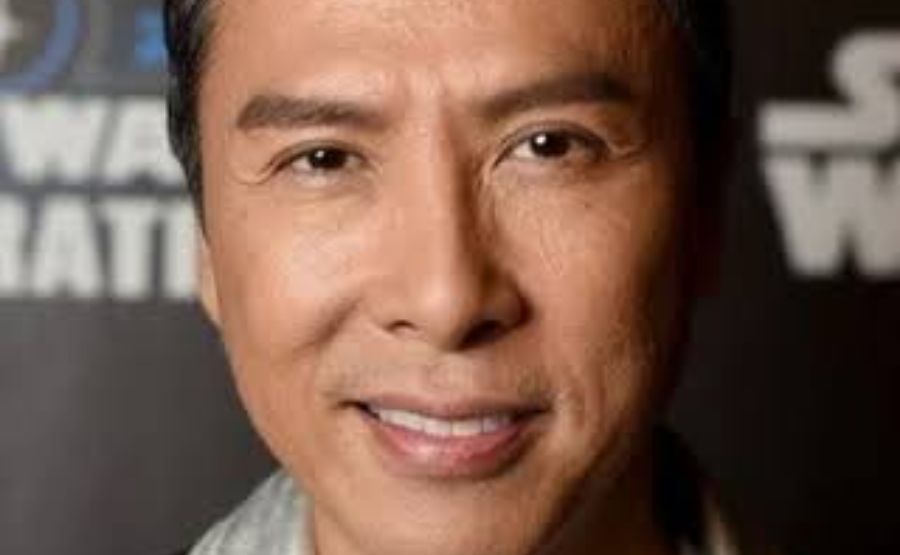
The Choreographer Behind the Star
It is easy to watch Yen’s films and see only the performer. Behind the camera, he has been just as consequential. He holds four Hong Kong Film Awards for Best Action Choreography and additional Golden Horse honors for the same craft, an unusually high tally even among his contemporaries.
Yen has explained candidly that Hong Kong and Hollywood approach fight direction differently. In Hong Kong productions, the action choreographer effectively directs the sequence outright, controlling camera placement and rhythm. In Hollywood, that authority is shared, and the choreographer works alongside, rather than instead of, the director. Yen has operated comfortably in both systems, a rare bilingual fluency in an industry where most action stars specialize in one.
His signature contribution was blending mixed martial arts into a genre long dominated by wire-assisted wuxia flourishes. Starting with SPL and refined through Flash Point and Special ID, Yen’s fights traded balletic exaggeration for grounded, joint-locking realism, a shift that reshaped expectations for what a modern Hong Kong action sequence should look like.
Personal Life: Music, Marriage, and a Complicated Family Portrait
Yen’s household growing up doubled as a conservatory. His mother sang; his father played violin; Yen himself became a proficient pianist, a skill he has occasionally shown off publicly, almost as a counterweight to his on-screen violence.
His romantic life has been less publicly harmonious. He married advertising executive Leung Zing-ci in a low-key American ceremony in 1993; the marriage ended within a year, though the couple had a son, Jeff, after the divorce. In 2003, Yen married Cissy Wang, a former Miss Chinese Toronto pageant winner. They have two children, Jasmine, born in 2004, and James, born in 2007.
Colleagues describe Yen as intensely disciplined about his body, adjusting his diet drastically for different roles, at one point eating a single meal a day to appear gaunt enough for Ip Man, and later eating constantly to bulk up for The Lost Bladesman. He has spoken about the toll this takes, framing it less as vanity and more as an occupational demand he accepted decades ago and has never stopped honoring.
He also gave up his U.S. citizenship around 2009, a choice that would later become inseparable from his public identity as a vocal supporter of mainland Chinese policy, discussed further below.
Controversy: Patriotism, Power, and the Price of Public Loyalty
Donnie Yen’s later career cannot be separated from his politics, and pretending otherwise would flatten a genuinely complicated public figure.
Since renouncing his U.S. citizenship, Yen has repeatedly and publicly aligned himself with Beijing. He called a 2017 meeting with Chinese leader Xi Jinping a “great honor.” In 2020, he posted a celebratory message marking Hong Kong’s 1997 handover to “motherland China,” a post that triggered renewed calls to boycott Mulan, in which he had a supporting role. In January 2023, he was appointed to a national advisory body representing Hong Kong’s arts and culture sector, a position widely seen in the city as a mark of political favor.
The sharpest flashpoint came weeks later. In a profile published by GQ ahead of his appearance as an Academy Awards presenter, Yen described the 2019 Hong Kong pro-democracy demonstrations, months of mass protest against an extradition bill that evolved into a broader movement against Beijing’s tightening grip, using a single, loaded word: “riot.” He praised mainland China’s infrastructure and modernization, and criticized Western media outlets for what he called a one-sided portrayal of the country. An online petition demanding his removal from the Oscars ceremony gathered more than 100,000 signatures. Protesters demonstrated outside the Dolby Theatre. Yen appeared anyway, later telling Variety that the backlash amounted to “cyber-bullying” and that he had a right to “love my own culture, love my own country.”
Critics, many of them Hong Kong activists who left the city after the 2020 national security law, argued that Yen’s global platform gave his framing outsized influence, effectively normalizing a characterization of the protests that Beijing itself promoted. Yen’s defenders countered that an entertainer voicing personal political convictions, however unpopular in certain quarters, is not inherently disqualifying, and that demands for his removal from an awards ceremony risked setting a troubling precedent for artistic expression.
Neither side’s argument fully resolves the tension at the heart of the episode: Yen is simultaneously a Hong Kong-born product of a now-constrained film industry and one of its most prominent defenders of the political system many blame for that constraint. It is a contradiction he has not tried especially hard to soften.
Legacy: Why Yen Still Matters
Younger audiences might not be able to identify Yen’s influence on screen combat since it has become so ingrained in action films. The grounded, joint-based, multi-disciplinary fight style he helped popularize in SPL and Flash Point reshaped expectations for realism in hand-to-hand sequences, an aesthetic visible in productions well outside Hong Kong.
His portrayal of Ip Man did something rarer still: it took a relatively obscure historical martial arts teacher and turned him into a cultural icon, credited by many observers with a measurable revival of interest in Wing Chun training worldwide. Wing Chun schools from Los Angeles to London have reported enrollment bumps directly tied to the franchise’s popularity, an unusual case of a commercial film series generating a real-world martial arts renaissance.
At 62, Yen occupies a strange dual position in global cinema: an elder statesman of Hong Kong action filmmaking and a still-active, still-fighting Hollywood supporting player whose John Wick work has introduced him to audiences with no memory of his 1980s stunt work. Few actors manage both simultaneously; fewer still choose, at this stage, to step behind the camera as a director on a major franchise entry, as he has with Caine.
Final Reflections
Donnie Yen’s career resists a tidy verdict, which may be the most honest thing that can be said about it. He is a technician of extraordinary discipline, a performer who spent a genuine “wilderness decade” absorbing new skills rather than chasing easy paychecks, and a collaborator whose choreography reshaped a genre from the inside.
He is also a man whose public political voice has alienated segments of the audience and industry that first made him famous. Those two truths coexist without canceling each other out. His body of work, spanning stunt doubling in 1983 to directing a Hollywood franchise film in 2026, testifies to an unusually long professional arc built on craft rather than charisma alone. His public statements on Hong Kong’s political turmoil complicate, but do not erase, that record.
What remains consistent across four decades is Yen’s refusal to be static: shifting styles, shifting industries, shifting from performer to choreographer to director, sometimes within the same film. Whether that restlessness reflects genuine artistic curiosity or the practical instincts of a man who watched his industry nearly collapse once already is, perhaps, a question only Yen himself can answer.
FAQs
1.When and where was Donnie Yen born?
He was born on July 27, 1963, in Guangzhou, Guangdong, China.
2.What is Donnie Yen’s most famous role?
His portrayal of Wing Chun grandmaster Ip Man across four films (2008–2019) remains his defining role.
3.Did Donnie Yen grow up in the United States?
Yes. His family moved to Boston when he was eleven, and he attended Newton North High School.
4.What martial arts is Donnie Yen trained in?
He has trained extensively in wushu, tai chi, taekwondo, judo, Brazilian jiu-jitsu, boxing, kickboxing, Muay Thai, and Wing Chun, among other disciplines.
5.Who discovered Donnie Yen for film work?
Action choreographer Yuen Woo-ping, who cast him after an audition in Hong Kong when Yen was 18.
6.What was Donnie Yen’s breakthrough film role?
His performance as General Nap-lan opposite Jet Li in Once Upon a Time in China II (1992) is widely considered his breakthrough.
7.How many times has Donnie Yen played a blind character?
Twice: Chirrut Îmwe in Rogue One: A Star Wars Story (2016) and Caine in the John Wick franchise beginning with Chapter 4 (2023).
8.Is Donnie Yen a director as well as an actor?
Yes. He directed his debut feature, Legend of the Wolf, in 1997, and is directing the John Wick spinoff Caine, which began filming in 2026.
9.Why did Donnie Yen face backlash around the 2023 Oscars?
A petition with over 100,000 signatures demanded his removal as a presenter after he described Hong Kong’s 2019 pro-democracy protests as a “riot” in a GQ interview and expressed support for Beijing.
10.Is Donnie Yen still a U.S. citizen?
No. He renounced his U.S. citizenship around 2009 and has described himself as “100% Chinese.”
11.What awards has Donnie Yen won?
He has won three Golden Horse Awards and five Hong Kong Film Awards, primarily for Best Action Choreography.
12.How many children does Donnie Yen have?
Three: a son, Jeff, from his first marriage, and a daughter, Jasmine, and son, James, with his current wife, Cissy Wang.
13.Did Donnie Yen ever turn down major Hollywood roles?
Yes, including parts in Rush Hour 2, The Forbidden Kingdom, The Mummy: Tomb of the Dragon Emperor, and The Expendables 2.
14.What was Donnie Yen’s career like before Ip Man? Uneven. After early success in the late 1980s and early 1990s, work dried up in the mid-1990s, prompting a pivot to television, directing, and international choreography work before a mid-2000s revival led by SPL: Sha Po Lang and Flash Point.
15.Has Donnie Yen said Ip Man 4 is his last kung fu film? Yes, he announced at a 2019 press conference in Beijing that Ip Man 4: The Finale would be his last traditional kung fu film, though he has remained active in action cinema more broadly since.
Every story matters—discover them all with Daily Narrative.