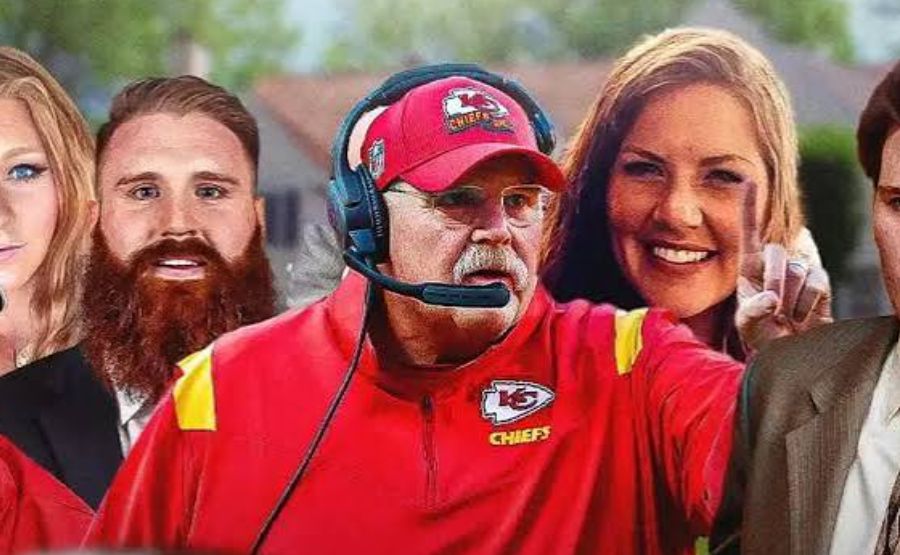
Drew Ann Reid: The Coach Who Built Two Empires and Buried One Son
Andy Reid matters now for a reason that has little to do with mustaches or cheeseburgers: he built two championship dynasties, three decades apart, while surviving a private tragedy that would have broken most careers before they started.
Quick Facts
| Category | Details |
| Full name | • Andrew Walter Reid |
| Born | • March 19, 1958, in Los Angeles, California |
| Nationality | • American |
| Education | • Glendale Community College; Brigham Young University (B.A., physical education; M.A., professional leadership in physical education and athletics), graduated 1981 |
| Primary roles | • NFL head coach, Philadelphia Eagles (1999–2012) • NFL head coach, Kansas City Chiefs (2013–present) • Eagles executive vice president of football operations (2001–2012) |
| Major honors | • Three Super Bowl championships (LIV, LVII, LVIII) • Three-time AP NFL Coach of the Year (2000, 2002, 2004) • Fourth all-time in career coaching wins |
| Key relationships | • Wife Tammy Reid (married 1981) • Children: Garrett, Britt, Spencer, Drew Ann, Crosby • Mentors: LaVell Edwards, Mike Holmgren • Star pupils: Donovan McNabb, Michael Vick, Patrick Mahomes |
| Notable milestones | • Hired by Eagles at age 40 with no coordinator experience • Led Eagles to four straight NFC Championship Games (2001–2004) • Rebuilt a 2–14 Chiefs team into a perennial contender • Coaching tree includes 11 future NFL head coaches |
| Religion | • A member of the Latter-day Saints’ Church of Jesus Christ |
The Making of a Coach Nobody Expected
Reid, the son of Walter and Elizabeth Reid, grew up in Los Angeles’ Los Feliz neighbourhood.. He played multiple sports at John Marshall High School and sold hot dogs at Dodger Stadium as a teenager, a job that taught him the rhythms of a workday long before football did.
No college offered him a football scholarship. He enrolled instead at Glendale Community College, then transferred to Brigham Young University, where he played offensive tackle without much playing time.
At BYU, something more valuable than snaps came his way. Head coach LaVell Edwards noticed that Reid spent practices coaching his own teammates through blitz pickups, not just executing his own assignments. Edwards eventually told him to consider coaching as a career.
Reid took the advice literally. He spent one year as a BYU graduate assistant, then nine more as an offensive line coach bouncing through four different colleges — San Francisco State, Northern Arizona, UTEP, and Missouri. It was an unglamorous decade, the kind that builds patience rather than reputations.
The turning point came through a friendship, not a resume. Mike Holmgren, who had coached alongside Reid at BYU, was hired to lead the Green Bay Packers in 1992 and called Reid first. Reid joined Green Bay’s staff, eventually coaching quarterbacks during the 1996 season when the Packers won Super Bowl XXXI.
That ring came as an assistant, invisible to most fans. It would be seven more years before Reid held a title that mattered to his own record.
See also” Steve Lambert: The Artist Who Turns Big Questions Into Public Games“
Philadelphia: A Decade of Almost
The Eagles hired Reid as head coach on January 11, 1999. He was 40 years old, had never called plays as an offensive or defensive coordinator, and reportedly showed up to his interview with a five-inch binder outlining exactly how he intended to run the franchise.
Philadelphia media questioned the hire immediately. Reid inherited a team that had gone 3–13 the year before, and his first draft decision doubled the skepticism: he passed on hometown favorite Ricky Williams and selected quarterback Donovan McNabb second overall.
McNabb became the bet that paid off. Under Reid, the Eagles reached the playoffs nine times in fourteen seasons and made four consecutive NFC Championship Games from 2001 through 2004 — a stretch of sustained excellence matched by almost no other franchise at the time.
The 2004 season delivered the Eagles’ first Super Bowl trip since 1980. They lost Super Bowl XXXIX to the New England Patriots, 24–21, a game decided by inches and clock management as much as talent.
The very next season unraveled. Wide receiver Terrell Owens’ clashes with the team grew public and corrosive, and Reid deactivated him for the rest of 2005. Weeks later, McNabb suffered a season-ending injury, and Philadelphia finished 6–10.
Reid absorbed blame that many around the team believed belonged elsewhere. McNabb later said publicly that fans and critics turned on Reid the moment results soured, even though Reid had built the very success they were now dismantling in hindsight.
The Eagles never returned to a Super Bowl under Reid. After three declining seasons capped by a 4–12 finish in 2012, owner Jeffrey Lurie fired him on December 31, 2012 — ending the longest active head-coaching tenure in the league at the time.
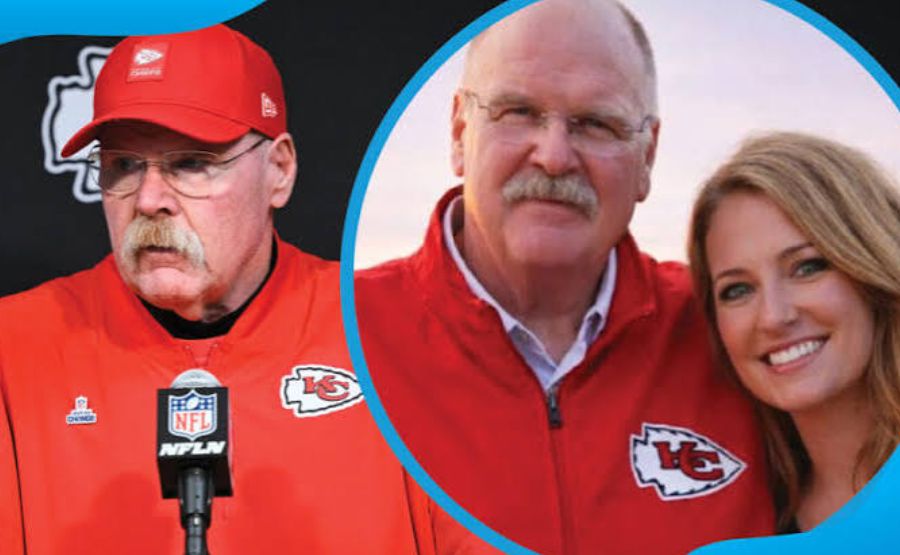
Kansas City: The Rebuild Nobody Predicted Twice
The Chiefs hired Reid days after his Eagles exit, and the turnaround was immediate. Kansas City had finished 2–14 the season before; under Reid in 2013, they went 11–5, one of the sharpest single-season reversals in franchise history.
For four years, the Chiefs won consistently but stalled in January, a pattern eerily similar to Philadelphia’s late-era ceiling. Then came the 2017 draft, when Kansas City traded up for a raw-armed quarterback out of Texas Tech named Patrick Mahomes.
Reid had spent decades coaching mobile, improvisational quarterbacks — Brett Favre’s understudies, McNabb, Michael Vick. Mahomes became the fullest expression of that pattern, and the partnership rewrote what Reid’s career would be remembered for.
Kansas City won Super Bowl LIV in February 2020, giving Reid his first championship as a head coach after more than two decades of trying. Three years later, the Chiefs beat Reid’s former team, the Eagles, in Super Bowl LVII, then repeated as champions in Super Bowl LVIII — the franchise’s first back-to-back titles in half a century.
The following season brought a third straight Super Bowl appearance and a lopsided loss back to Philadelphia, a reminder that even historic dynasties lose more often than they win it all. By any measure, though, Reid had done something almost no coach manages: build one contender, lose it, and build a second one somewhere else entirely.
Personal Life, Family, and Private Struggles
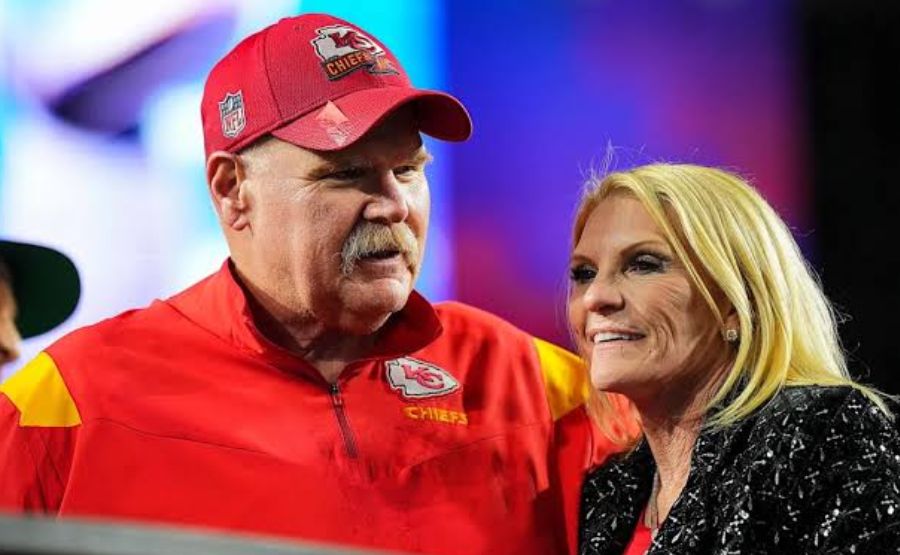
Reid met Tammy, his future wife, in a physical education class at BYU. They married in 1981 and had their first child while Andy was finishing his master’s degree — the start of a marriage now well past four decades, one that survived constant relocation as his coaching jobs moved the family through several states.
They raised five children: sons Garrett, Britt, and Spencer, and daughters Drew Ann and Crosby. Each child was born in a different state, a detail that captures just how unsettled the early coaching years were.
Two of the sons, Garrett and Britt, struggled with addiction from adolescence onward. In January 2007, both were arrested on the same day for separate incidents — Garrett for a heroin-impaired crash that injured another driver, Britt for pointing a handgun at a motorist during a road-rage confrontation.
A judge overseeing one case described the family home as lacking structure, a public rebuke aimed squarely at a father who was, at the time, one of the most successful coaches in the NFL. Reid took a five-week leave from the Eagles to accompany his sons into rehabilitation, and later visited them in prison nearly every week for close to two years.
Garrett appeared to be rebuilding his life afterward, working on his father’s strength and conditioning staff. On August 5, 2012, he was found dead in a dormitory room at Lehigh University during Eagles training camp, the victim of an accidental heroin overdose at age 29.
The Reid family’s public statement afterward balanced grief with candor about addiction’s persistence, framing Garrett’s death as part of a longer battle rather than a sudden collapse. Reid stayed on as Eagles coach through that training camp and the season that followed, coaching through a loss that few parents ever face.
Britt Reid’s troubles resurfaced in 2021. Two days before Super Bowl LV, while serving as the Chiefs’ outside linebackers coach, he crashed his truck into stopped vehicles on a Kansas City highway ramp while intoxicated, critically injuring five-year-old Ariel Young.
Britt pleaded guilty to felony DWI in 2022 and received a three-year sentence; Missouri’s governor commuted it to house arrest in 2023, a decision that drew sharp criticism from Young’s family and their attorney. Reid himself has said little publicly about either son’s legal troubles, a silence that has drawn its own scrutiny from reporters who note how rarely he is pressed on it compared to questions about his diet or his mustache.
Amid the hardship, the family has also marked its joys together. When the Chiefs won Super Bowl LIV, Reid and his surviving children embraced on the field in a moment several of them later described as a tribute to Garrett, whose absence from the celebration everyone in the family felt.
The Coaching Tree and a Style Built on Repetition
Reid’s staffs became, in effect, a coaching academy. Eleven of his former assistants went on to become NFL head coaches, including John Harbaugh, Ron Rivera, Doug Pederson, and Sean McDermott — a lineage that traces further back through Holmgren to Bill Walsh’s West Coast offense philosophy.
Pederson, in particular, closed a strange loop: he led the Eagles to their first Super Bowl title in franchise history in 2017, a triumph achieved with the very team that had fired his mentor five years earlier. Reid’s tree, taken together, has combined for hundreds of regular-season wins and multiple championships among his former pupils.
On the field, Reid became known for an offense built on route combinations, pre-snap disguise, and above all, an almost obsessive commitment to practice repetition. Colleagues and quarterbacks across three decades — Favre, McNabb, Vick, Mahomes — describe a coach who trusts structure over improvisation, even while producing some of the league’s most improvisational quarterbacks.
That contradiction defines him as much as any trophy. The public image is folksy and unhurried — the Hawaiian shirts, the mustache, the well-worn jokes about cheeseburgers — while the private discipline behind it involves arriving at the facility before dawn and outworking staffs half his age.
Legacy and Relevance Today
Reid’s career now spans parts of five decades and covers a wider arc of NFL history than almost any other living figure in the sport. He is one of only four coaches in league history to reach 300 regular-season wins and the only one to record 100 or more wins with two separate franchises.
His influence on quarterback development may outlast even his win total. Long before “dual-threat quarterback” became a common phrase, Reid was already building offenses around players who could throw and run, a template that shaped how a generation of teams evaluate and coach the position.
The coaching tree he built extends his fingerprints across nearly a third of the league at any given moment, a form of legacy that outnumbers championships as a measure of lasting impact. Even coaches he never worked with directly borrow ideas that trace back through Holmgren and Walsh to Reid’s own staffs.
At the same time, Reid’s story has become a case study in how fame insulates families from consequence. Commentators and legal observers have pointed out that Britt Reid’s sentence, and its commutation, would likely have looked different for a defendant without a famous surname — a criticism that trails Reid’s coaching triumphs like a shadow he has mostly declined to address in public.
That tension — a beloved public figure whose private life includes unresolved harm to others — is part of why Reid’s story still generates debate well beyond football circles. He is simultaneously one of the most universally liked figures in modern sports and a father whose family history intersects with real, documented injury to a child who was not his own.
Final Reflections
Andy Reid’s career resists a tidy verdict, and that is precisely what makes it worth examining closely. He is a master tactician who lost his signature quarterback battles for years before finally winning them, a mentor whose disciples multiplied his influence across the league, and a father who endured the death of one son to addiction and now carries the unresolved public reckoning of another son’s crime.
None of these truths cancels the others out. The same patience that let him rebuild a moribund Chiefs roster into a dynasty also describes his approach to his sons’ addictions — steady, private, unwilling to give up, and ultimately unable to prevent tragedy.
His on-field legacy is close to unimpeachable: three Super Bowl titles, a coaching tree that dominates hiring cycles, and a reputation for developing quarterbacks that will likely outlive his win total in importance. His off-field legacy is more contested, shaped by a family’s private suffering and by public frustration that scrutiny of that suffering has never matched the intensity applied to his play-calling.
Both stories are true at once, and neither the cheeseburger jokes nor the championship rings fully capture either one.
FAQs
1. When and where was Andy Reid born?
March 19, 1958, in Los Angeles, California.
2. Where did Andy Reid go to college?
He attended Glendale Community College before transferring to Brigham Young University, where he earned a bachelor’s degree and a master’s degree.
3. Did Andy Reid play in the NFL?
No. He played offensive line at BYU but never played professionally; he moved directly into coaching after college.
4. How many Super Bowls has Andy Reid won?
Three — Super Bowl LIV (2020), Super Bowl LVII (2023), and Super Bowl LVIII (2024), all with the Kansas City Chiefs.
5. Why did the Philadelphia Eagles fire Andy Reid?
After three declining seasons, including a 4–12 finish in 2012, owner Jeffrey Lurie ended Reid’s 14-year tenure.
6. Who is Andy Reid’s wife?
Tammy Reid, whom he met in a physical education class at BYU. They married in 1981.
7. How many children does Andy Reid have?
Five: sons Garrett, Britt, and Spencer, and daughters Drew Ann and Crosby.
8. What happened to Andy Reid’s son Garrett?
Garrett Reid died on August 5, 2012, of an accidental heroin overdose at age 29, during Eagles training camp at Lehigh University.
9. What happened with Andy Reid’s son Britt Reid?
Britt Reid, then a Chiefs assistant coach, caused a drunk-driving crash in February 2021 that critically injured a five-year-old girl. He pleaded guilty to felony DWI and was later granted clemency reducing his sentence to house arrest.
10. What is Andy Reid’s career coaching record?
He ranks fourth in NFL history in total wins and is the only coach to record 100-plus wins with two different franchises.
11. Did Andy Reid ever win a Super Bowl with the Eagles?
No. The Eagles reached Super Bowl XXXIX in the 2004 season but lost to the New England Patriots, 24–21.
12. Which quarterback is most associated with Andy Reid’s success?
Patrick Mahomes, whom Reid has coached since 2017 and who has won multiple MVP awards under his system, though Donovan McNabb and Michael Vick were also central to his earlier career.
13. How many NFL head coaches came from Andy Reid’s coaching staffs?
Eleven, including John Harbaugh, Doug Pederson, Ron Rivera, and Sean McDermott.
14. Is Andy Reid religious?
Yes, he is a member of The Church of Jesus Christ of Latter-day Saints and has spoken publicly about his faith.
15. Is Andy Reid still coaching?
As of the 2025 season, he remains head coach of the Kansas City Chiefs, a position he has held since 2013.
Every story matters—discover them all with Daily Narrative.