Amanda Kate Lambert: The Archivist of a Legend
In an era that rewards spectacle, Amanda Kate Lambert has built a quiet and consequential life by turning her attention inward — toward the vaults, the family albums, and the photographic negatives that preserve one of the most recognizable legacies in American music history.
Quick Facts
| Detail | Information |
| Full Name | Amanda Katherine Lambert Erlinger |
| Born | March 17, 1976 |
| Birthplace | Beverly Hills, California, USA |
| Nationality | American |
| Zodiac Sign | Pisces |
| Primary Roles | Photographer, Visual Artist, Author, Family Archivist |
| Education | Fine Arts, Art History, Photography (college level) |
| High School | Beverly Hills High School |
| Father | Hugh Lambert (choreographer/producer; died August 18, 1985) |
| Mother | Nancy Sinatra (singer, actress) |
| Grandfather | Frank Sinatra (1915–1998) |
| Grandmother | Nancy Barbato Sinatra |
| Sibling | Angela Jennifer “AJ” Lambert (older sister, musician) |
| Spouse | Michael Erlinger (married, met at age 19) |
| Children | Annabelle Erlinger (daughter) |
| Key Milestones | – Appointed family photo archivist, 2002 |
| – Co-edited Sinatra (ACC Art Books, 2015; 1,000 copies; $1,500 retail) | |
| – Curated “Sinatra at 100: A Century in the Making” (Proud Chelsea, London, 2015) | |
| – Guest of honor, “Sinatra: My Kind of Town” exhibition, Hilton/Asmus Contemporary, Chicago, September 2018 | |
| Net Worth (est.) | $2–3 million |
A Child Formed in the Margins of Fame
Beverly Hills in 1976 was a city still dreaming of itself — glamour as a daily fact of life, creativity as a kind of ambient noise. Amanda Katherine Lambert was born into this environment on March 17, 1976, as the second daughter of singer Nancy Sinatra and choreographer-producer Hugh Lambert. Her older sister, Angela Jennifer — known as AJ — arrived two years earlier, in May 1974. Together the girls grew up in a household saturated with art, music, and the unspoken weight of a name that carried international recognition.
Hugh Lambert was not a peripheral figure in the entertainment world. He worked as a choreographer, dancer, and producer, contributing to the landmark variety program The Ed Sullivan Show and managing his wife’s career. Within the family he was, by accounts from those who knew him, a warm and quietly rigorous creative presence. He encouraged his daughters toward artistic discipline without pressure. He died of cancer on August 18, 1985, when Amanda was nine years old. That loss — early, abrupt, irreversible — marked the terrain of her childhood. It also pushed her further into the orbit of the one person who seemed to understand what she was searching for.
That person was her grandfather.
Frank Sinatra’s public image was enormous: the Rat Pack, the Capitol Records sessions, the swagger and the sentiment. But for Amanda, he was simply the man who sat with her beside the pool at his Palm Springs compound and showed her how to load film into a camera. In her own words, if she was not at school, she was likely with Frank. He had maintained a painter’s studio at the Palm Springs home since his twenties, and there he taught Amanda to mix pigments, to handle brushes with patience, and — crucially — to observe a subject before committing it to an image. These were not casual afternoons; they were the informal apprenticeship that shaped her entire professional identity.
See aslo” Anne Steves: The Quiet Architect Behind America’s Favorite Travel Brand”
The Architecture of Her Education
Amanda and her sister AJ held a distinction unusual for children born into entertainment dynasties: they were among the first in the extended Sinatra family to earn college degrees. After attending Beverly Hills High School, which has long been known for its robust arts curriculum, Amanda went on to study fine arts, photography, and art history in college. The specific institutions she attended have never been publicly disclosed, consistent with her lifelong preference for privacy. What is known is the shape of her academic focus: she combined technical photographic training with archival and art-historical study, giving her the tools to think not only as a maker of images but as a custodian of them.
She described herself during her school years as “shy and behind the scenes.” While her mother was returning to public life after stepping back from performance to raise her daughters, and while her grandfather remained one of the most discussed cultural figures on the planet, Amanda was quietly developing an interior practice — a way of seeing that would eventually become her professional signature.
The Archive: 2002 and Beyond
The inflection point in Amanda Lambert’s adult career arrived in 2002, when she formally took on the role of manager and archivist of the Frank Sinatra personal photographic collection, a position she has held ever since. The assignment was not a ceremonial appointment. It was, in her own description, a box of file folders with no order, no catalog, no index — decades of prints, snapshots, contact sheets, and family photographs bundled without system or structure.
She began scanning images and building a digital record, but she also did something more important: she started asking questions. She brought the photographs to her grandmother, Nancy Barbato Sinatra — Frank’s first wife, who remained on close and affectionate terms with her former husband after their divorce in 1951 — and listened. Nancy Senior identified faces, named occasions, corrected misconceptions. She then began producing photographs of her own from personal albums the family had never collectively seen: leather-bound albums with black construction-paper pages, the images secured with photo corners, each print no larger than half a 3×5.
For Amanda, the discovery of these albums was, in her telling, “utter gold.” Among the images were photographs Frank and Nancy Barbato had taken of each other in their Hoboken, New Jersey apartment on Garden Street, using a darkroom they had built themselves. Frank had been experimenting with photography since his earliest touring days, learning to develop prints and manipulate texture in the darkroom. Holding those early self-portraits — images of a young man who had not yet become a legend — produced in Amanda a feeling she described as both emotional and vertiginous: wonder at what she held, and awareness of what it might become.
Sinatra: A Book as Artifact
When the Sinatra family began planning the centennial celebration of Frank Sinatra’s birth — December 12, 2015 marked one hundred years from his arrival in Hoboken — they looked to the person who had spent thirteen years cataloguing his visual life. Amanda Lambert was asked to co-edit a commemorative volume alongside Robin Morgan, the poet, activist, and author. The collaboration produced Sinatra, published by ACC Art Books in 2015.
The book was deliberately conceived as an object as much as a publication. Its print run was limited to exactly 1,000 copies, each retailing for approximately $1,500, housed in a clamshell case and signed by Frank’s three children: Nancy, Frank Jr., and Tina. At 400 pages, it drew on the family archives Amanda had assembled over more than a decade, the Capitol Records and Warner Bros. records archives, and images from noted photographers including Terry O’Neill and Milton Greene. It also included Frank’s own self-portraits from the Hoboken darkroom years — photographs that, until Amanda surfaced them, had existed in a private family album seen by almost no one outside the household.
The book was launched on July 23, 2015, at Saks Fifth Avenue in New York City, where Amanda appeared publicly alongside her mother Nancy. Contributions came from George Clooney, Martin Scorsese, Paul McCartney, Quincy Jones, and Debbie Reynolds, among others. Amanda’s role was not only editorial but curatorial and biographical: she made decisions about what the world would see of Frank Sinatra the private person, the father, the grandfather, the man who swam at the Jersey Shore as a young Italian-American kid from a block of modest flats.
The same year, she curated “Sinatra at 100: A Century in the Making” for Proud Chelsea in London, an exhibition that drew international attention partly for its inclusion of Frank’s adolescent self-portraits — images of playful experimentation that revealed an aesthetic sensibility few had known he possessed.
Personal Life: Stability as a Deliberate Choice
Amanda Lambert met Michael Erlinger when she was nineteen years old. Their relationship deepened steadily over time, and they eventually married, with Amanda occasionally using the full name Amanda Katherine Lambert Erlinger in professional contexts. Erlinger maintains an extremely low public profile, with almost no media footprint. The couple have one daughter, Annabelle, whose life they have guarded with the same deliberateness Amanda applies to her own.
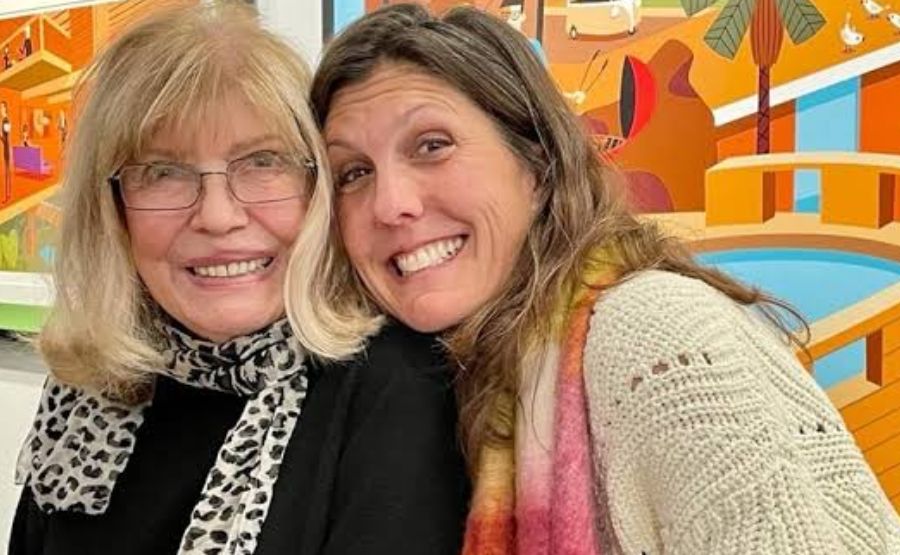
In a rare interview moment, Amanda described her husband as her best friend and identified their marriage as one of the defining features of a life she considers fortunate. That gratitude, when she expressed it, extended explicitly to her family — not to achievement or recognition, but to the quality of the relationships she had been able to build and sustain. When asked once what the best thing about her life was, she brought the answer back to family immediately.
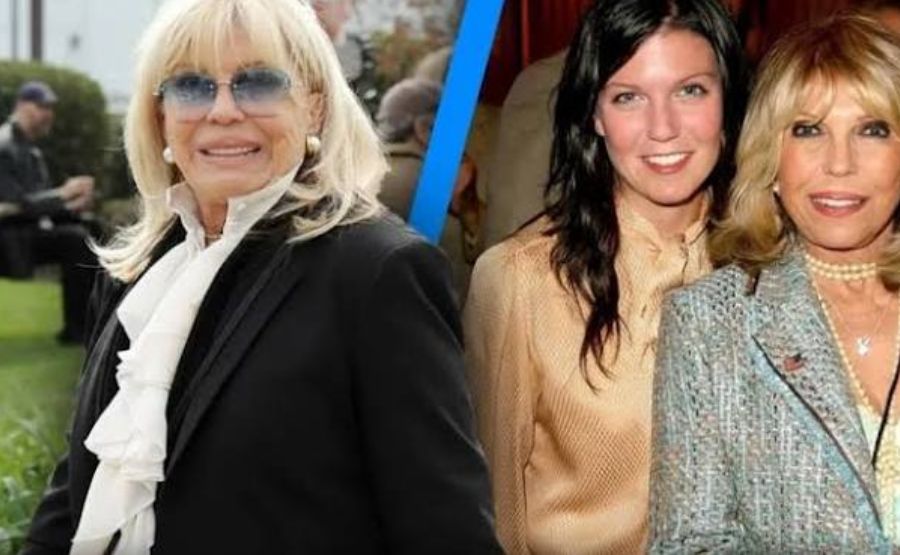
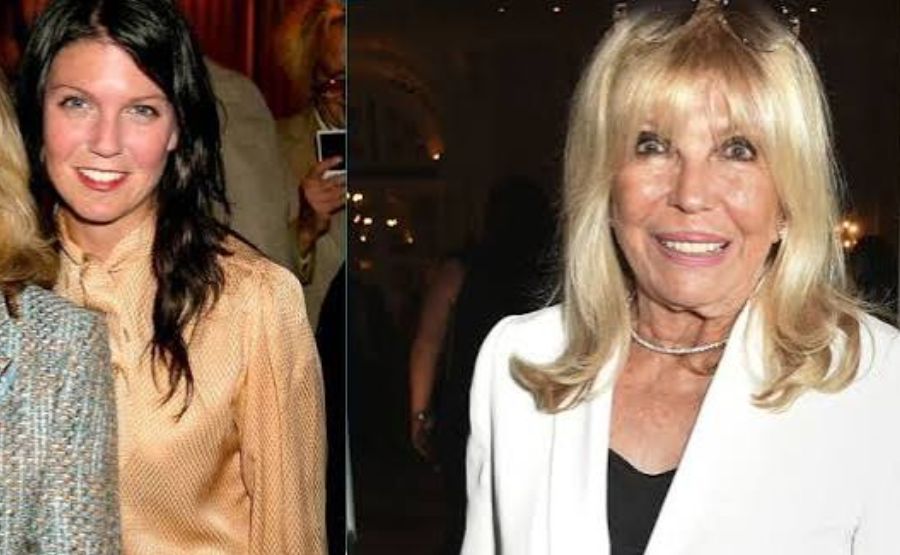
Her mother Nancy, who never remarried after Hugh Lambert’s death in 1985 and who described him as the love of her life, raised both daughters with what those close to them describe as a combination of creative encouragement and emotional groundedness. The bond between Nancy and Amanda has remained close and publicly visible on occasions — the Saks book launch, the December 2015 Sinatra centennial flag-raising at the Capitol Records Building in Los Angeles — without being performed or exploited.
Amanda keeps no public social media accounts. Her professional website, when it existed, has since gone inactive. She attends events connected to the Sinatra legacy when the work requires it, and retreats otherwise. This is not shyness, precisely. It reads, in its consistency, more like principle.
The Photographer’s Eye
Beyond the archival work, Amanda Lambert has maintained an independent practice as a visual artist and photographer. Her personal photographic style favors intimacy over spectacle: quiet light, emotional texture, the grammar of memory. She has described her work as something through which she hopes to leave a part of herself — not to accumulate recognition, but to participate in a longer conversation about what images hold and what they lose.
The 2018 exhibition “Sinatra: My Kind of Town” at Hilton/Asmus Contemporary in Chicago, mounted in collaboration with Frank Sinatra Enterprises, extended the archival work into a gallery context. Amanda served as guest of honor at the opening on September 13, 2018, and gave a public interview to WGN-TV’s midday news program to contextualize the show. The exhibition featured fine art prints from the Sinatra Collection, each accompanied by certificates of authenticity endorsed by the Frank Sinatra Estate, and offered viewers an image of Sinatra shaped less by myth than by the accumulated evidence of a private life.
In her mixed-media painting practice, Amanda has drawn on the same themes that animate her photographic work: heritage, identity, the relationship between personal and historical memory. She blends traditional and contemporary techniques, reflecting an art-historical education applied to emotional material.
Legacy and Relevance
The impact of Amanda Kate Lambert on cultural memory operates on a register that is hard to replace and easy to undervalue. She is not a performer. She has never sought celebrity. She does not narrate herself through the platforms that dominate contemporary self-presentation. And yet the work she has done — organizing, scanning, questioning, curating, selecting — has materially shaped how Frank Sinatra is understood by anyone who encountered the 2015 centennial materials or has come across the Sinatra Collection prints in galleries across the United States and the United Kingdom.
There is a form of cultural labor that rarely receives serious attention: the stewardship of a living archive. When Amanda arrived at that box of disordered file folders in 2002, the photographic record of Frank Sinatra’s life was in danger of what archivists call “benign neglect” — not destroyed, but inaccessible, uncontextualized, unlabeled. Over two decades, she transformed it into a coherent, navigable, authenticated resource that has supported exhibitions, publications, and documentary projects. The Sinatra Estate’s capacity to present authentic materials to the public depends in significant part on the structure she built.
There is also something worth considering about the generational dimension of this work. Amanda and AJ were reportedly the first Sinatra grandchildren to complete university degrees. Amanda applied that education not to expanding her own public presence but to deepening her family’s capacity to preserve and transmit its history. In a media environment that rewards the new and the loud, that choice is genuinely countercultural.
Final Words
What Amanda Kate Lambert’s life illustrates, in its quiet way, is something rarely modeled clearly in the cultural sphere: the possibility of inheriting a vast legacy and responding to it with custodial seriousness rather than competitive imitation or resentful rejection. She did not try to be Frank Sinatra. She did not try to be Nancy Sinatra. She found, in the visual grammar Frank himself had practiced poolside in Palm Springs, a mode of expression that was authentically hers, even as it connected her to him.
Her career poses a useful challenge to our standard metrics of significance. She has no chart placements, no film credits, no viral moments. She has a box of photographs she made into an archive, an archive she made into exhibitions, and exhibitions she mounted in cities from Amherst, Massachusetts to London. The effect is cumulative and cultural in the deepest sense: she has kept something alive that might otherwise have faded, and she has done it without asking for applause.
The personal losses she absorbed — her father at nine, her grandfather at twenty-two — gave her a relationship with impermanence that seems to animate her archival instinct. Things disappear. Images survive, if someone takes care of them. That understanding, quiet and consistent, has been the animating logic of her professional life.
She is, in the most precise sense of the phrase, a keeper of history.
FAQs
1. Who is Amanda Kate Lambert?
Amanda Kate Lambert, also known as Amanda Erlinger after marriage, is an American photographer, visual artist, author, and the official archivist of the Frank Sinatra personal photographic collection. She is the younger daughter of singer Nancy Sinatra and choreographer Hugh Lambert, and the granddaughter of Frank Sinatra.
2. When and where was Amanda Kate Lambert born?
She was born on March 17, 1976, in Beverly Hills, California.
3. Who were her parents?
Nancy Sinatra, an actress and singer, is her mother. Her father was Hugh Lambert, a dancer, choreographer, and producer who worked on The Ed Sullivan Show. Hugh died of cancer on August 18, 1985, when Amanda was nine years old.
4. What is Amanda Kate Lambert’s relationship to Frank Sinatra?
She is his granddaughter through her mother Nancy, who is Frank Sinatra’s eldest daughter by his first wife, Nancy Barbato Sinatra.
5. Does Amanda Kate Lambert perform music like her family?
No. While her sister AJ Lambert pursued a music career and her mother remains an iconic recording artist, Amanda chose visual arts — photography, painting, and mixed-media work. Her creative life is rooted behind a lens and a brush, not a microphone.
6. What is the Sinatra book she co-edited?
Sinatra (ACC Art Books, 2015) is a 400-page luxury art book co-edited by Amanda alongside poet and writer Robin Morgan. It was released in a limited run of 1,000 copies, retailed at approximately $1,500 each, and contained rare and previously unseen photographs from the Sinatra family archives, including self-portraits taken by Frank Sinatra himself. The book was signed by his three children: Nancy, Frank Jr., and Tina.
7. When did Amanda Lambert become the Sinatra family photo archivist?
In 2002 she formally took on the role of manager and archivist of the Frank Sinatra personal photographic collection, a position she has held for over two decades.
8. Who is Amanda Kate Lambert’s husband?
She is married to Michael Erlinger, a private individual with essentially no media presence. They met when Amanda was nineteen years old and have remained together since.
9. Does Amanda Kate Lambert have children?
Yes. She and Michael Erlinger have one daughter named Annabelle. The family maintains a deliberate policy of privacy, and very little additional information about Annabelle is available publicly.
10. What exhibitions has she curated?
Notable exhibitions include “Sinatra at 100: A Century in the Making” at Proud Chelsea in London (2015), and “Sinatra: My Kind of Town” at Hilton/Asmus Contemporary in Chicago (opened September 13, 2018), both drawn from the Sinatra Collection she manages.
11. Did Frank Sinatra teach her photography?
Yes, directly. Amanda has described sitting with Frank Sinatra poolside at his Palm Springs compound, where he showed her how to load film, pull out the picture, and develop it with patience. She has said that after her father died in 1985, Frank sustained and deepened her interest in photography through his own passion for it.
12. What is Amanda Kate Lambert’s estimated net worth?
Her estimated net worth is between $2 million and $3 million, derived from a variety of sources, including the Sinatra book publication, photography commissions, art sales, archival work for Frank Sinatra Enterprises, and Frank Sinatra’s estate (reports indicate each grandchild received roughly $1 million upon his death in May 1998).
13. Is Amanda Kate Lambert active on social media?
No. She maintains no public social media presence, and her personal website is no longer active. She consistently prioritizes privacy over public visibility.
14. Where does she live?
She is believed to reside in the Los Angeles area, where she has spent her entire life. She reportedly enjoys spending time at the beach and is known to swim and surf.
15. What is her broader significance to the Sinatra legacy?
Amanda’s two-decade archival project has transformed an unorganized collection of photographs into an authenticated, catalogued, publicly accessible cultural resource. The exhibitions and publications that have drawn on this collection have allowed general audiences, scholars, and fans to see Frank Sinatra as a father, friend, and private individual — dimensions of his character that the celebrity record alone could not convey.
Every story matters—discover them all with Daily Narrative.