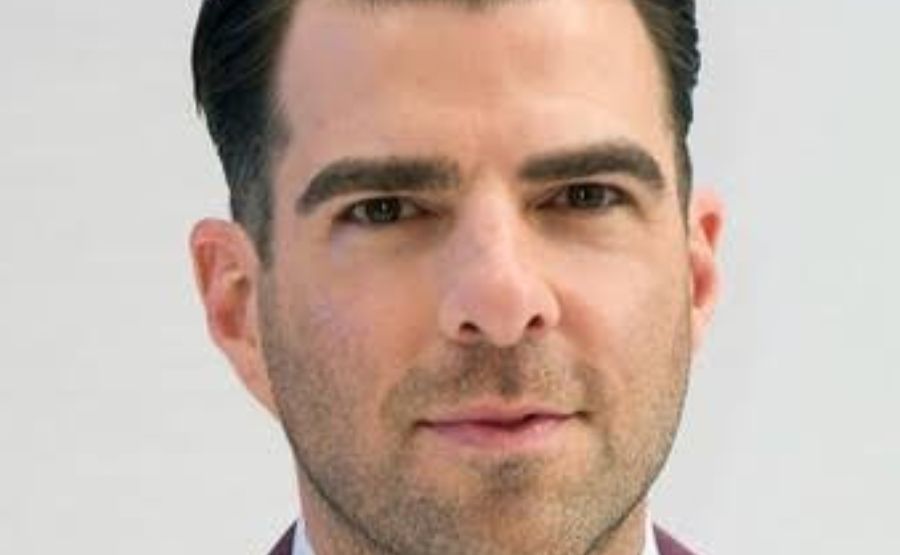
Zachary Quinto: Complexity as a Calling
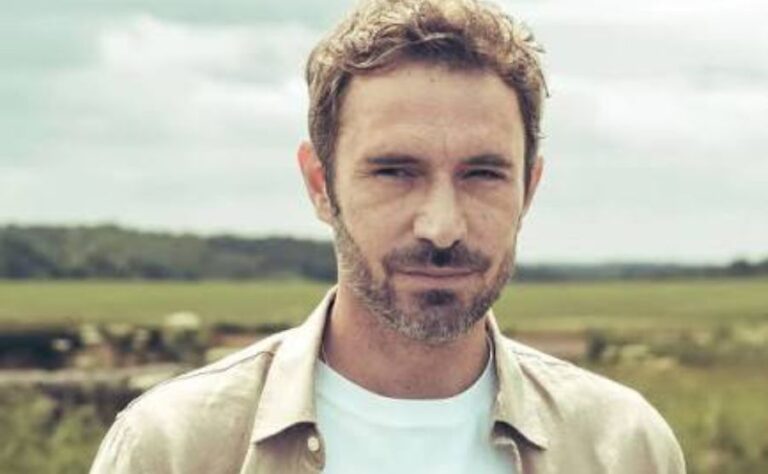
Zachary Quinto has built a career on the deliberate refusal to be simple — as a performer, as a public figure, and as a gay man who came out not for personal convenience but as an act of conscience — making him one of the more genuinely considered actors working in American film and television today.
Quick Facts
| Category | Details |
| Full name | Zachary John Quinto |
| Born | June 2, 1977, Pittsburgh, Pennsylvania |
| Nationality | American |
| Primary roles | Actor, producer |
| Breakthrough role | Sylar, Heroes (NBC, 2006–2010) |
| Signature film role | Spock, Star Trek (2009), Star Trek Into Darkness (2013), Star Trek Beyond (2016) |
| Notable film credits | Margin Call (2011), Snowden (2016), Hotel Artemis (2018) |
| Television credits | Heroes, American Horror Story: Asylum, NOS4A2, Brilliant Minds (2024–2026) |
| Stage | Angels in America (Signature Theatre, 2010–11); The Glass Menagerie (ART/Broadway, 2013–14); The Boys in the Band (2018); Best of Enemies (West End, 2022) |
| Awards | Primetime Emmy nomination (2013); Theatre World Award; Drama League Distinguished Performance Award nomination |
| Production company | Before the Door Pictures (co-founded 2008) |
| Key relationships | Leonard Nimoy, mentor; Miles McMillan, a longtime companion (c. 2013–2019) |
| Notable milestone | Publicly came out as gay in New York Magazine, October 2011 |
| Education | Carnegie Mellon University, School of Drama, BFA, 1999 |
Pittsburgh, Loss, and the Making of a Serious Actor
A barber’s son from a Pittsburgh suburb does not arrive at Carnegie Mellon without intention. Zachary John Quinto was born on June 2, 1977, to Joseph John Quinto, an Italian-American barber, and Margaret “Margo” McArdle, an Irish-American office worker who later worked at a magistrate’s office. He grew up in Green Tree, Pennsylvania, a quiet borough just outside Pittsburgh, attending Saints Simon and Jude Catholic School before moving on to Central Catholic High School.
When Quinto was seven years old, his father passed away from cancer. The loss was formative in ways he has returned to in interviews across decades. He has described how the early experience of losing someone he loved left him with a learned wariness about emotional intimacy — a pattern he identified only later, through therapy, of being drawn to people who were emotionally unavailable because they felt safer than genuine closeness.
Theatre offered a controlled space for feeling everything he was otherwise managing carefully. By the age of eleven, he was performing in local productions through the CLO Mini Stars in Pittsburgh, appearing in The Wizard of Oz and Cinderella. At Central Catholic High School, his performance as the Major General in Gilbert and Sullivan’s The Pirates of Penzance won him Pittsburgh’s Gene Kelly Award for Best Supporting Actor in 1995. He graduated that year and headed to Carnegie Mellon University’s School of Drama, earning a Bachelor of Fine Arts in 1999.
What surprised him, upon graduating, was his own next decision. Instead of settling in New York — the traditional destination for CMU drama graduates — he moved almost immediately to Los Angeles.
See also “Sharon Tate: The Life Before the Legend”
The Long Climb Through Television
Los Angeles in 1999 offered work, but thin work. Quinto accumulated guest appearances across a stretch of shows that would barely register on a serious résumé: Touched by an Angel, CSI, Charmed, Six Feet Under, Lizzie McGuire. The roles required presence but rarely depth.
The first meaningful opening came in 2003, when he landed a recurring role as computer analyst Adam Kaufman on Fox’s 24 during its third season. The part was substantial enough to demonstrate range within one of Fox’s most-watched properties. He worked steadily alongside it — including a Beckett production at the Odyssey Theatre in Los Angeles — keeping his craft sharp against the erosion that too much procedural television can cause.
In 2006, he played Sasan, a flamboyant Iranian-American character on Tori Spelling’s VH1 self-parody series So NoTORIous — a role notable mainly for demonstrating his willingness to take odd, uncategorizable work. The series was cancelled after one season, but later that same year everything changed.
Sylar, Heroes, and the Art of Playing a Villain
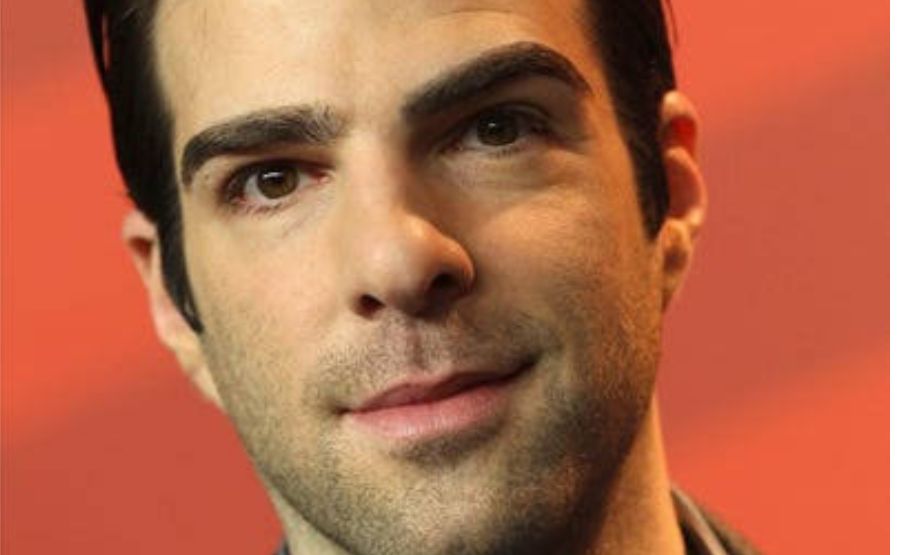
Heroes, the NBC science fiction drama that debuted in fall 2006, arrived at the right cultural moment — a post-9/11 America primed for prestige-adjacent television superhero storytelling. The show assembled a large ensemble, but its gravitational center was Sylar, a watchmaker-turned-serial killer who absorbed the supernatural abilities of others.
Quinto played him with unnerving stillness. Where a less disciplined actor might have amplified the menace outward, Quinto kept most of it internal — a humming, controlled danger that made Sylar more frightening than volume ever could. The role required him to locate something genuinely cold and display it without sentiment. He succeeded well enough that the show’s producers repeatedly contrived ways to keep Sylar alive across four seasons even when plot logic strained.
The irony Quinto has noted himself: his natural strengths as an actor — warmth, interiority, psychological precision — ran directly against the character’s shape. That friction, he suggested, was exactly what made the role productive. Playing against his own instincts forced him to find tools he would not otherwise have needed.
Heroes ran through 2010, its quality declining significantly in later seasons. What the show gave Quinto was irreplaceable regardless: name recognition, proven ability to anchor a major network production, and the visibility that made the Star Trek conversation possible.
Spock, Nimoy, and an Unexpected Inheritance
The announcement came at Comic-Con in July 2007. J.J. Abrams was rebooting the Star Trek film franchise, and Zachary Quinto would play a young Spock alongside Leonard Nimoy — who had originated the role in 1966. Devoted fans were skeptical, as they nearly always are with franchise recasting.
What Quinto knew, and later made public, was that Nimoy held casting approval over the role of young Spock and had sanctioned the choice. That fact transformed the assignment. It was not a studio decision imposed on a franchise; it was the original Spock extending a form of blessing that carried real weight.
The 2009 Star Trek earned widespread critical praise and commercial success, launching a trilogy that collectively grossed over $1.2 billion worldwide. Quinto’s Spock was younger, more emotionally volatile, and more openly conflicted than Nimoy’s iconic version — a reinterpretation made possible by the film’s alternate-timeline premise, which released the character from strict fidelity to an established personality arc.
The professional relationship became something neither man anticipated. Quinto and Nimoy developed a close friendship that endured long after production ended. Quinto has described it as among the most significant relationships of his adult life, carrying a paternal quality made more pointed by losing his own father at seven. When Nimoy died in February 2015 at the age of 83, Quinto flew back immediately from a shoot in Berlin to be with Nimoy’s family, spoke at the funeral, and wrote a tribute essay calling their friendship one of the greatest gifts the franchise had given him.
Margin Call and the Producer’s Ambition
In 2008, Quinto co-founded Before the Door Pictures, built on the conviction that he wanted creative agency over the stories he brought to audiences, not simply control over which roles he accepted.
The clearest demonstration arrived in 2011. Margin Call, written and directed by J.C. Chandor, dramatized a single night at a fictional investment bank on the eve of the 2008 financial crisis. Quinto starred as Peter Sullivan, a risk analyst who uncovers the exposure that will force catastrophic decisions, and he served as a producer. The cast — Jeremy Irons, Kevin Spacey, Paul Bettany, Demi Moore, Stanley Tucci, Penn Badgley — was formidable. The film premiered at the Sundance Film Festival in January 2011, showed at the Berlinale, grossed over $15 million globally against a small budget, and earned Chandor an Academy Award nomination for Best Original Screenplay.
Margin Call established Quinto as a producer with judgment, not merely a star who had attached his name. Before the Door subsequently executive-produced Robert Redford’s solo-performance film All Is Lost (2013) and the Starz documentary series The Chair (2014). The company’s output has been selective — modest in volume, serious in ambition.
Stage, American Horror Story, and the Pursuit of Difficulty
Concurrent with his screen career, Quinto sustained a theatre practice that most actors at his level of mainstream visibility do not maintain.
From October 2010 through February 2011, he played Louis Ironson in an off-Broadway revival of Tony Kushner’s Angels in America at the Signature Theatre in New York City. The role — a gay man who abandons his AIDS-stricken partner out of his own fear and confusion — ranks among the most demanding in the American dramatic canon. Quinto later called it simultaneously the most challenging and most rewarding work of his career. He won the Theatre World Award for the performance. The role also pushed him toward a reckoning with his own identity that he had been deferring.
He then played Tom Wingfield in Tennessee Williams’ The Glass Menagerie — first at the American Repertory Theatre in Cambridge, Massachusetts, in 2013, then on Broadway in 2014 — earning a Drama League Distinguished Performance Award nomination. In 2018, he joined the Broadway revival of Mart Crowley’s The Boys in the Band, a foundational work of gay American drama. In 2022, he made his West End debut in London in James Graham’s Best of Enemies, playing the writer and public intellectual Gore Vidal opposite a dramatization of the famous televised debates between Vidal and William F. Buckley Jr.
On television, his second major creative chapter came through Ryan Murphy’s American Horror Story. He appeared in the first season in 2011, then returned in a lead role for the second season, Asylum (2012–13), as Dr. Oliver Thredson — a psychiatrist concealing a murderous double life. The performance earned a Primetime Emmy nomination for Outstanding Supporting Actor.
Personal Life, Grief, and the Decision to Come Out
Quinto’s private life has intersected with his public career at specific, meaningful junctures. He has addressed his father’s death with unusual candor for a public figure, tracing its long residue through the shape of his early relationships. In therapy, he identified a recurring tendency to seek out emotionally unavailable partners — which he came to understand as a form of self-protection rooted in equating closeness with loss.
He came out publicly in October 2011, in an interview with New York Magazine. The timing was not arbitrary. He had spent the preceding eight months inhabiting a gay man’s experience of the AIDS crisis onstage in Angels in America. That autumn, he learned that Jamey Rodemeyer — a fourteen-year-old gay teenager from upstate New York who had recorded a video for the It Gets Better campaign — had died by suicide after sustained bullying. Quinto had contributed his own It Gets Better video the previous year.
The convergence of those two facts made his private stance untenable. He wrote publicly that Rodemeyer’s death had clarified what he had already sensed: that living as a gay man without acknowledging it was not a sufficient contribution to the work equality still required. He stated his intention to live honestly and with integrity. The announcement landed without industry scandal — which was itself evidence of how much the cultural climate had shifted since a decade earlier, when such a disclosure would have carried substantial professional risk.
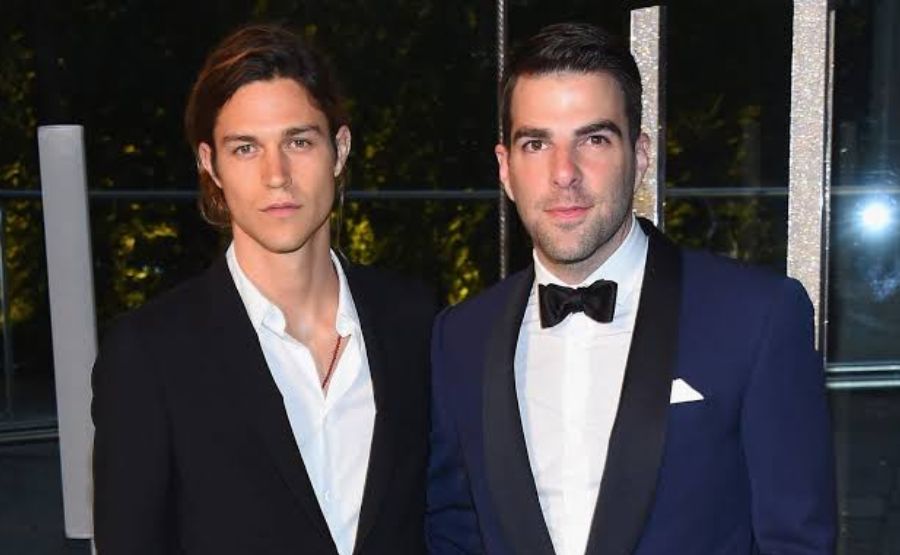
He was in a long-term relationship with artist Miles McMillan from approximately 2013 through 2019. Since then he has maintained his characteristic privacy on personal matters.
He has been a consistent public supporter of The Trevor Project, Global Green, the Alzheimer’s Association, and Autism Speaks. In 2017, he publicly criticized Kevin Spacey’s decision to come out as gay in the same statement addressing sexual misconduct allegations against him — calling the combination a deliberate attempt to deflect from a serious accusation rather than an act of genuine pride, and drawing a clear line between visibility and moral courage.
Brilliant Minds and the Ongoing Work
In 2024, Quinto launched Brilliant Minds, a medical drama on NBC in which he played a neurologist with an unconventional diagnostic approach and produced the series simultaneously. The show ran through 2026. His recent stage engagement — particularly the Gore Vidal role in Best of Enemies — continued his practice of taking on historically and politically substantial material.
The breadth of his working life remains unusual. Few actors of comparable screen recognition shift as fluidly between franchise blockbusters, prestige television, independent film, and classical theatre without allowing any one identity to crowd out the others.
Legacy, Influence, and Relevance Today
Quinto’s cultural footprint is harder to measure than his credits suggest, which is in some ways the point. He has not become a brand in the way comparable actors sometimes do. He has kept his most visible franchise role from consuming his entire professional identity, and built a production company on backing material that commercial development instincts typically reject.
His coming out in 2011 carried specific weight. He was among the most recognizable faces in American science fiction — Spock, one of the most beloved characters in popular culture — and his disclosure came during an accelerating national debate over marriage equality, when out gay actors at his level of mainstream visibility were rare. That visibility functions as a form of cultural infrastructure, most acutely for younger people working out their own identities.
The friendship with Leonard Nimoy added an unexpected dimension. Two men playing the same character across five decades — the elder transmitting something unmeasurable to the younger, the younger grieving the elder as a surrogate father — is a story about inheritance and continuity that exceeds franchise logistics.
His production work has demonstrated consistent good taste. Margin Call stands as one of the sharpest creative responses to the 2008 financial crisis in any medium, and Quinto’s contribution as producer belongs alongside his performance in the critical accounting.
Final Words
Zachary Quinto presents a peculiar case in contemporary American acting. He is famous for two roles — one a serial killer, one a half-Vulcan scientist — that reflect almost nothing of what his most substantive work actually looks like. His most searching performances have appeared on stage, before audiences that could fill only a fraction of the homes that watch him on network television.
He is also a public figure who has consistently tried to make his visibility mean something beyond his own profile — from the It Gets Better video to the pointed response to Kevin Spacey’s misuse of his own coming out. Those choices require the kind of moral seriousness that Hollywood culture rarely demands and sometimes actively discourages.
What the full arc of his career reveals is a performer who took his training seriously, built institutional structures — a production company, a theatre practice, a coherent value system — designed to protect his ability to do serious work inside an industry that does not automatically reward seriousness. The projects have not all been successes. The Star Trek sequel trilogy ran out of creative momentum before it ran out of box office. Not every Before the Door project has found its audience.
But the underlying intention has been legible and consistent throughout. In a culture that prizes reinvention as spectacle, Quinto’s career represents something quieter and more durable: the ongoing effort to remain the same person across many different rooms.
FAQs
1. Where was Zachary Quinto born and raised?
He was born on June 2, 1977, in Pittsburgh, Pennsylvania, and grew up in Green Tree, a suburb of the city.
2. What happened to Quinto’s father?
His father, Joseph John Quinto, a barber, died of cancer when Zachary was seven. The loss shaped his emotional development in ways he has discussed publicly over many years.
3. Where did Quinto train as an actor?
He earned a Bachelor of Fine Arts from Carnegie Mellon University’s School of Drama in 1999.
4. What was Quinto’s first major television role?
He had a recurring role as computer analyst Adam Kaufman on Fox’s 24 in 2003, but his star-making role was Sylar in NBC’s Heroes, beginning in 2006.
5. How did Quinto land the role of Spock in Star Trek?
He was cast by director J.J. Abrams. Critically, Leonard Nimoy held approval over who would play young Spock for the 2009 reboot, and Nimoy approved the casting.
6. How many Star Trek films featured Quinto?
The three are Star Trek Beyond (2016), Star Trek Into Darkness (2013), and Star Trek (2009).
7. What is Before the Door Pictures?
A production company Quinto co-founded in 2008. Its best-known project is Margin Call (2011), which received an Academy Award nomination for Best Original Screenplay.
8. When did Quinto publicly come out as gay?
In October 2011, in an interview with New York Magazine, prompted significantly by the death of fourteen-year-old Jamey Rodemeyer, a gay teenager who died by suicide following anti-gay bullying.
9. What is Quinto’s most acclaimed stage performance?
His portrayal of Louis Ironson in the off-Broadway revival of Tony Kushner’s Angels in America at New York’s Signature Theatre (2010–11), for which he won the Theatre World Award.
10. Did Quinto receive Emmy recognition?
He received a Primetime Emmy Award nomination for Outstanding Supporting Actor for his role as Dr. Oliver Thredson in American Horror Story: Asylum (2012–13).
11. What was his personal relationship with Leonard Nimoy?
What began as professional mentorship developed into a close personal friendship that Quinto has described as one of the most significant of his life, carrying a paternal quality tied to his own early loss. He spoke at Nimoy’s funeral in 2015.
12. What is Brilliant Minds?
An NBC medical drama, produced by and starring Quinto as a neurologist, which ran from 2024 to 2026.
13. Has Quinto performed on the West End?
Yes. In 2022, he made his West End debut in James Graham’s Best of Enemies, playing Gore Vidal opposite a dramatization of the televised debates with William F. Buckley Jr.
14. What organizations has Quinto publicly supported?
The Trevor Project, the It Gets Better Project, Global Green, the Alzheimer’s Association, and Autism Speaks, among others.
15. How does Quinto’s Spock differ from Leonard Nimoy’s?
Quinto’s version operates in an alternate timeline created by the 2009 film’s storyline. This allowed the character to be younger, more emotionally expressive, and romantically involved with Nyota Uhura — departures from the original series’ Spock that the alternate-universe premise made dramatically coherent.
Every story matters—discover them all with Daily Narrative.