Lena Waithe Net Worth: The Architect of a New Black Hollywood
Lena Waithe matters to modern American culture because she proved, through the sheer accumulation of work and will, that Black queer women could build an entertainment empire from the inside out — not by waiting to be invited in, but by becoming the person doing the inviting.
Quick Facts
| Detail | Information |
| Full Name | Lena Diane Waithe |
| Born | May 17, 1984, Chicago, Illinois |
| Nationality | American |
| Occupations | Screenwriter, television creator, producer, actress, entrepreneur |
| Education | Columbia College Chicago, B.A. in Cinema and Television Arts (2006) |
| Major Awards | Primetime Emmy Award for Outstanding Writing for a Comedy Series (2017, Master of None); BET Trailblazer Award (2020); GLAAD Media Award; TIME 100 Most Influential People (2018) |
| Key Works | Master of None (2015–2021, Netflix); The Chi (2018–present, Showtime); Queen & Slim (2019, film); Twenties (2020–2021, BET); Them (2021–present, Amazon Prime) |
| Production Company | Hillman Grad Productions (founded 2017) |
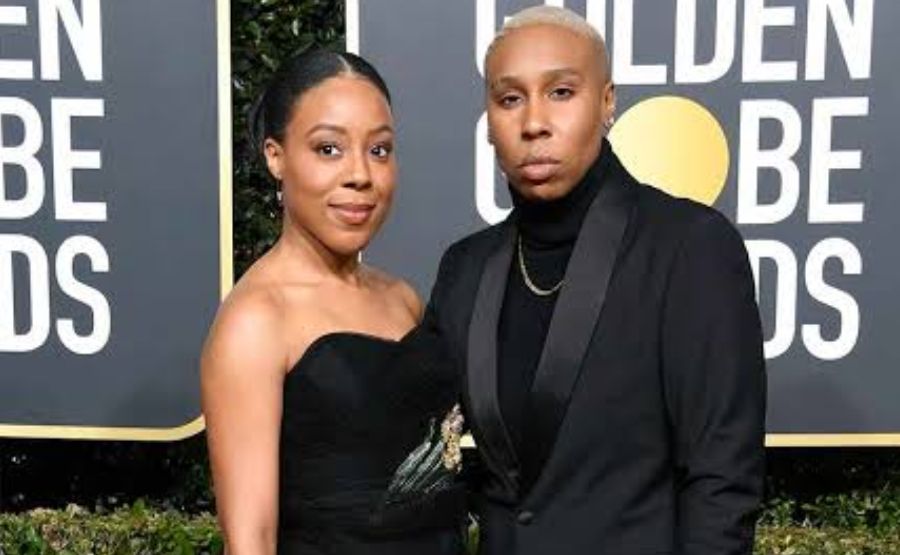
| Marriage | Alana Mayo (married 2019, separated January 2020, divorced 2020) |
| Notable First | The first female African American recipient of the Primetime Emmy for Outstanding Writing in a Comedy Series |
| Net Worth | Estimated $13–15 million (2026, multiple credible sources) |
| Father | Lawrence David Waithe (died when Lena was approximately 14–15 years old) |
| Ancestry | Paternal great-grandfather Winston Waithe emigrated from Barbados to Boston in 1921; family descended from enslaved people on sugar plantations in Christ Church, Barbados |
| Residence | Studio City, Los Angeles (purchased property at approximately $6.4 million) |
South Side Origins: Where the Story Begins
Chicago’s South Side has produced artists who carry the neighborhood’s particular weight in everything they make. Lena Waithe is one of them.
Born on May 17, 1984, she grew up in a world structured by her mother, her grandmother, and the community surrounding them after her parents divorced when she was three years old. Her father, Lawrence David Waithe, died when she was approximately fourteen or fifteen — a loss significant enough to reshape her understanding of time and family, though she has spoken about it sparingly in public. The women in her household became her primary architecture.
She attended Turner-Drew, a predominantly African-American elementary magnet school on the South Side. At twelve, the family moved to Evanston, the lakefront suburb immediately north of Chicago, where she attended Chute Middle School and later Evanston Township High School. The geography matters: she moved from a Black neighborhood into a more integrated, academically competitive environment at exactly the age when identity becomes most volatile.
Waithe has described knowing from the age of seven that she wanted to write for television. That is a peculiarly specific ambition for a seven-year-old, and it tells you something important. She was not dreaming of stardom. She was dreaming of authorship — of the person behind the characters rather than the characters themselves.
Her great-grandfather Winston Waithe had emigrated from Barbados to Boston in 1921, carrying with him the inherited weight of a family descended from people enslaved on sugar plantations in Christ Church, Barbados. That lineage of displacement and resilience runs beneath the surface of everything Waithe has ever made.
See also “Joshua Snyder Actor : The Art of Reinvention From the Television Screen to the Kitchen Counter“
Columbia College and the Leap West
Columbia College Chicago is not a prestige institution in the conventional sense. It does not trade in legacy admissions or East Coast pedigree. What it offers is something more practical: access to industry professionals, a city with creative density, and faculty who take working-class artistic ambition seriously.
In 2006, Waithe graduated from the Cinema and Television Arts program. She has specifically credited faculty playwright Michael Fry for teaching and encouragement that shaped her development as a writer. That kind of personal mentorship — a professor who saw what a student could become — is rarely acknowledged by those who later succeed. Waithe has acknowledged it repeatedly.
In her senior year, she completed Columbia College’s Semester in LA program, a five-week immersive experience with entertainment industry professionals. At the end of it, she did not come home. She stayed.
The transition to Los Angeles was financed, in part, through a lateral transfer of her Blockbuster Video job. More effectively than any resume, that detail—arriving in Hollywood through a shifted retail job while carrying spec scripts—tells the tale of her early years.
The Apprenticeship: Grind Before Glory
The years between 2006 and 2015 are the part of Waithe’s story that aspiring writers most need to understand. They were long. They were unglamorous. They worked.
She secured her first significant industry position as an assistant to Mara Brock Akil, the executive producer of the UPN/CW sitcom Girlfriends. She worked on productions including The Real World and Bones. She worked on the set of The Secret Life of Bees and on the 2009 biopic Notorious. She later joined the writing staff of the Fox procedural Bones and wrote for the Nickelodeon sitcom How to Rock in 2012.
These were not glamorous gigs. They were the repetitive, technical labor through which any writer learns the architecture of storytelling at scale — how shows are built episode by episode, how writers’ rooms function, how the gap between a spec script and a produced episode is wider than most people imagine.
She also did this: in 2011, she wrote the viral YouTube video Shit Black Girls Say.She wrote the online series Hello Cupid in 2013. She wrote and directed the short film Save Me, which screened at independent film festivals. She produced the satirical comedy film Dear White People in 2014. In that same year, Variety named her one of its “10 Comedians to Watch.”
This is the record of someone who did not wait for permission. She built her visibility through every available channel simultaneously.
Master of None and the Emmy That Changed Everything
The episode of television that made Lena Waithe a cultural figure is twenty-nine minutes long. It aired on November 6, 2015, as the eighth episode of the second season of Master of None, the Netflix comedy co-created by Aziz Ansari and Lena Yang. The episode is called “Thanksgiving.”
Waithe co-wrote “Thanksgiving” with Ansari. It is structured around a series of Thanksgiving dinners spanning more than two decades, tracing the character of Denise — played by Waithe herself — from childhood through her adult coming-out as a lesbian to her mother. The episode draws directly from Waithe’s own life. It is autobiographical storytelling at the level of literature.
At the 2017 Primetime Emmy Awards, held on September 17, Waithe and Ansari won the award for Outstanding Writing for a Comedy Series. Waithe became the first African-American woman ever to win in that category. During her acceptance speech, she addressed her LGBTQIA family directly: “The things that make us different — those are our superpowers.” She concluded by thanking the audience “for embracing a little Indian boy from South Carolina and a little queer Black girl from the South Side of Chicago.”
The speech went everywhere. It was quoted, clipped, shared, and dissected across every platform simultaneously. What it did, beyond the personal moment of recognition, was name a constituency that television had underserved for decades and declare, from one of entertainment’s most visible stages, that they deserved to be seen.
Out Magazine named Waithe its Out100 Artist of the Year on November 8, 2017. TIME named her one of the 100 most influential people of 2018. The awards and recognitions accumulated rapidly, as they do when an industry realizes it has been waiting for someone without knowing it.
Building Hillman Grad: The Business of Belonging
The name Hillman Grad comes from A Different World, the NBC sitcom that ran from 1987 to 1993 as a spinoff of The Cosby Show. Set at the fictional Hillman College — a historically Black university — the show depicted Black professional aspiration with a specificity and warmth that was, at the time, largely absent from American television.
Waithe has said, in a 2024 interview with Variety, that when it came time to name her production company, “Hillman Grad just felt right. It said a lot about who I was and how A Different World inspired me as a child, a writer, and an individual.”
She founded Hillman Grad Productions in 2017, the same year as her Emmy win. The company’s stated mission is to develop and produce content that amplifies underrepresented voices — specifically Black, queer, and marginalized communities — across film and television. It goes beyond just branding. Hillman Grad has produced The Chi, Twenties, Boomerang, Them, the documentary Kokomo City, and the film A Thousand and One, among others.
The company’s financial model is built on ownership. Waithe has spoken about the distinction between being paid for a project and owning a piece of it — the difference between a single paycheck and a recurring revenue stream. That philosophy, applied consistently across a slate of productions spanning Showtime, BET, Amazon, and Netflix, has been the primary engine of her estimated net worth of $13–15 million as of 2026.
She also holds a reported $6.4 million property in Studio City, Los Angeles — a 6,587 square-foot home with six bedrooms, an infinity pool, spa, and home cinema. Endorsement relationships with brands including Nike have supplemented her production income. Real estate investment adds another diversified stream.
The financial architecture reflects a deliberate strategy: Waithe has sought to control the means of production, not merely participate in them.
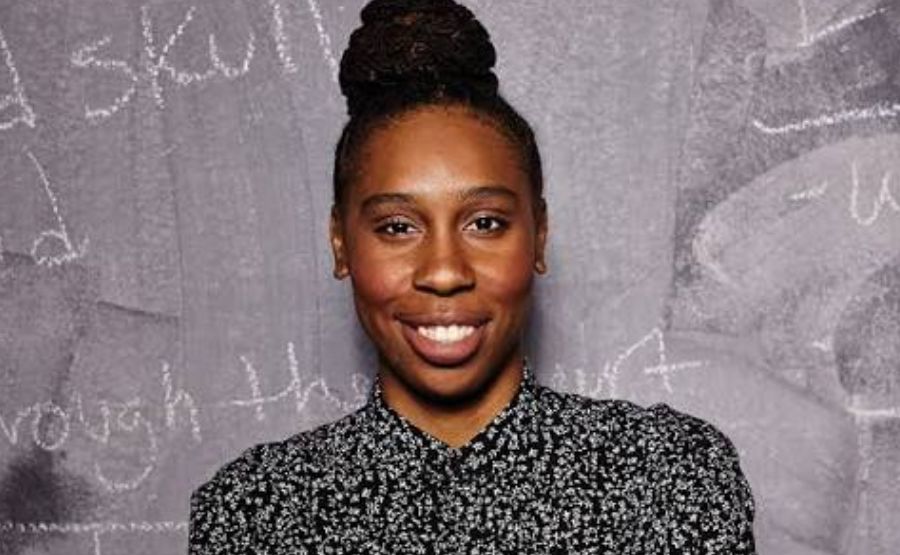
The Chi: Homecoming as Political Act
On January 7, 2018, The Chi made its Showtime debut. Set on Chicago’s South Side, it follows the interlocking lives of several young people navigating love, ambition, violence, and community in the neighborhood where Waithe grew up. As of 2026, the show has run for multiple seasons, making it one of the longest-running drama series created by a Black woman in American television history.
Waithe has described her intent with the show in a New York Times interview: “I wanted to humanize them and show that their lives are valid…but I don’t paint us in a perfect light at all. My hope is that I can show us in an honest way.”
That honesty was the show’s primary critical distinction from its launch. Where previous fictional representations of Chicago’s South Side had often reduced residents to archetypes of criminality or despair, The Chi insisted on complexity — aspiring chefs, grieving mothers, teenagers with interior lives as rich and conflicted as any on prestige television.
The show also became the site of Waithe’s most significant professional controversy.
The Jason Mitchell Crisis: A Test of Stated Values
In the spring of 2019, The Chi star Jason Mitchell was fired from the upcoming Netflix film Desperados following misconduct allegations. In rapid succession, he was dropped by his representation and terminated from The Chi. What followed placed Waithe under a scrutiny she had not anticipated.
Second-season showrunner Ayanna Floyd Davis publicly stated that Waithe had known about harassment allegations against Mitchell from The Chi‘s first season — that co-star Tiffany Boone had complained about his conduct and had sought to leave the show, while Mitchell remained slated for a third season. Floyd Davis stated directly to The Hollywood Reporter: “Ultimately, everyone was well aware of Jason’s behavior and his multiple HR cases, including Lena.”
Waithe appeared on The Breakfast Club radio program on May 30, 2019, to address the allegations. She acknowledged knowing about the complaints after the first season wrapped and said she had believed the situation was being handled through HR channels. She said she had hired Floyd Davis specifically because she thought a Black woman showrunner would create a safer environment.
She then said something that reverberated badly: “I don’t regret making a Black woman a showrunner. I do regret trusting her to handle it all by herself.”
Critics — including writers at Slate and The Root — identified the statement as displacing responsibility from Waithe onto Floyd Davis, who had herself become a target of Mitchell’s conduct. Waithe, who had been publicly vocal about Time’s Up and on-set safety, had described the precise scenario in a 2018 Hollywood Reporter interview: if anyone misbehaved on set, she would call Showtime and have them removed. The gap between that declaration and the actual timeline of Mitchell’s tenure on the show was significant.
Waithe eventually offered a more direct acknowledgment: “My biggest regret is that I wish I would have said forget that and not trusted anybody to do my job. I wish I would have reached out to Tiffany on my own.” She added: “What I want to do is own that I wish I would’ve handled the situation differently, and I wish I would’ve done more.”
The episode did not end her career. The Chi continued and has thrived. But it provided a sharp lesson in the distance between advocacy as public identity and accountability as daily practice — a lesson that the most honest accounts of her career should acknowledge.
Black Storytelling’s Weight and Queen & Slim
In 2019, Waithe wrote the screenplay for Queen & Slim, directed by Melina Matsoukas and starring Jodie Turner-Smith and Daniel Kaluuya. The film follows a Black couple who kill a police officer in self-defense during a traffic stop and go on the run, becoming involuntary symbols in a nation that cannot stop watching Black pain.
The film won the BET Award for Best Movie in 2020. It was critically recognized as a significant contribution to the tradition of American fugitive narrative — Bonnie and Clyde refracted through the specific terror of being Black and pursued in contemporary America.
It also generated a substantive critical debate. Some critics argued that the film aestheticized Black suffering — that it made the spectacle of Black death beautiful in ways that served entertainment more than justice. Waithe, as the film’s writer, was at the center of that conversation.
The criticism pointed to a genuine tension in her work: the effort to tell Black stories authentically sometimes collides with the commercial machinery of prestige storytelling, which has its own appetite for beautiful tragedy. Waithe has engaged with that tension thoughtfully, without resolving it entirely — which is probably the honest position.
Personal Life: Love, Loss, and the Work of Being Seen
Lena Waithe came out publicly through her work before she did through her words. The “Thanksgiving” episode of Master of None, broadcast in 2015, dramatized her coming-out to her mother before most of the world knew she was queer. That reversal — story before statement — is consistent with who she is: a writer who processes life through narrative.
She became engaged to Alana Mayo on Thanksgiving Day 2017, the same year as her Emmy win. Their engagement carried its own symbolism: the day that her most famous episode depicted, the occasion that had given shape to her coming-out story, became the occasion of her proposal.
They married in 2019 at San Francisco City Hall, in an unannounced, spontaneous ceremony in front of a bust of Harvey Milk — the pioneering gay rights activist murdered in 1978. Waithe described the ceremony to The Ellen DeGeneres Show: “She was just driving and she saw the courthouse and she said, ‘We should get married there.’ And I said, ‘Cool, I’m down.'”
Two months after publicly announcing the marriage, in January 2020, they announced their separation. Alana Mayo filed for divorce in Los Angeles Superior Court in November 2020. Rumors of infidelity circulated widely, though neither Waithe nor Mayo confirmed or denied them. Their joint statement was measured: “We have nothing but support for one another and ask that you respect our privacy during this time.”
The brevity of the marriage — and the speed of its public collapse — generated considerable commentary. Mayo went on to serve as president of Orion Pictures. Waithe continued building Hillman Grad.
Reports in 2024 confirmed that Waithe was in a relationship with British actress and singer Cynthia Erivo, one of the most decorated performers of her generation. The relationship had been rumored since early 2020, when Bossip first reported it. Neither Waithe nor Erivo made formal statements, and the confirmed relationship does not appear to have generated significant professional disruption for either party.
Waithe has no children. She has spoken about mentorship as a substitute for the biological transmission of values — building a generation of Black, queer, and marginalized storytellers through Hillman Grad’s development programs rather than through parenting.
Legacy and Lasting Influence
The 2017 Emmy victory served as a gateway. Everything Waithe has built since then has been the hallway behind it.
She expanded the cultural definition of who gets to tell stories about Black American life by being, simultaneously, the teller and the subject. Her work insists that Blackness and queerness are not competing identities but coexisting dimensions of the same person — and that television is large enough to hold both, if the people making it are willing to fight for the space.
Hillman Grad Productions has become a genuine institutional force, not merely a vanity company. Its focus on helping filmmakers get their work to the audiences it was made for — rather than the general audience Hollywood defaults toward — addresses a structural failure in the distribution ecosystem. “The industry doesn’t really know how to market to them,” Waithe stated to Variety in 2024. They don’t know how to get the work to the people that actually need to see it. And oftentimes, that’s something that we really work hard at.”
She has served as co-chair of the Committee of Black Writers and co-founded Black Women Who Brunch, both networking initiatives aimed at creating professional infrastructure for people the industry has historically kept outside the room. These are less glamorous than an Emmy. They may be more lasting.
Her net worth — estimated between $13 million and $15 million in 2026, with projections of continued growth — reflects something more than individual financial success. It represents the economic viability of building entertainment from the margins inward: owning the work, retaining the revenue, expanding the slate, repeating.
Onward (2020) made her the voice of Officer Specter, the first openly LGBTQ+ character in a Disney/Pixar animated film. That the milestone occurred not through live-action drama but through animated voice work is a reminder that representation accumulates in unexpected places.
Final Words
Lena Waithe arrived in Los Angeles in 2006 via a Blockbuster Video transfer and a bus ticket funded by ambition. She left Chicago carrying a degree from a non-prestige institution, a commitment to stories about people television had ignored, and the particular determination of someone who grew up without a father and learned very early that the world does not organize itself around your needs.
Eleven years later, she stood at the Emmy podium and made history.
That arc — from South Side childhood to industry-altering recognition — is the architecture of her public narrative, and it is real. But it omits the friction: the years of apprenticeship, the controversy that exposed the gap between her advocacy and her institutional responses, the marriage that lasted barely a season, the ongoing tension in her work between authentic storytelling and the commercial demands of prestige entertainment.
Waithe is most interesting not at the moments of triumph but at the moments of contradiction. A creator who champions on-set safety who struggled to act on misconduct allegations in her own production. A storyteller who has built an empire on vulnerability who has kept the interior of her personal life largely guarded. A writer who turned her coming-out into Emmy-winning television and her engagement into a symbolic moment at Harvey Milk’s feet — and then, quietly, in two months, separated from the woman she married there.
These are not condemnations. They are the normal complexity of a public life lived at considerable speed. Waithe is forty-two years old. She has already done more than most industry figures accomplish in a full career. The work she has created — The Chi, Twenties, Queen & Slim, “Thanksgiving” — will outlast the controversies that surrounded their making.
The South Side gave her the material. The industry gave her the platform. What she has done with both is, by any honest measure, considerable.
FAQs
1. What is Lena Waithe’s net worth in 2026?
Multiple credible sources estimate her net worth at between $13 million and $15 million, derived from writing, producing, acting, her production company Hillman Grad Productions, endorsement deals, and real estate. Some projections cite figures as high as $20–25 million, though these remain unverified. The most consistent credible estimate is $13–15 million.
2. What is Lena Waithe’s most significant achievement?
At the 2017 Primetime Emmy Awards, she became the first African-American woman to win the Emmy for Outstanding Writing for a Comedy Series, for co-writing the “Thanksgiving” episode of Master of None with Aziz Ansari. Based on her experience coming out as a lesbian, the episode was loosely autobiographical.
3. What is Hillman Grad Productions?
Hillman Grad Productions is the production company Waithe founded in 2017, named after the fictional HBCU from the NBC sitcom A Different World. Its mission is to develop and produce content amplifying Black, queer, and marginalized voices. A Thousand and One, Kokomo City, Boomerang, The Chi, Twenties, and Them are among the projects.
4. Who is Lena Waithe’s family?
She was born in Chicago to parents who divorced when she was three. Her father, Lawrence David Waithe, died when she was approximately fourteen or fifteen. She was raised by her mother and grandmother on the South Side. In 1921, Winston Waithe, her paternal great-grandfather, moved to Boston from Barbados.
5. What is The Chi?
The Chi is a drama series Waithe created for Showtime, premiering January 7, 2018, set on Chicago’s South Side. It depicts the interconnected lives of community members navigating love, violence, ambition, and family. It is still one of the longest-running shows produced by a Black woman on Showtime as of 2026.
6. What happened in the Jason Mitchell controversy?
Jason Mitchell, a star of The Chi, was fired in 2019 following sexual harassment allegations from co-star Tiffany Boone and second-season showrunner Ayanna Floyd Davis. Floyd Davis stated publicly that Waithe and the entire production had known about Mitchell’s conduct. Waithe acknowledged she had known of allegations since after Season 1, expressed regret about not intervening more directly, and ultimately admitted she should have handled the situation differently.
7. What was Lena Waithe and Alana Mayo’s marriage?
Waithe and Mayo, a film executive who later became president of Orion Pictures, dated for three years and became engaged on Thanksgiving Day 2017. They married in a spontaneous courthouse ceremony in San Francisco in 2019, in front of a bust of Harvey Milk. They announced their separation in January 2020, just two months after publicly revealing the marriage. Mayo filed for divorce in November 2020.
8. What is Queen & Slim?
Queen & Slim (2019) is a film Waithe wrote and produced, directed by Melina Matsoukas and starring Jodie Turner-Smith and Daniel Kaluuya. It follows a Black couple who kill a police officer in self-defense and go on the run. It won the BET Award for Best Movie in 2020 and generated significant critical discussion about the ethics of aestheticizing Black suffering.
9. Where did Lena Waithe go to school?
She attended Turner-Drew elementary school in Chicago, Chute Middle School and Evanston Township High School in Evanston, Illinois, and earned a degree in Cinema and Television Arts from Columbia College Chicago in 2006.
10. What is Lena Waithe’s relationship with Cynthia Erivo?
Reports in 2024 confirmed a relationship between Waithe and British actress and singer Cynthia Erivo. The relationship had been rumored since early 2020. Neither party has made formal public statements about its current status.
11. What property does Lena Waithe own?
She purchased a property in Studio City, Los Angeles, reportedly valued at approximately $6.4 million. The home is 6,587 square feet with six bedrooms, eight bathrooms, an infinity pool, spa, and home cinema.
12. What did Waithe mean when she named her company Hillman Grad?
Hillman is the fictional HBCU (Historically Black College or University) in the NBC sitcom A Different World (1987–1993). Waithe has said the show was profoundly inspirational to her as a child and shaped her vision of Black intellectual and professional possibility. The name honors that lineage.
13. What is Lena Waithe’s connection to the LGBTQ+ community?
Throughout her career, Waithe has been an outspoken supporter of LGBTQ+ rights and identifies as gay.She has received a GLAAD Media Award, and in 2020 was the voice of Officer Specter in Pixar’s Onward — the first openly LGBTQ+ character in a Disney/Pixar animated film. Her Emmy win in 2017 was also the first by an out Black woman in that category.
14. What early industry jobs did Lena Waithe have?
After arriving in Los Angeles in 2006 via a Blockbuster Video job transfer, she secured a position as an assistant to Mara Brock Akil, executive producer of Girlfriends. She later worked on The Real World, Bones, How to Rock, Dear White People, and other projects before her breakthrough on Master of None.
15. What is Lena Waithe’s annual income?
Specific annual salary figures are not publicly documented. Her income derives from multiple streams: writing and producing fees, back-end production profits through Hillman Grad, endorsement agreements (including Nike), real estate, and acting work across television and film. Projections suggest continued growth from her current estimated net worth of $13–15 million.
Every story matters—discover them all with Daily Narrative.