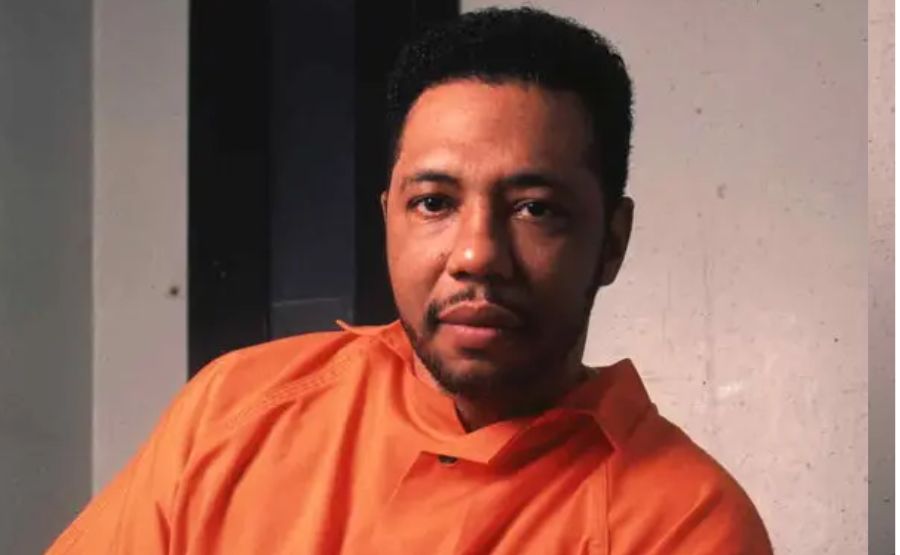
Larry Hoover: King, Kingpin, and the Question That Won’t Close
Larry Hoover’s life force-feeds America a question it has never comfortably answered: whether a man shaped entirely by neglect, poverty, and structural abandonment can be held fully accountable for the destruction he caused — and whether the system that imprisoned him has any serious interest in the answer.
Quick Facts
| Detail | Information |
| Full Name | Larry Hoover Sr. |
| Born | November 30, 1950, Jackson, Mississippi |
| Current Age | 74 (as of 2025) |
| Nationality | American |
| Known As | “King Larry,” “Prince Larry,” the Board Chairman |
| Primary Role | Founder, Gangster Disciples / Black Gangster Disciple Nation |
| Convicted | 1973 (murder, Illinois state); 1997 (40 federal counts including conspiracy, extortion, drug trafficking) |
| Sentences | 150–200 years (state); six federal life terms (commuted May 28, 2025) |
| Prison | ADX Florence, Colorado (federal, until 2025); transferred to Illinois state prison |
| Partner/Wife | Winndye Jenkins (together since 1968; legally married January 9, 2020) |
| Children | Larry “Lil Larry” Bernard (b. 1970); Larry Hoover Jr.; Tyree Hoover (b. 1995) |
| Key Relationship | David Barksdale (co-founder, BGDN) |
| Notable Milestone | Federal sentence commuted by President Donald Trump, May 28, 2025 |
| Gang Estimated Peak | ~30,000 members across 35+ states; ~$100 million annual revenue (per DOJ, 1995) |
| Published Work | The Blueprint of a New Concept: From Gangster Disciple to Growth & Development (1996) |
The World That Made Him
The Mississippi Delta in 1950 was no place of opportunity for a Black family. On November 30 of that year, Larry Hoover was born in Jackson to Floyd Hopkins and Obell Cooper, a mechanic and a household and service work she could find. He was their eldest child.
When Hoover was four, his mother packed up the children and followed the Great Migration north to Chicago. His father stayed behind. The couple last spoke in 1966. For most of his formative years, Hoover was raised by a single mother who cleaned laundromats and worked in restaurant kitchens, relying at times on welfare to bridge the gap.
The family settled in Englewood, a neighborhood on Chicago’s South Side that was, by the mid-1950s, already absorbing the consequences of white flight, redlining, and industrial decline. Englewood was not simply poor — it was systematically stripped. Schools were underfunded. Fathers were missing. Employers had left. What remained was density, desperation, and street life.
Young Hoover found his footing early through small entrepreneurial impulses. He sold Jet magazine on elevated train platforms. He cleaned furnaces. He hauled groceries for neighbors. These were not insignificant details — they reveal an acquisitive, energetic intelligence that, under different circumstances, might have expressed itself in a boardroom rather than a gang hierarchy.
See also “Zach Justice Net Worth: From Georgia Dropout to Digital Media Architect“
The Making of King Larry
By the time he was 12 or 13, Hoover had dropped out of school and joined a loose confederation of neighborhood teenagers who called themselves the Supreme Gangsters. The gang had roughly 30 members. They skipped class, rode the El train together, and committed petty crimes — theft, muggings, the ordinary mischief of unsupervised adolescence with no economic floor.
What distinguished Hoover was not the criminal impulse — that was everywhere — but his organizational talent. He absorbed leadership instinctively. When the founding leader of the Supreme Gangsters, Alex Rain, was murdered in 1964, Hoover stepped into command with a natural authority that older members recognized immediately.
At 15, he had grown the gang to more than 1,000 members, renaming the collective the Gangster Nation. In January 1969, he briefly merged this group with the Black P Stones to form the Gangster Stones, then dissolved that alliance within months. What mattered to Hoover was not the alliance itself but the leverage it generated.
The defining moment came in June 1969, when Hoover approached David Barksdale, the charismatic leader of the Black Disciples. Both men were rivals. Both recognized that the violence consuming Chicago’s South Side was leaving both gangs weakened. They merged their organizations into the Black Gangster Disciple Nation — Barksdale as King, Hoover as Chairman.
The BGDN did something remarkable for a street gang: it also made peace with rival groups. In 1969, the GDs, Black P Stones, and Vice Lords formed a loose coalition known as the Lords, Stones, and Disciples (LSD), explicitly framing their truce in civil-rights language. It was the first sign that Hoover understood something beyond street muscle — he understood political symbolism.
By the early 1970s, the BGDN controlled significant portions of Chicago’s South Side drug trade, pulling in more than $1,000 a day. Hoover was 21.
Murder and the Law’s Long Shadow
On the evening of February 26, 1973, a 19-year-old neighborhood dealer named William “Pooky” Young was abducted in Englewood. Young had been accused, five days earlier, of stealing drugs and cash from gang stash houses. He was shot six times in the head and his body left in an alley near 68th Street and Union Avenue.
Hoover ordered the killing.
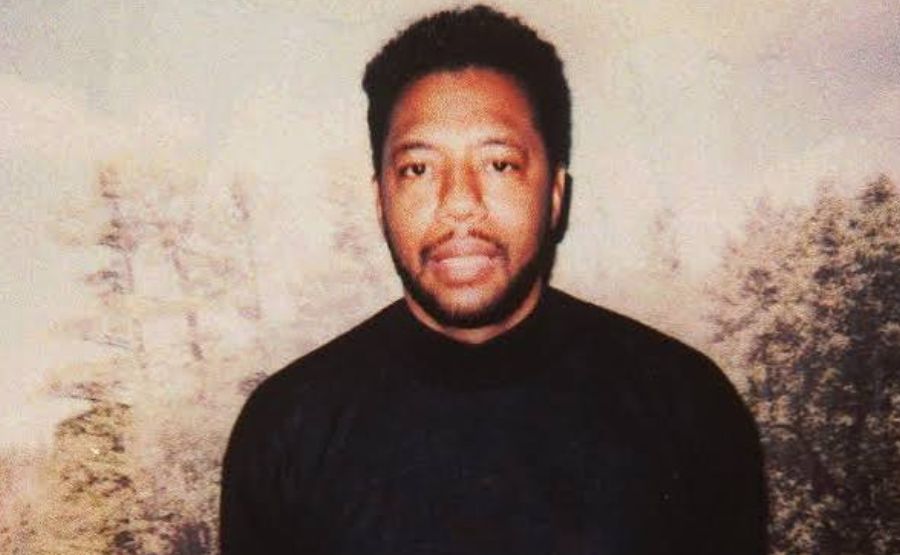
Later that year, Hoover and another Gangster Disciple named Andrew Howard were arrested, tried, and convicted. The Illinois court sentenced both men to 150 to 200 years in prison. Hoover was transferred to Crest Hill, Illinois’ Stateville Correctional Center. He was 23 years old.
He would not see the outside world again as a free man.
The following year, David Barksdale died. A 1970 assassination attempt had ruptured his kidneys, and prolonged kidney failure finally killed him in 1974. Hoover, running the BGDN from his prison cell, assumed sole command of what was now called the Gangster Disciples.
What happened next defied every assumption about incarceration as a brake on criminal power. Hoover ran his organization from behind bars with remarkable efficiency. In the late 1970s, he expanded the Gangster Disciples’ sphere of influence by forming the Folk Nation — a broad coalition of Black and Latino street gangs including the Satan Disciples, Latin Eagles, Two-Six, and more than a dozen others. The Folk Nation gave Hoover a multi-gang alliance that stretched across Chicago’s West Side and eventually into cities far beyond Illinois.
By 1993, DOJ estimates suggested the Gangster Disciples had between 25,000 and 30,000 members operating in at least 35 states, generating approximately $100 million annually from narcotics sales — primarily cocaine and heroin.
Reform, Reinvention, and the Double Game
In the late 1980s, prison authorities made what would prove an inadvertent miscalculation: they transferred Hoover, now perceived as a model prisoner, to Vienna Correctional Center, a minimum-security facility in southern Illinois. The reduced security gave him greater access to visitors, phones, and the organizational infrastructure of the GDs. His reach expanded.
Then something happened that law enforcement and Hoover’s supporters still interpret entirely differently.
Sometime around 1990–1993, Hoover began publicly renouncing violence. He rebranded. The initials “GD,” long for Gangster Disciples, were reinterpreted as “Growth and Development.” Hoover circulated a text called The Blueprint of a New Concept, which directed members to pursue education, legitimate employment, and community activism. Members were instructed to vote, attend school, and develop vocational skills.
What followed was genuinely ambiguous. Under the Growth and Development banner, a nonprofit arm registered voters and ran community drives. A music label raised money for youth programs.Ghetto Prisoner was a clothing brand that donated its profits to charitable causes. Members of the GDs organized peaceful protests against the closure of public programs. Chicago aldermen and community organizers — including former mayor Eugene Sawyer — publicly supported Hoover’s 1993 parole bid, calling him a potential force for peace in violence-stricken neighborhoods.
The parole board rejected the bid.
Simultaneously, federal investigators had not been idle. A joint 17-year undercover operation involving the FBI, ATF, and Illinois Department of Corrections had been building a case. Wiretaps captured Hoover directing drug distribution from prison. Informants revealed that the nonprofit organizations were used to launder proceeds from narcotics sales. Not a dollar, testimony indicated, went to the community causes they ostensibly served.
On August 31, 1995, federal agents arrested Hoover at Dixon Correctional Center and transported him to Metropolitan Correctional Center in Chicago. In 1997, after trial, he was found guilty on all 40 counts — conspiracy, extortion, money laundering, and running a continuing criminal enterprise from a state prison cell. Federal Judge Harry Leinenweber, in sentencing Hoover to three additional life terms (combined with earlier sentences, the total amounted to six), told Hoover that his ability to organize and lead thousands was a gift — and that he had weaponized it. Hoover was transferred to ADX Florence in Fremont County, Colorado.
ADX Florence — the federal government’s only “supermax” facility — was built to house the unreachable. The Unabomber, Ramzi Yousef, Richard Reid, and Joaquín “El Chapo” Guzmán have all lived within its walls. Inmates spend 22 to 23 hours per day in isolation in cells measuring roughly 7 by 12 feet. For nearly three decades, that was Larry Hoover’s world.
Personal Life in Fragments
Hoover’s personal life has unfolded almost entirely through glass partitions and monitored telephone lines. Since 1968 — two years before his first murder conviction — he has been with Winndye Jenkins, a woman from his Chicago neighborhood who chose, against every material logic, to stand beside him.
Jenkins waited. She built a life around waiting. She traveled to Colorado with grandchildren in tow to visit a man she could not touch for decades. In 2020, after more than 50 years together, Colorado state prison authorities finally recognized their union as a legal marriage, on January 9 of that year. Visiting rights were sometimes restricted without explanation; there were periods when even three visits per year were not possible.
Hoover has three sons from different relationships. Larry Bernard, the eldest, was born in 1970 and raised by his paternal grandmother; he eventually settled in Jackson, Mississippi, and built a restaurant business after years in steel mills. Larry Hoover Jr., born to Winndye Jenkins, became the public face of the Free Larry Hoover movement — a construction businessman who cultivated a relationship with rapper Kanye West and appeared on West’s 2021 album Donda. Tyree, the youngest, born in 1995, pursued public relations and co-founded an events management firm in Chicago.
While incarcerated, Hoover earned his GED. He obtained an emergency medical technician’s license. He taught himself to read as an adult — he entered prison, his son has said publicly, as a dyslexic young man who was functionally illiterate. The book that most profoundly shaped his self-conception was Boss, Mike Royko’s 1971 biography of Chicago Mayor Richard J. Daley. What captivated Hoover was Royko’s account of how Irish immigrant street gangs in early 20th-century Chicago had transformed themselves into political machines. The book gave Hoover a framework — and perhaps an alibi.
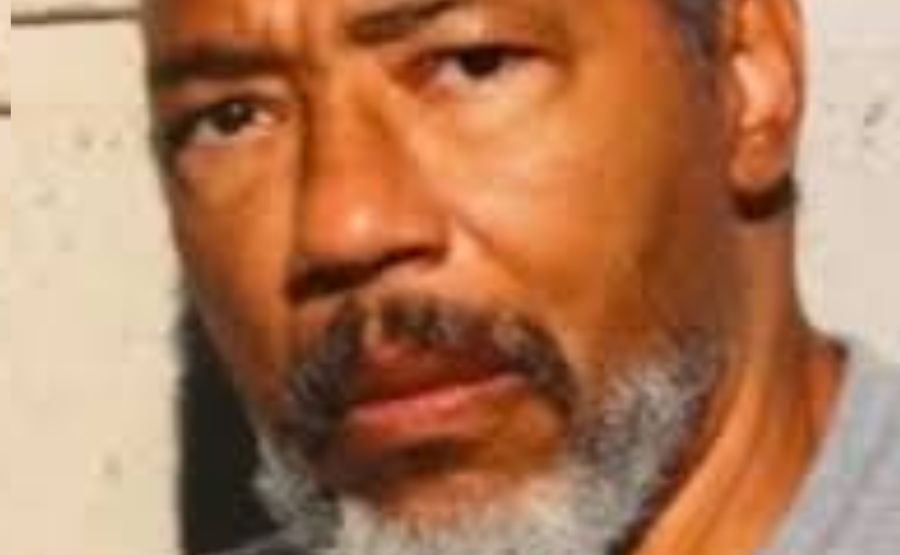
By October 2025, following his federal commutation and transfer to a Colorado state penitentiary, Hoover suffered three heart attacks while performing mandatory prison labor, according to his attorneys. His legal team filed a 39-page clemency petition with the Illinois Prisoner Review Board, describing his physical condition as critical and his continued imprisonment as, in their words, a slow institutional death.
The Federal Commutation and What Remains
On May 28, 2025, President Donald Trump commuted Larry Hoover’s six federal life sentences — declaring them served “with no further fines, restitution, probation or other conditions.” The order was part of a broad wave of presidential clemency actions, but Hoover’s was among the most freighted with symbolism.
The path to commutation was years in the making. In 2018, Kanye West walked into the Oval Office and appealed directly to Trump, describing Hoover as a man working to turn his life around. Trump’s alleged reply, “What did he do?” encapsulated both the extent of his acquaintance with the case and the influence of executive clemency granted to celebrities. In December 2021, West and Drake staged the “Free Larry Hoover Benefit Concert” at the Los Angeles Memorial Coliseum, drawing enormous cultural attention to sentencing reform and Hoover’s case specifically. West later featured Hoover in songs including “Jesus Lord” and referenced him on Donda.
Despite the federal commutation, freedom did not follow. Hoover immediately transferred — not to the outside world — but to a state prison in Illinois, where his 1973 murder conviction carries a sentence of 150 to 200 years. He remains one of just 35 people still incarcerated under Illinois’ pre-1978 indeterminate sentencing system, a structure the state abandoned decades ago. His co-defendant in the Young murder, Andrew Howard — who physically carried out the killing — was paroled more than 30 years ago.
Former federal prosecutor Ron Safer, who led the 1997 prosecution, was blunt about the commutation: he said he could not understand why Hoover, of all federal prisoners, was selected for relief. “In a state that spawned Al Capone,” Safer told the Chicago Sun-Times, “I do not believe there is a more notorious or prolific criminal than Larry Hoover.”
Hoover’s attorney Justin Moore countered immediately: the federal government had done its part. Illinois now needed to act.
As of October 2025, Governor JB Pritzker had not signaled any intention to grant state clemency.
Legacy: Architecture of Influence
Larry Hoover’s shadow falls across contemporary America in ways both concrete and cultural.
The Gangster Disciples he built remain nominally active in Chicago, though the organization has fractured badly since his federal imprisonment. Criminologists, including Lance Williams at Northeastern Illinois University, have noted that Hoover’s removal may have paradoxically destabilized Chicago’s street ecosystem — eliminating the centralized command structure that had, however brutally, kept violence organized and bounded. Fragmentary, decentralized gang conflict may in some ways be harder for law enforcement to manage than a hierarchical cartel with identifiable leadership.
In hip-hop, Hoover’s name operates as a shorthand for contested notions of Black urban power. Rick Ross name-dropped him in the 2010 single “B.M.F.” as a byword for underworld prestige. Kanye West wove him into his late-career evangelical period as a symbol of redemption suppressed by an unjust system. Killer Mike’s Grammy-winning 2023 album Michael nodded to Hoover’s legacy in the frame of Black liberation. Chicago’s drill music scene — which has defined global rap aesthetics for over a decade — is steeped in an atmosphere Hoover’s organization helped create.
On the question of reform, Hoover’s legacy is genuinely split. Those who encountered Growth and Development during the early 1990s — the voter drives, the community concerts, the leadership seminars — describe an organization that gave structure and purpose to young men who had none. Grammy-nominated Chicago rapper Rhymefest has said Hoover gave him his first understanding of how hip-hop could be leveraged for social and political ends. GLC, another Chicago MC who grew up in the GD orbit, argues that organizational capacity — not crime — was Hoover’s signature crime in the eyes of the state.
The counternarrative is equally grounded in evidence. Federal prosecutors proved that the nonprofits were laundering fronts. Informants testified that no charitable proceeds reached their stated beneficiaries. The drug trade that Hoover directed, from the 1970s through the 1990s, flooded Chicago’s South Side with heroin and cocaine, hollowed out families, and produced countless dead. William “Pooky” Young was 19 years old.
Final wards
There is no version of Larry Hoover’s story that resolves cleanly. He is neither the pure predator of federal prosecution narratives nor the misunderstood reformer his advocates project. He is something more difficult: a man of genuine organizational genius who aimed that genius at destruction, who may have later sought redemption, and whose redemption — if real — arrived too late and too entangled in criminal infrastructure to be fully trusted.
What the Hoover case illuminates is not primarily about Hoover himself. It illuminates a system: the structural abandonment of Black Chicago in the postwar decades, the way poverty creates alternative governments in the vacuum left by retreating public institutions, the seductive logic of incarceration as a response to symptoms rather than causes, and the deep discomfort the American criminal justice apparatus has with any Black organizational power — even power that has long since been deprived of true authority, according to most sources.
His commutation in 2025, driven partly by hip-hop advocacy and a political transaction between celebrity and presidential ego, is itself a kind of satire of how justice actually works in America. The man whose federal sentences were relieved is the same man still locked in a 7-by-12 cell with three heart attacks and no release date. The story lies in the difference between the material reality and the symbolic gesture.
At 74, Larry Hoover exists somewhere in that gap — too sick to be a threat, too infamous to be forgotten, too inconvenient to simply release, and too symbolic of too many competing American anxieties to be quietly set aside.
FAQs
1. When and where was Larry Hoover born?
Hoover was born on November 30, 1950, in Jackson, Mississippi. His family relocated to Chicago’s Englewood neighborhood when he was four years old.
2. What gang did Larry Hoover found?
Hoover co-founded the Black Gangster Disciple Nation (BGDN) alongside David Barksdale in 1969. The organization is more commonly known today as the Gangster Disciples.
3. What was Hoover convicted of in 1973?
He was convicted of ordering the murder of 19-year-old William “Pooky” Young, a neighborhood drug dealer accused of stealing from gang stash houses. Hoover was sentenced to 150 to 200 years in Illinois state prison.
4. How did Hoover continue leading the Gangster Disciples from prison?
Through visitors, monitored phone lines, coded communications, and intermediaries, Hoover directed gang operations for more than two decades. Federal investigators documented this using wiretaps during a 17-year undercover investigation.
5. What were his federal charges in 1997?
Hoover was convicted on 40 federal counts including drug conspiracy, extortion, money laundering, and operating a continuing criminal enterprise from inside state prison. He received six life sentences.
6. What is Growth and Development?
Beginning around 1990–1993, Hoover rebranded the Gangster Disciples as “Growth and Development,” directing members toward education, voting, and community programs. Federal prosecutors argued the initiative was simultaneously a front for ongoing criminal activity.
7. How large were the Gangster Disciples at their peak?
By 1995, the Department of Justice estimated approximately 30,000 members operating in at least 35 states, generating roughly $100 million annually from drug sales.
8. Who is Winndye Jenkins?
Jenkins is Hoover’s longtime partner and, since January 9, 2020, his legal wife. They have been together since 1968. She founded the Larry Hoover Project to advocate for his clemency and has spent decades navigating restricted visitation rights.
9. What is ADX Florence?
ADX Florence in Fremont County, Colorado, is the federal government’s only supermax facility — housing the most dangerous federal offenders in near-total isolation. Hoover spent approximately 27–28 years there until his federal commutation in 2025.
10. What happened in May 2025?
President Donald Trump commuted Hoover’s six federal life sentences, declaring them served in full. The commutation followed advocacy by rapper Kanye West and other supporters. However, Hoover was transferred to an Illinois state prison — not released — because his 1973 state murder conviction remains in force.
11. Why hasn’t Hoover been fully released despite the federal commutation?
The president can only commute federal sentences. Hoover’s state murder conviction falls under Illinois jurisdiction and requires a separate action — parole board approval or a gubernatorial commutation — which has not been granted.
12. What is Hoover’s current legal and physical status?
As of late 2025, Hoover was housed in a Colorado state penitentiary, having suffered three heart attacks while performing prison labor. His attorneys filed a 39-page clemency petition with the Illinois Prisoner Review Board. His health is described as fragile.
13. How did Kanye West become involved in the Free Larry Hoover campaign?
West, a Chicago native, lobbied President Trump in person at the Oval Office in 2018. In December 2021, he and Drake co-hosted the Free Larry Hoover Benefit Concert at the Los Angeles Memorial Coliseum. West also referenced Hoover on his Donda album and in multiple songs.
14. Did Hoover’s co-defendant Andrew Howard also remain imprisoned?
No. Howard, who physically carried out the Young murder, was paroled more than 30 years ago — a disparity Hoover’s attorneys have repeatedly cited as evidence that continued incarceration serves no proportionate purpose.
15. How has Larry Hoover influenced Chicago’s culture and beyond?
Hoover’s influence runs through Chicago’s political organizing traditions, the Folk Nation gang coalition, and the aesthetic DNA of Chicago drill music. Dozens of rappers have referenced him. Criminologists note that his removal from power may have paradoxically fragmented and intensified street violence by eliminating centralized gang leadership.
Every story matters—discover them all with Daily Narrative.