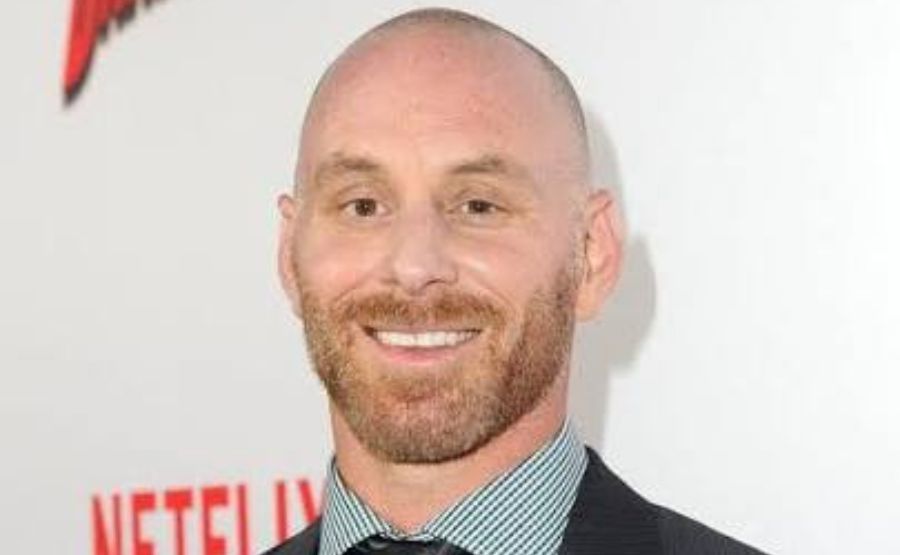
Matt Gerald: The Unlikely Hollywood Journey of a Wall Street Dropout Turned Character Actor
There’s something quietly fascinating about a person who walks away from a perfectly good life to chase something that scares them. Most people never do it. They stay comfortable, play it safe, and wonder for decades what might have been. Matt Gerald didn’t do that. He left a career on Wall Street, moved to Los Angeles, and started over — and the results have been pretty remarkable.
You might not know his name off the top of your head, but the moment you see his face, you’ll recognize him. He’s the guy who built Daredevil’s iconic red suit. He’s the mean soldier in Avatar who you just kind of wanted to see get what was coming to him. He showed up in Dexter and gave you chills for two episodes straight. And somehow, he keeps appearing in the biggest films and shows of the past twenty-five years, always making you feel like his character has been around a lot longer than their screen time suggests.
That’s the real skill. And today, we’re going to talk about it.
Key Facts:
| Fact | Detail |
| Full Name | Matthew Gerald |
| Born | May 2, 1970 |
| Birthplace | Miami, Florida, USA |
| Education | The Wharton School, University of Pennsylvania |
| Career Before Acting | Finance / Wall Street |
| Acting Debut | Starstruck (1998) |
| Breakthrough Role | Corporal Lyle Wainfleet, Avatar (2009) |
| Notable MCU Role | Melvin Potter / Gladiator, Daredevil (2015–2018) |
| Also Known For | Ray Speltzer, Dexter (2012); Tommy Hisk, The Shield |
| Avatar Films | Avatar (2009), The Way of Water (2022), Fire and Ash (2025), Avatar 4 & 5 upcoming |
| Other Credits | Yellowstone, Mayor of Kingstown, Special Ops: Lioness, San Andreas, G.I. Joe: Retaliation |
| Side Career | Screenwriter |
| Personal Life | Married with two children |
From Miami to the Wharton School — and Then a Sharp Left Turn
Matt Gerald grew up in Miami, Florida. He was clearly smart and driven enough to get into the Wharton School at the University of Pennsylvania, which is one of the most respected business programs in the country. While he was there, he also played college football. So he wasn’t just hitting the books — he was building the kind of physical presence and competitive toughness that would later serve him very well on screen.
After graduation, he did what a lot of Wharton people do: he headed toward finance. Wall Street. The suits, the numbers, the hustle of the trading floor. By any normal measure, his life was on track.
But something didn’t fit.
And then, almost by accident, everything changed.
How a Theater Stagehand Job Changed Everything
Here’s the part of the story Matt Gerald tells himself, and it’s genuinely funny. After college, he was back in Miami Beach when an attractive Australian model he liked mentioned she was doing a play. She asked if he’d help out as a stagehand. His answer was essentially: absolutely, you had me at “stagehand.”
So he spent a month working backstage on a production of Burn This by Lanford Wilson. Night after night, he watched the actors on that small stage do something he’d never seriously considered. He watched people tell the truth through fiction. He watched an audience lean in. And quietly, a thought crept in: I could do this.
Nothing ever happened with the girl, as he cheerfully admits. But something far more lasting happened to him. Within a year, he was in Los Angeles — studying, grinding, doing the work.
That’s not a small thing. Leaving a finance track to become an actor is the kind of decision most people talk themselves out of before breakfast. Gerald just did it.
The Long Climb: Early Films and First Steps
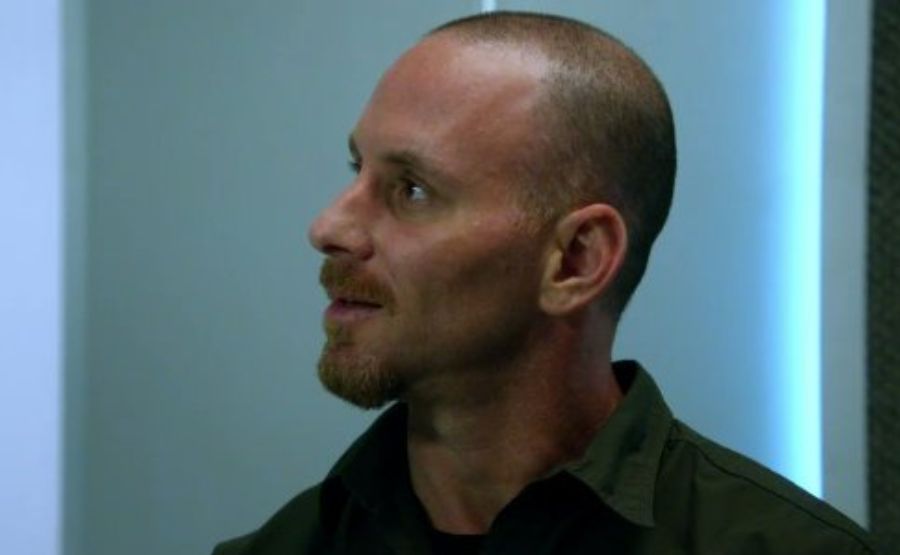
Getting started in Hollywood takes patience that borders on stubbornness. For Gerald, the late 1990s were a series of small roles with no name attached to them. A patrolman here. A minor character there. But the films themselves were often notable ones.
He showed up in Paul Thomas Anderson’s Magnolia in 1999 — a movie full of remarkable performances and big emotional swings. He appeared in The Minus Man the same year, alongside Owen Wilson. He landed a role in Joel Schumacher’s Tigerland in 2000, which featured a very early Colin Farrell. These weren’t huge parts, but they put him in rooms with serious directors and serious actors. That matters.
By 2003, he was in Terminator 3: Rise of the Machines and S.W.A.T., getting a first taste of the action-film world he’d come to know very well. Television started opening up too — CSI: Crime Scene Investigation, The Shield, a string of procedural appearances that kept him working and kept him sharp.
He was building something. Slowly. Quietly. Brick by brick.
Avatar and the Breakthrough Nobody Saw Coming
When James Cameron spent a decade building a science-fiction world called Pandora, he needed people who could make you believe in a military operation against an alien people. Corporal Lyle Wainfleet was one of those people — a mercenary soldier who’s all sharp edges and zero empathy, the kind of guy who doesn’t ask questions about orders.
Gerald got the role. And what followed was an extraordinary experience.
He spent five months in New Zealand during the shoot, and then a full additional year back in Los Angeles working through post-production and technical work. He once said he had almost as much fun doing a small four-month theater run in LA right after Avatar wrapped — fifty sold-out shows in a row — as he did on the blockbuster itself. That says something about the kind of artist he is. Big films and small stages both matter to him.
Avatar (2009) became the highest-grossing film in history at the time. Wainfleet wasn’t the lead. But he was memorable. He was the face of a certain kind of human nastiness in the film, the kind that makes you understand why the Na’vi see the colonizers the way they do. When Avatar: The Way of Water arrived in 2022, Gerald was back — this time as “Recom Wainfleet,” a new version of the character brought back through cloning technology. It’s a clever creative solution, and it meant Gerald got to evolve the role rather than just repeat it. He returned again for Avatar: Fire and Ash in 2025, and is attached to both the fourth and fifth films in the franchise, which are currently in production.
That’s a remarkable level of continuity with one of cinema’s most ambitious ongoing stories.
Melvin Potter: The Role That Surprised Everyone
If Wainfleet was the role that gave Gerald a seat at the blockbuster table, Melvin Potter in Netflix’s Daredevil was the one that showed just how deep he could go.
Melvin Potter is not a villain in any comfortable sense. He’s a gifted craftsman — someone who can build armor, weapons, and equipment at an extraordinary level. But Wilson Fisk has used threats against the person Melvin loves most to force him into service. Melvin makes Fisk’s suits. He has no choice.
What makes the character extraordinary is the way Gerald plays him: as a man with the emotional world of a child inside the body of someone physically formidable enough to go toe-to-toe with Daredevil. He’s not cruel. He’s scared. He’s trapped. And the moment Matt Murdock offers him a way out — a promise to protect the woman who cares for him — Melvin Potter becomes something genuinely moving.
Gerald appeared in seven episodes across three seasons of Daredevil. He was there in Season 1 when Melvin built the iconic red suit that became synonymous with the show’s identity. He was back in Season 2, quietly keeping his promise to stay clean. And in Season 3, when Fisk once again finds a way to use Melvin, it hits hard precisely because we’ve seen how hard Melvin tried to do the right thing.
In an interview, Gerald talked about finding Melvin “fascinating” — a man who is technically brilliant but emotionally vulnerable in a way that makes him completely unpredictable. He’d never been deep into comics before the role, and he dove into the source material to understand where the character had been and where he might go. The care shows in every scene.
People who watched Daredevil often remember Melvin Potter vividly even though he was never the lead. That’s the whole art of character acting right there.
A Villain You Actually Feared: Ray Speltzer in Dexter
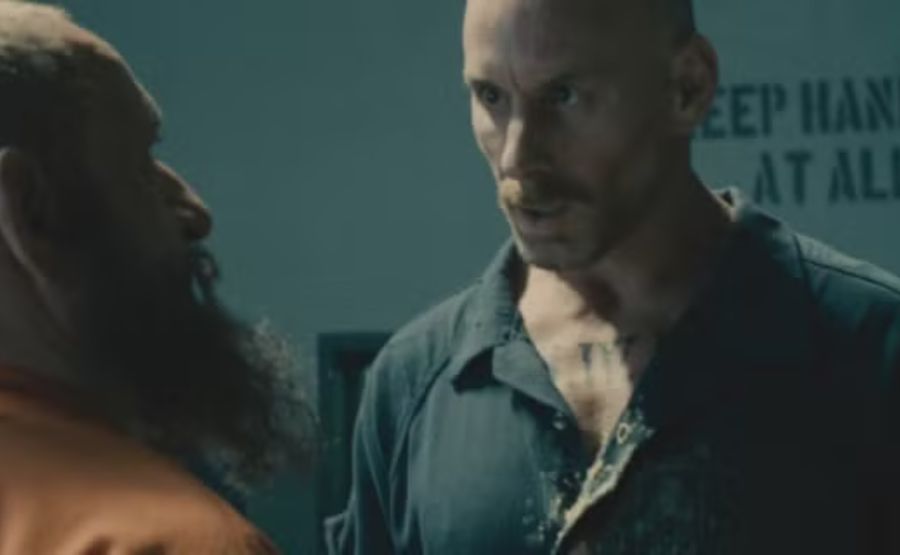
In 2012, Gerald showed up in Dexter as Ray Speltzer — two episodes, and somehow one of the most unsettling recurring antagonists the show produced. Speltzer was a serial killer with a ritualistic bent, the kind of character written to make your skin crawl. Gerald leaned into it without overplaying it. The stillness was the scary part.
It’s a pattern with him. The characters who scare you most in his hands are often the quiet ones. The ones who don’t need to shout.
A Career Built on Blockbusters, Taylor Sheridan, and Everything in Between
The breadth of Gerald’s filmography is genuinely impressive. He shares scenes with Dwayne Johnson three separate times — G.I. Joe: Retaliation, San Andreas, and Rampage — to the point where he once joked that Johnson might prefer thinking of him as a “life-long muse.” He appears in Escape Plan with Sylvester Stallone and Arnold Schwarzenegger. He shows up in Red Dawn alongside Chris Hemsworth. He’s in Will Smith’s Netflix film Bright.
And then there’s a quieter recent chapter. Taylor Sheridan — the man behind Yellowstone, Mayor of Kingstown, and Special Ops: Lioness — has used Gerald repeatedly. He played Grant Horton in three episodes of Yellowstone in 2024. He showed up in Mayor of Kingstown for four episodes in 2023. He had a recurring role in Special Ops: Lioness. Sheridan’s world of morally complicated men in difficult situations is a natural fit for what Gerald does.
His career also reflects real civic commitment. In 2023, he was one of over three hundred actors — alongside names like Meryl Streep and Jennifer Lawrence — who signed an open letter to SAG-AFTRA leadership calling for strong protections around artificial intelligence, fair streaming revenue, and better compensation structures during labor negotiations. It was a moment where the actor community pushed back against industry changes that threatened livelihoods, and Gerald was part of that effort.
The Man Behind the Roles
Across everything Gerald has said publicly about his life and work, a personality emerges that is wry, self-aware, and genuinely warm.
He’ll tell you that when he was considering roles early on, his checklist included things like: Is the script well-written? Does the character have real impact? And — completely seriously — does it shoot in Hawaii, Australia, New Zealand, South Africa, New York, New Orleans, or London? Two out of three, and he’s interested.
He loves sports movies and says he still hopes to play a gruff retired athlete or coach someday. He describes his advice to aspiring actors with honest bluntness: if you can see yourself doing anything else, maybe do that. But if acting is the only thing you can imagine, then stay committed, grow thick skin, and focus on the work.
Beyond all of it, his own website notes that his most cherished accomplishment isn’t any role or any film. It’s his family — his wife and his two children. That detail, sitting quietly on a professional page full of credits, says quite a bit about who he actually is.
The Character Actor’s Gift
There’s something worth pausing on here. We live in a culture that loves leading men and women — the faces on the poster, the names above the title. But great films and great television are built on the people who surround those leads and make them feel real.
Matt Gerald has spent twenty-five years doing exactly that. He walks in, he makes you believe in a person, and then he walks out — and somehow the story feels more true because he was in it. Melvin Potter made Daredevil more human. Wainfleet made Pandora more dangerous. Ray Speltzer made Miami feel genuinely unsafe for two episodes. Tommy Hisk made The Shield feel messier and more honest.
That’s the character actor’s gift. You don’t get your name called at the Oscars. You don’t get the profile in a fashion magazine. But you are the glue that holds the story together. And the audience — the real audience, the one that watches carefully — notices.
What’s Next
Gerald has two more Avatar films coming. Avatar 4 is currently in post-production with a 2029 release expected. Avatar 5 is in active filming for 2031. Wainfleet — or some version of him — will be part of Cameron’s world for years still to come.
There’s also a film called Animals in post-production, where Gerald appears in an as-yet-undisclosed role. There are no indications that his career will slow down.
If anything, the arc suggests something hopeful: that the kind of actor who commits fully to smaller parts eventually finds himself invited to bigger and bigger tables. Not because he chased the spotlight, but because the work made the spotlight follow him.
Final Thoughts
Matt Gerald’s story is the kind that doesn’t get told often enough. He’s not a cautionary tale about Hollywood dreams — he actually made it work. But he’s also not the overnight success story we get fed in profiles of famous stars. He’s something more useful than either of those things.
He’s proof that showing up with real commitment to the work — even in a small part, even in a two-episode arc, even as the guy who builds the suit rather than wears it — eventually amounts to something. A career. A life. A quiet kind of satisfaction that comes from having chosen the harder path and not regretted it.
If you haven’t gone back and rewatched his scenes in Daredevil, it might be worth doing. Melvin Potter deserves a second look. So does the actor who brought him to life.
FAQs
1. When and where was Matt Gerald born?
He was born on May 2, 1970, in Miami, Florida.
2. Did Matt Gerald really work on Wall Street?
Yes. After graduating from the Wharton School at the University of Pennsylvania, he pursued a career in finance before deciding to switch to acting.
3. How did he get into acting?
He started by volunteering as a stagehand at a small local theater in Miami Beach — largely to spend time near someone he liked. He watched the performances night after night and realized this was what he wanted to do. Within a year he moved to Los Angeles to study acting seriously.
4. What is Matt Gerald best known for?
He’s most widely recognized for three things:
- Corporal Lyle Wainfleet in James Cameron’s Avatar franchise
- Melvin Potter in Netflix’s Daredevil
- Ray Speltzer in Dexter
5. How many Avatar films has he appeared in?
He appeared in the original Avatar (2009), Avatar: The Way of Water (2022), and Avatar: Fire and Ash (2025). He’s also attached to Avatar 4 (expected 2029) and Avatar 5 (expected 2031).
6. Who is Melvin Potter in Daredevil?
Melvin Potter is a skilled armor-maker and craftsman who is coerced by Wilson Fisk into making weapons and protective suits. He’s portrayed as emotionally vulnerable and socially limited, yet physically powerful. His relationship with his parole officer Betsy Beatty is what keeps him grounded. He ultimately builds Daredevil’s iconic red suit.
7. How many episodes of Daredevil did Matt Gerald appear in?
He appeared in seven episodes across the three seasons (2015–2018).
8. Did he play more than one character in the Marvel Cinematic Universe?
Yes. He first played “White Power Dave,” a menacing prison inmate, in the Marvel short film All Hail the King (2014). He then played Melvin Potter in Daredevil, making him one of the few actors to have played two separate characters in the MCU.
9. What happened with his planned role in Ant-Man?
He was cast in Ant-Man when Edgar Wright was attached to direct. When Wright left the project, Gerald’s role fell through as well.
10. Has he worked with Dwayne Johnson more than once?
Three times: G.I. Joe: Retaliation (2013), San Andreas (2015), and Rampage (2018). Gerald has joked that Johnson might call him a “life-long muse.”
11. Is Matt Gerald a screenwriter as well?
Yes, he is credited as a screenwriter, though his writing work has not received the same public profile as his acting career.
12. What Taylor Sheridan projects has he appeared in?
He appeared in Yellowstone (3 episodes, 2024), Mayor of Kingstown (4 episodes, 2023), and Special Ops: Lioness (2 episodes, 2023–2024).
13. Did Matt Gerald sign the SAG-AFTRA open letter in 2023?
Yes. He was one of over 300 performers who signed an open letter to SAG-AFTRA leadership advocating for strong protections around AI, fair compensation, and equitable streaming revenue during contract negotiations.
14. What does Matt Gerald say about acting advice?
He’s honest about it: if you can picture yourself doing something else, do that. If acting is the only thing you can imagine, then commit fully, build a thick skin, and focus on the craft above all else.
15. Does Gerald have a preference for big films or smaller projects?
He’s said he loves both. After shooting Avatar, he went straight into a four-month theater run in Los Angeles — fifty sold-out shows — and found that nearly as fulfilling. If forced to choose, he’d probably pick big films, but he genuinely values all of it.
Every story matters—discover them all with Daily Narrative.