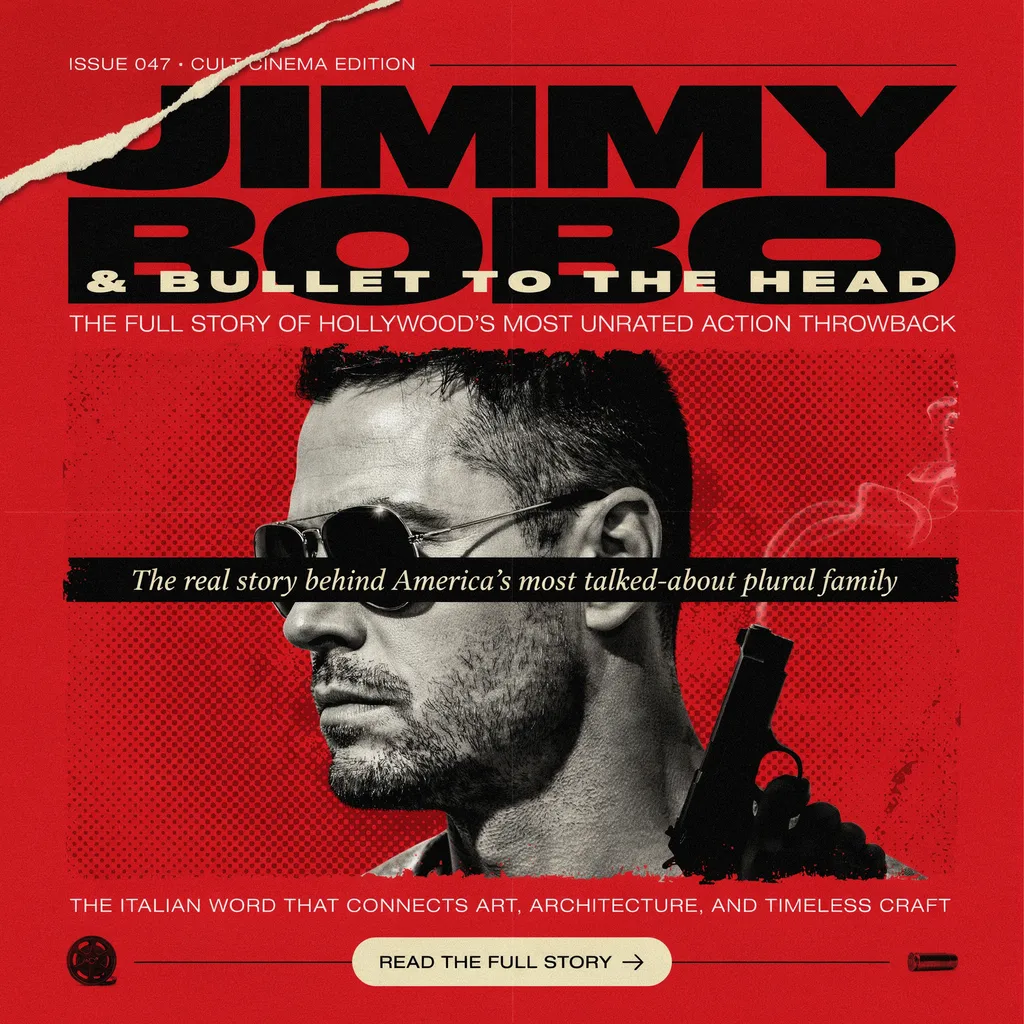
Jimmy Bobo & Bullet to the Head: The Full Story of Hollywood’s Most Underrated Action Throwback
There’s a certain kind of movie that doesn’t get the respect it deserves when it first comes out. Critics shrug. Audiences stay home. And then, years later, people rediscover it on a streaming platform at 11 p.m. on a Tuesday and think — wait, why didn’t anyone tell me about this?
Bullet to the Head is exactly that kind of movie. Released in February 2013, it bombed so badly at the box office that it made newspaper headlines for all the wrong reasons. Yet today, it sits on Netflix Top 10 lists and earns the quiet admiration of action fans who know their stuff. If you’ve ever wondered what the fuss around Jimmy Bobo is really about — or why this film keeps coming back into conversations — grab a coffee and settle in. We’re going to talk through the whole thing.
Key Facts:
| Detail | Information |
| Film Title | Bullet to the Head |
| Release Date | February 1, 2013 (USA) |
| Director | Walter Hill |
| Main Character | Jimmy Bobo (James Bonomo) |
| Played By | Sylvester Stallone |
| Co-Star | Sung Kang as Detective Taylor Kwon |
| Villain | Jason Momoa as Keegan |
| Setting | New Orleans, Louisiana |
| Source Material | French graphic novel Du Plomb Dans La Tête by Matz & Colin Wilson (2004) |
| Budget | ~$55 million |
| Worldwide Gross | ~$22.6 million |
| Rotten Tomatoes Score | 44% |
| Rating | R (strong violence, language, brief nudity) |
| Running Time | 91 minutes |
Who Is Jimmy Bobo?
Let’s start with the man himself. Jimmy Bobo — real name James Bonomo — is a professional hitman working out of New Orleans. He’s been doing this for years. He knows the city’s back streets, its corruption, its smells.He doesn’t act like a decent person. He’s not chasing justice or carrying a secret wound from his past. He just lives by his own code, does his work, and goes home.
That makes him different from almost every Stallone character you’ve ever seen. Rocky fights for his dignity. Rambo fights for his brothers. But Bobo? He fights because that’s the job.
What’s interesting is that this coldness doesn’t make him unlikable. Stallone plays him with a kind of weary, quiet confidence. You get the sense that Bobo has thought about what he does, made his peace with it, and moved on. There’s almost something philosophical about him — in a gritty, street-level way.
See also”North Penn Now: The Little News Site That Grew Into Something Bigger Than Anyone Expected“
Where Did Jimmy Bobo Come From?
A book existed before a movie did. A French one, no less.
Back in 2004, a French writer named Alexis Nolent — who publishes under the pen name Matz — teamed up with New Zealand illustrator Colin Wilson to create a graphic novel called Du Plomb Dans La Tête. That title translates to something like “Lead in the Head,” though English publishers later renamed it Bullet to the Head for American audiences.
The story is a sharp, energetic crime noir. Two hitmen. A political murder. Cops on both sides of the law. And a city that seems to eat people alive. Matz had already made his name writing The Killer, a grim and philosophically rich tale about a professional assassin. Du Plomb carried some of that same weight, but pushed it into faster, pulpier territory.
When Dynamite Entertainment brought the book to English-speaking readers in 2010–2011, breaking it into a six-issue comic series, it caught Hollywood’s attention almost immediately.
How the Film Got Made
The journey from page to screen was longer and bumpier than most people know.
A director named Wayne Kramer was originally attached to the project. He had a specific vision — darker, more psychological. But Stallone, who was producing and starring, wanted something a bit more playful. More old-school. Less bleak. The two couldn’t find common ground, so Kramer walked away.
That left a gap. And Stallone, who’d been thinking about this project for a while, made a phone call that changed everything.
He called Walter Hill.
Hill is a legend in American cinema — the man behind The Warriors, 48 Hrs., The Driver, and Southern Comfort. He’d helped write Alien. He’d helped launch Eddie Murphy’s film career. But it had been over a decade since his last theatrical release, and he’d been sitting at home watching projects fall apart.
When Stallone’s call came, Hill said yes. The two had never worked together before, which surprised many people given how naturally they fit. Hill later said that Stallone personally hand-picked him because he felt the material needed Hill’s specific kind of stripped-down, masculine filmmaking — fast cuts, real danger, economy of dialogue.
Hill told Stallone to play things loosely, to lean into his natural personality rather than construct a big character. He wanted something close to how Stallone actually carries himself when he walks into a room. That instinct turned out to be one of the film’s best decisions.
The Story: What Actually Happens
New Orleans. Two hitmen — Jimmy Bobo and his younger partner Louis Blanchard — take out a corrupt former police officer in a hotel room. Job done. Or so they think.
Shortly afterward, Louis is killed in a bar by a mercenary named Keegan. The people who hired Bobo and Louis have decided to clean house. Loose ends tied up. No witnesses.
At the same time, a Washington D.C. detective named Taylor Kwon arrives in New Orleans to investigate the dead cop. He quickly figures out Bobo is connected. And when a pair of corrupt local police try to kill Kwon, Bobo — somewhat to his own surprise — saves him.
What follows is a classic mismatched partnership. Bobo and Kwon can’t stand each other. Kwon is by-the-book, tech-savvy, and morally rigid. Bobo is instinctive, old-fashioned, and entirely unbothered by the law. One walks around with a smartphone looking things up. The other walks around with a knife and a deeply personal philosophy.
Together, they pull at a thread that leads to a sprawling corruption scheme. A slick developer named Robert Nkomo Morel is using a crooked lawyer, dirty cops, and Keegan’s mercenary muscle to raze low-income housing and build luxury condominiums in their place. Classic villain motivation — greed dressed up as progress.
The story ends with the axe fight everyone remembers.
The Axe Fight: Why People Still Talk About It
Picture this. Stallone, who was 66 years old during filming, picks up a fire axe. Across from him stands Jason Momoa — then already building a reputation from Game of Thrones and Conan the Barbarian — massive, grinning, lethal.
And they just go at it.
No guns. No gadgets. Just two big men, two axes, and a dim, dusty space that feels like the inside of a bad dream.
It’s one of the most genuinely surprising action sequences in any film from that era. Not because of explosions or special effects, but because it feels so old. So physical. So real. You can almost hear bones complaining.
Momoa has talked about how much he enjoyed working through the choreography with Walter Hill. He wanted Keegan to feel like someone enjoying himself — a predator who’s amused by the fight. There’s a moment where Keegan loses his axe and just starts clapping, gleefully irritated. It’s such a specific, strange character choice, and it works completely.
This is the scene that gets shared. The scene that makes people who dismissed the movie reconsider it.
Stallone at 66: A Different Kind of Action Hero
It’s worth pausing on what Stallone was actually doing with this role.
By 2013, he’d already revisited Rocky, Rambo, and launched the Expendables franchise. People loved seeing him in familiar modes. But Jimmy Bobo wasn’t a familiar mode. Bobo has no heroic credentials. He’s not saving anyone out of nobility. He’s just a man trying to survive a double-cross, and the fact that he happens to save a cop along the way is almost incidental.
That made the performance trickier than it looks. Stallone had to resist the instinct to turn Bobo into a hero-shaped character. He had to let him stay morally grey.
Some critics compared it to his performance in Copland (1997), a film where he played a quiet, heavy small-town sheriff who was in over his head — not the larger-than-life icon, but a real, fallible person. Bullet to the Head asked for something similar: a man who’s extremely competent but not especially good.
The quiet satisfaction Stallone finds in that gap — between skill and virtue — gives the film its most interesting texture.
Walter Hill’s Fingerprints Are Everywhere
You can’t talk about this film without talking about Walter Hill’s style. And his style is unmistakable.
Hill has always said that every film he makes is, at its heart, a Western. He doesn’t mean they all have horses and tumbleweeds. He means they’re about men with codes facing men with different codes, in a world where rules are either made or broken by whoever’s strongest in a given moment.
Bullet to the Head fits this perfectly. Bobo and Kwon are both professionals. But they define professionalism completely differently. Bobo believes a job is a job — you do it and you own it. Kwon believes in institutions, procedure, the chain of command. Neither is entirely right. Neither is entirely wrong.
Hill plays that tension with a very light touch. There are jokes. There are one-liners. But underneath the wisecracks, there’s a genuine argument about how people should live and work.
Hill calls films like this “anti-buddy movies.” The two men save each other repeatedly, but they never warm up. By the ending, there’s respect — but no friendship. It feels honest. Real people in impossible situations don’t always come out of it holding hands.
The Box Office Reality
Here’s where things get genuinely painful to recount.
Bullet to the Head opened the first weekend of February 2013 — Super Bowl weekend, of all times. The studio was hoping to catch the same audience that had turned Taken into a surprise hit over the same frame four years earlier.
It didn’t happen.
The film earned just $4.5 million in its opening weekend from over 2,400 theaters. That’s roughly $1,900 per screen. By any measure, that’s awful. It was, at the time, Stallone’s worst solo opening in over 30 years — dating back to before Rocky III.
The total domestic gross was about $9.5 million. Against a $55 million budget, that’s a significant loss.
There are a few reasons this happened. The marketing never quite found its footing. The Super Bowl ate the core audience. Competition from a zombie romantic comedy called Warm Bodies (which was tracking young and fresh) split attention further. And honestly, the film’s deliberate, classical tone may have felt unfamiliar to audiences used to the bombastic pace of modern action blockbusters.
It wasn’t what 2013 wanted. But 2013 was wrong.
Why It Found Its Audience Later
After theaters, Bullet to the Head quietly found a home on cable, then home video, then streaming. And something interesting happened.
People started actually watching it.
Without the pressure of opening weekend expectations, without the marketing hype setting impossible stakes, the film could just be what it is: a lean, confident, well-made noir thriller with two genuinely great performances and a climax people don’t forget.
When it popped up on Netflix years later, it cracked Top 10 lists in multiple countries. Fans of Momoa who’d come in through Aquaman went back to find early work and discovered Keegan — a role that showed a completely different side of him than the heroic characters he’s known for.
The film had traveled, slowly, to the right audience.
The Legacy of Jimmy Bobo
Jimmy Bobo isn’t Rocky or Rambo. He doesn’t have a franchise. There’s no sequel. He exists in exactly one film, running 91 minutes, set in the rain and neon of New Orleans.
But there’s something about him that sticks. Maybe because he’s a rare action hero who doesn’t pretend to be anything other than what he is. No secret heroism underneath. No redemption arc that transforms him into a better man. Just a guy who operates by a personal code and lives with the consequences.
In a genre full of characters who are secretly noble, Jimmy Bobo is refreshingly, honestly not. And there’s a strange kind of respect you end up feeling for that.
Final Thoughts
Bullet to the Head is the kind of movie that rewards patience. Not patience during the film — it moves fast and it’s fun — but patience in letting it find you at the right moment.
It came out in the wrong season, against the wrong competition, in an era that wasn’t quite ready for a slow-burn throwback to 1970s and ’80s crime cinema. But the film itself didn’t care. It just kept existing. Quietly. Waiting.
If you haven’t seen it yet, you’re in a good spot. You get to watch it without the noise of a bad opening weekend hanging over it. You get to discover Momoa’s best villain turn before he became a household name for entirely different reasons. And you get to see Stallone do something genuinely interesting with a character who refuses to be likable in the usual ways.
Give it a Sunday afternoon. Bring something cold to drink. And enjoy one of the more honest action films of the last two decades.
FAQs
1. Who exactly is Jimmy Bobo, and is he based on a real person?
Jimmy Bobo is a completely fictional character. His full name is James Bonomo, and he’s a professional hitman who works in New Orleans. He comes from the French graphic novel Du Plomb Dans La Tête, written by Alexis Nolent under the pen name Matz, published in 2004.
2. Why is the character called Jimmy Bobo specifically?
The nickname “Bobo” appears to be simply a street alias — the kind of name someone with a long criminal career picks up over time. The original French graphic novel gave him the same street name, and it carried over into the film adaptation.
3. Is Sylvester Stallone actually 66 in this movie?
Yes, Stallone was around 65–66 years old during the filming of Bullet to the Head. Many viewers find this remarkable given the physical demands of the role, particularly the axe fight sequence with Jason Momoa, who is considerably younger and physically larger.
4. What French graphic novel is the movie based on?
The film adapts Du Plomb Dans La Tête — which means something like “Lead in the Head” — a crime noir graphic novel by French writer Alexis Nolent (pen name: Matz) with artwork by New Zealand illustrator Colin Wilson. It was originally published in France in 2004 and translated to English by Dynamite Entertainment around 2010–2011.
5. Who directed Bullet to the Head and why does that matter?
Walter Hill directed it — and that’s a big deal. Hill made The Warriors, 48 Hrs., and The Driver, among many others. He’s considered a master of a particular style of lean, masculine crime filmmaking. Bullet to the Head was his return to theaters after an 11-year gap, and Stallone personally called him to offer the job.
6. Why did the movie fail so badly at the box office?
Several things went wrong at once. It opened Super Bowl weekend in February 2013, competing for attention from its core audience. A zombie romantic comedy called Warm Bodies also opened that same weekend and pulled younger viewers. The marketing was uneven. And many critics felt the film’s deliberately old-fashioned tone felt out of step with what audiences expected in 2013.
7. How much money did it lose?
The budget was around $55 million, not counting marketing costs. It earned approximately $22.6 million worldwide, with only $9.5 million of that coming from domestic theaters. It was Stallone’s worst opening weekend performance in over three decades.
8. What’s the axe fight scene all about?
Near the film’s climax, Bobo and the villain Keegan — played by Jason Momoa — face off using fire axes rather than guns. It’s deliberately physical and old-school. Momoa prepared extensively for the choreography and added character details, including a moment where Keegan loses his axe and starts playfully clapping. Many people consider it the best scene in the film.
9. What’s the relationship between Bobo and the cop character Taylor Kwon?
They’re an “anti-buddy pair,” in Walter Hill’s own words. They never become friends. They save each other’s lives repeatedly but never trust each other completely. By the end, there’s a grudging mutual respect — Kwon chooses not to report Bobo to the police — but the two go their separate ways. Hill was deliberately avoiding the usual formula where mismatched partners bond into best friends.
10. How does Jason Momoa’s villain compare to his other roles?
Keegan is quite different from Momoa’s heroic turns in Aquaman or Game of Thrones. He plays a mercenary who genuinely seems to enjoy hurting people — sadistic, methodical, and oddly cheerful about it. Many fans who came to the film through Momoa’s later work are surprised by how good and how genuinely unsettling he is in this role.
11. Has the film gained a following since its initial release?
Yes, significantly. When it became available on Netflix, it climbed into Top 10 lists in several European countries. Online film communities have increasingly argued it deserves reappraisal. A common view among action fans is that critics in 2013 judged it too harshly against the superhero films dominating that era.
12. What happened to the original director Wayne Kramer?
Kramer was attached early and had a darker, more psychological vision for the material. He and Stallone couldn’t agree on tone — Stallone wanted more humor and energy — so Kramer left before production began. Stallone then reached out directly to Walter Hill.
13. Was there a Razzie nomination for this film?
Yes. Stallone received a Razzie nomination for Worst Actor — but it covered his performances across three films that year, including Escape Plan and Grudge Match. He didn’t win; that went to Jaden Smith for After Earth.
14. Where can I watch Bullet to the Head today?
Availability changes by region and over time, but it has been available for streaming and rental on platforms including Netflix (in some regions), Amazon Prime Video, Apple TV, and other digital rental services. Checking your local streaming platform is the best way to find current availability.
15. Is there any sequel or follow-up featuring Jimmy Bobo?
No. The character exists only in this one film. There was no sequel developed, and given the film’s box office performance, none appears to be in development. Jimmy Bobo remains a single-story character, which — in a strange way — gives the film a more complete, self-contained feel.
Every story matters—discover them all with Daily Narrative.