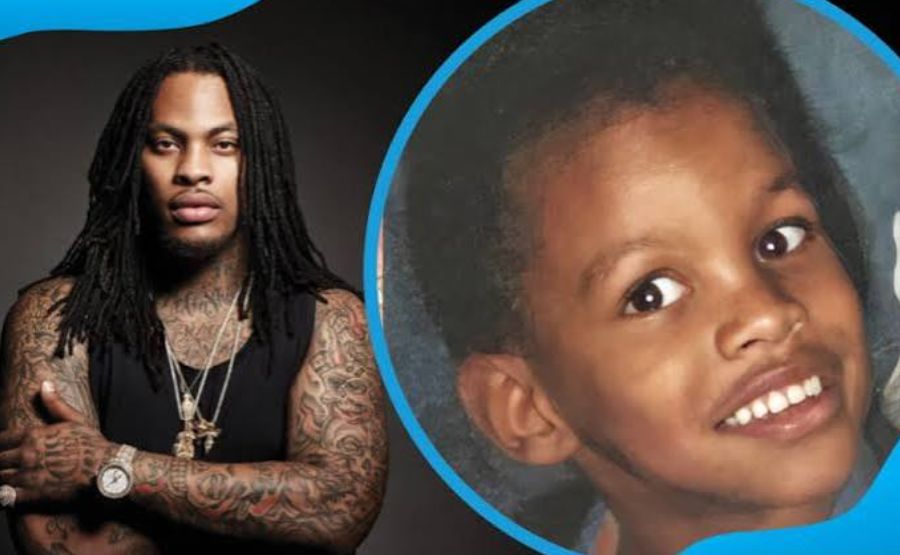
Rahleek Malphurs: The Brother Behind the Music
The grief that shaped one of hip-hop’s most viscerally charged careers did not begin in a recording studio or on a street corner — it began with a child on a bicycle, a small act of kindness, and a loss that no family ever fully recovers from.
Quick Facts
| Detail | Information |
| Full Name | Rahleek Hakeem Malphurs |
| Born | November 13, 1989, South Jamaica, Queens, New York City |
| Died | April 25, 2000 (aged 10), Riverdale, Georgia |
| Cause of Death | Riding a bicycle when struck by a car |
| Nationality | American |
| Known For | Younger brother of rapper Waka Flocka Flame (Juaquin James Malphurs); his death profoundly shaped his family and his brother’s public career |
| Mother | Toni Wright, whose real name is Debra Antney, is the CEO and music executive of Mizay Entertainment |
| Father | Rahleek Malphurs Sr. (absent during childhood; later died in incarceration from kidney failure) |
| Brothers | Juaquin James Malphurs (Waka Flocka Flame, born May 31, 1986); Nyquam Malphurs (Wooh Da Kid); Caodes Scott (Kayo Redd, 1986–2013); Tyquam Alexander |
| Lasting Significance | His death became a defining trauma in Waka Flocka Flame’s life and a recurring theme in his music, interviews, and humanitarian work; Debra Antney has cited his memory as central to the family’s advocacy for grief and mental health awareness |
South Jamaica, Queens: The World He Was Born Into
South Jamaica, Queens is a neighborhood that has never been gentle with its residents. By the late 1980s, it carried the specific weight of an urban community navigating poverty, the crack epidemic, and the systematic withdrawal of public investment that characterized that era’s approach to Black neighborhoods in New York City. It was also, like many such communities, a place of deep human texture — resilient families, mutual aid, block-level loyalty, and creative energy that would eventually find its way into the genre then emerging from the city’s boroughs.
Rahleek Hakeem Malphurs was born into this world on November 13, 1989. He was the younger brother of Juaquin James Malphurs, the future Waka Flocka Flame, who had arrived three and a half years earlier on May 31, 1986. Their mother was Debra Antney, a woman whose force of personality and professional ambition would eventually make her one of hip-hop’s most consequential managers. Their father, Rahleek Malphurs Sr., was not a presence in the home. Public accounts indicate he spent significant time incarcerated and later died in custody from kidney failure.
What this meant in practical terms was that Debra Antney raised her sons largely alone, building her professional life while maintaining a household. She worked in music management, cultivating relationships with artists who would soon become household names — Gucci Mane, Nicki Minaj, Ludacris. The household ran on discipline and love in roughly equal measure, and Debra Antney’s accounts of those years consistently emphasize the closeness of her sons to each other. In the absence of a father, the brothers oriented around one another.
See aslo “Jefferson Salvini Randall: The Weight of a Name Carried Quietly“
The Move South and a Childhood in Riverdale
At some point in the 1990s, the family relocated from South Jamaica to the Atlanta metropolitan area, eventually settling in Riverdale, Georgia — a suburb south of the city that was developing rapidly as families moved outward from urban Atlanta. The move placed the Malphurs family in the orbit of what was then becoming the geographical center of a new American musical form. Atlanta’s hip-hop scene, anchored by artists like Gucci Mane and energized by a production culture distinct from New York’s, would eventually absorb Juaquin and define his artistic identity. But that was still years away.
For Rahleek, Riverdale was simply home. He was a schoolboy. People who knew him in those years — including his mother, speaking publicly after his death — described a child who genuinely enjoyed learning. He took his schoolwork seriously. He took the schoolwork of his classmates seriously too. That quality, his inclination toward helping others at an age when most children are focused on their own needs, is the detail his family returns to most often when describing who he was.
Waka Flocka Flame, speaking in multiple interviews about his brother, has described a relationship built on the ordinary currency of childhood brotherhood: playfulness, protection, the particular warmth of a younger sibling who looks up to an older one. Juaquin was fourteen when Rahleek died. He had been his brother’s keeper in the literal sense that families assign such roles — looking out for the younger one, covering for him when necessary.
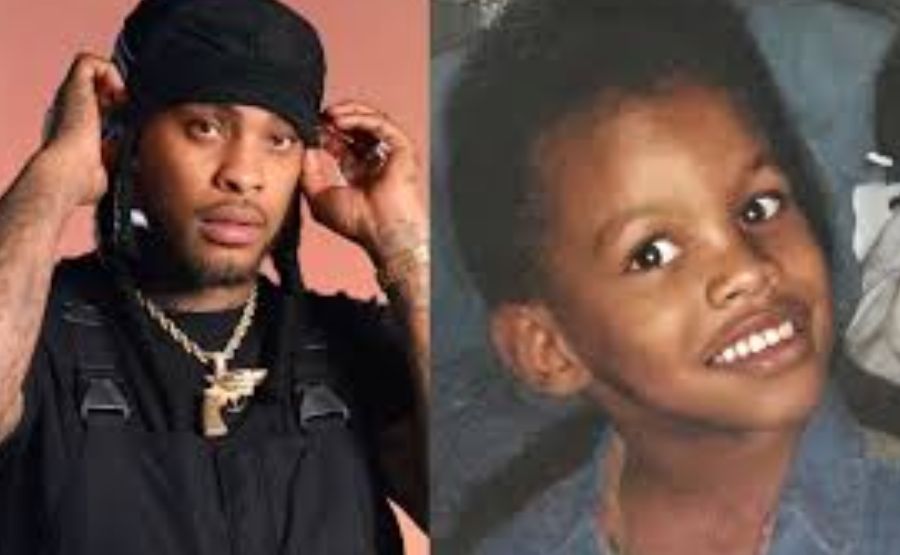
April 25, 2000: What Happened and Why It Matters
The specific circumstances of Rahleek’s death come most directly from Debra Antney herself. In a 2010 interview with Vibe magazine — one of the most important primary sources on this subject — she described what had happened a decade earlier with the clarity and the weight of a woman who had rehearsed the story many times without it ever becoming easier.
Rahleek had wanted to go to a classmate’s home to help him with schoolwork. The reported motivation: the classmate’s father was strict, and the boy needed to finish his work before his father came home. Rahleek, at ten years old, decided to go help. He went out on his bicycle. Juaquin told him to go — said he would cover for him if their mother asked where he was.
On the way home, a vehicle struck Rahleek. He died on April 25, 2000. He was ten years old and approximately a month away from his eleventh birthday.
Debra Antney told Vibe that Waka blamed himself for years. He was the one who had told his brother to go. He was fourteen, a teenager doing what teenagers do — covering for a younger sibling’s small expedition — and that decision placed him in a position he has never fully extracted himself from. His mother confirmed this directly: the guilt became a central feature of his psychology. It contributed, by her account, to the shift in his personality and his relationship to school, to structure, to the future.
That detail — the teenager who said “go, I’ll cover” — is the kind of particular human fact that no amount of retrospective analysis can fully metabolize. It just sits there, inside the story, demanding to be acknowledged.
The Family He Left Behind: A Portrait in Loss and Resilience
Debra Antney has spoken publicly on multiple occasions about what Rahleek’s death cost the family, and what came after. The phrase she used on Twitter on December 30, 2013 — “I just lost another son” — was not metaphorical. By 2013, she had lost two. Caodes Scott, known professionally as Kayo Redd, her son who shared the music industry with Waka, died on December 29, 2013, at twenty-seven, in what law enforcement and family statements characterized as a suicide by self-inflicted gunshot wound at his home in Henry County, Georgia.
The Malphurs family’s experience of grief is not a single event. It is a series of losses compounding over thirteen years, each one arriving in a context shaped by the one before. Rahleek died in 2000 when the family was not yet publicly known. Kayo Redd died in 2013, when Waka Flocka Flame was a chart-certified rapper with a devoted following and a public platform — meaning the second loss happened in view of an audience that had opinions about it.
Nyquam Malphurs, who performs as Wooh Da Kid, has navigated a musical career inside his brother’s larger shadow, collaborating with Waka on projects and maintaining a presence within the Bricksquad ecosystem Waka built. Tyquam Alexander has maintained a markedly private life. The family has not been spared.
Debra Antney, who managed Waka’s career and who built Mizay Entertainment into a genuinely significant operation within hip-hop’s infrastructure — her clients at various points included Nicki Minaj, Gucci Mane, OJ Da Juiceman, and Lex Luger — has used her platform, particularly in later years, to speak about grief, mental health, and the particular pressures that fall on young Black men who feel the weight of their family’s financial expectations. Her account of Kayo Redd’s final hours — that he struggled with the belief that he couldn’t provide for her the way Waka could — is, among other things, an indictment of the masculinity codes that silently destroy people.
Personal Life: What a Decade Contains
Rahleek Malphurs had ten years. That is both the fact and the limitation of any biographical account of his life. He did not have a career. He did not have relationships in the adult sense. He did not produce a body of work, achieve a position, win a prize, or leave a record that can be cross-referenced.
What he had was a family. A mother who speaks of him in the present tense of love even twenty-five years later. Brothers who grew up in the space his absence created. A classmate somewhere in Riverdale who needed help with homework on an April evening in 2000, and whose name history has not recorded, but whose circumstance set the last events of Rahleek’s life in motion.
He had a father he did not know. Rahleek Malphurs Sr.’s incarceration meant his sons grew up without him. The absence of a father in a household with multiple boys navigating a world that offered them limited structural support is not simply a biographical detail — it is one of the organizing conditions of the American Black family experience in that era, and the Malphurs family was not exceptional in facing it. They were representative. What made them exceptional was what they built despite it.
Debra Antney raised sons who were creative, ambitious, and deeply attached to each other. Whatever their individual trajectories, the emotional infrastructure of the household she built is legible in the way they speak about each other and about her. Waka Flocka Flame, in particular, has been publicly and consistently devoted to his mother — a devotion that is not uncomplicated, since their professional relationship as artist and manager eventually ended in dispute, but that remains emotionally foundational to his public identity.
Rahleek sits at the center of all of this. He is, in a very real sense, the person around whom the rest of the family’s emotional life organized after April 2000.
How Rahleek Shaped Waka Flocka Flame’s Career and Public Identity
Waka Flocka Flame’s music is not typically described in terms of emotional depth. His early work — Flockaveli in 2010, “Hard in da Paint,” “No Hands” — prioritized sonic impact over lyrical interiority. The production was brutal and immediate. The persona was aggressive and unapologetic. But underneath the aesthetic was a person who had carried a specific grief for a decade before he ever released a record.
Debra Antney’s 2010 Vibe interview provides the clearest connection. She told the magazine that after Rahleek’s death, Waka “hated everything dealing with school” because Rahleek’s last errand had been educational — going to help a classmate with homework. School became associated, in Waka’s psychology, with the chain of events that ended his brother’s life. That psychological displacement — from a concrete loss to a generalized aversion — is the kind of grief response that mental health professionals recognize as common and that families often don’t name until years later.
In multiple interviews following Kayo Redd’s death in 2013, Waka spoke with unusual openness about his relationship to loss. He told HipHopDX that after losing Kayo, he drank more, was less present in his personal relationships, and became emotionally unavailable in ways he later had to work to correct. He described a process of recovery that involved reading, meditation, dietary change, and “the art of release.” He said he did not attend either of his younger brothers’ funerals — he could not face their bodies. The statement is striking in its honesty: “I don’t want to see any body without a spirit in it.”
That sentence is also, indirectly, a window into what Rahleek’s death did to him at fourteen. Having seen one brother’s body — having been present in some way for the aftermath of Rahleek’s accident — he made the decision not to repeat that experience with Kayo. The losses are not separate. They are layered. Each one intensified by the one that came before.
In 2020, Waka Flocka Flame received an honorary doctorate in philanthropy and humanitarianism. He has used his platform to address mental health, community support, and the costs of unprocessed grief. From Rahleek’s passing in April 2000 to those public declarations, there is no figurative connection. It is biographical.
Legacy: The Permanence of a Brief Life
The legacy of Rahleek Malphurs is not the kind that enters encyclopedias or generates Wikipedia articles about his own achievements. It is the kind that lives in the people who survived him.
Debra Antney has spoken of both Rahleek and Kayo as catalysts for her own advocacy around mental health and family resilience. The losses that should have broken the family have instead, by her telling, deepened its commitment to speaking honestly about grief, about the pressures on young Black men, and about the cost of silence when people are struggling. “I just don’t know why he would do such a thing,” she said of Kayo in 2013 — a statement that contains within it every parent’s anguish and also the cultural moment’s broader failure to create adequate space for male emotional expression.
The Atlanta hip-hop world that Waka Flocka Flame helped define has never been particularly characterized by visible vulnerability. The aesthetic codes of trap music — its aggressive surfaces, its insistence on strength — are in many ways a response to the environments that produced it. Within that context, Waka’s willingness to speak publicly about carrying guilt for his brother’s death, about not attending funerals because he cannot bear to see a body without spirit, represents a departure that is worth noting. He has named his grief. Not many figures in his genre do.
For the people who search for Rahleek’s name — and they do, in significant numbers, judging by the proliferation of articles attempting to profile him — the interest reflects something that transcends celebrity journalism. There is a human need to understand the shape of a life that ended before it had a chance to define itself. Who was the boy who went to help a classmate with homework? What would he have become? The questions are unanswerable. The asking of them is, itself, a form of respect.
Final Words
Rahleek Malphurs lived for ten years and three months. He gathered the things a youngster gathers during that time, such as a mother’s affection, a brother’s devotion, a teacher’s attention, and a classmate’s need. He acted on the last of these one evening in April 2000 and did not come home.
His story resists the categories that biography typically operates in. He was not famous. He accomplished nothing that the world records. He was a child. And yet his brief existence shaped the inner life of a man whose music reached millions, whose mother helped build a genre, and whose family has spent twenty-five years navigating the specific weight of his absence.
What his life offers, in the end, is not a lesson about achievement or ambition. It is something quieter: evidence that a person can matter permanently without ever becoming public, that the shape a child leaves in a family lasts longer than any career, and that grief, honestly carried and honestly spoken, can become the basis for something that helps other people carry their own.
Debra Antney said it plainly in 2013, posting through the second of her sons’ deaths: “I just lost another son.” She had already lost Rahleek. She carried both. She has kept going. That, too, is part of what Rahleek’s life produced — a mother whose grief made her more, rather than less, present in the world.
FAQs
1. Who was Rahleek Malphurs?
Rahleek Hakeem Malphurs was an American child born November 13, 1989, in South Jamaica, Queens, New York City. He was the younger brother of rapper Waka Flocka Flame (Juaquin James Malphurs) and the son of music executive Debra Antney. He died on April 25, 2000, at age ten, after being Riding a bicycle when struck by a car in Riverdale, Georgia.
2. How did Rahleek Malphurs die?
He was struck by a car while riding his bicycle in Riverdale, Georgia, on April 25, 2000. According to Debra Antney’s account in a 2010 Vibe interview, Rahleek had gone out to help a classmate with schoolwork before the classmate’s father came home. He was killed during that errand.
3. How old was Rahleek when he died?
He was ten years old. He was born November 13, 1989, and died April 25, 2000, a few weeks before what would have been his eleventh birthday.
4. Who is Waka Flocka Flame and how is he related to Rahleek?
Waka Flocka Flame, born Juaquin James Malphurs on May 31, 1986, is Rahleek’s older brother. He is an American rapper who rose to prominence in 2009 with the single “O Let’s Do It” and consolidated that fame with his 2010 debut album Flockaveli, which reached number six on the Billboard 200. Its single “No Hands” achieved diamond certification from the RIAA. Juaquin was approximately thirteen or fourteen years old when Rahleek died.
5. Who is Debra Antney?
Debra Antney, also known as Toni Wright, is Rahleek’s mother and a prominent figure in hip-hop management. She founded Mizay Entertainment and managed artists including Gucci Mane, Nicki Minaj, OJ Da Juiceman, Lex Luger, and Waka Flocka Flame. She has spoken publicly about Rahleek’s death in several interviews, most notably with Vibe magazine in 2010, and has become an advocate for grief awareness and mental health within the music community.
6. Did Waka Flocka Flame blame himself for Rahleek’s death?
Yes. Debra Antney confirmed in the 2010 Vibe interview that Waka told Rahleek to go help the classmate and said he would cover for him. When Rahleek was killed on that errand, Waka carried the guilt of having been the one who told him to go. Antney described this as a turning point in Waka’s personality and his relationship to school and routine.
7. Who were Rahleek’s other brothers?
He had four brothers: Juaquin James Malphurs (Waka Flocka Flame), Nyquam Malphurs (who performs as Wooh Da Kid), Caodes Scott (Kayo Redd), and Tyquam Alexander.
8. What happened to Kayo Redd?
Caodes Scott, known as Kayo Redd, was an aspiring rapper signed to Waka Flocka Flame’s Bricksquad Monopoly Records. He was found dead at his home in Henry County, Georgia on December 29, 2013, at approximately twenty-seven years old. Law enforcement did not suspect foul play, and the death was characterized as a suspected suicide by self-inflicted gunshot wound. Debra Antney confirmed his death publicly on Twitter with the words: “I just lost another son.”
9. How did losing Rahleek affect Waka Flocka Flame’s career?
Waka has cited Rahleek’s death repeatedly in interviews as a foundational trauma. In a 2010 Vibe interview facilitated through his mother’s account, the connection between Rahleek’s educational errand and Waka’s subsequent aversion to school is documented. In HipHopDX interviews following Kayo Redd’s death in 2013, Waka spoke about the compounding nature of his grief and the behavioral consequences — including increased drinking and emotional unavailability — that he worked to address through reading, meditation, and lifestyle changes.
10. Did Waka attend Rahleek’s or Kayo’s funerals?
In a HipHopDX interview following Kayo Redd’s death in 2013, Waka stated that he did not attend either of his younger brothers’ funerals. He explained that he could not bring himself to see their bodies. He described this as a deliberate decision to protect his mental state, not as abandonment.
11. What did Rahleek’s father do?
Rahleek Malphurs Sr. was largely absent from the household during Rahleek’s childhood. Available accounts indicate he spent significant periods incarcerated and later died in custody from kidney failure. He had minimal documented involvement in Rahleek’s upbringing.
12. Was Rahleek ever involved in music like his brothers?
No. He died at ten years old and had no involvement in the music industry. His brothers Waka Flocka Flame and Wooh Da Kid pursued music professionally. Kayo Redd was in the early stages of a rap career at the time of his death in 2013.
13. Why do so many people search for Rahleek Malphurs today?
He became known to the public primarily through Waka Flocka Flame’s interviews and public statements, in which Waka has repeatedly cited Rahleek’s death as a defining moment in his life. Fans seeking to understand the emotional foundations of Waka’s music and public persona encounter Rahleek’s story as a central element.
14. What is Debra Antney’s legacy in connection to Rahleek?
Antney has used her platform, particularly following the deaths of both Rahleek and Kayo Redd, to speak openly about grief, mental health, and the pressures facing young Black men in the music industry and beyond. She has framed both losses not as separate events but as part of a sustained family experience of loss that has deepened her commitment to advocacy and honest public conversation.
15. How should Rahleek Malphurs be remembered?
As a ten-year-old boy who, by all verified accounts, was kind, curious about learning, and inclined to help others — qualities his family has consistently described. He never had the chance to define himself on a larger stage. What he defined, instead, was the interior life of a family that has carried him for twenty-five years: a mother who has spoken his name publicly ever since, a brother who built a career partly shaped by the guilt and grief of losing him, and a family that has used that loss to move toward greater honesty about the things that break people and the things that hold them together.
Every story matters—discover them all with Daily Narrative.