Jon Eicholtz: The Architect Who Built More Than Buildings
Jon Truesdale Eicholtz’s career offers a quiet corrective to the American entertainment industry’s tendency to reduce accomplished people to the sum of their most famous relationships — he was a significant architectural engineer and real estate developer for three decades before marrying Barbara Eden, and the fifty years of professional achievement that bracket that marriage deserve examination on their own terms.
Quick Facts
| Detail | Information |
| Full Name | Jon Truesdale Eicholtz |
| Date of Birth | August 22, 1939 |
| Birthplace | Topeka, Kansas, USA |
| Nationality | American |
| Primary Roles | Architect; architectural engineer; real estate developer; philanthropist |
| Education | University of Kansas, Bachelor of Science in Architectural Engineering (1962) |
| Major Projects | Sheraton Waikiki Hotel (1,800 rooms; Hawaii); Commerce Tower (30-story skyscraper, Kansas City, Missouri); 10560 Wilshire (Los Angeles); Catalina Landing |
| Career Landmark | President and CEO, The Hawaii Corporation; joined Pankow Organization (~1978) |
| Industry Recognition | The Sheraton Waikiki slipforming method was recognized by Engineering News-Record as a significant advancement in building technology. |
| First Marriage | Previously married; first wife died of cancer (details not publicly disclosed) |
| Second Marriage | Barbara Eden (born August 23, 1931) — married January 5, 1991, Grace Cathedral, San Francisco |
| Stepson | Matthew Ansara (Barbara’s son with actor Michael Ansara; died 2001) |
| Philanthropy | Jon T. Eicholtz and Barbara Eden Acting Scholarship, University of Kansas (~$300,000, established ~2012–2014) |
| Residence | Beverly Hills, California |
| Net Worth | Estimated $10 million–$20 million (most consistent sources; some cite lower) |
| Age (2026) | 86 years old |
| Companion animal | Bentley, a Labradoodle (adopted during the COVID-19 pandemic) |
Topeka, 1939: The Foundation Beneath the Foundation
Topeka, Kansas, in the late 1930s was a city in the full weight of American midcentury striving. It was a state capital, a railroad hub, and a community that had survived the Depression’s worst years on a combination of agricultural resilience and institutional steadiness. It was also, for a boy who would grow up to spend fifty years erecting large structures in cities across America, precisely the right kind of environment — practical, material, attentive to how things are actually built rather than merely imagined.
Jon Truesdale Eicholtz was born there on August 22, 1939. What is known about his family background is deliberately limited; he has kept those details private across eight decades of public adjacency. What is verifiable is that he grew up in the same Kansas that produced a specific disposition toward work: methodical, durable, oriented toward craft rather than celebrity. He attended local schools in Topeka before enrolling at the University of Kansas — the state’s flagship public research university, with its main campus in Lawrence — to study architectural engineering.
He graduated in 1962 with a Bachelor of Science in Architectural Engineering. The degree placed him at the intersection of two disciplines that are sometimes treated as separate: the technical world of structural systems, materials engineering, and load calculations, and the design world of spatial planning, proportion, and the human experience of built spaces. That dual fluency would define his professional practice for the next five decades.
The year 1962 was not a neutral moment to enter the architectural profession. American cities were rebuilding, expanding, and in some cases making planning decisions whose consequences — urban expressways bisecting communities, modernist housing towers disconnected from street life — would be contested for generations. Eicholtz entered a profession at the height of its social influence and its institutional confidence, just before that confidence would be seriously challenged.
See also “Fielder Jewett: Two Careers, One Private Life, and the Rarest Thing in Hollywood“
Hawaii: A Decade at the Edge of Modern Construction
After graduating from the University of Kansas, Jon Eicholtz made the choice that distinguished him from most of his architectural engineering classmates: he went to Hawaii. The decision placed him, in the early 1960s, in one of the most architecturally demanding and geographically specific environments available to an American professional. Hawaii had achieved statehood only in 1959. It was in the early stages of a hotel and resort construction boom that would reshape its economy and its coastline simultaneously.
He spent nearly a decade working on residential and commercial projects across the islands. Hawaii’s architectural context was unlike anything the mainland offered: tropical conditions, salt air, seismic considerations, a specific relationship between indoor and outdoor space inherited from both indigenous Pacific and Asian influences, and a tourism economy that placed premium value on grand hospitality structures. It was also a state where the logistics of construction — shipping materials to an island chain in the middle of the Pacific Ocean — demanded extraordinary planning efficiency.
The defining professional achievement of his Hawaiian period was his work on the Sheraton Waikiki Hotel — an 1,800-room structure on Oahu’s famous beach that became one of the largest hotels in the Pacific region. The engineering challenge that distinguished the project was specifically noted by the industry: he collaborated with engineers to transform the building’s design from a conventional cast-in-place concrete structure into one constructed using slipforming techniques. Slipforming is a method of continuous concrete pouring that allows vertical structures to rise steadily rather than in discrete pours, significantly reducing the time and cost of large tower construction. Engineering News-Record, the authoritative trade publication of the construction industry, identified the Sheraton Waikiki slipforming application as a landmark contribution to construction practice.
He served as President and CEO of The Hawaii Corporation during this period — an executive responsibility that placed him in charge of operations, project management, and business development, not merely design. The title reflected an early transition from technical practitioner to organisational leader that would characterise the rest of his career.
Pankow and the Mainland: Commerce Tower and the California Years
Around 1978, Jon Eicholtz joined the Pankow Organisation — formally Charles Pankow Builders, one of the most respected design-build construction firms in the United States. The Pankow model was unusual in American construction for its integration of design and construction expertise within a single organisation, rather than separating the architectural/engineering phase from the contracting phase. For an architectural engineer with Eicholtz’s combination of design training and executive experience, the firm was an ideal professional environment.
His most publicly cited project from this period is Commerce Tower in Kansas City, Missouri — a 30-story skyscraper that became a landmark of Kansas City’s downtown. His role was project manager, the professional position responsible for coordinating the hundreds of technical, logistical, contractual, and human decisions that transform an approved design into a standing building. Project management at this scale is not a support function. It is the central executive function of construction: the role that determines whether a project is delivered on time, within budget, and at the quality the design specified.
The Kansas City project carried personal resonance beyond the professional. Commerce Tower was built in the same midwestern territory where Eicholtz had grown up — a geographic return of sorts, an opportunity to demonstrate that the Kansan who had gone to Honolulu to reshape hotels could return to the American interior and reshape its skylines.
He also managed 10560 Wilshire Boulevard in Los Angeles and Catalina Landing — projects that established his footprint in the California market that would eventually become his permanent home. The transition from Hawaii through Kansas City to Los Angeles traces the gravitational pull of American real estate development in the late twentieth century: toward the West Coast, toward mixed-use urban development, toward the property investment strategies that generated the longest-term financial returns.
His later career involved real estate development and investment alongside the architectural practice — a strategic combination that moved him from being paid to design and manage buildings to being a partial owner of the assets those buildings created. Sources indicate he pursued multi-unit residential property investment with at least one business partner, though the full details of his investment portfolio are not part of the public record.
Personal Life: Loss, Restraint, and the Meeting That Changed Everything
Before Barbara Eden, Jon Eicholtz was married once. His first wife died of cancer. He has never spoken publicly about her, and this silence is consistent with a broader pattern of personal reticence that makes him, as a biographical subject, both compelling and opaque. What can be said is that the loss of a spouse to a prolonged illness represents a specific kind of grief — one that does not resolve quickly and that shapes how a person approaches subsequent relationships with both greater caution and, when trust eventually rebuilds, deeper intentionality.
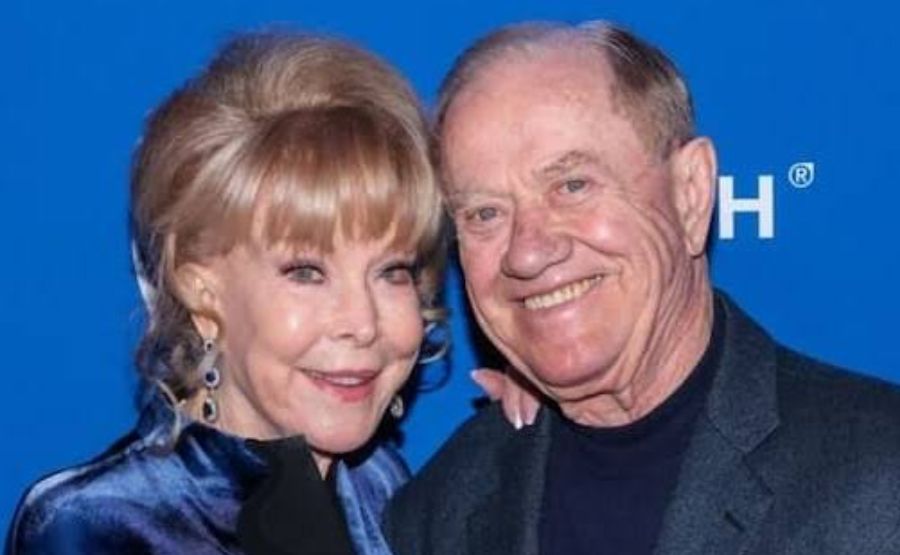
Jon Eicholtz and Barbara Eden met in 1988, introduced through mutual social connections in the Los Angeles world they both inhabited. Eden, by 1988, had navigated her own complicated relationship history: a nineteen-year marriage to actor Michael Ansara that ended in 1974, a subsequent marriage to music producer Charles Fegert that lasted five years and ended in 1982, and a period of personal recalibration that made her cautious about new romantic investment. Eden has spoken publicly about the early stages of their relationship, describing her initial uncertainty — a first encounter that left her unsure whether Eicholtz would follow up, followed by his patient, consistent return.
What Eicholtz offered, by multiple accounts, was the quality that his entire professional biography had already demonstrated: steadiness. The man who had spent decades managing complex construction projects across multiple time zones and climate zones, who had built institutions in Hawaii, managed towers in Kansas City, and navigated Los Angeles real estate markets, brought to personal relationships the same unhurried discipline he brought to everything else. He called. He was patient. He did not perform romantic intensity he did not feel.
They married on January 5, 1991, at Grace Cathedral in San Francisco — the Episcopal cathedral perched above Nob Hill that has served as the venue for significant civic and personal ceremonies in California for more than a century. The event was intimate, attended by close family and friends, and produced no publicity that either party sought.
Matthew Ansara: The Loss That Defined Their Marriage’s Hardest Years
Barbara Eden’s son Matthew Ansara — born to Eden and her first husband, actor Michael Ansara — became Jon Eicholtz’s stepson upon their marriage in 1991. Matthew was born in 1965 and was approximately 25 years old when Eicholtz entered his life as a stepfather. Whatever the dynamics of that relationship, the biographical record does not expose them.
What the record does contain is the tragedy of Matthew Ansara’s death in 2001, at the age of 35, from a heroin overdose. Eden has spoken publicly about Matthew’s struggles with addiction across the years preceding his death, and about the profound grief of losing him. The experience of losing a child to addiction is one of the most devastating and psychologically complex forms of parental loss — compounded, in this case, by the specific context of the addiction crisis of the late 1990s and early 2000s, before the broader opioid epidemic had generated the public health infrastructure and cultural awareness that the crisis now receives.
Eicholtz’s response to Matthew’s death, like virtually every other element of his private life, has been kept entirely out of public discourse. He and Barbara have navigated their grief together, in private, over a period now exceeding two decades. The marriage not only survived the loss but remained, by all available evidence, intact and stable — a fact that says something about the foundation they had built in the decade preceding it.

Philanthropy: The Kansas Scholarship and the Ethics of Giving Back
The most publicly documented act of philanthropy that Jon Eicholtz has undertaken — and among the most personally revealing — is the Jon T. Eicholtz and Barbara Eden Acting Scholarship at the University of Kansas. The couple established the scholarship with a donation of approximately $300,000, directed specifically toward students pursuing professional careers in acting.
The layers of this gift are worth examining. The University of Kansas is Eicholtz’s own institution — the place where his professional formation began in 1958 and concluded in 1962. Returning to it with a scholarship was both an act of gratitude and a deliberate investment in the next generation of creative professionals. The scholarship’s focus on acting, rather than on architecture or engineering or real estate, reflects something genuine about the couple’s shared values: Eden’s lifetime in the performing arts and Eicholtz’s deep respect for that work.
A $300,000 endowment to a university scholarship is a substantial gift. It is not the nine-figure philanthropic commitment of a tech billionaire, but it is the kind of gift that has concrete, sustained impact: it generates scholarship income annually, it carries the donors’ names in perpetuity, and it makes the arts accessible to students who might otherwise not be able to afford the training required for professional performance careers. The decision to give it to a state university rather than a prestigious conservatory reflects the couple’s own educational and values backgrounds.
Their broader philanthropic activity — described across sources as including education, healthcare, and environmental conservation — has remained largely out of the public record, which is itself consistent with a giving philosophy that appears to prioritise impact over recognition.
The Marriage to Barbara Eden: Thirty-Five Years of Private Partnership
Jon Eicholtz and Barbara Eden married in 1991 and have remained together as of 2026 — thirty-five years into a union that has outlasted most Hollywood marriages by several multiples. Eden was born on August 23, 1931: one calendar day and eight years after Eicholtz’s August 22, 1939 birthday, a coincidence they have reportedly noted with amusement.
The marriage’s endurance is its own biographical statement. Eden’s earlier marriages — to Michael Ansara and Charles Fegert — had both ended in divorce, and her public statements have made clear that she approached her third marriage with the careful deliberateness of someone who had learned from prior experience. What she found in Eicholtz, by her own account, was a man whose professional steadiness translated into personal reliability: someone who was present, consistent, and not engaged in the competitive celebrity dynamics that had complicated her earlier partnerships.
Eicholtz, for his part, has navigated the specific challenge that faces any accomplished person who marries someone more famous than themselves: the perpetual risk of being reduced to a biographical footnote in someone else’s story. He has handled this with characteristic equanimity. He has not sought his own celebrity, has not pursued adjacent entertainment industry roles, and has not used the marriage to amplify his own professional profile. He remains, in the public eye, primarily “Barbara Eden’s husband” — and appears entirely unbothered by this characterisation.
They live in Beverly Hills. During the COVID-19 pandemic’s isolation period, they adopted a Labradoodle named Bentley — a detail that signals domestic ordinariness beneath the Hollywood address. Eden has appeared periodically at public events in her eighties; Eicholtz accompanies her with the low-key consistency that has defined his presence in her life since 1988.
Legacy and Influence: What Fifty Years of Architecture Leaves Behind
Jon Eicholtz’s professional legacy is architecturally concrete — that is not a metaphor. The Sheraton Waikiki, opened in 1971, remains standing on Waikiki Beach and continues to operate as one of Honolulu’s major hospitality destinations. Commerce Tower stands in Kansas City’s downtown, a 30-story presence in the city’s skyline. 10560 Wilshire and Catalina Landing represent his contributions to Los Angeles’s built environment.
The slipforming technique that Engineering News-Record highlighted in connection with the Sheraton Waikiki was not merely a cost-saving innovation on one project. It was a contribution to construction practice that other developers and engineers could reference and adapt. Industry publications exist precisely to disseminate these kinds of technical advances, and the fact that Engineering News-Record chose to cite the Sheraton Waikiki project placed it in a body of professional literature that influenced practitioners beyond Hawaii.
His career also represents a specific model of professional development that the architectural engineering field has produced but rarely publicised: the practitioner who moves fluidly between technical design work, project management, executive leadership, and real estate investment without losing the foundational technical credibility that makes each transition meaningful. He was not a famous architect in the way that I.M. Pei or Frank Gehry were famous. He was a highly accomplished practitioner who built real things that real people used, across a fifty-year career that never sought recognition beyond its professional community.
The University of Kansas scholarship ensures that his name will persist in an institution of learning after his career is fully concluded — not in a lecture hall named after him, but in the annual reality of a student who could not otherwise afford acting training and who pursues that training because Jon Eicholtz and Barbara Eden made it financially possible. That is a specific and durable kind of legacy.
Final Words
At 86 years old, Jon Truesdale Eicholtz has lived a professional life that reached genuine distinction across multiple phases and geographies — from the engineering innovation of Hawaii’s hospitality boom through the project management of Midwestern skyscrapers to the real estate development strategies of coastal California — and a personal life that has been defined primarily by its constancy.
The honest biographical assessment of Jon Eicholtz is this: he is a man who built things, literally and figuratively, with unusual patience and without apparent need for public recognition. He built hotels and towers that still stand. He built a real estate career that generated lasting financial independence. He built a marriage, across thirty-five years, that has outlasted the industry that most frequently discusses it. He built a scholarship at his own university that will generate opportunities for creative students long after he is gone.
What he has not built is a public persona. There is no memoir. No interview circuit. No social media presence. Apart from the occasional charitable announcement, no public remarks about anything. The absence is not evasion — it is philosophy. Eicholtz appears to hold, with genuine consistency, the view that a professional life is justified by what it produces rather than by how its story is subsequently told.
In an entertainment-adjacent world that measures people relentlessly by their publicised narrative, that position is quietly unusual. It is also, in its way, the most Kansas thing about him.
FAQs
1. Who is Jon Eicholtz?
Jon Truesdale Eicholtz is an American architectural engineer, real estate developer, and philanthropist born on August 22, 1939, in Topeka, Kansas. He is best known publicly as the husband of actress Barbara Eden, star of I Dream of Jeannie, though he built a substantial independent career in architecture and real estate development spanning more than fifty years before and after that marriage.
2. Where did Jon Eicholtz study?
He attended the University of Kansas in Lawrence, Kansas, where he earned a Bachelor of Science in Architectural Engineering in 1962. The degree combined structural engineering principles with design and construction management — a dual foundation that defined his professional practice for the following five decades.
3. What were Jon Eicholtz’s most significant professional projects?
His most cited projects include the Sheraton Waikiki Hotel in Honolulu, Hawaii (1,800 rooms; notable for its innovative slipforming construction technique recognised by Engineering News-Record); Commerce Tower in Kansas City, Missouri (a 30-story skyscraper where he served as project manager); 10560 Wilshire Boulevard in Los Angeles; and Catalina Landing.
4. What was the slipforming technique at the Sheraton Waikiki?
Slipforming is a construction method that pours concrete continuously as a building rises, rather than in discrete horizontal pours. On the Sheraton Waikiki project, Eicholtz collaborated with engineers to redesign the original cast-in-place structure into a slipformed one, significantly reducing construction costs and time. Engineering News-Record, the primary trade publication of the American construction industry, identified this application as a landmark contribution to construction practice.
5. In Hawaii, what managerial positions did Eicholtz occupy?
He served as President and CEO of The Hawaii Corporation during his nearly decade-long period working in Hawaii following his 1962 graduation. The executive role placed him in charge of operations, project management, and business development at an organisational level well beyond typical early-career architectural practice.
6. What organisation did Eicholtz join around 1978?
He joined the Pankow Organisation (formally Charles Pankow Builders), a respected American design-build construction firm known for integrating design and construction expertise within a single organisational structure. His work at Pankow included the Commerce Tower project management in Kansas City.
7. When and where did Jon Eicholtz and Barbara Eden marry?
They married on January 5, 1991, at Grace Cathedral in San Francisco — the Episcopal cathedral on Nob Hill that has served as the venue for significant ceremonies in California for over a century. The wedding was intimate, attended by close family and friends, and was not publicly announced or reported as a celebrity event.
8. How did Jon Eicholtz and Barbara Eden meet?
They met in 1988 through mutual social connections in Los Angeles. Eden has described the beginning of their relationship as cautious — she was uncertain after their first meeting whether he would follow up, given her prior difficult relationship experiences. He called, returned consistently, and they built a relationship over approximately two years before marrying.
9. Was Jon Eicholtz previously married?
Yes. He was married once before Barbara Eden. His first wife died of cancer. He has never spoken publicly about her or about the details of that marriage, consistent with his general approach to personal privacy.
10. What happened to Matthew Ansara?
Matthew Ansara was Barbara Eden’s son from her first marriage to actor Michael Ansara. He became Jon Eicholtz’s stepson upon the 1991 marriage. Matthew died in 2001 at the age of 35 from a heroin overdose. Eden has spoken publicly about his struggle with addiction and the grief of losing him. Eicholtz has maintained silence about the loss, consistent with his approach to all personal matters.
11. What is the Jon T. Eicholtz and Barbara Eden Acting Scholarship?
It is a scholarship established by Eicholtz and Eden at the University of Kansas, funded by an approximately $300,000 donation made around 2012–2014. The scholarship supports students pursuing professional careers in acting — a field personally central to Eden’s life and funded through the institution where Eicholtz’s own education began. It represents one of the few acts of formal public philanthropy the couple has undertaken in their own names.
12. What is Jon Eicholtz’s estimated net worth?
Most sources estimate his net worth between $10 million and $20 million, accumulated through his career in architectural engineering, project management, and real estate development and investment. Some sources provide lower estimates. No verified financial disclosure exists. Barbara Eden’s net worth is separately estimated at approximately $10 million.
13. How old is Jon Eicholtz, and where does he live?
He was born on August 22, 1939, making him 86 years old as of 2026. He and Barbara Eden reside in Beverly Hills, California, where they have maintained their primary home since at least the time of their 1991 marriage.
14. What is notable about the birth dates of Jon Eicholtz and Barbara Eden?
They were born on consecutive calendar days in August, eight years apart: Eicholtz on August 22, 1939, and Eden on August 23, 1931. The coincidence — one day and eight years — is a biographical detail both have acknowledged publicly with evident affection.
15. Why does Jon Eicholtz have so little public documentation despite a fifty-year career?
His career was conducted in the architectural engineering and commercial real estate sectors — industries that generate trade publication coverage rather than mainstream media attention. He has never sought public attention, maintains no known social media presence, has given no general-interest interviews about his professional work, and has consistently defined himself through professional accomplishment rather than public narrative. The primary pathway through which general audiences became aware of him was his 1991 marriage to Barbara Eden, whose career placed her in the entertainment media’s field of attention.
Every story matters—discover them all with Daily Narrative.