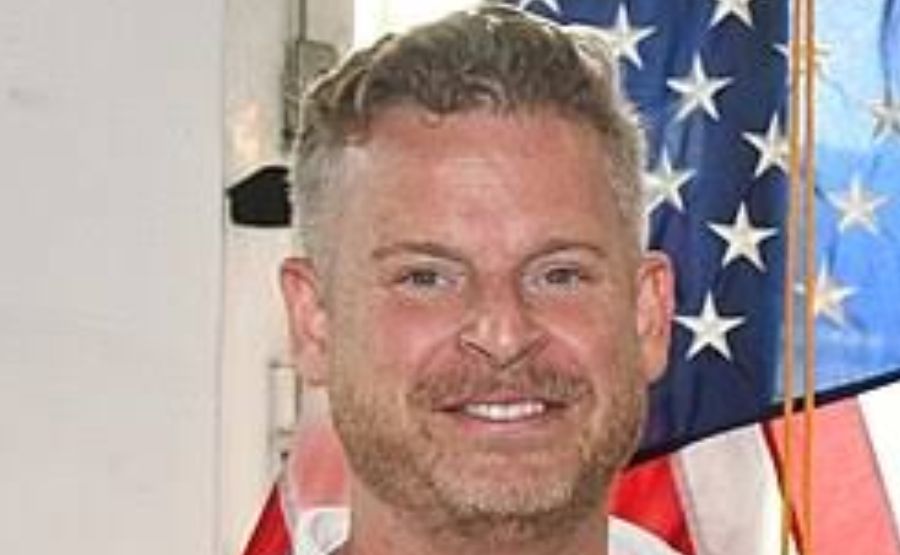
Matt Lashey: From the Broadway Stage to the Front Lines of Patient Care
Matt Lashey is proof that the most consequential career pivots are rarely strategic — they are forced upon us by love, fear, and the sudden recognition that the skills we spent years building in one world are precisely what another world desperately needs.
Quick Facts
| Detail | Information |
| Full Name | Matt Lashey |
| Nationality | American (reported as born in Germany; raised in the United States) |
| Education | B.F.A. in Musical Theatre, Boston Conservatory at Berklee (1991–1995); M.B.A. in Marketing and Media Management, Columbia Business School (graduated 2005) |
| Primary Roles | Treatment Technologies & Insights, Inc. co-founder and chief executive officer.(TTI); Creator, chemoWave and Wave Health apps; Former Broadway performer; Former media research executive |
| Broadway Credits | Thoroughly Modern Millie (April 18, 2002 – June 20, 2004), Swing (original), Marquis Theatre; 42nd Street revival (2001–2005), ensemble performer, replacement understudy for Billy Lawlor, St. James Theatre |
| Notable Regional Credits | Balladeer, Assassins (Boston Premiere); George Bailey, It’s a Wonderful Life; Sam, Shenandoah |
| Key Corporate Roles | Acting SVP of Primary Research, Discovery Networks; VP of Strategic Insights, Lifetime Networks and A&E Television’s Digital Assets; VP of Innovation Insights and Business Leadership, Maddock Douglas consulting firm |
| Company Founded | Treatment Technologies & Insights, Inc. (TTI), co-founded 2016 |
| Apps Created | chemoWave (launched 2017, now transitioned to Wave Health); Wave Health (current flagship product) |
| Platform Distinction | Wave Health rated #1 health app by Cedars-Sinai Medical Center in a 2021 study of over 1,100 health applications |
| Active Users | 30,000+ active users as of 2023–24 planning cycle |
| Partner | Richard Grenell (diplomat; served as U.S. Ambassador to Germany, 2018–2020; Acting Director of National Intelligence, 2020; Interim President, Kennedy Center, 2025) |
| Key Personal Catalyst | Grenell’s diagnosis with non-Hodgkin’s lymphoma; Lashey’s data-analyst approach to caregiving became the foundation for TTI |
| Residence | Palm Springs, California area |
| Media Appearances | The American Journal of Managed Care, the Hirshberg Foundation for Pancreatic Cancer Research Symposium, the Entrepreneur Rx podcast, and The Doctor’s Opinion |
The Conservatory Years: Where It Began
The biography of Matt Lashey begins not in a startup incubator or a consulting firm, but in a rehearsal room at the Boston Conservatory, where he spent four years — roughly 1991 through 1995 — training in musical theatre with the seriousness that institution demands.
The Boston Conservatory at Berklee is among the most rigorous conservatory programs in the United States. Its musical theatre training is physically intensive and technically precise, demanding competence across voice, dance, and dramatic performance simultaneously. Students who complete a B.F.A. They have trained their bodies and brains into instruments rather than just studying performance.
Lashey earned his degree in Musical Theatre from the Boston Conservatory. His regional credits during and after that period reflect genuine breadth: the Balladeer in a Boston Premiere production of Stephen Sondheim’s Assassins, George Bailey in It’s a Wonderful Life, and Sam in Shenandoah. These are roles with substance — the Balladeer in Assassins in particular functions as a narrator and moral commentator across one of the American musical’s most complex structural experiments.
Those years at the conservatory instilled something that would later prove unexpectedly transferable: the capacity to observe human behavior with precision, to track patterns, to synthesize disparate signals into meaningful narrative. At the conservatory, that capacity was applied to character development. Later, it would be applied to cancer patient data.
See aslo “Lauren LaRosa: The Brown Girl Grinding Her Way to the Top“
Broadway: The Discipline of the Ensemble
The gap between completing a conservatory degree and making it to Broadway is one that most musical theatre performers never close. Lashey closed it.
In 2001, he joined the cast of the revival of 42nd Street at the St. James Theatre on West 44th Street in Manhattan. The show had opened on May 2, 2001, and would run until January 2, 2005 — one of Broadway’s longest-running productions of that decade. Lashey joined as a replacement ensemble performer and later served as understudy for the lead role of Billy Lawlor, eventually also stepping into that featured role.
The following spring, on April 18, 2002, Thoroughly Modern Millie opened at the Marquis Theatre. Lashey joined the original company as a swing — one of the most demanding positions in musical theatre. A swing learns multiple ensemble tracks simultaneously and can substitute for any of those performers on short notice, without a full rehearsal. It requires the ability to hold five or six sets of choreography, staging, and character work in active memory and deploy any of them within hours.
According to the Internet Broadway Database, Lashey remained with Thoroughly Modern Millie through June 20, 2004. His tenure with 42nd Street overlapped, meaning he was navigating two major Broadway productions simultaneously during portions of 2002.
These were not marginal appearances. Both productions were significant Broadway events. 42nd Street won four Tony Awards including Best Revival of a Musical. Thoroughly Modern Millie won six Tony Awards including Best Musical, with Sutton Foster winning Best Actress in a Musical for her performance in the title role. Lashey was employed by groups that included actors at the top of the professional hierarchy in American theater.
What Broadway teaches — beyond the obvious technical demands — is how to function under sustained pressure in a collaborative environment where individual ego must be subordinated to collective output. A swing who panics cannot do the job. A performer who cannot subordinate personal anxiety to professional responsibility breaks the production for everyone. These are not trivial competencies, and they travel.
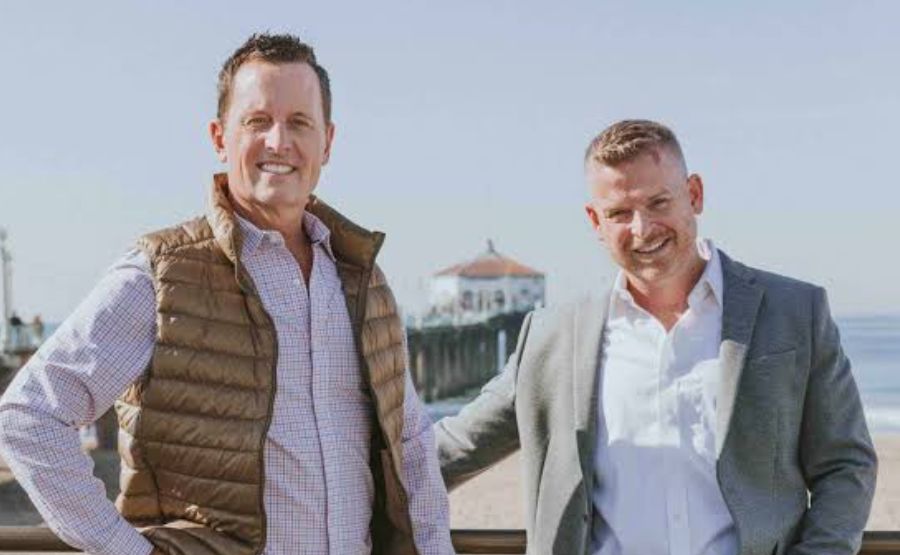
The Pivot: From Performer to Analyst
At some point after his Broadway tenure, Lashey made a decision that is unusual in either direction: he enrolled in the MBA program at Columbia Business School. He graduated in 2005.
Columbia Business School occupies the top tier of American graduate management education. Its programs in marketing, media, and finance draw students competing for admission against some of the most credentialed applicants in the country. Lashey entered this environment carrying a background in musical theatre performance — a background that most MBA programs would have regarded as decorative rather than relevant.
What the application committees recognized, and what his subsequent career confirmed, was something less obvious: the analytical orientation that serious performance training develops. Reading a score, understanding its structural logic, tracking the relationship between a conductor’s tempo choices and the emotional arc of a scene — these are forms of pattern analysis. The vocabulary differs. The cognitive process does not.
After Columbia, Lashey entered the consulting and media research world at a senior level. He joined Maddock Douglas, a prominent innovation consulting firm, as Vice President of Innovation Insights and Business Leadership. In that role, he spearheaded multi-million-dollar innovation engagements for an impressive roster of corporate clients including Walmart, Nationwide, ESPN, Transamerica, Penn Mutual, and SwissRe.
He subsequently served as VP of Strategic Insights for Lifetime Networks and A&E Television’s Digital Assets — a role at the intersection of content strategy and audience data. He later held the position of Acting SVP of Primary Research for Discovery Networks, one of the world’s largest nonfiction content companies. These were not entry-level positions. They represented a decade of sustained achievement in one of the most competitive corridors of the American media industry.
The career arc — conservatory, Broadway, Columbia, consulting, senior media research — is unusual enough to warrant analysis on its own terms. Each transition required Lashey to demonstrate competence in a domain where his previous credentials provided no direct advantage. Each time, he built credibility from functional performance rather than inherited professional authority. That pattern would define the most consequential chapter of his life.
Personal Life: The Crisis That Changed Everything
Sometime during the period when Lashey was logging the seventy-to-eighty-hour weeks of a senior consultant, his partner Richard Grenell was diagnosed with non-Hodgkin’s lymphoma.
Richard Allen Grenell is a prominent American diplomat and political figure who served as U.S. Ambassador to Germany from 2018 to 2020 under President Donald Trump, and briefly as Acting Director of National Intelligence in 2020 — the first openly gay person to serve in a U.S. cabinet-level position. In 2025, Trump appointed him Interim President of the John F. Kennedy Center for the Performing Arts in Washington, D.C. Grenell is a figure of considerable public presence, aligned with the Republican Party and conservative political causes. Lashey and Grenell have been long-term partners for years; they reside in Palm Springs, California.
When Grenell’s cancer diagnosis arrived, Lashey described his initial response in an interview with entrepreneur John Shufeldt with disarming honesty: he did what most people do — he went online and searched, and found that despite his MBA from one of the world’s most prestigious business schools, the Googling left him feeling more frightened rather than more informed.
What he did next was different. Their physician advised them to keep a detailed record of what Grenell was experiencing during treatment. Lashey — who described himself explicitly as a “data analyst turned caregiver” — responded to that suggestion with the instincts his entire professional career had developed. He began tracking systematically: symptoms, medications, meals, side effects, sleep, water intake, activity levels. He built a structured dataset of one patient’s treatment experience and began analyzing it for patterns and correlations.
The correlations he found were real and actionable. He shared them with Grenell’s physicians. The doctors adjusted protocols based on what the data showed. There was, in Lashey’s telling, less trial and error. There was more control. Richard Grenell is today cancer-free.
Building TTI: From Personal Data to Platform
The insight that emerged from Grenell’s treatment was, in retrospect, elegant in its simplicity: cancer patients spend the vast majority of their treatment time outside the clinical setting. The doctor appointments — brief windows of twelve to fifteen minutes every three to four weeks — represent a tiny fraction of the patient’s actual treatment experience. Yet those appointments are the only moments when clinical decisions get made, based almost entirely on the patient’s ability to remember and articulate what happened since the last visit.
Lashey identified this as a structural failure in cancer care. Patients lacked the tools to capture what they were experiencing between appointments in a way that was both comprehensive and clinically useful. Physicians lacked the data to make personalized, evidence-based adjustments during those brief windows. The result was excessive trial-and-error in one of medicine’s most consequential domains.
Lashey was a co-founder of Treatment Technologies & Insights, Inc. in 2016. (TTI) with Grenell as a founding partner. In 2017, TTI launched chemoWave — a free mobile application designed to enable cancer patients undergoing chemotherapy to track their full treatment experience in real time. The app captured medications, meals, symptoms, side effects, mood, sleep, steps, and other activities, and then applied pattern analysis to generate individualized insights both for the patient and for sharing with their care team.
In February 2019, Lashey announced the launch of “My Insights,” a feature that provided two distinct categories of analytics: Personal Insights derived from the individual patient’s own accumulated data, and Global Insights comparing that patient’s experience against aggregated, anonymized data from users with similar profiles. The statistical sophistication of this feature — building population-level insight from individual patient reporting while returning personalized outputs to each user — represented a meaningful advance over generic symptom tracking.
The application attracted clinical attention. In a 2021 study conducted by Cedars-Sinai Medical Center evaluating more than 1,100 health applications, Wave Health — the expanded successor to chemoWave — was rated number one. Cedars-Sinai is one of the most respected academic medical centers in the United States; its endorsement carried genuine clinical credibility.
The evolution from chemoWave to Wave Health reflected something pragmatic and important. Hundreds of patients who were not undergoing chemotherapy had begun using chemoWave because the underlying tracking and insight methodology served their needs — they were managing chronic conditions of various kinds that shared the same structural problem: too much experience happening between too-short clinical encounters. Lashey and his team responded by expanding the platform’s scope to serve all chronic condition patients, not only oncology patients.

The Technical Architecture: What TTI Actually Does
A serious biographical account of Matt Lashey requires engagement with what his company actually builds, because the sophistication of the platform is central to understanding both his contributions and their limitations.
TTI’s core technological claim is patient-reported outcomes (PROs) combined with AI-driven pattern analysis. A patient using Wave Health enters health data across multiple categories daily — symptoms, medications, activities, mood, sleep — and the application’s algorithms identify statistical correlations between those variables over time. The outputs are visualized in reports that patients can share directly with their clinical teams.
Lashey has been careful and intellectually honest about the epistemological boundaries of this approach. In the Entrepreneur Rx interview, he addressed the correlation-versus-causation distinction directly: “We are cognizant of the fact that causation is a fine line we’re treading. Our system identifies that there is a relationship and it’s never just one thing.” This is a methodologically sound distinction. The app identifies correlations in individual patient data; it does not claim to establish causal mechanisms. The clinical value lies in generating hypotheses and prompts for the patient-physician conversation, not in replacing clinical judgment.
TTI has also pursued partnerships with established clinical and patient advocacy organizations. In early 2018, the company launched a collaboration with ASCO’s cancer.net — the American Society of Clinical Oncology’s online patient information resource and one of the most authoritative destinations for cancer patients in the United States — to provide targeted in-app symptom insights at the moment of specific patient distress. This integration gave chemoWave access to clinically validated content and gave cancer.net’s guidance a more personalized, real-time delivery mechanism.
The company has also demonstrated meaningful commitment to healthcare equity. In 2018, TTI launched a Spanish-language version of chemoWave specifically designed for Hispanic cancer patients, incorporating feedback from focus groups with advocates, physicians, nurses, caregivers, and promotoras — community health educators embedded in Latino communities. The expansion addressed documented disparities in cancer outcomes and treatment experience among Hispanic patients, and reflected a commitment to broadening access beyond English-speaking, digitally fluent users.
The Kennedy Center Context: Art, Politics, and an Unlikely Footnote
In early 2025, Richard Grenell’s appointment as Interim President of the John F. Kennedy Center for the Performing Arts introduced an unexpected dimension to Matt Lashey’s public biography. The appointment became politically contentious almost immediately — Grenell’s lack of arts administration background, his reported desire to make the Kennedy Center’s programming more like Paula Abdul, and the subsequent departure of several arts organizations and performers generated sustained media coverage.
In that context, Lashey’s Broadway background became a minor news item. Several publications noted, with varying degrees of editorial coloring, that Grenell’s claim to understanding dance was partly rooted in his partner’s former Broadway career. The Daily Beast and Yahoo Entertainment reported that Grenell pointed to Lashey’s ensemble work in 42nd Street and Thoroughly Modern Millie as part of his personal familiarity with the performing arts.
This framing placed Lashey in an unusual position: a former Broadway performer now adjacent to a highly politicized debate about arts leadership, while simultaneously running a health technology company with no political dimensions whatsoever. The contrast between his two public identities — health-tech CEO and former dancer whose career is being cited in a controversy about the Kennedy Center — is genuinely ironic. It also illustrates something broader about how biography works in practice: the chapters we leave behind have a tendency to be reactivated by circumstances we did not choose.
Lashey has not given public commentary on the Kennedy Center situation. His professional public presence remains focused on TTI, Wave Health, and patient advocacy.
Legacy and Lasting Influence
Matt Lashey’s most durable contribution operates in the gap between two moments in medicine that have, for too long, been treated as structurally separate: the clinical encounter and the lived experience of illness.
The problem he identified — that the twelve to fifteen minutes a cancer patient spends with their physician every few weeks cannot capture the totality of what that patient has experienced — is not a novel observation. Clinicians have recognized it for decades. The challenge was building a practical, accessible, evidence-quality instrument to bridge that gap for patients without medical training or data literacy.
Wave Health, as of its most recent public reporting, had reached more than 30,000 active users. Its endorsement from Cedars-Sinai Medical Center’s comparative analysis of over 1,100 apps gives it the kind of third-party clinical credibility that distinguishes it from the broader landscape of wellness applications. The individual tale surrounding chemotherapy was covered by the American Journal of Managed Care.The development of Wave—a sign that Lashey’s research had sparked interest in the peer-reviewed clinical literature, not only within the health technology press.
The Spanish-language expansion represents a particularly significant contribution to healthcare equity. Cancer outcomes for Hispanic Americans show persistent disparities along multiple dimensions, including patient engagement, treatment adherence, and documentation of treatment experiences. An application designed specifically for that community — built with community input rather than simply translated from existing English content — addresses a real and documented gap.
More broadly, Lashey embodies a form of entrepreneurial biography that deserves recognition: the pivot motivated by care for another person rather than by market opportunity. He did not identify a gap in the healthcare market and design a product to fill it. He became a caregiver, applied his professional skills in an unprecedented context, and discovered that the gap existed by living inside it. That origin story is not merely affecting; it is the reason the application’s design reflects genuine understanding of the patient experience rather than an engineer’s assumptions about it.
Final Words
The arc of Matt Lashey’s biography from the Boston Conservatory to Broadway to Columbia Business School to Discovery Networks to a cancer patient app would, if described out of sequence, seem incoherent. It is, in fact, the account of a person who has consistently followed the work that his current skills could do best — and who, at the most important moment of his life, discovered that all of those skills had been preparing him for a problem he hadn’t known existed.
What is most striking about Lashey’s story is not the apparent diversity of its chapters but their underlying consistency. Broadway performance, consulting, media research, and health technology entrepreneurship all require the same fundamental competencies: pattern recognition, sustained attention to detail, the ability to work collaboratively under pressure, and the discipline to subordinate personal preference to the needs of the situation. The vocabulary changes. The cognitive architecture does not.
The personal dimension of his work — that it was born in his partner’s illness, that its founding narrative is explicitly one of love expressed through data — gives TTI a character that pure market-driven health technology companies rarely have. That character is not without its complications; it means the company’s origin story is permanently entangled with a politically significant figure whose own public profile carries controversies that have nothing to do with cancer care. Navigating that entanglement with grace requires exactly the kind of professional maturity that a decade on Broadway and a decade in corporate consulting tends to produce.
Matt Lashey built something that thousands of people now rely on during one of the most frightening passages of their lives. He built it because he was frightened himself, and because his particular constellation of skills offered a way to respond to that fear with rigor rather than resignation. That is the most honest summary of his contribution — and it is more than sufficient.
FAQs
1. Who is Matt Lashey?
Matt Lashey is an American entrepreneur, health technology executive, and former Broadway performer. He is Co-Founder and CEO of Treatment Technologies & Insights, Inc. (TTI), the company that created chemoWave and its successor platform Wave Health, AI-powered apps designed to help cancer and chronic illness patients track and analyze their treatment experiences.
2. What Broadway shows did Matt Lashey appear in?
According to the Internet Broadway Database (IBDB), Lashey appeared on Broadway in two productions: Thoroughly Modern Millie at the Marquis Theatre, where he served as a swing in the original company (April 18, 2002 through June 20, 2004); and the revival of 42nd Street at the St. James Theatre (2001–2005), where he first performed as an ensemble member and Billy Lawlor’s stand-in understudy before taking the lead in that prominent role.
3. Where did Matt Lashey study?
He earned a Bachelor of Fine Arts in Musical Theatre from the Boston Conservatory at Berklee, attending from approximately 1991 to 1995. He later earned an MBA in Marketing and Media Management from Columbia Business School, graduating in 2005.
4. What is chemoWave?
ChemoWave was a free mobile application for cancer patients undergoing chemotherapy. Launched in 2017, it enabled patients to track symptoms, medications, meals, side effects, sleep, mood, and other activities in real time, then used AI to generate personalized insights about correlations within that data. It has since been succeeded by the broader Wave Health platform, which serves patients with any chronic condition.
5. Why did Matt Lashey create chemoWave?
His partner Richard Grenell was diagnosed with non-Hodgkin’s lymphoma while Lashey was working as a senior consultant. Applying his data analysis background to caregiving, Lashey began tracking Grenell’s treatment experience systematically and sharing the resulting patterns with his doctors. The approach contributed to better-informed clinical decisions and — per Lashey’s account — to fewer side effects and better outcomes. Grenell is today cancer-free. That caregiving experience provided the proof of concept for chemoWave.
6. What is Wave Health?
Wave Health is the expanded successor to chemoWave, launched after TTI discovered that hundreds of non-oncology patients were using chemoWave because the underlying tracking methodology addressed their chronic conditions effectively. Wave Health retains all of chemoWave’s core functionality while extending it to any chronic health condition. In 2021, it was rated the number one health app by Cedars-Sinai Medical Center in a study evaluating more than 1,100 health applications.
7. What senior roles did Matt Lashey hold before founding TTI?
He served as VP of Innovation Insights and Business Leadership at Maddock Douglas (an innovation consulting firm), where he led multi-million-dollar engagements for clients including Walmart, ESPN, Nationwide, and SwissRe. He subsequently served as VP of Strategic Insights for Lifetime Networks and A&E Television’s Digital Assets, and later as Acting SVP of Primary Research for Discovery Networks.
8. Who is Richard Grenell, and what is his relationship to Matt Lashey?
Richard Allen Grenell is a prominent American diplomat and political figure affiliated with the Republican Party. He served as U.S. Ambassador to Germany from 2018 to 2020, briefly as Acting Director of National Intelligence in 2020 (the first openly gay person to hold that cabinet-level position), and was appointed Interim President of the Kennedy Center for the Performing Arts by President Trump in February 2025. He is Matt Lashey’s long-term partner; the two reside in Palm Springs, California.
9. What is TTI’s current scale and reach?
As of 2023–24 planning disclosures, TTI had over 30,000 active users on Wave Health and was planning expansion into four additional markets. The company operates physician portals and research databases in addition to its patient-facing applications, and has partnered with ASCO’s cancer.net for integrated in-app clinical content delivery.
10. Did Matt Lashey address health disparities with his app?
Yes. In 2018, TTI launched a Spanish-language version of chemoWave specifically designed for Hispanic cancer patients, developed with input from focus groups involving advocates, physicians, nurses, caregivers, and promotoras (community health educators). Organizational partners included Nueva Vida and Latinas Contra Cancer, both organizations focused on Latino cancer communities.
11. What is the relationship between Lashey’s Broadway background and his entrepreneurship?
Lashey has described his career path as moving from the performing arts into data analysis and consulting, and then into health technology entrepreneurship. The skills he identifies as core to his work at TTI — pattern recognition, synthesis of complex information, sustained attention to detail, and collaborative problem-solving under pressure — are competencies that both professional performance training and management consulting develop intensively. The disciplines appear more connected than they initially seem.
12. Has Lashey’s work been covered in clinical literature?
Yes. The American Journal of Managed Care published coverage of the personal story behind chemoWave’s creation. In addition to mainstream health technology press coverage (MedCity News, BioSpace, PRNewswire), the company has been featured in patient advocacy contexts including a speaking appearance at the Hirshberg Foundation for Pancreatic Cancer Research’s 14th Annual Symposium, and TTI’s work was noted in clinical partnership with ASCO’s cancer.net platform.
13. What regional theatre credits does Lashey hold?
According to NJTheater.com, his regional credits include the Balladeer in Assassins (the Boston Premiere of the Sondheim musical), George Bailey in It’s a Wonderful Life, and Sam in Shenandoah. The Balladeer in Assassins is a particularly substantial role, functioning as the musical’s narrator and moral center.
14. How has the Kennedy Center controversy touched Lashey’s public profile?
When Richard Grenell’s appointment as Interim President of the Kennedy Center became controversial in 2025, multiple media outlets noted that Grenell had cited his partner’s Broadway background as a component of his personal familiarity with the performing arts. The Daily Beast and associated outlets reported that Grenell pointed to Lashey’s ensemble work in 42nd Street and Thoroughly Modern Millie. Lashey himself has not given public commentary on the Kennedy Center situation.
15. What distinguishes TTI’s approach from general wellness applications?
TTI’s platform is specifically designed around patient-reported outcomes (PROs) as a clinical data category, not simply as personal wellness tracking. The distinction matters: PROs are a recognized methodology in clinical research for capturing patient experience data that informs treatment decisions and regulatory evaluations. By building technology that operationalizes PROs at scale and connects that data to clinical workflows, TTI occupies a space between consumer wellness apps and clinical research tools — a positioning that Cedars-Sinai’s independent endorsement validates.
Every story matters—discover them all with Daily Narrative.