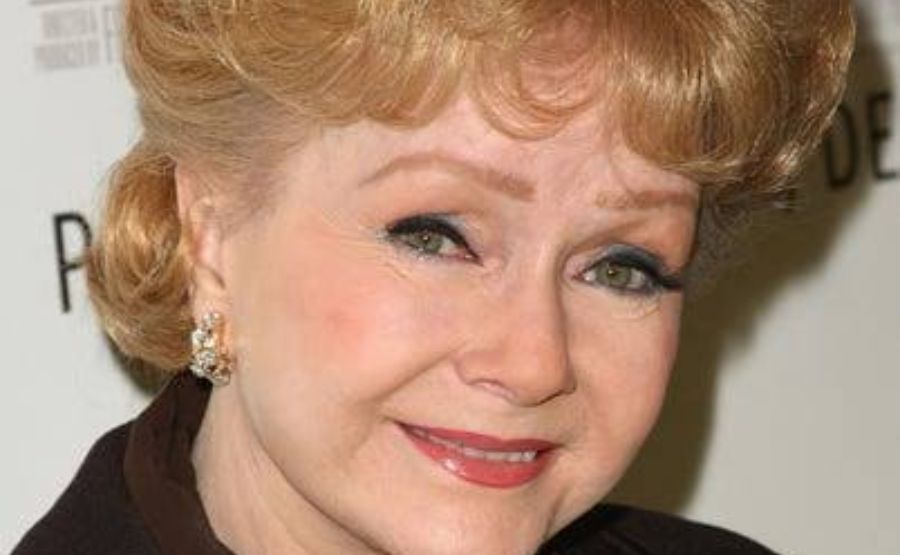
Debbie Reynolds: The Unsinkable American
Few entertainers in Hollywood history fought as hard, endured as much, and performed as tirelessly as Debbie Reynolds — a woman whose public image of cheerful resilience was earned, not manufactured.
Quick Facts
| Detail | Information |
| Full Name | Mary Frances Reynolds |
| Stage Name | Debbie Reynolds |
| Born | April 1, 1932 — El Paso, Texas |
| Died | December 28, 2016 — Los Angeles, California (intracerebral hemorrhage) |
| Nationality | American |
| Primary Roles | Actress, Singer, Dancer, Businesswoman, Preservationist |
| Major Awards | Academy Award nomination (Best Actress, The Unsinkable Molly Brown, 1964); SAG Life Achievement Award (2015); Jean Hersholt Humanitarian Award (2016); Tony nomination (Irene, 1973); multiple Golden Globe nominations |
| Key Relationships | Eddie Fisher (m. 1955–1959); Harry Karl (m. 1960–1973); Richard Hamlett (m. 1984–1996); daughter Carrie Fisher (actress, 1956–2016); son Todd Fisher (filmmaker, b. 1958) |
| Notable Milestones | At the age of 19, she made her breakthrough in Singin’ in the Rain (1952) without any prior dance training.- Oscar-nominated for The Unsinkable Molly Brown (1964) – Billboard #1 hit with “Tammy” (1957)Gathered over 3,000 Hollywood costumes and memorabilia items beginning 1970<br>- Filed personal bankruptcy in 1997 after Las Vegas hotel failure<br>- Emmy-nominated for Will & Grace recurring role (2000)<br>- Footprints and handprints at Grauman’s Chinese Theatre<br>- Star on the Hollywood Walk of Fame at 6654 Hollywood Boulevard |
A Working-Class Foundation in Unlikely Soil
Mary Frances Reynolds came into the world on April 1, 1932, in El Paso, Texas, the second child of Maxene and Raymond Reynolds. Her father worked as a carpenter for the Southern Pacific Railroad, and the family navigated the Depression with difficulty — at one point living in a cellar with a dirt floor. Raymond Reynolds was not a man of many options, but he was a man of action. When Mary Frances was seven, he loaded his family into a car and drove west toward California, joining the migration of Depression-era Texans chasing better odds.
They settled in Burbank, in the suburbs of Los Angeles, but Hollywood might as well have been another country. The Reynolds family were strict members of the Church of the Nazarene, a denomination that viewed movies as a moral hazard. Mary Frances attended Burbank High School, played French horn, took up gymnastics, and became a cheerleader. Her ambitions ran toward practical things: she planned to study physical education and teach gym.
The transformation from gym teacher to movie star began with a free scarf and blouse. In 1948, the sixteen-year-old entered the Miss Burbank beauty contest primarily because contestants received those modest gifts. She was energetic, quick-witted, and possessed a natural magnetism that caught the attention of two talent scouts sitting in the audience. Both representatives — one from Warner Bros., one from MGM — wanted to sign her. They flipped a coin. Warner Bros. won. Within two years, she had signed with MGM instead.
The studio renamed her Debbie Reynolds. The girl from the Nazarene household had entered the industry her faith had forbidden.
See aslo “Zachary Quinto: Complexity as a Calling“
The Crucible of Singin’ in the Rain
Reynolds’ 1952 casting in Singin’ in the Rain was the most significant and taxing event of her early career. She was nineteen years old. She had no formal dance training. What she had was gymnastics conditioning, extraordinary determination, and what she would later describe as a naïve certainty that failure was not a real possibility.
The producers at MGM matched her against two of cinema’s most technically accomplished dancers: Gene Kelly and Donald O’Connor. Kelly, twenty years her senior, reacted to the casting with open skepticism that curdled into something harsher. He offered her no encouragement during rehearsals, criticized her at every turn, and in her memoirs she described one romantic scene in which he forced a French kiss on her without warning — a moment she found deeply unsettling. She called him a cruel taskmaster, and the description appears to have been accurate.
What Reynolds did in response defined her character. She found empty rehearsal rooms and practiced until her feet bled. She worked with voice coaches to flatten her Texas accent and lower her pitch. When she broke down during one session, it was Fred Astaire — not Kelly — who found her sobbing beneath a piano in a studio building.After inviting her to see him practice, Astaire demonstrated to her that even the most easy performances were the result of painstaking, persistent work. Reynolds never forgot the lesson, or the kindness.
The “Good Morning” number alone required fifteen hours to complete. Reynolds spent two days in bed afterward, unable to walk without pain. But the film itself became one of the most celebrated musical comedies in American cinema history — named the greatest movie musical of all time by the American Film Institute. Reynolds’ performance as Kathy Selden launched her into genuine stardom, and for the next decade she was among the highest-paid and most-watched actresses in Hollywood.
The irony that her singing was partly dubbed by Betty Noyes in certain sequences was a footnote that delighted future film historians. The girl who had learned to dance in three months had become, to all appearances, a natural.
The Golden Era: America’s Sweetheart on Screen and Vinyl
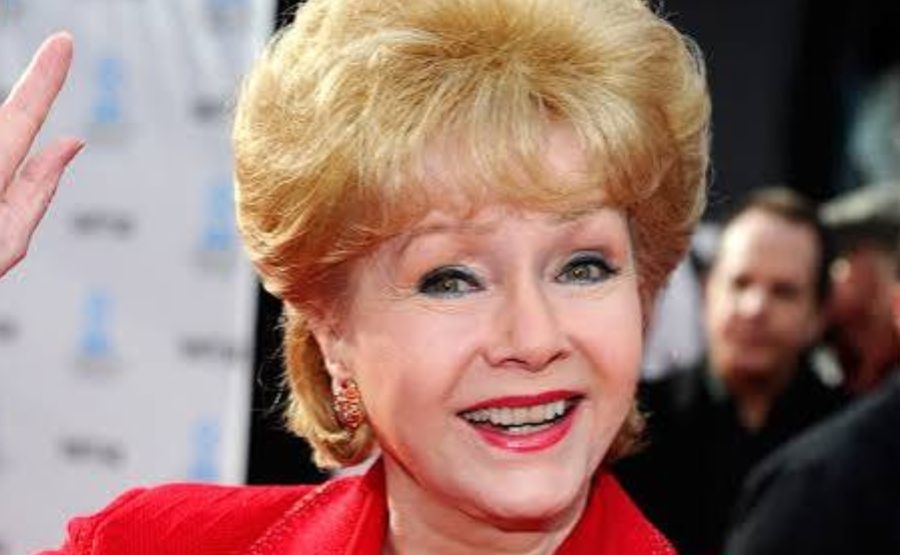
Through the mid-1950s and into the early 1960s, Reynolds delivered a run of commercially successful films that cemented her as one of MGM’s most reliable leading ladies. She played bright, energetic young women with a particular gift for comic timing — roles in The Tender Trap (1955) alongside Frank Sinatra, Tammy and the Bachelor (1957), and The Mating Game (1959) all drew large audiences.
Her music career ran parallel. In 1951, a duet she recorded with Carleton Carpenter for the film Two Weeks with Love — “Aba Daba Honeymoon” — reached number three on the Billboard charts. In 1957, “Tammy,” drawn from her film of the same name, hit number one on the pop charts, stayed there for weeks, sold gold, and earned an Academy Award nomination for Best Original Song. It was the kind of crossover success that studios dreamed about, and Reynolds had achieved it through charm rather than formal vocal training.
The work ethic was consistent. When asked about her preparation for Singin’ in the Rain decades later, she offered a line that cut to the center of her personality: “I didn’t feel you could fail. I felt the part was me, and I marched straight ahead.”
The early 1960s brought even greater artistic recognition. Reynolds won the lead role of Molly Brown in The Unsinkable Molly Brown (1964), playing the free-spirited Titanic survivor Margaret Brown with a force that surprised audiences accustomed to her lighter fare. The performance earned her an Academy Award nomination for Best Actress — the only Oscar recognition of her career — and represented a pivot toward the kind of dramatic weight she had long been capable of.
Scandal, Survival, and the Limits of the “Girl Next Door”
The most famous chapter of Reynolds’ personal life began not with a scandal she caused, but one that was done to her. In 1955 she married Eddie Fisher, a popular crooner whose popularity rivaled Frank Sinatra’s among younger audiences. Together they became one of Hollywood’s most photographed couples. They had two children: Carrie, born October 21, 1956, and Todd, born in 1958.
Their closest friends were film producer Mike Todd and his wife, Elizabeth Taylor. Reynolds served as Taylor’s matron of honor at their 1957 wedding; Todd Fisher was named after Taylor’s husband. The four were genuinely close.
In March 1958, Mike Todd was killed when his private plane crashed in New Mexico. Fisher flew to Taylor’s side to comfort her — and did not come back. The betrayal moved at remarkable speed. Within months, Fisher had separated from Reynolds and taken up with Taylor. In 1959, Reynolds’ divorce was finalized in a proceeding that reportedly lasted ten minutes and cost ten dollars. Fisher and Taylor married within weeks.
The press response was ferocious, but it broke in Reynolds’ favor. She became the wronged party, the wholesome young mother abandoned for Hollywood’s most glamorous woman. Her box-office value climbed. Fisher’s career, by contrast, collapsed: NBC canceled his television program in March 1959, and RCA Victor dropped him the following year for declining sales.
Reynolds had a more complicated private accounting. She did not spare Taylor blame, but placed the larger portion on Fisher. She told interviewers years later that she thought Fisher had always wanted to be Mike Todd — entrepreneurial, admired, powerful — and that when Todd died, Fisher found a way to become him by claiming his widow. The analysis was precise and unsentimental.
What Reynolds did not do, according to her son Todd, was use the scandal as a weapon against her children’s father. She never spoke ill of Fisher to Carrie or Todd. She absorbed the humiliation and redirected her energy into work.
Three Husbands, Three Catastrophes
The arc of Reynolds’ marriages reads as a study in misplaced trust. Her second husband, shoe magnate Harry Karl, whom she married in 1960, spent the next thirteen years draining her finances through compulsive gambling. By the time she divorced him in 1973, Reynolds discovered she was nearly three million dollars in debt. She responded the way she always responded: by working harder. She performed in nightclubs and Las Vegas forty-two weeks a year, methodically paying off what another person had lost.
Her third marriage, to Virginia businessman Richard Hamlett in 1984, repeated the pattern almost exactly. Hamlett’s gambling addiction eventually drove Reynolds to file for divorce in 1996. By then, she had invested heavily in a Las Vegas hotel and casino she had opened in 1993 — a venture designed to give permanent exhibition space to her vast collection of Hollywood memorabilia. Hamlett’s debts, mismanagement at every level, and an off-Strip location conspired against the property. In July 1997, Reynolds filed personal bankruptcy. The hotel was auctioned in August 1998 for $10.65 million, eventually passing through the hands of the World Wrestling Federation and several other owners before disappearing entirely.
Reynolds was sixty-five years old when the hotel closed. Her response, characteristically, was to keep performing.
The Collector: Saving Hollywood from Itself
Among Reynolds’ most distinctive and least celebrated achievements was her work as a preservationist of Hollywood costume and film history. It began at the 1970 MGM auction, when the studio — struggling financially and largely indifferent to its own legacy — sold off decades of costumes, props, and equipment at cut-rate prices. Reynolds attended and began buying.
Over the following decades, she assembled a collection exceeding 3,000 costumes and occupying more than 46,000 square feet of storage space. The items she gathered included Judy Garland’s ruby slippers from The Wizard of Oz, the white dress Marilyn Monroe wore in The Seven Year Itch, Charlie Chaplin’s bowler hat, costumes from The Sound of Music, and Audrey Hepburn’s Ascot gown from My Fair Lady. Each piece represented not just fabric and thread but a material record of American popular culture.
Reynolds spent decades attempting to persuade the film industry and Hollywood institutions to help her create a permanent museum. The Academy of Motion Picture Arts and Sciences, which would later establish its own museum in Los Angeles, repeatedly declined to engage with her collection. She found this refusal baffling and wrote about it with uncharacteristic bitterness in her memoirs.
The collection eventually passed to her son Todd Fisher. After his mother’s death, the Academy — which had completed its museum by then — approached him about incorporating Reynolds’ work into their institution. “My mother was one of the most forgiving people ever,” Todd Fisher told a reporter. “She would never want me to hold a grudge.”
Reinvention and the Second Act
Reynolds’ career after the 1960s was not a decline — it was a sustained act of professional improvisation. When film roles dried up in the late 1960s, she moved to Broadway, debuting in a 1973 revival of Irene that broke weekly box-office records and earned her a Tony nomination for Best Actress in a Musical. It was, notably, one of Carrie Fisher’s first stage appearances as well.
She headlined Las Vegas residencies for decades, performing with a stamina that outlasted the assumptions of every industry observer who had written off her longevity. She created two exercise video programs in the 1980s. She opened the Debbie Reynolds Professional Studios dance school in Burbank in 1979, training a generation of performers.
Television brought her to new audiences. In 1969, she starred in The Debbie Reynolds Show — a sitcom that earned a Golden Globe nomination before she walked away over the network’s tobacco advertising practices. Late in her career, she played Albert Brooks’ mother in the 1996 film Mother, delivering a performance of quietly devastating comic precision that critics recognized as some of her finest acting. Her recurring role as Grace Adler’s flamboyant mother in Will & Grace from 1999 to 2006 introduced her to audiences who had not been born when Singin’ in the Rain was made. She earned an Emmy nomination for the role.
In 2013, she appeared in Steven Soderbergh’s HBO film Behind the Candelabra as Liberace’s mother, in prosthetics, almost unrecognizable, and gave a performance entirely divorced from the Debbie Reynolds persona. It was one of the last reminders that she had always been capable of more than the industry had asked of her.
The Relationship That Defined Her Final Chapter
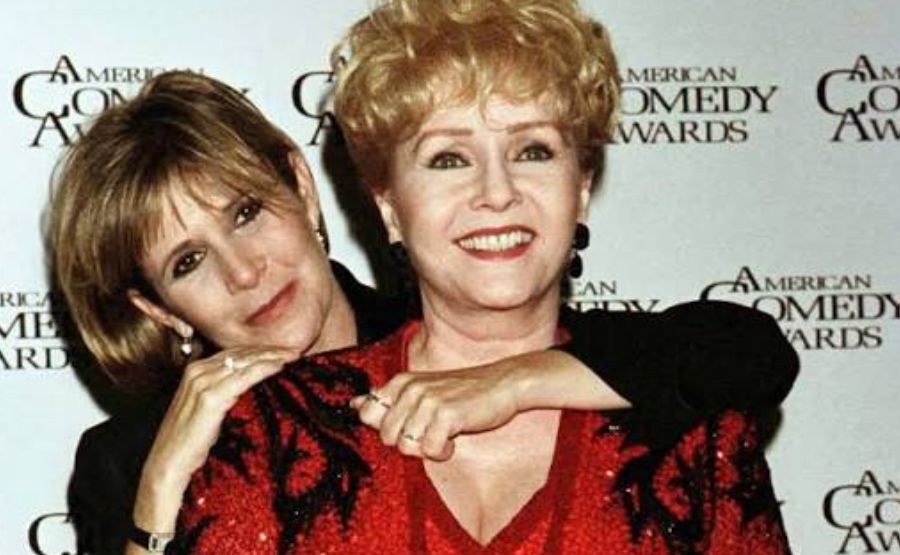
Reynolds’ relationship with her daughter Carrie Fisher was, by all accounts, the most important and complicated of her life. The two shared a Beverly Hills compound in their later years, living in adjacent houses on a property that felt like its own small world.
The dynamic between them was layered. Carrie Fisher’s 1987 novel Postcards from the Edge, and the 1990 film adaptation, drew directly on their mother-daughter tensions — the overbearing stage mother, the daughter struggling to establish a distinct personality, the love that endured despite the conflict. Reynolds acknowledged the portrait, denied the specific details, and continued performing with her daughter when the occasions arose.
The 2016 documentary Bright Lights: Starring Carrie Fisher and Debbie Reynolds, directed by Alexis Bloom and Fisher Stevens, caught both women at an intimate, unguarded register. The film premiered at Cannes in May 2016. It showed Reynolds preparing to receive the SAG Life Achievement Award, which Carrie Fisher presented to her. It was, unknowingly, a record of their last sustained time together.
Carrie Fisher suffered a cardiac arrest on December 23, 2016, aboard a flight from London to Los Angeles. She died on December 27 at Ronald Reagan UCLA Medical Center. She was sixty years old. The following day, December 28, Reynolds was taken by ambulance from Fisher’s Beverly Hills home to Cedars-Sinai Medical Center after suffering a severe stroke. She died that afternoon. The cause was intracerebral hemorrhage, with hypertension as a contributing factor.
Todd, her son, told interviewers that his mother had “willed herself” to follow her daughter because she had not wanted to leave Carrie alone. Reynolds was eighty-four. She was entombed at Forest Lawn Memorial Park in Hollywood Hills, with a portion of Carrie Fisher’s ashes beside her.
Legacy and Lasting Influence
Debbie Reynolds’ legacy operates on several registers simultaneously. As a film performer, she represents one of the last direct links to the classical Hollywood musical — an era of synchronized production, live-performance values, and a particular kind of all-around performing virtuosity that the film industry no longer cultivates.
Her preservation work may ultimately outlast her acting career in historical significance. The costumes she rescued from the 1970 MGM auction would have been dispersed or destroyed without her intervention. The ruby slippers she saved from The Wizard of Oz are now artifacts of American cultural history. Reynolds did this work privately, persistently, and largely without institutional support — a one-woman preservation effort conducted in parallel with a full performance schedule.
Her public navigation of the 1958 Eddie Fisher scandal also carries a longer shadow. Reynolds did not collapse publicly, did not weaponize her children’s loyalty, and did not nurse her grievances into bitterness — at least not visibly. She eventually reconciled with Elizabeth Taylor. In Carrie Fisher’s 2001 television film These Old Broads, the two women made fun of Fisher together.The reconciliation was real, not performative.
For younger audiences, Reynolds appears in a different frame: as Carrie Fisher’s mother, as the subject of Bright Lights, as the grandmother of Billie Lourd. She is, in this reading, part of a three-generation story of women navigating Hollywood on their own terms — with uneven results, significant costs, and remarkable endurance.
Final Words
Debbie Reynolds was not an unambiguous triumph. She was swept by catastrophic marriages, financial ruin, the particular indignities of a post-Golden-Age actress looking for substantive roles, and a Hollywood establishment that failed to preserve its own history and failed to recognize her efforts to compensate for that failure.
She was also a performer of genuine talent who worked harder than the industry required and survived longer than it predicted. She arrived in Hollywood as a sixteen-year-old gymnast who had never danced a step and left it as a repository of institutional memory that no one else had thought to keep. The journey between those two points was rarely graceful and almost never easy.
The title she most coveted — America’s Sweetheart — was both genuine tribute and limiting label. Reynolds was more complicated than sweetness: sharper, tougher, more commercially shrewd, and more willing to absorb punishment than the nickname suggested. The nickname stuck. The complexity survived alongside it.
What remains of Debbie Reynolds is a film in which she dances despite bloody feet, a voice on a record she recorded in a single session, a warehouse of costumes that Hollywood was ready to discard, and a complicated truth about what it costs to keep smiling when the audience expects it of you.
FAQs
1. Where and when was Debbie Reynolds born?
Reynolds was born Mary Frances Reynolds on April 1, 1932, in El Paso, Texas, to a working-class family.
2. How did she get the name “Debbie”?
Mary Frances was her given name. MGM — the studio she signed with after leaving Warner Bros. — suggested the stage name Debbie Reynolds at the start of her professional career.
3. Was Debbie Reynolds actually trained as a dancer?
No. When she was cast in Singin’ in the Rain in 1952, she had no formal dance training. Her background was in gymnastics and cheerleading. She learned under intense pressure and physical strain over three months of rehearsal.
4. What was her relationship with Gene Kelly really like?
By her own account, it was difficult. Kelly criticized her relentlessly during rehearsals and, according to her memoirs, made unwanted physical advances. She called him a “cruel taskmaster.” Fred Astaire, by contrast, offered her encouragement when he found her in distress. Reynolds and Kelly maintained professional distance for the rest of their lives.
5. How did the Eddie Fisher-Elizabeth Taylor scandal affect her career?
It actually elevated her box-office value. Public sympathy ran strongly in her favor. Fisher’s career suffered far more severely — his NBC television program was canceled in 1959 and his record contract dropped in 1960 due to negative publicity.
6. Did Reynolds and Elizabeth Taylor ever reconcile?
Yes. The two eventually put the scandal behind them, reportedly exchanging notes on a shared cruise ship sometime in the late 1960s or early 1970s. Taylor later appeared in the TV movie These Old Broads (2001), a film written by Carrie Fisher that humorously pilloried the ex-husband both women had shared.
7. Why did she file for bankruptcy in 1997?
Reynolds opened the Debbie Reynolds Hotel and Casino in Las Vegas in 1993. The property suffered from off-Strip location, mismanagement, and the financial strain created by her third husband Richard Hamlett’s gambling debts. Unable to service its debt, both the hotel company and Reynolds personally filed for bankruptcy protection in July 1997. The next year, the property was put up for auction.
8. What was her Hollywood memorabilia collection?
Reynolds began collecting at the 1970 MGM auction and amassed over 3,000 costumes and props, including Judy Garland’s ruby slippers from The Wizard of Oz, Marilyn Monroe’s dress from The Seven Year Itch, Charlie Chaplin’s bowler hat, and costumes from dozens of Golden Age films. She attempted for decades to establish a permanent museum but could not secure institutional support.
9. What were her three marriages?
She married singer Eddie Fisher in 1955 (divorced 1959); shoe manufacturer Harry Karl in 1960 (divorced 1973, after discovering he had spent nearly three million dollars of her money gambling); and Virginia businessman Richard Hamlett in 1984 (divorced 1996, after similar financial destruction).
10. What was her Broadway career?
Reynolds debuted on Broadway in a 1973 revival of Irene, which broke weekly box-office records. She was nominated for a Tony Award for Best Actress in a Musical. She later appeared in Woman of the Year (1983) and toured extensively in Annie Get Your Gun and The Unsinkable Molly Brown.
11. What was her connection to Will & Grace?
Reynolds played Bobbi Adler, the flamboyant mother of Grace Adler, in recurring appearances on the sitcom from 1999 to 2006. The role introduced her to younger audiences and earned her an Emmy nomination for Outstanding Guest Actress in a Comedy Series in 2000.
12. How did she die?
Reynolds suffered an intracerebral hemorrhage on December 28, 2016, one day after the death of her daughter Carrie Fisher. She was taken by ambulance from Fisher’s Beverly Hills home and died at Cedars-Sinai Medical Center in Los Angeles. She was eighty-four years old. Hypertension was listed as a contributing factor.
13. Where is she buried?
Reynolds is entombed at Forest Lawn Memorial Park in Hollywood Hills, Los Angeles. A portion of Carrie Fisher’s ashes was placed with her mother. The public memorial was held on January 6, 2017.
14. Who are her surviving family members?
Her son Todd Fisher, a filmmaker and memorabilia collector, survived her. Her granddaughter Billie Lourd — Carrie Fisher’s daughter — is an actress who has continued the family’s presence in entertainment.
15. What is her lasting legacy?
Reynolds’ legacy includes her role in Singin’ in the Rain as a defining performance of the Hollywood musical era, her Academy Award-nominated work in The Unsinkable Molly Brown, her preservation of thousands of Hollywood costumes that would otherwise have been lost, her decades-long Las Vegas performing career, and her enduring example as an entertainer who repeatedly rebuilt her professional and financial life after devastating setbacks.
Every story matters—discover them all with Daily Narrative.