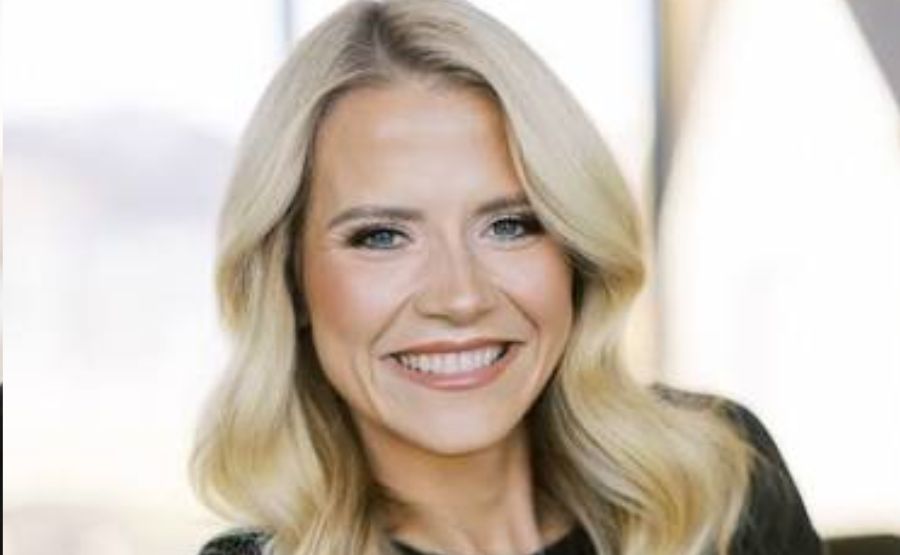
Elizabeth Smart: How One Survivor Transformed America’s Understanding of Trauma, Child Safety, and the Courage to Speak
Elizabeth Smart’s enduring relevance lies not in what was done to her, but in how relentlessly and deliberately she has refused to let that define the only story worth telling about her life.
Quick Facts
| Category | Details |
| Full name | Elizabeth Ann Smart |
| Born | November 3, 1987, Salt Lake City, Utah, United States |
| Nationality | American |
| Primary roles | Child safety advocate, author, foundation founder, public speaker, television correspondent, documentary producer |
| Key events | Abducted at knifepoint from her Salt Lake City home, June 5, 2002 (age 14); rescued in Sandy, Utah, March 12, 2003 |
| Captors | Brian David Mitchell (sentenced to life in prison, December 2010) and Wanda Eileen Barzee (sentenced to 15 years federal prison, 2010; released 2018) |
| Education | Brigham Young University, harp performance major |
| Spouse | Matthew Gilmour (married January 2012, Hawaii); met during LDS missionary work in France |
| Children | Three: Chloe (born February 2015), James (born April 2017), Olivia (born November 2018) |
| Key publications | My Story (St. Martin’s Press, 2013); Where There’s Hope (St. Martin’s Press, 2018) |
| Foundation | Elizabeth Smart Foundation, established 2011; programs include Smart Defense and Smart Talks |
| Legislative work | Advocated for national AMBER Alert system (signed into law April 2003); testified before Congress in support of the Adam Walsh Child Protection and Safety Act (July 2006) |
| Notable milestones | Congressional testimony, March 2006; Mitchell trial testimony, November 2010; Netflix documentary Kidnapped: Elizabeth Smart (January 2026); announcement of competitive bodybuilding career, 2025 |
A Childhood Interrupted
Elizabeth Smart was born on November 3, 1987, the second of six children raised by Edward “Ed” Smart and Lois Smart in Salt Lake City, Utah. The family occupied a large, comfortable home in the Federal Heights neighborhood, an affluent community perched against the foothills east of the city.
The household was devoutly active in The Church of Jesus Christ of Latter-day Saints, and its rhythms — school, church, music, sport — reflected both financial security and genuine religious conviction. Smart showed an early gift for the harp, a talent her parents nurtured seriously.
Nothing in the texture of that childhood suggested the event that would divide it.
See aslo “Drew Ann Reid: The Coach Who Built Two Empires and Buried One Son“
The Night of June 5, 2002
The chain of events that led to Smart’s abduction began, unremarkably, the previous autumn. In fall 2001, Smart, her mother Lois, and her younger sister Mary Katherine encountered a bearded man panhandling near downtown Salt Lake City. Lois offered him five dollars and the possibility of day work at their home. The man, who gave his name as “Emmanuel,” spent a few hours working on the roof of the Smart house and then disappeared.
He was, in fact, Brian David Mitchell — a self-styled religious extremist with a history of mental illness and documented delusion, who had decided, in the language of his own fabricated scripture, that he required multiple “celestial wives.”
Shortly after 1 a.m. on June 5, 2002, fourteen-year-old Smart woke to a knife pressed against her throat. Mitchell ordered her out of bed, threatened to kill her and her entire family if she resisted, and led her on a three-mile walk through the dark Utah foothills to a hidden campsite in Dry Creek Canyon. His spouse, Wanda Eileen Barzee, was waiting at that location.
Smart’s nine-year-old sister Mary Katherine had also woken during the intrusion. Terrified by Mitchell’s threats, she lay motionless for two hours before rousing her parents.
Nine Months in the Canyon
The details of Smart’s captivity, which she would later describe as “nine months in hell,” are among the most documented and legally established accounts of prolonged abduction in American criminal history.
Mitchell kept her tethered to a tree and sometimes concealed her in a pit dug into the hillside. He raped her repeatedly, beginning on the first night and continuing daily throughout her nine months of captivity. He conducted a self-invented “marriage ceremony,” imposed his religious ideology through endless sermons, and used Barzee — who believed completely in his prophetic claims — as an instrument of psychological control.
Smart endured multiple near-rescues. A Salt Lake City detective named Richey confronted Mitchell, Smart, and Barzee at the city library in August 2002 but was deflected by Mitchell’s confident, calm demeanor and a circular religious argument. Smart was too terrified of Mitchell’s standing death threats to signal for help.
Mitchell brought Smart and Barzee to San Diego, California, for a period, then returned to Utah. In July 2002, he and Barzee attempted a break-in at the home of Smart’s fifteen-year-old cousin, apparently intending to take her as another “bride.” They were frightened away.
The Breakthrough and Rescue
The investigation that consumed Salt Lake City for nine months followed a frustrating series of wrong turns. Authorities received more than 16,000 tips. Early suspicion fell wrongly on Smart’s uncle Tom Smart and later on a handyman named Richard Ricci, a career criminal who had briefly worked in the Smart home. Ricci died of a brain aneurysm in custody in August 2002, never having been formally charged in the case.
The true breakthrough came from an unlikely source. In October 2002, nine-year-old Mary Katherine, reading the Guinness Book of World Records, suddenly connected the memory of the voice she had heard that night in her bedroom to “Emmanuel” — the day laborer their mother had hired the previous autumn. She told her parents.
Police released a composite sketch in February 2003. Relatives of Mitchell recognized him and contacted authorities. On March 12, 2003 — 279 days after her abduction — two witnesses who had seen a recent America’s Most Wanted broadcast spotted Mitchell and Barzee walking with a young woman on a street in Sandy, Utah, approximately eighteen miles from the Smart home. Police stopped the group. Smart confirmed her identity.
She was fifteen years old.
Return, Recovery, and the Choice to Bear Witness
Smart’s return home generated one of the most widely watched press conferences in Utah history. Her family described her as physically healthy. The public narrative quickly pivoted toward miracle and faith.
The private reality was far more complex. Smart has spoken candidly, across years of interviews and in her memoir, about the shame she felt in the immediate aftermath — an emotional response that she understood intellectually was irrational but could not initially will away. She did not speak publicly about the specific nature of her ordeal for years. She described feeling isolated, believing herself to be one of very few people who had survived such an experience, and finding no cultural framework within which to place what had happened to her.
She enrolled at Brigham Young University to study harp performance, completed two years of LDS missionary work in France, and deliberately built a life before deciding to enter fully into public advocacy.
What shifted her was the trial. When it became clear that explicit details of her captivity would become part of the public record during Brian David Mitchell’s court proceedings, Smart made a decision: if the story was going to be told, she would tell it herself, on her terms, and for a purpose.
On the Stand: Testimony That Convicted a Predator
Mitchell’s path to trial was extraordinarily long. He spent years cycling through competency hearings, interrupting proceedings by singing hymns, and mounting a defense centered on the claim that his religious beliefs insulated him from legal accountability. Multiple courts debated his mental fitness.
Smart testified for three days during Mitchell’s federal trial, beginning in November 2010. She had returned from missionary work in France specifically to take the stand. Courtrooms described her as composed and precise. She detailed the sexual abuse, the physical conditions of captivity, the repeated death threats, and the incident of the near-rescue at the library.with quiet clarity, why she had not screamed for help when that detective had stood With a calm clarity, she elucidated the reason she hadn’t called for help while that detective was just a few feet from her.feet away from her.
Mitchell was found guilty on December 10, 2010, on federal charges of kidnapping and unlawful transportation of a minor across state lines for the purpose of sexual activity. A federal judge sentenced him to life in prison in May 2011.
Barzee had pleaded guilty in 2009, cooperated with prosecutors, and was sentenced to fifteen years in federal prison. She was released in September 2018 — a development that alarmed Smart and prompted renewed public discussion of victim notification rights in federal sentencing.
Building Something From the Damage
Smart founded the Elizabeth Smart Foundation in 2011, the same year Mitchell received his life sentence. The organization’s mission centers on three interlocking commitments: prevention of child abduction and sexual assault, recovery support for survivors, and legislative advocacy.
Her legislative work predates the foundation. She stood with President George W. Bush in the White House Rose Garden on April 30, 2003, when he signed legislation creating a national AMBER Alert system — a direct outcome of the public pressure generated partly by her own case. She testified before Congress in March 2006 in support of predator accountability legislation. She spoke at the signing of the Adam Walsh Child Protection and Safety Act in July 2006.
Her 2013 memoir, My Story, co-written with Chris Stewart and published by St. Martin’s Press, reached the New York Times bestseller list. The book served a dual purpose: it gave Smart narrative ownership of her own experience, and it functioned explicitly as a document of survivor resilience for others who might find it on a library shelf at a moment of need.
Where There’s Hope, published in 2018, extended that mission further — a book less concerned with what happened to Smart than with the practical and emotional work of recovery, built around interviews with other survivors alongside her own reflections.
A Second Assault, and Its Consequences
In February 2020, Smart disclosed that she had been sexually assaulted again — this time on a Delta Airlines flight returning to Utah in the summer of 2019. She had fallen asleep in a first-class seat and woken to a male passenger rubbing her inner thigh.
Her public handling of the incident was instructive. She described freezing — a response that surprised and disturbed her, given more than a decade of survivor advocacy. She filed a complaint with Delta and contacted the FBI. Then she converted the experience into institutional action.
The assault directly motivated the creation of Smart Defense, a program under the Elizabeth Smart Foundation’s umbrella that trains women and girls in physical self-defense skills developed with input from MMA professionals and law enforcement. Smart was transparent about the irony: an advocate who had spent years telling women and girls they had the right to fight back had herself frozen when faced with assault.
That transparency — the refusal to present herself as a completed or impervious figure — is among the qualities that have sustained her public credibility over two decades.
Personal Life, Family, and Complexity at Home
Smart met Matthew Gilmour, a native of Scotland, during LDS missionary service in Paris, France. They married in January 2012 at a ceremony in Hawaii. The couple settled in Utah and had three children: a daughter, Chloe, born February 2015; a son, James, born April 2017; and a second daughter, Olivia, born November 2018.
Smart has spoken warmly about the intimacy of her marriage in contexts where she was asked whether abuse had permanently altered her capacity for physical closeness. Her answer, delivered with characteristic directness, was that consensual intimacy and the violence she survived inhabit entirely different emotional registers, and that her three children were evidence enough of her ability to distinguish between them.
The family landscape shifted significantly in August 2019, when Smart’s father Ed publicly announced — via a letter shared on Facebook — that he was gay, divorcing Lois after thirty-four years of marriage, and leaving the LDS church. The announcement carried enormous personal weight for everyone in the Smart family. Elizabeth, speaking later on the Armchair Expert podcast with Dax Shepard, recalled her father calling her early one morning and delivering all three revelations in rapid succession. Her response, by her own account, was simple: “You’re still my dad.”
The episode layered fresh complexity onto a family narrative already freighted with public meaning. The Smart family had presented, throughout the search for Elizabeth, a portrait of unified Mormon faith. Ed Smart’s coming-out in 2019 revealed the private cost of that presentation for at least one member of the household, and invited a more honest reckoning with the gap between family mythology and family reality.
Smart’s own relationship to her faith has become more nuanced with time. She has shown gratitude for the spiritual framework that supported her during her captivity, although she has spoken more cautiously in recent years about the institutional church and its policies.
Media, Documentaries, and Controlling the Narrative
Smart has been unusually deliberate about how her story enters public culture. She narrated and produced the 2017 Lifetime film I Am Elizabeth Smart, which told her story from her perspective rather than through the external lens that had defined most prior coverage. She subsequently executive-produced multiple Lifetime films profiling other survivors of abduction, including The Girl Who Escaped: The Kara Robinson Story and Abducted by My Teacher: The Elizabeth Thomas Story.
The January 2026 Netflix documentary Kidnapped: Elizabeth Smart represented the most comprehensive account she had yet offered. Smart described it publicly as her attempt to tell the “full story” — a phrase that carried implicit acknowledgment that earlier accounts, however honest, had been partial.
She has also, in 2025, announced her entry into competitive bodybuilding — an unexpected development that, characteristically, she framed not as eccentricity but as a continued commitment to physical agency and self-command.
Legacy: Rewiring a National Conversation
Elizabeth Smart’s influence on American child-safety law and culture is specific and measurable. The national AMBER Alert system, to which her case directly contributed political momentum, has been credited with the safe recovery of more than a thousand children since its federal codification. The Adam Walsh Act, which she helped advocate, created the National Sex Offender Public Website and established new federal standards for sex offender registration.
Beyond legislation, Smart’s public career has shaped cultural expectations around how society should speak about survivors. Her consistent insistence that shame belongs to perpetrators — not victims — that recovery is possible, and that a life after trauma can be full and independent helped shift media and institutional language around abduction and sexual violence.
While the public narrative around Smart has sometimes reduced her to the story of her kidnapping, those who have worked with her through the Foundation describe someone operating with clear-eyed strategic intelligence — a person who studies policy, cultivates legislative relationships, and designs programs with measurable outcomes rather than simply lending her name to causes.
She has also been honest about the limits of her influence. In her 2020 disclosure of the airplane assault, she acknowledged that even a well-resourced, deeply experienced advocate can freeze when targeted — and that this freezing is a physiological response, not a moral failure. That admission helped normalize, rather than mythologize, the experience of victimization for millions of people who heard her say it.
Final Reflections
Two decades of distance from the hillside campsite in Dry Creek Canyon have produced a figure who is considerably more complicated than the girl the nation watched be found.
Smart has built a public identity that is always in tension: the survivor who speaks about the past in order to illuminate the present; the Mormon daughter of a family that turned out to be more layered than its public presentation; the advocate who disclosed her own re-victimization because silence, she decided, was the more dangerous option.
She has not resolved these tensions so much as inhabited them with unusual honesty. She has not pretended that recovery is linear, or that advocacy is sufficient, or that faith is simple. She has refused both the role of permanent victim and the role of effortless hero.
What remains, when those performances are set aside, is a woman who was subjected to one of the most documented acts of prolonged criminal violence in modern American history, chose to tell her story publicly at significant personal cost, and then spent the following two decades building institutions designed to make that choice unnecessary for as many future survivors as possible.
That is not a small thing. It is, in fact, the full story she has been working to tell.
FAQs
1. When and where was Elizabeth Smart born?
She was born on November 3, 1987, in Salt Lake City, Utah, the second of six children of Ed and Lois Smart.
2. How old was Elizabeth Smart when she was kidnapped?
She was fourteen years old when Brian David Mitchell abducted her at knifepoint from her bedroom on June 5, 2002.
3. Who kidnapped Elizabeth Smart, and how did they know her?
Brian David Mitchell and his wife Wanda Eileen Barzee abducted her. Mitchell had done a brief day of handy work on the Smart family’s roof several months before the abduction, after being invited by Lois Smart, who had encountered him panhandling downtown.
4. How long was Elizabeth Smart held captive?
She was held for approximately nine months — 279 days — before being found on March 12, 2003.
5. How was Elizabeth Smart found?
Two civilian witnesses who had seen a recent America’s Most Wanted segment recognized Mitchell and Barzee walking with a young, veiled woman on a street in Sandy, Utah, approximately eighteen miles from her home, and alerted police.
6. What sentences did her captors receive?
Mitchell was found guilty in December 2010 and sentenced to life in federal prison in May 2011. Barzee received a fifteen-year federal sentence and was released in September 2018.
7. Why did Elizabeth Smart not try to escape or call for help?
She has explained that Mitchell made explicit, repeated threats to kill her and her entire family if she resisted. A standing terror of those threats — not passivity or complicity — kept her from acting even during the library near-rescue.
8. What is the Elizabeth Smart Foundation?
Smart founded it in 2011 to support survivors of sexual assault and abduction through prevention education, recovery programs, and legislative advocacy. Programs include Smart Defense (physical self-defense training) and Smart Talks (survivor outreach).
9. What books has Elizabeth Smart written?
She co-authored My Story (St. Martin’s Press, 2013), a New York Times bestseller detailing her kidnapping and recovery, and Where There’s Hope (St. Martin’s Press, 2018), which focuses on the process of healing from trauma.
10. Who is Elizabeth Smart’s husband?
Matthew Gilmour, a Scottish-born man she met during LDS missionary work in France. They married in Hawaii in January 2012.
11. Does Elizabeth Smart have children?
Yes — three children: daughter Chloe (born February 2015), son James (born April 2017), and daughter Olivia (born November 2018).
12. What happened with her father Ed Smart?
In August 2019, Ed Smart publicly announced he was gay, divorcing Lois Smart after thirty-four years of marriage, and leaving the LDS church. Elizabeth responded publicly with support, stating that her parents’ decisions were personal and that her love for both of them was unchanged.
13. Was Elizabeth Smart assaulted again after her rescue?
Yes. In February 2020, she publicly disclosed that a male passenger had groped her while she slept on a Delta Airlines flight in the summer of 2019. The experience directly motivated the creation of Smart Defense, the foundation’s physical self-defense training program.
14. What legislation did Elizabeth Smart help advance?
She was a visible advocate for the national AMBER Alert system (signed into law April 2003) and testified in support of the Adam Walsh Child Protection and Safety Act (signed July 2006), which created the National Sex Offender Public Website.
15. What is the most recent major project Elizabeth Smart has undertaken?
The Netflix documentary Kidnapped: Elizabeth Smart, released in January 2026, in which she described providing the most complete account of her experience to date. She also announced a competitive bodybuilding pursuit in 2025.
Every story matters—discover them all with Daily Narrative.