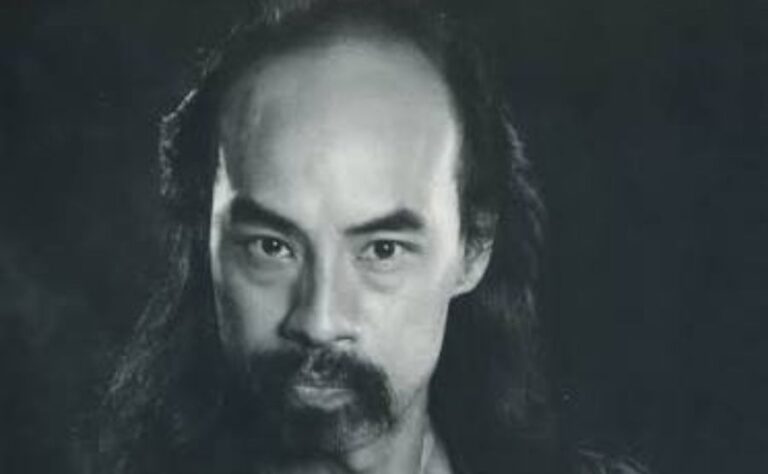
José Bastón: The Man Behind Latin America’s Largest Screen
At a moment when the Spanish-language media world is undergoing its most turbulent transformation in decades — digital disruption, streaming fragmentation, geopolitical pressure — the three-decade arc of José Bastón’s career at Televisa stands as one of the defining case studies in how a single executive can shape what an entire continent watches, and what it doesn’t.
Quick Facts
| Detail | Information |
| Full Name | José Antonio Bastón Patiño |
| Nickname | “Pepe” |
| Date of Birth | April 13, 1968 |
| Place of Birth | Mexico City, Mexico |
| Nationality | Mexican |
| Primary Roles | Media executive; television producer; businessman |
| Major Employer | Grupo Televisa, SAB (1989–2017) |
| Senior Title Held | President, Televisión y Contenidos de Televisa (2008–2017) |
| Board Memberships | Univision Communications; SKY Mexico; Cablevisión |
| Father | Ricardo Alfredo Bastón Talamantes (deceased) |
| Mother | Gloria Patiño |
| First Marriage | Natalia Esperón (actress; married 1995, divorced 2005) |
| Children (First Marriage) | Natalia Bastón (b. 1996); triplets Mariana Bastón, José Antonio Bastón Jr., and Sebastián Bastón (b. November 2003; Sebastián died November 19, 2003) |
| Second Marriage | Eva Longoria (actress, producer; married May 21, 2016) |
| Son (Second Marriage) | Santiago Enrique Bastón (b. June 19, 2018) |
| Current Residences | Mexico City; Marbella, Spain |
| Net Worth (est.) | $15–25 million USD |
| Notable Production Credits | Most Wanted; Felices; ¿Para Siempre?; Halloweed |
The City That Made Him
Mexico City in the late 1960s and early 1970s was a place of enormous contradiction. It housed one of the world’s most dynamic urban concentrations alongside some of its starkest inequality. Television, in that environment, was not merely entertainment. It was a social binding agent, a political instrument, and, for the Azcárraga family that controlled Televisa, a spectacular commercial monopoly.
José Antonio Bastón Patiño was born into that city on April 13, 1968 — the same year that student protesters were massacred at Tlatelolco, the same year that the Olympic Games tried to present Mexico as a modern, stable nation to the world. The contradictions of his birthplace would eventually define the industry he would rise to lead.
His father, Ricardo Alfredo Bastón Talamantes, died when José was still a young child, an absence that forced an early reckoning with responsibility. His mother, Gloria Patiño, raised him as the family’s primary anchor. The biographical record does not elaborate on the family’s specific economic circumstances, but multiple accounts indicate that Bastón grew up understanding that financial stability required active pursuit rather than inheritance.
He attended local schools in Mexico City, showing greater enthusiasm for sport — particularly soccer and basketball — than for academic rigor. He matriculated in 1986 without proceeding directly to university, an unconventional choice in a city where higher education served as the primary credential for professional advancement. Instead, he chose to work.
That decision, pragmatic and slightly contrary, reflects a pattern that would recur throughout his career: Bastón has consistently made choices that prioritize proximity to the actual work of making television over the institutional credentials that typically precede it.
See also “Leta Ramirez: The Architecture of a Champion’s Character“
Entering the Machine: Televisa in 1989
When José Bastón walked into Grupo Televisa as a twenty-one-year-old marketing account executive in 1989, he entered the most powerful media institution in the Spanish-speaking world.
Televisa’s dominance over Mexican broadcasting was total in a way that media scholars struggled to describe accurately. By the late 1980s, no comparable country anywhere harbored a single private company with such comprehensive control of its nation’s airwaves. The Azcárraga family had inherited this position from their founding patriarch and expanded it systematically over four decades. They produced the telenovelas that defined Latin American popular culture across multiple generations. They owned the stadium where Mexico’s most beloved football club played. They negotiated the broadcasting rights to the most watched global sports events. And they delivered, reliably, political loyalty to whoever governed Mexico in exchange for the regulatory protection that made all of it possible.
Bastón entered this world not through a prestigious graduate program or a family connection to the Azcárragas, but through Channel 12 in Tijuana — a regional operation far from the Mexico City center of power. He worked in marketing acquisitions. He then moved through planning, programming, and content development, accumulating functional knowledge at every level of the organization.
The trajectory was slow. It was also deliberate. Bastón spent nearly two decades learning Televisa from within before ascending to its apex, a process of institutional education that produced an executive with unusually comprehensive understanding of how the company actually generated its value — not just in the boardroom but on the production floor, in the acquisitions department, and in the programming schedules that shaped what millions of households watched every evening.
By 1998, he had joined Televisa’s board of directors. A decade later, in 2008, he received the appointment that would define his public career: President of Televisión y Contenidos de Televisa, the operational command of the company’s core television and content production business.

The Presidency: Navigating a Monopoly Under Pressure
The years between 2008 and 2017, when Bastón led Televisa’s content operations, coincided with the most structurally disruptive decade in the history of broadcast television worldwide.
Netflix launched its streaming service in 2007. YouTube had already reshaped how younger audiences related to video. The smartphone was transforming the screen itself from a fixed household object to a portable personal device. For a company whose business model had been built on broadcast dominance, the digital transition was not merely a technological challenge — it was an existential provocation.
Bastón’s response, according to multiple accounts of his tenure, was a two-track strategy. He pushed Televisa toward international partnerships, particularly strengthening the company’s relationship with Univision Communications — the dominant Spanish-language broadcaster in the United States — where he also served on the board. He simultaneously worked to position Televisa’s telenovela and drama content for distribution beyond Mexican borders, recognizing that the company’s greatest asset was not its broadcast infrastructure but its catalog of content and its relationships with Spanish-speaking audiences across Latin America and the United States.
Whether this strategy proved ultimately adequate to Televisa’s challenges is a matter of fair debate. By the mid-2010s, the company faced mounting criticism from Mexican media scholars and telecommunications regulators for its continued market dominance in a landscape that was supposed to have been liberalized. AThe Federal Telecommunications Institute of Mexico ruled in 2015 that Televisa did not have “substantial power” in the pay television market, despite the business controlling over sixty percent market share, drew sharp criticism from independent observers. As the operational president at the time, Bastón oversaw an organization whose place in the market was still a matter of serious public debate.
The political entanglements that had defined Televisa across its entire history did not vanish under his watch. The network’s relationship with the Institutional Revolutionary Party — the PRI — had been a consistent feature of Mexican media-politics since the 1950s. The election of Enrique Peña Nieto in 2012, whose wife Angélica Rivera was a former Televisa telenovela actress, concentrated scrutiny on the relationship between the company and political power in ways that were uncomfortable for the institution. Bastón was not the architect of those relationships, which predated his birth. But he presided over an organization that carried them.
Departure and What It Revealed
In late 2017, José Bastón resigned from the presidency of Televisión y Contenidos. He remained on the board as a director. The official reasons were described as personal. They were not elaborated.
Emilio Azcárraga Jean, Televisa’s chairman and Bastón’s longtime professional patron, issued a public farewell statement acknowledging nearly three decades of contribution and confirming that Bastón would continue his association with the company through board membership. The transition was managed smoothly, as these things typically are at institutions that prefer to conduct their internal politics quietly.
Bastón has not given detailed public interviews about why he left operational leadership or what he thinks of the decade he spent guiding the company’s content strategy. His preference for privacy, which Eva Longoria has described publicly as fundamental to his character, extends fully to his professional life. In press releases, he doesn’t provide an explanation.He does not grant profiles to entertainment journalists seeking the insider account of what it was like to run the hemisphere’s largest Spanish-language media company from within.
What the departure revealed, in the absence of explanation, was the shape of an executive who had built his career inside a single institution, reached its apex, and then — for reasons known primarily to himself — chosen something different. The something different appeared, in the years that followed, to involve production work, family, and a life split between Mexico and Spain rather than the Mexico City corridors of a media empire.
Personal Life: Grief, Resilience, and a Second Beginning
The most revealing dimension of José Bastón’s private life involves not the famous marriage that brought him international recognition but the devastation that preceded it.
He married Mexican actress Natalia Esperón in 1995. She was twenty years old; he was twenty-seven. They had met years earlier when he was a young Televisa executive and she was a seventeen-year-old auditioning for a television production — a meeting Esperón has recalled in interviews, noting that she found him attractive but that initial contact led to nothing for some time. What developed afterward was a decade-long marriage that produced a daughter, Natalia, and then, in November 2003, a set of triplets.
Of those three children, one did not survive. Two days after his birth, on November 19, 2003, Sebastián Bastón passed away. He and his surviving siblings, Mariana and José Antonio Jr., had been among a set of four embryos, reduced during a high-risk pregnancy to three.
The loss destroyed something between Bastón and Esperón that neither could fully repair. In an interview years later, Esperón described how each of them processed Sebastian’s death separately rather than together — each retreating into individual grief rather than shared mourning. “Yes, because each of us lived it separately,” she said, when asked whether the death had driven their divorce. The marriage ended in 2005.
That grief — its private scale, its isolating force, its capacity to erode even a committed partnership — is the central human fact of Bastón’s life that the public record can confirm. He has not discussed it directly in any accessible interview. Esperón has. Her account of what happened to their marriage locates the fracture in the exact place where tragedy and human limitation met.
After the divorce, Bastón entered a seven-year relationship with Paola Saad, a jewelry designer. That relationship also ended, for reasons not disclosed publicly.
In early 2013, through a mutual friend, he met Eva Longoria on what sources describe as a blind date. Neither was prepared for the other. Longoria later told People that she had been exiting a difficult relationship and found no immediate connection. Bastón, for his part, reportedly did not initially recognize her — which is either charming or implausible depending on how seriously one takes the claim. Six months later, they encountered each other again, and the dynamic shifted.
Their relationship evolved deliberately. They were made public in November 2013 when Mexico City’s Museo Jumex opened.In December 2015, during a trip to Dubai organized around the Global Gift Foundation, Bastón proposed. The engagement attracted significant attention in Mexico, where he was a recognized figure, and in Hollywood, where she was famous in a different register.
On May 21, 2016, they married in a private ceremony at Bastón’s family home in Valle de Bravo — a lakeside town approximately eighty-eight miles from Mexico City. The guest list included Ricky Martin, Mario Lopez, Melanie Griffith, David Beckham, and Victoria Beckham, who designed Longoria’s wedding dress. The ceremony concluded with fireworks over the lake.
On June 19, 2018, their son Santiago Enrique Bastón was born.

Public and Private: The Asymmetry of a Famous Marriage
There is an inherent asymmetry at the center of José Bastón’s public existence that deserves honest examination. He is a man of genuine professional achievement — three decades at the helm of Latin America’s most powerful media company, a career that shaped the content consumed by hundreds of millions of Spanish-speaking people worldwide. He is also, in the international English-language press, described primarily as Eva Longoria’s husband.
Longoria has been candid about this dynamic. She has called him “a very private man” and acknowledged that she actively brags about the relationship because, in her telling, he refuses to brag about himself. She has described him as “honest, with clear ideas” — language that suggests a man who knows what he thinks and does not need external validation to confirm it.
The nickname “Mr. Fancy Pants,” which Longoria has attributed to herself as a descriptor for his fashion sensibility, became a widely circulated detail that, intentionally or not, shaped a particular kind of public image — the elegantly dressed, somewhat mysterious husband of a famous actress. It is a portrait that, whatever its accuracy, sits awkwardly against the reality of a man who spent nearly three decades navigating one of the most complex media environments in the world.
By late 2024, Bastón and Longoria had sold their Bel-Air property — purchased in 2017 for more than ten million dollars — and relocated the family between Spain and Mexico. Longoria, in a November 2024 Marie Claire cover interview, described the move as driven by accumulated disillusionment with Los Angeles rather than any single event. Santiago, their son, spent his early years in Mexico City, Marbella, and wherever his parents’ work obligations needed.
Legacy and Lasting Influence
The legacy of José Bastón is inseparable from the legacy of Televisa itself — which means it carries both the weight of genuine achievement and the complications of an institution that operated in morally ambiguous terrain.
On the achievement side: Bastón guided the content strategy of the largest Spanish-language media company in the world during a period of profound structural disruption. He strengthened Televisa’s international partnerships, particularly with Univision, at a moment when the U.S. Hispanic audience was becoming an increasingly consequential demographic for advertisers and producers alike. He helped position the company’s content catalog for a streaming era that its founders could not have imagined. The telenovelas, dramas, and entertainment productions that his team developed during his tenure reached audiences across Latin America, the United States, Europe, and beyond.
On the complication side: Televisa under Bastón’s content leadership remained an institution whose market dominance raised legitimate questions about media plurality in Mexico. The long history of Televisa’s political alliances — what scholars have documented as a decades-long arrangement in which the company’s regulatory protection was secured through editorial loyalty to whatever political regime controlled the government — did not evaporate under his operational watch. He was not the architect of that arrangement, but he was its steward during a period when its compatibility with democratic media values was under sustained public scrutiny.
His post-Televisa career in production — credits including Most Wanted, Felices, and other projects — suggests an executive who retains creative investment in the medium he spent his career shaping. His board presence at Televisa, continuing after his operational departure, maintains his formal connection to the institution.
The broader significance of his career may ultimately lie in what it represents about the transition moment in Spanish-language media. Bastón entered Televisa when broadcast dominance was so complete that the company’s future seemed self-reinforcing. He left operational leadership at the moment that dominance was being genuinely challenged for the first time. The career arc thus maps precisely onto the arc of analog broadcast media itself — its peak, its complexity, and its negotiated decline into a more fragmented landscape.
Final Words
José Bastón presents the biographer with a genuinely uncommon challenge: a figure of real consequence who has successfully maintained a private self in parallel with a public one. He is not a cipher — the contours of his career are documented, the key moments of his personal life have been addressed, however obliquely, in the public record. But he has consistently declined to supply the interior narrative that contemporary celebrity culture treats as standard currency.
What the available evidence reveals is a man shaped by early loss — his father’s death in childhood, his infant son’s death in 2003 — who found in institutional loyalty and professional discipline a structure capable of sustaining ambition across decades. He built a career through patient accumulation rather than dramatic positioning. He rose to lead a continent’s media culture without ever becoming a public face of that culture himself. He married one of the most photographed women in the world and immediately became, by all accounts, the person who most consistently encouraged her public profile while protecting his own.
The contradictions are real. A media executive who distains media attention. A man who spent thirty years shaping what Mexico watched and who has never given a substantial interview about what he thinks. A father who lost a child to a grief that separated him from a ten-year marriage, and who built a second family with equal care decades later.
These are not contradictions that resolve easily. They are, instead, the texture of a complex life lived with evident intentionality. José Bastón decided early what he valued — family, professional craft, privacy, results over narrative — and has maintained those priorities through considerable changes in circumstance. That consistency, whatever its source, is itself a form of achievement.
FAQs
1. Who is José Bastón?
José Antonio Bastón Patiño, known as “Pepe,” is a Mexican businessman, media executive, and television producer born on April 13, 1968, in Mexico City. He spent nearly three decades at Grupo Televisa, eventually serving as President of Televisión y Contenidos — the operational leadership of the largest Spanish-language media company in the world. He is also widely known internationally as the husband of American actress Eva Longoria.
2. What is Televisa, and why does it matter?
Grupo Televisa is a Mexico City-based mass media conglomerate that dominated Mexican broadcasting for most of the twentieth century. At its peak, the company controlled more than sixty percent of pay television in Mexico and produced the majority of Spanish-language telenovelas and drama content distributed across Latin America and into the United States. Media scholars have described it as one of the most comprehensive examples of private broadcasting dominance in a major country. Its partnership with U.S. broadcaster Univision gives it significant reach among Spanish-speaking audiences in North America.
3. How long did José Bastón work at Televisa?
He joined Televisa in 1989 as a marketing account executive at Channel 12 in Tijuana and remained associated with the company for approximately three decades. He ascended to the presidency of Televisión y Contenidos in 2008 and stepped down from that operational role in late 2017. He continued as a board director following his departure from day-to-day operations.
4. What did Bastón actually do as President of Televisión y Contenidos?
He oversaw Televisa’s core television programming, content production, and content development strategies. This included supervising the production of telenovelas and drama series, managing acquisitions, forging international distribution partnerships — particularly with Univision Communications, whose board he also joined in 2012 — and navigating the transition from traditional broadcast toward digital and streaming platforms.
5. Why did José Bastón leave the Televisa presidency in 2017?
The official explanation cited personal reasons. Neither Bastón nor Televisa provided further elaboration. Emilio Azcárraga Jean, the company’s chairman, issued a farewell statement acknowledging Bastón’s contributions. Bastón did not make a public statement about the departure. He retained his board seat.
6. Who was José Bastón’s first wife?
He married Mexican actress Natalia Esperón in 1995. They had four children together: daughter Natalia (born 1996) and triplets Mariana, José Antonio Jr., and Sebastián (born November 2003). Sebastián died two days after birth. The marriage ended in divorce in 2005. Esperón has spoken publicly about the role of their infant son’s death in the deterioration of the marriage, describing how they each processed the grief separately rather than together.
7. How did José Bastón and Eva Longoria meet?
They were introduced by a mutual friend in early 2013 on what was effectively a blind date. Longoria has said there was no immediate connection, as both were transitioning out of other relationships. They encountered each other again approximately six months later and began dating. Their relationship became public in November 2013 at the Museo Jumex opening in Mexico City.
8. When and where did José Bastón and Eva Longoria marry?
They married on May 21, 2016, at Bastón’s family home in Valle de Bravo, Mexico — a lakeside town roughly eighty-eight miles from Mexico City. The ceremony was private but attended by close friends and family including Ricky Martin, Mario Lopez, Melanie Griffith, David Beckham, and Victoria Beckham, who also designed Longoria’s wedding dress. The event concluded with fireworks.
9. Do José Bastón and Eva Longoria have children together?
Yes. Their son, Santiago Enrique Bastón, was born on June 19, 2018. Santiago is Bastón’s fifth child and Longoria’s first biological child. The family subsequently relocated from Los Angeles, dividing their time between Mexico City and Marbella, Spain.
10. What is known about the death of Bastón’s infant son Sebastián?
Sebastián Bastón was one of three surviving triplets born in November 2003 to José Bastón and Natalia Esperón. He died on November 19, 2003 — two days after birth. The pregnancy had originally involved four embryos; a high-risk process resulted in three being carried to term. Natalia Esperón has spoken in interviews about the devastating impact of Sebastian’s death on the marriage, describing grief that each parent navigated in isolation from the other.
11. What controversies surrounded Televisa during Bastón’s tenure?
The primary controversies involved Televisa’s market dominance and its political relationships. Despite Mexico’s 2013 telecommunications reform, which aimed to introduce genuine broadcast competition, Televisa continued to hold over sixty percent of the pay television market. A 2015 IFT ruling that rejected its own investigators’ finding of Televisa’s “substantial market power” drew significant criticism from independent media scholars and advocacy organizations. The company’s historical relationship with the PRI — described by one former Televisa patriarch as a “soldier of the PRI” arrangement — also remained a subject of public debate during Bastón’s years at the helm.
12. Is José Bastón still involved in the entertainment industry?
Yes. Following his departure from Televisa’s operational leadership, Bastón pursued television and film production. His production credits include Most Wanted, Felices, ¿Para Siempre?, and Halloweed. He also retained his Televisa board membership, maintaining formal institutional connection to the company where he built his career.
13. Where do José Bastón and his family currently live?
As of late 2024 and into 2026, the family splits time between Mexico City and Marbella, Spain. They had previously maintained a primary residence in Bel-Air, Los Angeles, purchased in 2017. Longoria has spoken about the decision to relocate away from Los Angeles as driven by accumulated dissatisfaction with the city’s changing character, predating the COVID-19 pandemic and unrelated to the 2024 U.S. presidential election.
14. How does Eva Longoria describe her husband publicly?
She has described him as “a very private man” and as someone with “clear ideas” and “honesty.” She has referred to his fashion sense with the affectionate nickname “Mr. Fancy Pants.” She has also described him as “super supportive, super loving, and encouraging.” He rarely grants interviews or appears on red carpets independently of professional obligations.
15. What is the broader significance of José Bastón’s career in the context of Latin American media?
His career maps onto the entire arc of Televisa’s modern period — from a moment of near-total broadcast dominance in the late 1980s through the disruptions of digital distribution, streaming competition, and regulatory pressure in the 2010s. He represents a particular type of media executive: one who built operational expertise from within a dominant institution rather than disrupting from outside it. His presidency coincided with Televisa’s most challenging transition period, and the strategies he pursued — international partnership, content diversification, U.S. Hispanic market engagement — reflect the genuine complexity of sustaining a Spanish-language media giant in a fragmenting global entertainment landscape.
Every story matters—discover them all with Daily Narrative.