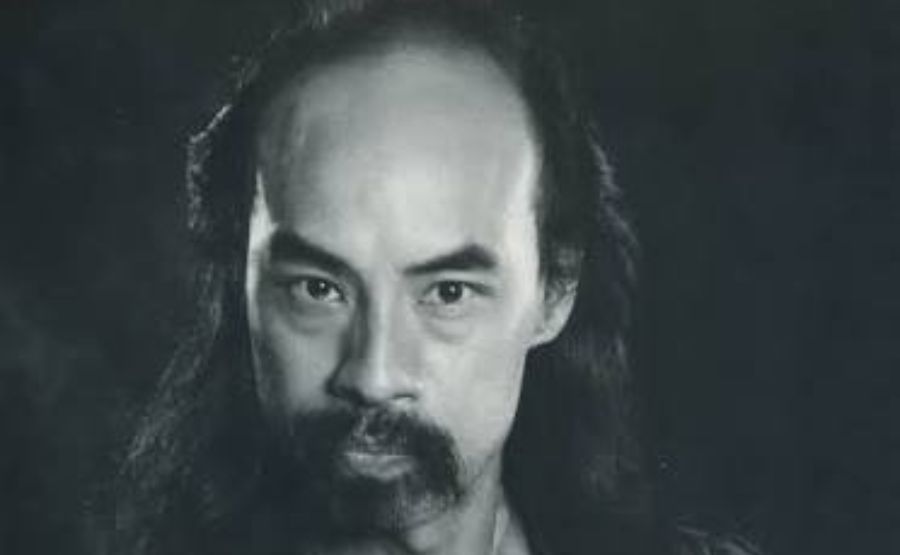
Al Leong: The Man Who Died a Thousand Deaths and Became Immortal Because of It
Long after most of the films that made him famous have faded from multiplexes into nostalgia, Al Leong endures online as a meme, a punchline, and a genuine folk hero of action cinema — proof that a single stolen candy bar can outlive a career.
Quick Facts
| Category | Details |
| Full name | Albert Leong |
| Born | September 30, 1952, St. Louis, Missouri, United States |
| Nationality | American (Chinese American) |
| Primary roles | Actor, stuntman, stunt coordinator, martial artist, occasional director/writer |
| Active years | Early 1980s – mid-2000s (largely retired since a 2005 stroke) |
| Signature roles | Uli in Die Hard (1988); Endo in Lethal Weapon (1987); Genghis Khan in Bill & Ted’s Excellent Adventure (1989); Wing Kong hatchet man in Big Trouble in Little China (1986); Minh in Rapid Fire (1992) |
| Martial arts background | Trained under Grandmaster Ark Yuey Wong in Five Animal/Five Family kung fu styles, beginning around age 8 |
| Major honors | Inducted into the Martial Arts History Museum Hall of Fame, 2014 |
| Key relationships | Married to Tracie Yamashita (1991); two children from a prior marriage |
| Notable milestones | Career-defining 1986–1987 run with producer Joel Silver; brain cancer diagnosis (1993); self-published memoir The Eight Lives of Al “Ka-Bong” Leong (2011); subject of documentary Henchman: The Al Leong Story (2018) |
A Childhood Behind the Laundry Counter
Al Leong’s first stage was not a soundstage. It was the back room of his parents’ Chinese laundry in St. Louis, Missouri, where he spent long afternoons while his father worked the counter.
He was the youngest of three children born to Chinese American parents. As one of the only Asian children at his elementary school, he absorbed a particular kind of visibility early — the sense of being watched, categorized, and occasionally avoided.
In 1962, when Leong was ten, the family relocated to Los Angeles. The move reshaped the rest of his life.
See also”Matt Gerald: The Unlikely Hollywood Journey of a Wall Street Dropout Turned Character Actor“
Forged in Chinatown: The Making of a Martial Artist
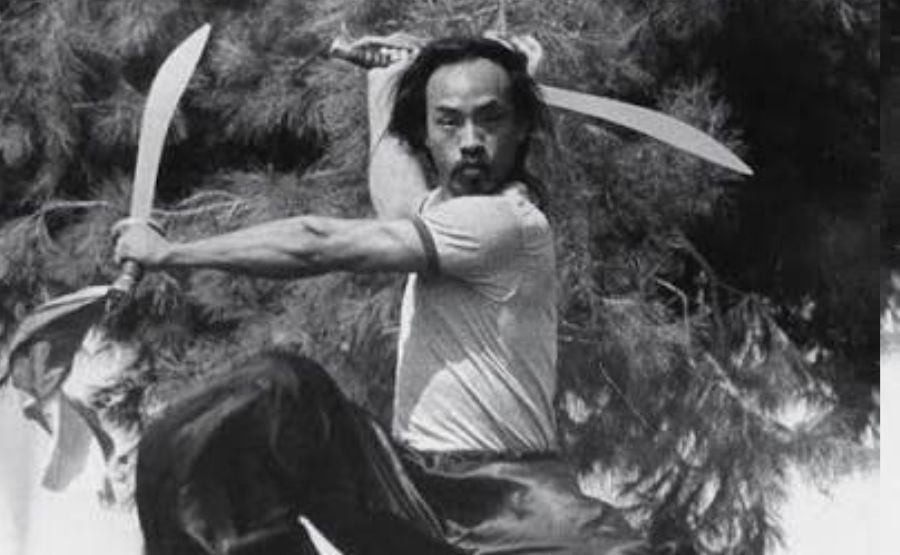
Long before Hollywood discovered him, Leong was already a serious athlete. He began training in martial arts as a young boy, studying Praying Mantis style before being accepted into the tutelage of Grandmaster Ark Yuey Wong, a pioneering figure who taught the Five Animal and Five Family kung fu systems out of a modest storefront in Los Angeles’s Chinatown.
Wong was a significant figure in his own right. He is widely credited as one of the first instructors to teach traditional Chinese martial arts openly to non-Chinese students in America, a quiet act of cultural opening in an era when such instruction was often kept within tight ethnic circles.
Leong trained with near-religious discipline through his junior high and high school years at Hollywood High School, often six or seven days a week. By his late teens and early twenties, he was competing on the Southern California martial arts tournament circuit, eventually claiming the Beverly Hills Pro/Am Karate Soft Forms Championship and developing a reputation, particularly with weapons forms, that made rivals wary of facing him.
This was not yet a career. It was discipline for its own sake — a way, by his own account, of channeling restless energy and staying out of trouble.
From Camera Grip to Camera Subject
Leong’s entry into Hollywood was almost incidental. Encouraged by a friend already working in the industry, he applied for a job at Warner Bros. and was hired quickly during a period of heavy production demand.
For roughly three years he worked behind the scenes as a grip, handling lighting and rigging equipment on the Merv Griffin and Steve Allen lots before moving into low-budget feature work. He had no plan, at that point, to step in front of a camera.
The break came almost by accident. A director, aware that Leong practiced martial arts, asked him to teach a fight routine to four young actresses for a scene. Leong ended up performing the sequence himself.
That single moment earned him his Screen Actors Guild card. It also revealed, almost instantly, a screen presence — lean, coiled, intense — that television producers in the booming action genre of the early 1980s were eager to use.
The Apprenticeship Years: Television’s Action Boom
The early-to-mid 1980s were a golden window for episodic American action television, and Leong rode it expertly. He turned up, often uncredited, across a remarkable run of series: The A-Team, Knight Rider, Magnum, P.I., The Fall Guy, MacGyver, T.J. Hooker, and The Twilight Zone, frequently cast as a thug, bouncer, or bodyguard.
These appearances built him a reputation among stunt coordinators as fast, fearless, and reliably good in a fight scene, even when the choreography had to be improvised on the spot. On at least one occasion, by his own later account, he stepped in on short notice to perform a stunt originally intended for a credited co-star, wig and all, simply because the job needed doing.
It was unglamorous work. It was also the foundation for everything that followed.
The Joel Silver Years: Three Films That Made a Legend
No single relationship shaped Leong’s career more than his collaboration with producer Joel Silver. After Leong’s work on John Carpenter’s Big Trouble in Little China (1986) — in which he played one of the Wing Kong hatchet men, despite reportedly being available for only a single day of filming — Silver brought him in for two of the defining action films of the era.
In Lethal Weapon (1987), Leong played Endo, the icy professional who tortures Mel Gibson’s character with electric shocks in one of the film’s most tense sequences. The scene became so culturally embedded that it would later be parodied on Family Guy, an unlikely afterlife for a minor villain with almost no dialogue.
A year later came Die Hard (1988), and with it Leong’s single most recognizable moment: as the terrorist Uli, he pauses mid-heist to break into a vending machine and steal a Nestlé Crunch bar before resuming his assignment of wiring explosives to the roof. The gag was small, almost wordless, and entirely unforgettable. It is, for many fans, the moment Al Leong’s name became inseparable from the character actor’s craft of stealing a scene without stealing a line.
Uli’s death — shot by Bruce Willis’s John McClane on the stairwell — became, like Endo’s fate before it, part of a recurring joke among fans: Al Leong, it seemed, was contractually obligated to die spectacularly in nearly everything he appeared in.
A Career Built on Memorable Deaths
The running gag has a basis in fact. Across more than three decades on screen, Leong was shot, strangled, blown up, impaled, and decapitated with such regularity that fan communities began compiling his death scenes the way other communities might catalog a musician’s discography.
He was killed by Bruce Willis in Die Hard. He was crushed or drowned by a rampaging Godzilla in the 1998 American remake. He faced off against Brandon Lee in a blazing laundry during the climax of Rapid Fire (1992). He squared off against Jean-Claude Van Damme in Death Warrant (1990).
This typecasting carried real professional cost, even as it built his cult following. Leong was, by most accounts of those who worked alongside him, a versatile and disciplined performer capable of far more range than the genre allowed him to show. Hollywood, in the 1980s and 1990s, had narrow ideas about what an Asian American actor with his look could play, and Leong worked largely within those limits because that was where the paychecks were.
The Cobra Controversy: A Career Detour That Reveals an Industry’s Fault Lines
One episode in particular illustrates the tensions Leong navigated. He read for, and was awarded, a lead villain role in Sylvester Stallone’s Cobra (1986). An Asian American advocacy group objected to the casting of an Asian actor as the film’s antagonist, and Leong was subsequently removed from the part.
Leong later expressed real frustration about the decision, noting that he had long wanted to work with Stallone and that the loss cost him a role he had been excited about. The episode sits uneasily at the intersection of two legitimate concerns: representation advocates worried about reinforcing stereotypes of Asian menace on screen, and an individual actor whose livelihood and ambition were caught in the crossfire of that larger debate.
It is a small story, but a telling one. It shows an industry wrestling, imperfectly and sometimes at an individual actor’s expense, with questions about Asian representation that remain unresolved decades later.
Behind the Camera: Stunt Coordination and Quiet Craftsmanship
Leong’s contributions were never confined to performing in front of the lens. As his career matured, he moved increasingly into stunt coordination, shaping the action on productions including Kung Fu: The Legend Continues (1994), The Golden Child, Last Action Hero, the 1998 Godzilla, Tim Burton’s Planet of the Apes (2001), and Daredevil (2003).
This behind-the-scenes work rarely earns the recognition that on-screen villainy does, but colleagues have credited Leong with helping shape the choreography and authenticity of fight sequences across an entire generation of action films. It was, in many ways, the more substantial and lasting professional legacy — even if it was the least visible to audiences.
He also expanded creatively in smaller ways: in 2003 he starred in screenwriter David Callaham’s comic short film Writer’s Reel, a wry send-up of the Hollywood actor’s demo reel, which was accepted into several short film festivals. In 2000, he wrote and directed his own low-budget feature, Daddy Tell Me a Story…, his first and only credit as a director.
Personal Life, Family, and Private Struggles
Leong’s personal life has unfolded largely outside the spotlight that followed his screen career, though he has spoken candidly about its difficulties in later interviews.
He was previously married and had two children before that marriage ended in divorce. In 1991, he married Tracie Yamashita, a relationship he has described warmly in subsequent years. Off set, friends and interviewers have noted an unexpectedly tender side to a man best known for menace on screen: he has amassed a personal collection of more than 150 stuffed animals, each one reportedly given a name.
The physical toll of three decades of stunt work was severe and cumulative. Leong has said he broke every one of his ribs over the course of his career, along with both arms, both collarbones, and his sternum. These were not abstract numbers; they were the accumulated price of a profession that asked him, again and again, to make violence look real.
Far more serious was a diagnosis of brain cancer in 1993. The treatment that followed — extensive radiation — left him without hearing in his right ear and with only one functioning salivary gland, permanent changes that altered his daily life long after the cancer itself was addressed.
The first of Leong’s two strokes occurred in 2005. The strokes affected his mobility and, by his own description, left him prone to sudden, uncontrollable crying, an emotional symptom he found difficult to discuss publicly. Medical advice eventually pushed him toward retirement from active stunt work and most on-camera roles.
Writing his 2011 self-published memoir, The Eight Lives of Al “Ka-Bong” Leong, became its own act of perseverance. The stroke-related effects on his memory meant he had to relearn basic spelling, searching the keyboard letter by letter for words that had once come easily.
Recognition: The Martial Arts Hall of Fame and a Documentary Tribute
In 2014, the Martial Arts History Museum in Burbank, California inducted Leong into its Hall of Fame, formally recognizing both his competitive martial arts record and his decades of work translating those skills into film and television choreography. The honor placed him alongside martial arts legends including Bruce Lee, Jackie Chan, and his own teacher, Ark Yuey Wong, who had been inducted years earlier.
Four years later, in 2018, director Vito Trabucco released Henchman: The Al Leong Story, a documentary tracing Leong’s career and health struggles through interviews with the man himself and with longtime collaborators, including John Carpenter and stunt coordinator Jeff Imada. The film treated Leong’s medical battles not as a footnote but as integral to understanding his resilience.
Legacy: Why a Henchman Still Matters
It would be easy to dismiss Al Leong as a footnote in action movie trivia — the guy who steals the candy bar, the answer to a pub quiz question. That assessment undersells him.
Leong’s career predates and quietly anticipated a broader cultural reckoning with how Asian American actors are cast in American film. He worked steadily through an era when roles for Asian performers were narrowly defined, often as anonymous threats with little dialogue and no interiority — and he found ways, within those constraints, to make individual moments unforgettable through sheer craft and timing.
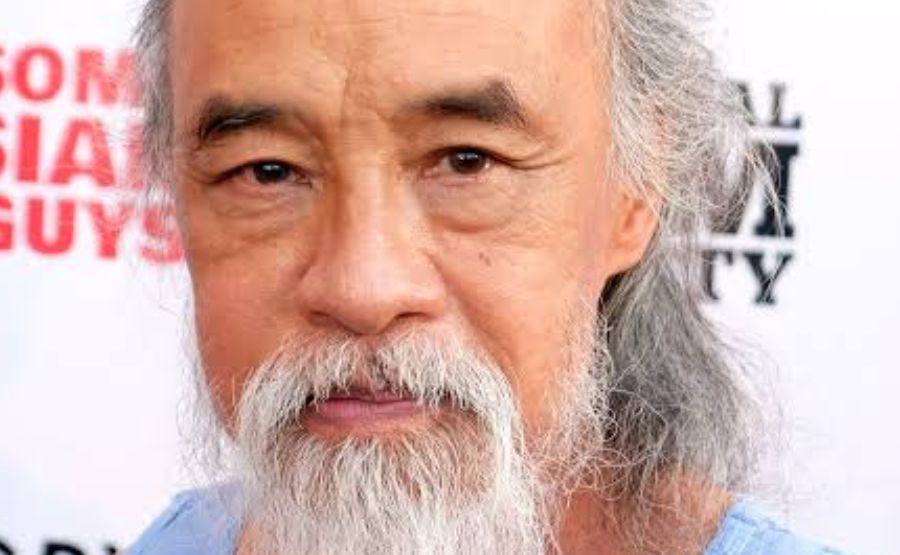
His influence is visible in the wave of younger Asian American filmmakers and performers who have cited him directly. The crowd-funded web series Awesome Asian Bad Guys, created by Patrick Epino and Stephen Dypiangco, brought Leong back to the screen alongside fellow character actors like George Cheung and Yuji Okumoto, explicitly honoring and reclaiming the “Asian bad guy” archetype that had defined so much of their careers.
The internet, too, has been kind to Leong in ways traditional Hollywood metrics never could capture. Fan sites, supercut compilations of his on-screen deaths, and a steady stream of internet jokes have kept his name circulating among audiences born well after his most famous films were released — a second life built entirely on cult enthusiasm rather than studio marketing.
Final Reflections
Al Leong’s story resists easy categorization. He was never a leading man, yet his presence is more durable in popular memory than many actors who were.
He benefited from, and was constrained by, an industry that wanted exactly one type of role from him for the better part of two decades. He filled that role so completely, with such physical commitment and unexpected charisma, that audiences remember him long after they have forgotten the films’ plots.
His health struggles — cancer, two strokes, a body permanently marked by the cost of stunt work — sit uncomfortably alongside the playful, even joyous, public image he cultivated through fan interactions and his own memoir. Both are true at once. That is, perhaps, the most honest thing one can say about him: Al Leong was a man capable of dying memorably for a living, who survived, off screen, some of the hardest fights of his life.
His legacy is not measured in box office numbers or award nominations. It is measured in the persistence of a candy bar joke, in a kung fu lineage carried forward from a Chinatown storefront, and in the quiet respect of an industry that, even when it limited him, could never replace him.
FAQs
1. Who is Al Leong?
Al Leong is a retired American actor, stuntman, martial artist, and stunt coordinator, best known for playing henchmen and villains in 1980s and 1990s action films.
2. Al Leong was born where and when?
He was born September 30, 1952, in St. Louis, Missouri.
3. What is Al Leong’s most famous role?
His most iconic role is Uli, the terrorist who pauses to steal a candy bar, in Die Hard (1988).
4. What other major films did Al Leong appear in?
His credits include Lethal Weapon (1987), Big Trouble in Little China (1986), Bill & Ted’s Excellent Adventure (1989), Rapid Fire (1992), Death Warrant (1990), and the 1998 American Godzilla.
5. Did Al Leong work primarily as an actor or a stuntman?
Both. He built a long career as an on-camera actor while also working extensively as a stuntman and stunt coordinator on numerous productions.
6. Who trained Al Leong in martial arts?
He trained under Grandmaster Ark Yuey Wong in Los Angeles’s Chinatown, studying the Five Animal and Five Family kung fu systems.
7. Was Al Leong ever cast in a leading role?
He was cast in a lead villain role in Sylvester Stallone’s Cobra (1986) but was removed from the part following objections from an Asian American advocacy group.
8. What health issues has Al Leong faced?
He was diagnosed with brain cancer in 1993 and suffered two strokes, the first in 2005, which left lasting physical and emotional effects.
9. Is Al Leong married?
He has been married to Tracie Yamashita since 1991, following an earlier marriage that ended in divorce.
10. Does Al Leong have children?
Indeed, his first marriage produced two children.
11. Has Al Leong received any formal honors?
In 2014, he was admitted into the Hall of Fame of the Martial Arts History Museum.
12. Did Al Leong write a memoir?
Yes, he self-published The Eight Lives of Al “Ka-Bong” Leong in 2011.
13. Is there a documentary about Al Leong?
Yes, Henchman: The Al Leong Story (2018), directed by Vito Trabucco, profiles his career and personal struggles.
14. Is Al Leong still acting today?
He has been largely retired from film and stunt work since his 2005 stroke, though he made later appearances including in the web series Awesome Asian Bad Guys.
15. Why does Al Leong have a cult following today?
His combination of memorable, often wordless villain moments, real martial arts skill, and a long string of dramatic on-screen deaths has made him an enduring favorite among action movie fans online.
Every story matters—discover them all with Daily Narrative.