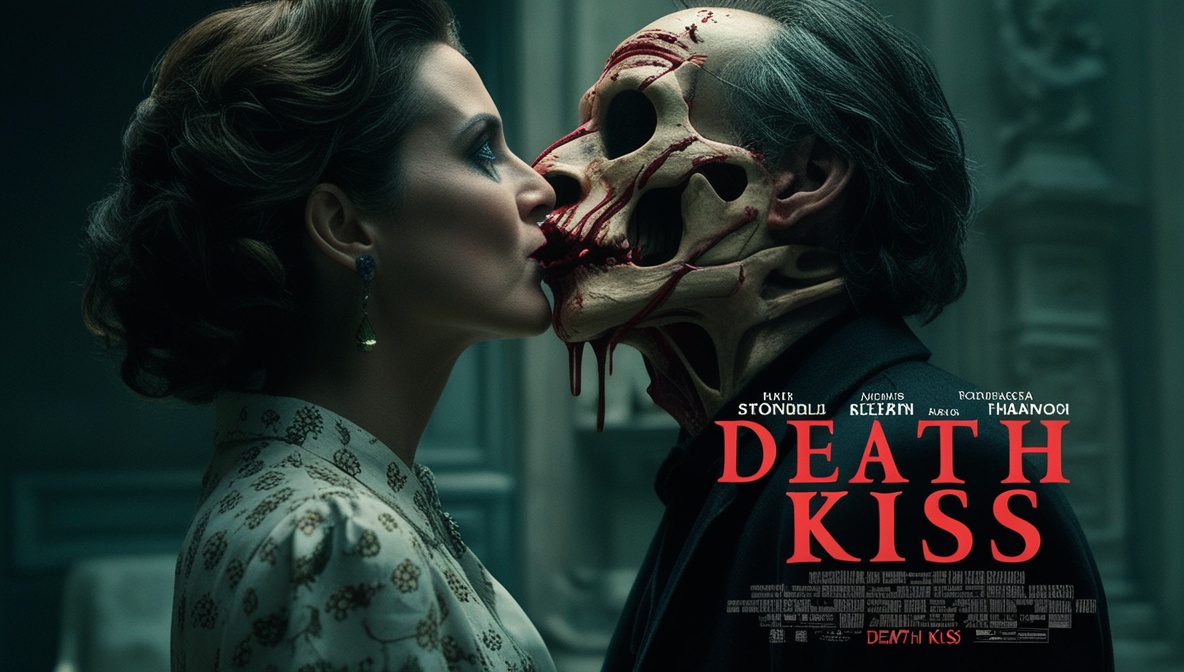
Death Kiss (2018): The Most Wonderfully Weird B-Movie You’ve Probably Never Heard Of
Okay, settle in, because this one is genuinely strange — and I mean that in the most affectionate way possible.
Picture this: it’s 2018, and a Puerto Rican indie director walks into a bar in Spain, spots a photograph on the wall, and freezes. He stares at it. He’s convinced it’s a still from some Charles Bronson movie he hasn’t seen before. He asks around. He checks online. And then he finds out — that’s not Charles Bronson at all. That’s a Hungarian carpenter, former coal miner’s son, and Wild West stunt performer named Robert Kovacs. And that moment of confusion is the entire reason Death Kiss exists.
What followed is one of the stranger little stories in modern cinema. A low-budget action film built entirely around a man’s face. A love letter to revenge movies from the 1970s and 80s. A film that divides audiences cleanly down the middle — half of them delighted, half of them baffled. I’ve spent a lot of time with this movie and the story around it, and I want to share all of it with you.
Key Facts
| Detail | Information |
| Title | Death Kiss |
| Release Year | 2018 (VOD/digital: October 2018; DVD: later that year) |
| Director | Rene Perez |
| Writer | Rene Perez |
| Cinematographer | Rene Perez |
| Composer | Rene Perez (as “The Darkest Machines”) |
| Stars | Eva Hamilton, Richard Tyson, Daniel Baldwin, and Robert Bronzi (Kovacs) |
| Runtime | Approximately 87 minutes |
| Genre | Action / Crime / Vigilante throwback |
| Setting | Sacramento, a crime-heavy American city |
| Distributed by | Uncork’d Entertainment |
| IMDB Rating | Around 4.5–4.7/10 |
| Inspired by | The Death Wish franchise (1974–1994), starring Charles Bronson |
| Robert Bronzi’s real name | Robert Kovacs |
| Bronzi born | 1956, outside Budapest, Hungary |
Who Is Charles Bronson, and Why Does He Matter Here?
Before we get into the movie itself, you need to know a little about the man it’s paying homage to. Charles Bronson was one of the biggest action stars of his era. From the 1950s through the 1990s, he played rugged, tight-lipped heroes who solved problems with quiet menace and very large guns.
His most famous role was Paul Kersey in the Death Wish series, which started in 1974. The character was a regular man whose family was attacked by criminals. His response? He picked up a weapon and took justice into his own hands. Simple story. Enormously popular.
Bronson died in 2003. But his face — that square jaw, the deep-set eyes, the heavy mustache — was so distinctive that when a Hungarian stuntman in Spain began leaning into a striking resemblance, people did double-takes on two continents.
See aslo”Serial Banshee: Why Season Four Took Such a Dark Turn“
The Strange, True Story Behind the Film
Robert Kovacs grew up in Hungary, the son of a coal miner. He loved American Westerns as a kid. He trained as a carpenter, worked as a horse breeder, learned some martial arts, and eventually started performing in Wild West stunt shows around Europe — Spain, the Canary Islands, various theme parks.
Somewhere along the way, a friend told him he looked exactly like Charles Bronson. He grew out the mustache. He styled his hair. He started working as a Bronson impersonator at events. And he became very, very good at capturing the man’s posture, his stillness, his unhurried way of moving through a room.
Rene Perez — a director who’d been making genre films since the early 2010s — came across a photo of Kovacs on the wall of a bar in Spain and genuinely thought it was a Bronson movie still he’d never seen. When he tracked down who Kovacs actually was, the idea clicked into place immediately. He brought the Hungarian actor to America, first for a Western called From Hell to the Wild West in 2017, and then specifically wrote Death Kiss as a vehicle for him. The film is set in Sacramento and follows a mysterious, unnamed man — listed in the credits simply as “K” or “The Stranger” — as he moves through a city overrun with crime.
There was one small complication, though. Bronzi speaks with a thick Hungarian accent. And Charles Bronson had one of the most recognizable gravelly American voices in film history. So Perez’s solution was elegant in its simplicity: he just had someone else dub over Bronzi’s lines entirely. That’s right — the main character of the movie doesn’t actually speak in his own voice.
What Actually Happens in the Film
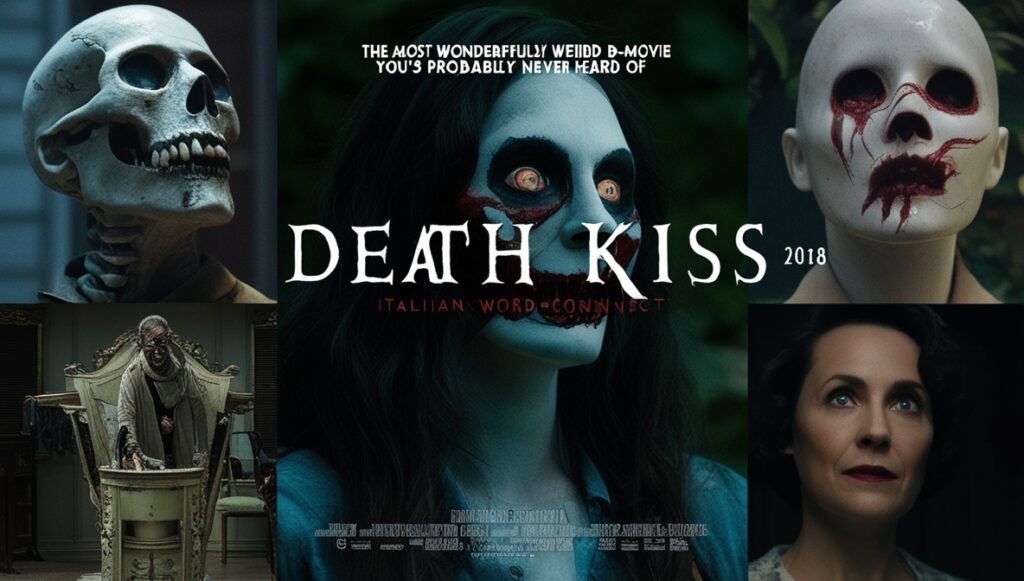
The plot is not complicated, and that’s honestly by design. The Stranger arrives in Sacramento and starts eliminating criminals — drug dealers, traffickers, violent thugs. He doesn’t explain himself. He barely talks. He mostly just points a gun and pulls the trigger, which sends out waves of spectacularly over-the-top CGI blood in every direction.
At the same time, he’s leaving anonymous envelopes of cash in the mailbox of a young mother named Ana, who is raising a daughter who uses a wheelchair. He seems to be watching over them from a distance, for reasons the film eventually reveals in a twist near the end. The twist isn’t shocking, but it gives the story a little heartbeat it wouldn’t otherwise have.
The main villain is Tyrel, played by Richard Tyson — whom you might remember as the bully from Kindergarten Cop. He runs the criminal side of things in town and makes for a satisfyingly nasty bad guy.
Running through the film like a commentary track is Daniel Baldwin, playing a right-wing radio host named Dan Forthright. His character talks over the airwaves about rising crime and the need for someone to step up. It’s a clever structural choice, because it lets the film fill in narrative gaps without slowing down the action. Baldwin, interestingly, was actually working as a radio host in real life around this time, and he brings a strange authenticity to the role.
What Makes It Genuinely Special (And What Doesn’t Work)
Let me be honest with you the way a good friend would be. This is not a great film by technical standards. The acting from most of the supporting cast is shaky at best. The CGI blood — and there is a lot of it — looks more like water balloons bursting than anything realistic. The dubbing on Bronzi’s lines is occasionally off-sync in ways that are hard to ignore. And some scenes stretch out far longer than the story needs them to.
But here’s what works, and it works astonishingly well: Robert Bronzi on screen, walking those streets, pointing that gun, staring down criminals with that face. The first time you see him and your brain says “that’s Charles Bronson” — and then you remember Bronson has been dead for over fifteen years — it’s genuinely eerie. Not in a horror movie way. In a quiet, wonder-struck way. Like running into someone who looks exactly like a person you’ve been thinking about for years.
Bronzi has Bronson’s stillness down cold. The way he holds himself. The tight economy of his movements. The ability to fill a frame just standing there without making any significant movements. People don’t realise how difficult it is to fake that.. Most lookalikes can get the face. They can’t get the gravity. Bronzi somehow has both.
The musical score, composed by Perez himself, leans into synthesizers and gives everything an 80s feel that suits the material nicely. It might be a little loud in places, but it’s got personality.
How It Fits Into the Death Wish Tradition
The Death Wish films were controversial even in their own time. The idea of a regular citizen bypassing the legal system and executing criminals raised uncomfortable questions about justice, race, and class — questions the movies sometimes addressed and sometimes conveniently ignored.
Death Kiss doesn’t really try to answer those questions either, though some critics noted the film felt politically charged in ways that made them uneasy. The criminals are drawn in broad strokes. The vigilante is portrayed as unambiguously right in everything he does. Whether you find that satisfying or troubling probably depends on where you’re coming from personally.
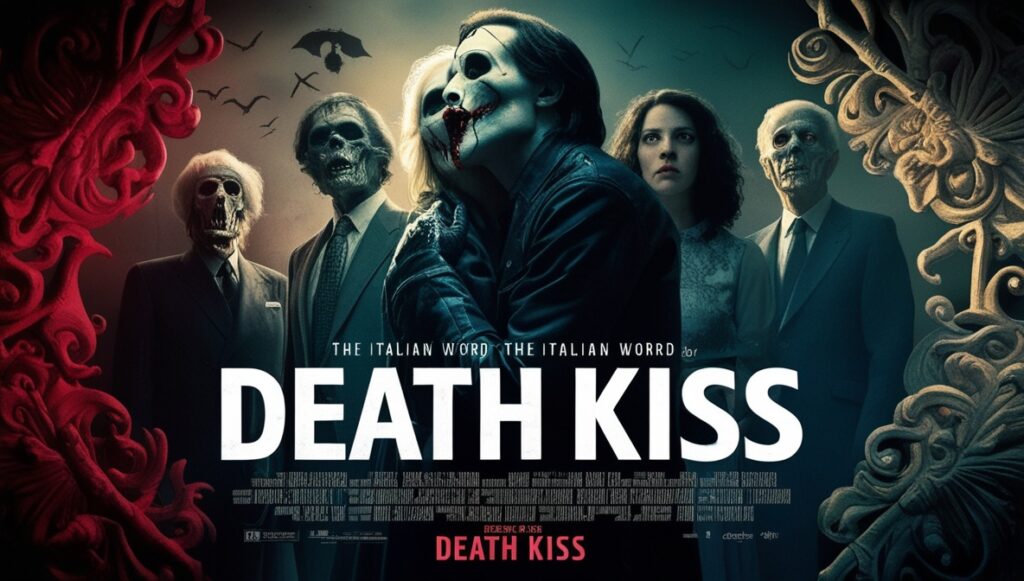
What the film does capture well is the texture and mood of those old films. The setting feels timeless, neither too modern nor too retro. The color palette and camera work, also handled by Perez, give it a gritty feel that suits a grindhouse tribute. It doesn’t look like it was shot yesterday, and that’s not an accident.
The Conversation Around Lookalike Casting
Something worth pausing on: Death Kiss raised an interesting question that people in film circles discussed for a while. Is it respectful or a little strange to build an entire film around someone impersonating an actor who’s no longer alive?
Most fans of the original Bronson films seemed to take it in the spirit it was intended — as a genuine tribute, a fond look back at a style of action cinema that had largely disappeared. Others were more critical, feeling it crossed a line somewhere between homage and exploitation.
It’s not a new phenomenon. After Bruce Lee died in 1973, dozens of films starred actors with similar names and looks. History has a habit of recycling faces that audiences loved. But there’s something particularly striking about Bronzi, because the resemblance is so complete. He’s not a vague echo. He’s a near-copy. And that specificity is what makes the whole thing feel unusual in ways that are hard to fully put into words.
Robert Bronzi After Death Kiss
The film gave Bronzi a real foothold. He went on to appear in Once Upon a Time in Deadwood, Cry Havoc, Escape From Death Block 13, and several other low-budget productions. In Escape From Death Block 13, director Gary Jones let Bronzi use his actual voice and even made his character Hungarian — and reviewers generally found him more natural and likable for it. It suggests there’s an actual actor in there underneath the Bronson impression, one worth watching on his own terms.
He’s also appeared in British productions like The Gardener, and his face reliably ends up on the cover art of whatever film he’s in, because — let’s face it — it sells.
Who Should Actually Watch This Film
If you grew up watching Bronson movies with a parent or older sibling, there’s a warm nostalgia to Death Kiss that genuinely lands. If you love cheap, cheerful, unapologetically low-budget action cinema and can enjoy it on its own merits, you’ll have a fine time.
If you’re expecting something polished, narratively satisfying, and tightly scripted, look elsewhere. This film knows exactly what it is. The moment you match your expectations to what it’s actually offering, it becomes a perfectly decent evening.
Final Thoughts
There’s something quietly wonderful about the story of Death Kiss that I keep coming back to. A coal miner’s son in Hungary grows up watching American Western movies at a local theater. He notices he looks like one of the stars. He leans into it. He grows a mustache. He performs at theme parks in Spain. And then — through a chance photo on a bar wall, spotted by a director in the right mood — he ends up in a film that got people around the world writing reviews, debating its merits, and feeling the ghost of Charles Bronson walking through their screens one more time.
Movies get made for all kinds of reasons. Sometimes the best stories aren’t in the films themselves but in how they came to exist. Death Kiss is exactly that kind of movie. Flawed, odd, lovably committed to its own strange premise. A piece of cinema that shouldn’t exist but does, and is all the more interesting for it.
FAQs
1. What is Death Kiss about?
A mysterious, unnamed vigilante arrives in a crime-heavy city and begins eliminating criminals — drug dealers, traffickers, and gang members — while quietly sending money to a young mother and her disabled daughter. The film ends with a reveal connecting these two storylines.
2. Who plays the main character?
Robert Bronzi, whose real name is Robert Kovacs, a Hungarian actor and former stuntman who bears an extraordinary resemblance to the late Charles Bronson.
3. Is Death Kiss based on an original screenplay or a book?
It’s an original screenplay written by director Rene Perez, inspired by the spirit and style of the Death Wish film franchise.
4. Why does the main character sound different from how he looks?
Bronzi’s English carries a strong Hungarian accent, so director Rene Perez had his lines dubbed over by another voice actor in post-production.
5. Is this a sequel to the Death Wish movies?
Officially, no. It’s a separate film with no legal connection to the Death Wish series. It’s best described as a tribute or homage, not a continuation.
6. Who is in the supporting cast?
- Daniel Baldwin as Dan Forthright, a right-wing radio host
- Richard Tyson (from Kindergarten Cop) as the villain Tyrel
- Eva Hamilton as Ana, the young mother
7. Where was Death Kiss filmed?
The film was set in Sacramento, California, and Perez handled multiple roles himself — directing, writing, filming, and composing the score.
8. How did the director find Robert Bronzi?
Rene Perez spotted a photo of Bronzi on the wall of a bar in Spain and initially mistook it for a Charles Bronson film still. He tracked Bronzi down, brought him to the US, and built a creative partnership around him.
9. Is it worth watching?
That depends entirely on your taste. Fans of 1970s–80s grindhouse action and Bronson films tend to enjoy it. Viewers expecting polished filmmaking will be disappointed. As a B-movie curiosity, it absolutely delivers.
10. What rating did Death Kiss receive?
It holds around a 4.5–4.7 out of 10 on IMDB, which reflects the genuine split in audience opinion. Some loved it; others found it too rough around the edges.
11. Did Bronzi make more films after this one?
Yes — he went on to star in several other low-budget productions, including Once Upon a Time in Deadwood, Cry Havoc, Escape From Death Block 13, and The Gardener, among others.
12. What’s the film’s runtime?
Just under 90 minutes — roughly 87 minutes.
13. Does the film have any notable technical strengths?
The synthesizer-heavy musical score, composed by Perez himself, gives the film a genuine retro atmosphere. Bronzi’s physical performance and his uncanny resemblance to Bronson are the film’s biggest draws.
14. Why was Death Kiss released the same year as the Bruce Willis Death Wish remake?
The Bruce Willis Death Wish remake arrived in early 2018. Death Kiss came out in October of that same year, and several critics suggested it was deliberately timed to ride the renewed interest in vigilante revenge cinema that the Willis film generated.
15. Is this film appropriate for younger viewers?
No. It contains strong violence, strong language, brief nudity, and scenes depicting sexual exploitation. It’s intended for adults familiar with grindhouse-style action films.
Every story matters—discover them all with Daily Narrative.