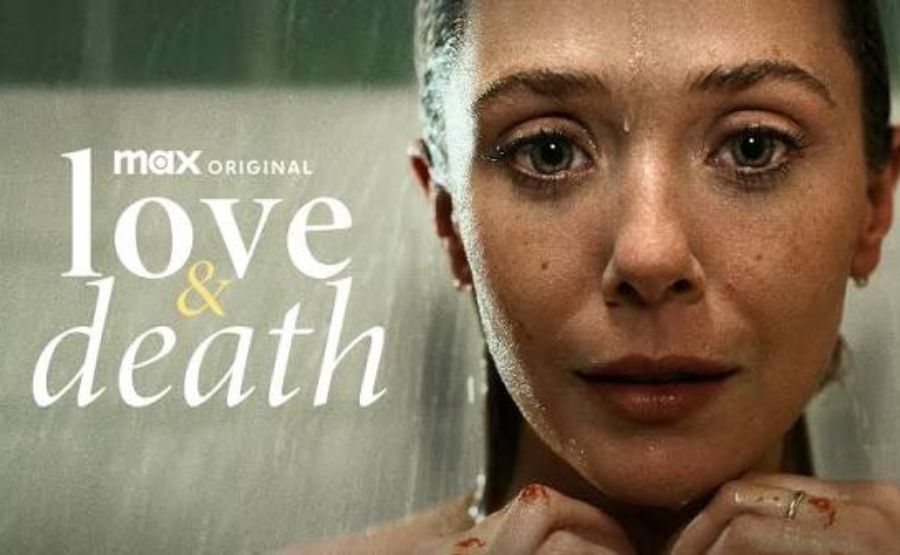
Love and Death: The HBO Max Series That Disrupted a Tranquil Texas Town
Picture a sunny Sunday morning in a small Texas town. Church bells are ringing. Families pile into station wagons. Kids run across well-kept lawns. Everything looks exactly the way a happy life is supposed to look. And then, one ordinary weekday in June 1980, something happens in a utility room that nobody in that community could have possibly imagined.
That’s the world of Love & Death — HBO Max’s gripping seven-episode miniseries that tells the true story of Candy Montgomery, a church-going housewife who was accused of killing her friend with an axe. It’s a story about suburban longing, a secret affair, a devastating act of violence, and one of the most shocking jury verdicts in Texas history. And in the hands of writer David E. Kelley, director Lesli Linka Glatter, and a cast led by the extraordinary Elizabeth Olsen, it became one of 2023’s most talked-about television events.
Let’s sit with this story for a while. It deserves that.
Key Facts
| Detail | Information |
| Title | Love & Death |
| Type | Biographical crime drama miniseries |
| Network | HBO Max (now Max) |
| Premiere Date | April 27, 2023 |
| Total Episodes | 7 |
| Written By | David E. Kelley |
| Directed By | Lesli Linka Glatter and Clark Johnson |
| Lead Cast | Elizabeth Olsen, Jesse Plemons, Lily Rabe, Patrick Fugit, Krysten Ritter, Tom Pelphrey, Elizabeth Marvel, Keir Gilchrist |
| Executive Producers | David E. Kelley, Nicole Kidman, Lesli Linka Glatter |
| Based On | Evidence of Love (book) and Texas Monthly articles |
| Setting | Wylie, Texas, late 1970s–1980 |
| Filmed In | Austin, Texas and surrounding areas |
| Rotten Tomatoes Score | 62% (critics) |
| Now Streaming | Netflix (as of December 2025) |
The Real Story Behind the Series
Before there was a miniseries, there was a real crime that left a whole community in shock.Candy Montgomery was, by every outward measure, a perfectly ordinary woman. She lived in Wylie, Texas — a quiet suburb north of Dallas. Her husband was Pat Montgomery, who worked as an electrical engineer.. She was a devoted mother. She sang in the church choir, sat on the parish council, and organized the volleyball team at the First United Methodist Church of Lucas. She was everyone’s friend. Everyone liked Candy. Betty Gore was also everyone’s friend. She was a middle school teacher, married to Allan Gore, and the mother of two young children. She and Candy knew each other from church. They were close. Their lives overlapped in the comfortable, familiar way that small-town lives do.
In late 1978, something shifted. Candy and Allan Gore shared an accidental collision during a church volleyball game. Candy had been feeling restless for a while — dissatisfied in ways she couldn’t quite name, trapped in a marriage that was stable but emotionally quiet. She decided she wanted more.Then, during one of the more unusual moments in this entire tale, she casually walked up to Allan and proposed that they start an affair. Directly. Practically. Like she was proposing a committee idea. They agreed to rules. No emotions. Weekdays only. No disruption to either family. It was, by all accounts, almost businesslike. And it went on for months. Allan eventually ended things to focus on his marriage. Betty had been struggling — with anxiety, with loneliness, with the strain of a husband who traveled often for work. Allan wanted to give the marriage a real chance. Candy accepted the end of the affair. Things seemed to return to normal.
Then came June 13, 1980. A Friday. Allan was away on a business trip. Candy stopped by the Gore house — she said it was to pick up a swimsuit for Betty’s daughter, who was staying with the Montgomerys. Whatever happened inside that home that day has been told and retold in courtrooms, books, articles, and now multiple television series. What is known is this: when Betty Gore’s neighbors finally forced their way inside after Allan couldn’t reach her by phone, they found Betty dead in the utility room. She had received 41 axe blows. Her infant daughter was alone in a nearby room, unharmed.
Candy Montgomery was arrested. She claimed self-defense — that Betty had confronted her about the affair, that Betty had attacked first, and that Candy had only responded in a panic of fear.A psychiatrist hired by her defense team testified that Candy had entered a dissociative state, triggered by a childhood trauma that surfaced during hypnosis. Following an eight-day trial, a jury of nine women and three men deliberated for just over three hours and found Candy not guilty.
The crowd outside the courthouse chanted “Murderer! Murderer!” The verdict shocked the state. And the tale wouldn’t disappear.
See aslo “You Cast: Inside Netflix’s Most Unsettling Love Story“
How the Show Came Together
Love & Death was ordered by HBO Max in May 2021. The announcement came with a pair of names that made people immediately pay attention: writer David E. Kelley, who had created Big Little Lies and The Undoing, and star Elizabeth Olsen, who had just finished WandaVision and was ready for something very different.
Nicole Kidman came on as executive producer through her Blossom Films company — the same company behind Big Little Lies. The series was co-produced by Lionsgate and drew its source material from two places: the book Evidence of Love: A True Story of Passion and Death in the Suburbs, written by journalists Jim Atkinson and John Bloom, and a pair of long-form articles originally published by Texas Monthly in 1984 under the headline “Love & Death in Silicon Prairie.”
The show filmed on location across Texas — Austin and a dozen nearby towns and counties — capturing the wide skies, tidy subdivisions, and church-centered community feel of the late-1970s Dallas suburbs. The production designers did careful work. The sets, the costumes, the wallpaper, the kitchen appliances — all of it placed you firmly in a particular moment in American life, before the internet, before smartphones, when secrets traveled slowly and a small town really could close ranks around its own.
It’s worth noting that while Love & Death was in production, Hulu was also making Candy — a separate miniseries about the same story, starring Jessica Biel. The two shows aired within a year of each other, and the comparison was inevitable. Jessica Biel even reached out to Elizabeth Olsen when she heard they were both working on the same case. Olsen apparently found the gesture sweet. The two women had never actually met.
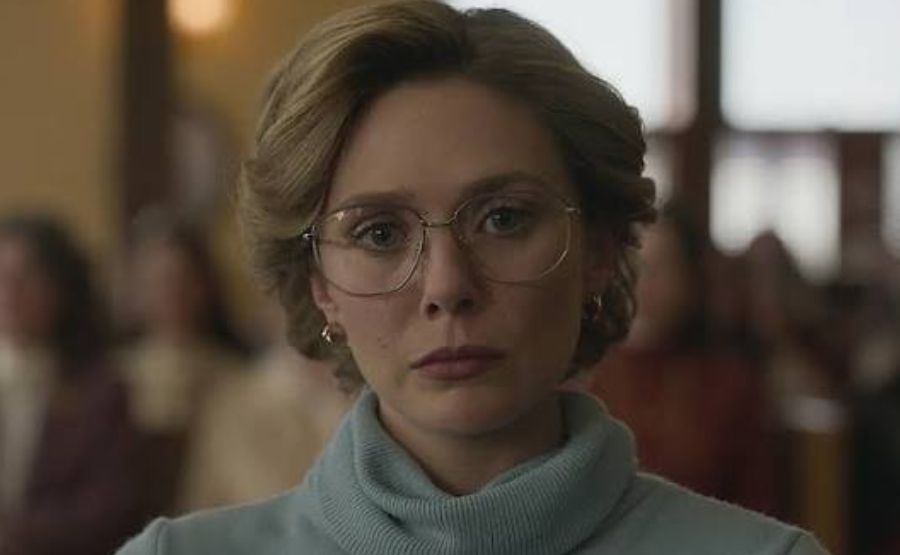
Elizabeth Olsen as Candy Montgomery
You cannot talk about Love & Death without spending real time on Elizabeth Olsen’s performance. It is, by most accounts — critics, viewers, and even some of the show’s harshest reviewers — the thing that makes the series worth watching.
She plays Candy not as a monster, not as a victim, but as a fully three-dimensional woman who is difficult to pin down. In the early episodes, Candy has an almost irresistible warmth about her. She is social, energetic, quick to laugh. She loves her children. She’s good at church things. She’s also clearly bored — and not in a trivial way. She feels like a woman whose intelligence and energy have been poured into an existence that is too small for her.
Olsen brings something quietly unnerving to the role. Her eyes, in particular, are used to extraordinary effect. Sometimes they’re wide and bright, radiating the sunny confidence that makes everyone love Candy. And then, in other moments, they go still in a way that is deeply unsettling. You watch this woman move through the world performing the role of a happy housewife, and you feel the gap between the performance and the person underneath.
As the series moves toward the trial, Olsen’s work becomes even more layered. Candy after the killing is someone who has been through something she can’t fully explain, doing everything she can to appear normal while her whole life teeters on the edge. There’s a scene where she serves her family dinner and calmly tells her daughter that discussing a potential murder conviction is not appropriate table conversation. It’s one of the most chilling moments in the series — and Olsen plays it without flinching.
The Rest of the Cast
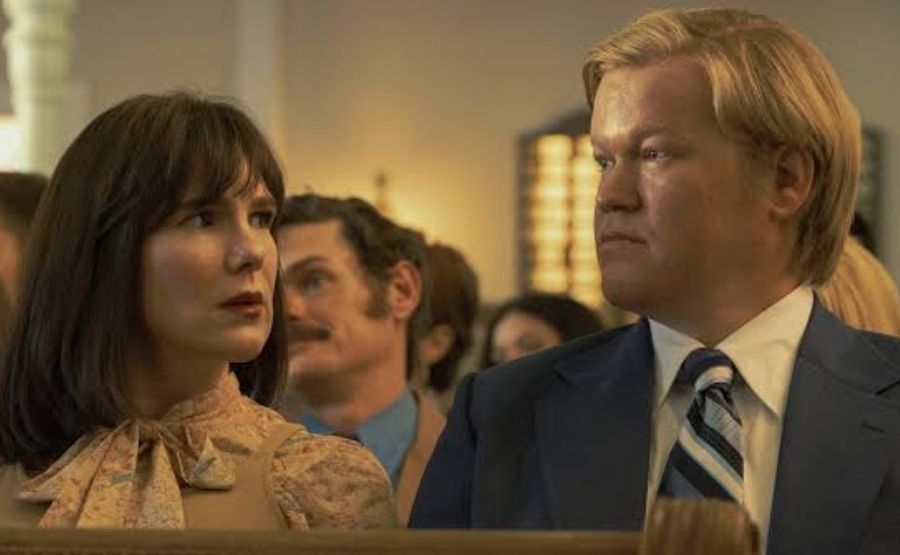
Jesse Plemons as Allan Gore is quietly excellent in the kind of role that doesn’t announce itself. Allan is passive, awkward, well-meaning, and not particularly good at understanding his own feelings. He drifted into the affair with Candy because she came and asked, and he drifted back out of it because it felt complicated. Plemons plays him with a soft blankness that is perfectly calibrated — you don’t dislike Allan, but you also can’t quite get a grip on him.
Lily Rabe has perhaps the most difficult job in the whole cast. Betty Gore is the victim of the story. She is also, as written, a complex and sometimes difficult person — anxious, intense, struggling with postpartum depression, demanding in ways that pushed the people around her away. Rabe doesn’t play Betty as simply sympathetic or simply difficult. She plays her as a real woman, full of contradictions, who deserved far more than she got. Some critics argued the show didn’t give Betty enough interiority. But within the material she had, Rabe was remarkable.
Patrick Fugit as Pat Montgomery plays a man who is almost heroically oblivious — a kind, quiet person who genuinely cannot see what is happening in his own marriage until it is much too late. Krysten Ritter as Sherry, Candy’s best friend, brings a real spark of color to every scene she’s in. And Tom Pelphrey as Don Crowder, Candy’s flamboyant defense attorney, is a consistent source of energy in the trial episodes — a man who curses at judges and talks to cameras and turns every moment into theater.
Elizabeth Marvel as Jackie Ponder, Candy’s pastor and closest confidant, brings warmth and quiet intelligence to what could have been a minor role. And Keir Gilchrist rounds out the main cast as Ron Adams, an early person of interest in the investigation.
What the Show Is Really About
On the surface, Love & Death is a true-crime drama. But underneath that surface, it’s doing something more interesting. It’s asking what happens to people — especially women — when the life they’re expected to want doesn’t fit who they actually are.
Candy Montgomery is a woman living in a very particular moment in American culture. The late 1970s in suburban Texas. The expectations were clear: marriage, children, church, community service. And for many women, that was genuinely fulfilling. But Candy had something burning inside her that that life couldn’t contain. She didn’t know how to name it. She didn’t have many outlets for it. She thought an affair could fix it, like adding a new valve to a pressure cooker.
The show treats this with empathy — not to excuse what happened, but to understand it. Kelley and Glatter are interested in the ordinary, quiet dissatisfactions that build up inside people over years. The small conversations that don’t quite connect. The solitude concealed by a grin. The sense that you are always performing a role that someone else wrote for you.
This is what distinguishes Love & Death from a mere sensationalized crime drama. It’s not interested in making you gasp at the brutality. It’s interested in making you understand — uncomfortably — how ordinary the path to violence can look before it arrives.
How Critics and Audiences Responded
The reaction to Love & Death was truly varied, which is interesting in itself.
On Rotten Tomatoes, the series holds a 62% critics’ score — not bad, but not the glowing reception the creative team might have hoped for. Some reviewers felt the show leaned too heavily in Candy’s favor, presenting Betty Gore as an irritating presence rather than a full human being whose death mattered deeply. Rolling Stone criticized the storytelling for letting Candy’s perspective crowd out everyone else’s. IndieWire felt the courtroom sequences — which make up a significant portion of the final episodes — were dramatically flat, given that we already knew what we were going to see.
But almost every review, positive or negative, praised Olsen’s performance as something genuinely special. Time magazine called it David E. Kelley’s best work since Big Little Lies, arguing that his refusal to turn Candy into a cartoon villain was a real and meaningful achievement. Viewers on IMDb gave it a 7.5 out of 10, with many calling it gripping, beautifully produced, and brilliantly acted.
The 1970s aesthetic — the wood-paneled kitchens, the polyester prints, the soundtrack of carefully chosen period songs — drew consistent praise. Lesli Linka Glatter’s direction, particularly in the early domestic episodes, created a world that felt genuinely lived-in and specific. The camera moved through those suburban homes with a quiet attentiveness that made the later violence land harder, because you’d already come to understand exactly what kind of life was at stake.
Where Are They Now — The Real People
After the trial, Candy and Pat Montgomery moved to Georgia within three months. Before getting divorced, they were together for four years. Candy became a family counselor and has kept completely out of the public eye ever since. When a reporter reached her in 2000 on the 20th anniversary of the murder, she declined any comment with characteristic bluntness: “I’m telling you in big bold letters: I’m not interested.”
Betty Gore’s two daughters were raised by Betty’s parents in Kansas. Allan Gore eventually remarried. The house where Betty Gore died became something of a grim landmark in Wylie, Texas — the “axe murder house” — though the neighborhood has changed significantly in the decades since.
The series ends with text updates about each major character, tying the real story back to the drama you’ve just watched.
Final Thoughts
There’s a reason this story has been told and retold — in a book, in magazine articles, in two separate miniseries — and why it keeps finding new audiences. It’s not just the violence or the verdict. It’s the gap between the sunny surface of that Texas suburb and the darkness that had been quietly building underneath it.
Love & Death addresses that gap thoughtfully and with consideration. It doesn’t offer easy answers. It doesn’t tell you Candy was a monster. It doesn’t tell you she was a victim. It just shows you a person — recognizable in many small ways — whose life reached a moment that changed everything, for everyone around her.
Elizabeth Olsen’s performance alone makes this worth your time. But the show is more than just a showcase for a great actress. It’s a thoughtful, unsettling look at what gets buried inside people when they feel they have no other way out. That’s a subject worth sitting with, even on a calm afternoon.
FAQs
1. Is the series Love & Death inspired by real events?
Yes, entirely. The miniseries is based on the real case of Candy Montgomery, who was tried for the murder of Betty Gore in Wylie, Texas in 1980. The show draws primarily from Evidence of Love, a book written by journalists Jim Atkinson and John Bloom, and a pair of Texas Monthly articles from 1984.
2. Where is Love & Death currently available to watch?
The series originally premiered on HBO Max in April 2023. As of December 2025, it became available on Netflix as well.
3. How many episodes does the series have, and how long are they?
There are seven episodes, each running approximately 54 to 60 minutes. The first three episodes were released together on launch day; the remaining four came out weekly.
4. Was Candy Montgomery really found not guilty?
Yes. On October 30, 1980, after just over three hours of deliberation, the jury found her not guilty. The verdict was widely criticized by the public, and spectators outside the courthouse responded with anger.
5. What was Candy’s defense argument at trial?
Her defense attorney Don Crowder argued self-defense — that Betty Gore had confronted Candy about the affair and attacked her first with the axe. A psychiatrist testified that Candy had experienced a dissociative episode triggered by repressed childhood trauma, specifically the memory of her mother repeatedly telling her to “shush.”
6. What is Elizabeth Olsen’s role in the series?
She plays Candy Montgomery, the central character and primary perspective through which the story is told. This role is highly demanding, necessitating that she exhibit warmth, repression, panic, numbness, and a survival instinct — at times all within a single scene.
7. What is Jesse Plemons’ role?
He plays Allan Gore — Betty’s husband and Candy’s affair partner. He’s the quiet, passive figure at the center of the love triangle, and Plemons plays him with a particular kind of ordinary believability that makes the whole situation feel more real.
8. How does Love & Death compare to Hulu’s Candy?
Both shows cover the same true story but with different tones and approaches:
- Candy (Hulu, starring Jessica Biel) uses more horror elements and flashes between timelines
- Love & Death (HBO Max) adopts a more linear and naturalistic approach, with the story mainly told from Candy’s viewpoint
- Critics were divided on which version handled the material better, though Olsen’s performance was widely considered stronger than Biel’s
9. Who produced the series?
David E. Kelley wrote and executive produced it. Nicole Kidman and Per Saari executive produced through Blossom Films. Lesli Linka Glatter directed four of the seven episodes and also executive produced. Lionsgate co-produced the series.
10. Did the show film in the actual Wylie, Texas?
No. The series filmed across the Austin, Texas area and surrounding towns including La Grange, Georgetown, Lockhart, and several others. The production recreated the feel of late-1970s North Texas suburbs with careful attention to period detail.
11. What happened to Candy Montgomery after the trial?
She and her husband Pat moved to Georgia within three months of the verdict. They eventually divorced after about four years. Candy later worked as a family counselor and has deliberately avoided any public attention since the early 1980s.
12. What is the book the show is based on?
The primary source is Evidence of Love: A True Story of Passion and Death in the Suburbs, written by journalists Jim Atkinson and John Bloom. It was first published in 1984 — the same year Texas Monthly ran the original long-form articles on the case.
13. What themes does the series explore beyond the crime itself?
The show looks at:
- The pressures placed on women in suburban American life in the 1970s
- The gap between how people appear in a community and who they actually are
- How small dissatisfactions can build into something explosive over time
- The way media and legal systems shape stories around crimes
- The murky territory between guilt, self-defense, and the limits of understanding another person’s inner life
14. Is the show worth watching if you already know how the story ends?
Yes, for most viewers. Knowing the outcome doesn’t reduce the tension — in fact, it adds a particular kind of unease as you watch ordinary moments accumulate toward the inevitable. The performances, direction, and period atmosphere are strong enough to carry the experience.
15. Did the show win any awards?
It received nominations at the Critics Choice Awards and was nominated at the BAFTAs (in the UK, where it aired on ITV and ITVX in 2023–2024). Elizabeth Olsen was widely expected to receive Emmy recognition for her performance, though the awards landscape was complicated by the writers’ and actors’ strikes of 2023.
Every story matters—discover them all with Daily Narrative.