Iron Hill Brewery North Wales: The Story Behind One of the Suburbs’ Favorite Brewpubs
Pull up a chair, because this one has a real story to it — not just a “here’s a restaurant, here’s the menu” kind of story, but one with big wins, a shocking collapse, and a slow, hopeful comeback still playing out right now. If you ever sat at the bar at 1460 Bethlehem Pike with a Pig Iron Porter in front of you, or brought the kids in for burgers on a Tuesday, this place probably meant something to you. So let’s talk about what it was, what happened to it, and what might be coming next.
I want to be upfront about something before we go any further. As of right now, the North Wales location is closed. It shut its doors along with every other Iron Hill restaurant in late September of 2025, when the company filed for bankruptcy. Since then, some locations have revived under new owners. North Wales, sadly, hasn’t been one of them yet — the building was still sitting empty and listed for a new tenant as of this summer. I’ll walk you through all of it, including the parts that might change again soon.
Key Facts
| Detail | Information |
| Address | 1460 Bethlehem Pike, North Wales, PA 19454 |
| Founded (company) | 1996, in Newark, Delaware |
| Founders | Kevin Finn, Mark Edelson, Kevin Davies |
| What it was | Brewpub — house-brewed beer plus scratch-made American food |
| Signature beers | Vienna Red Lager, Pig Iron Porter, seasonal and barrel-aged specials |
| Company awards | 88+ combined medals from the Great American Beer Festival and World Beer Cup |
| Peak size of chain | 22 locations across PA, DE, NJ, SC, and GA |
| What happened | Closed all locations and filed for Chapter 7 bankruptcy in September 2025 |
| Current status of North Wales | Closed; building listed for a new tenant as of June 2026 |
| Locations that have reopened | Center City Philadelphia, Wilmington, Huntingdon Valley, Hershey, Lancaster |
| New ownership | Group including original co-founder Mark Edelson, operating under Rightlane LLC |
How a Little Brewpub in Delaware Grew Into a Regional Name
Every big story starts small, and this one starts on a single street in Newark, Delaware, back in 1996. Three guys — Kevin Finn, Mark Edelson, and Kevin Davies — opened a restaurant that brewed its own beer right there on-site. That was still a bit of a novelty back then. Most people were drinking whatever big brand was on sale, and here was this little spot serving beer made twenty feet from your table.
They named the place after a nearby spot connected to the Revolutionary War, which tells you something about how much they wanted this to feel rooted in its community, not like some corporate chain dropped in from nowhere. And it worked. People liked the beer. They liked the food even more than they expected to. Word spread the old-fashioned way, one satisfied regular at a time.
From there, growth just kept happening. New locations popped up across Pennsylvania, then New Jersey, then further south into South Carolina and Georgia. At its biggest, the company was running 22 separate brewpubs, each one brewing its own beer on-site rather than shipping it in from one central factory. That’s actually a pretty demanding way to run a chain — every single location needs a working brewery crew, not just a kitchen crew — and Iron Hill pulled it off for close to three decades.
See aslo”Fountain of Youth Movie Review (2025): What Everyone Is Actually Saying About This Movie“
Why North Wales Became a Local Favorite
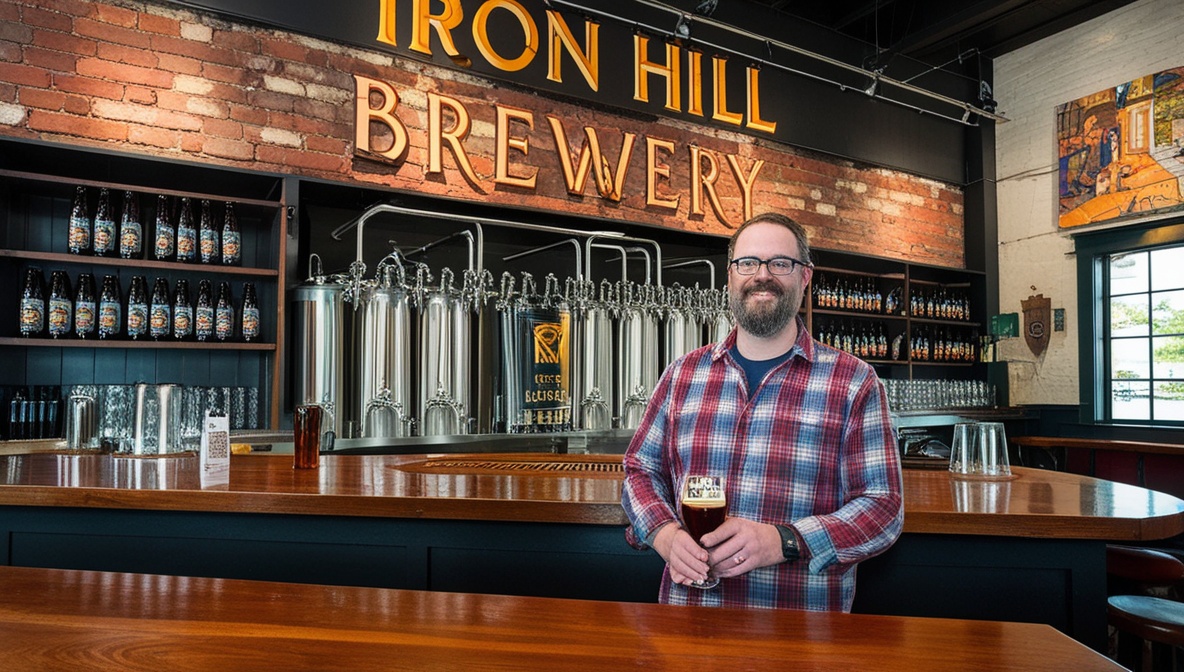
The North Wales location sat right off PA-309, an easy stop for anyone driving through Montgomery County. Walk in and you’d find the bar straight ahead, dining rooms opening up on either side, and behind that, visible through some glass, the actual brewing equipment. That little peek at the tanks mattered more than people might guess. It reminded you this wasn’t some place just reheating things from a truck.
Regulars talk about the place with real warmth. People mention specific bartenders and servers by name — the kind of detail you only get when a spot becomes part of your routine, not just a one-time dinner out. Families used it for birthdays. Beer nerds used it for the rotating small-batch releases that never made it onto the printed menu. Somebody who’d been going for over a decade could still remember one specific bourbon-barrel stout from years back like it happened last week.
That’s the thing about a good neighborhood brewpub. It’s not really about any single beer or any single dish. It’s about having a place that’s reliably good, close enough to become a habit, and just interesting enough that you never quite get bored of it.
What Made the Beer Worth Talking About
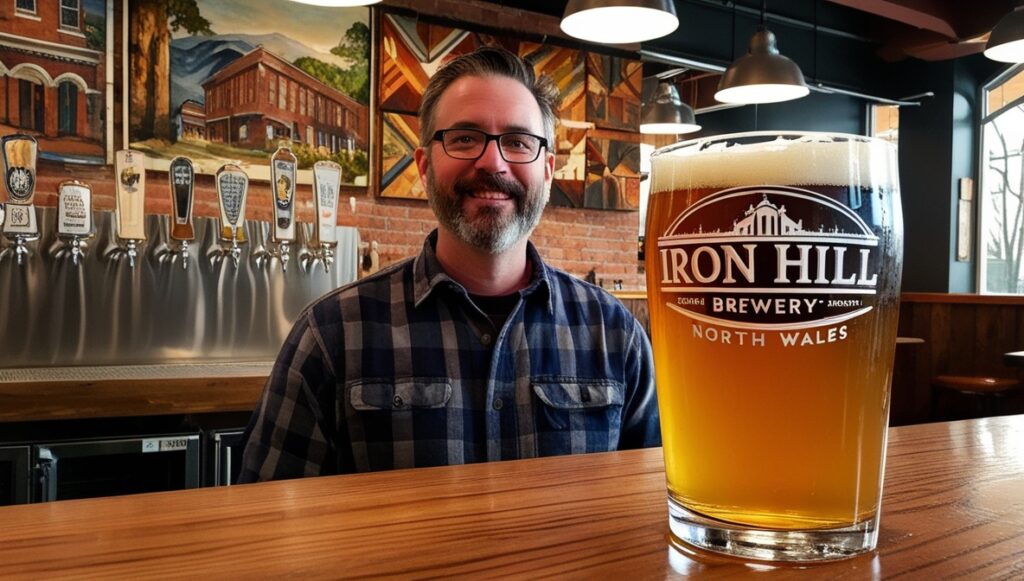
Two beers came up again and again whenever people talked about Iron Hill: the Vienna Red Lager and the Pig Iron Porter. Neither one was flashy or trendy — no wild fruit additions, no hazy murk, nothing chasing a trend. They were just well-made versions of classic styles, brewed consistently enough that you knew exactly what you were getting no matter which location you walked into.
But the real draw for serious beer fans was what sat next to those staples — the rotating stuff. Each location had its own brewer with room to experiment: barrel-aged imperial stouts, Belgian styles, seasonal one-offs that showed up on tap for a few weeks and then vanished. That mix of dependable and surprising is a tricky balance for any brewery to strike, and Iron Hill managed it well enough to win over 80 medals at the Great American Beer Festival alone, plus a long stretch of wins at the World Beer Cup. Some counts put the combined total above 88 awards. That’s not a small accomplishment — that’s a brewery that professional judges kept respecting, year after year, across two decades.
The Food Side of Things
Iron Hill never tried to be a fine-dining destination, and that was smart. It aimed for something more useful: solid, made-from-scratch American food that paired well with beer and worked for almost any occasion. Burgers with thick-cut bacon and smoked gouda. Pretzel buns. Cast-iron skillet queso topped with brisket. Flatbreads with arugula and balsamic glaze. Nothing too fussy, nothing too plain.
Reviews over the years were mostly warm, occasionally mixed — the kind of honest feedback you’d expect from any restaurant that’s been open for a long stretch and served thousands of different tables. Some nights the service moved fast and everything landed perfectly. Other nights, especially during a rush, people noticed slower service or a dish that didn’t quite hit. That’s ordinary restaurant life, not a red flag. What stands out more is how many people kept coming back anyway, which tells you the good nights outnumbered the rough ones by a wide margin.
The Sudden Collapse
Here’s where the story turns hard. In September 2025, Iron Hill closed three locations — Newark, Chestnut Hill, and Voorhees — and the company’s leadership described it as a strategic move to strengthen the rest of the chain. Just two weeks later, everything changed. On September 25, 2025, all sixteen remaining locations, North Wales included, closed at once. The company announced it was filing for Chapter 7 bankruptcy, citing ongoing financial difficulties.
Employees found out with almost no warning. Some learned through an internal email, others through social media before anyone from the company had even called them directly. One former worker described losing her job as so sudden it left her needing “a second” just to process it. Reports later pointed to roughly $20 million in accumulated debt behind the shutdown — the kind of number that makes clear this wasn’t one bad month, but pressure that had been building for a while.
Rising costs for food, labor, and energy hit the whole restaurant industry hard in recent years, and full-service chains with a lot of locations tend to feel that pressure more than smaller operations. Add in a brewpub’s extra overhead — brewing equipment, brewing staff, ingredients for beer on top of ingredients for food — and you can start to see how the math got difficult. Iron Hill wasn’t alone. Plenty of regional chains have quietly shrunk or shut down over the past couple of years as the industry resets itself.
A Careful, Slower Comeback
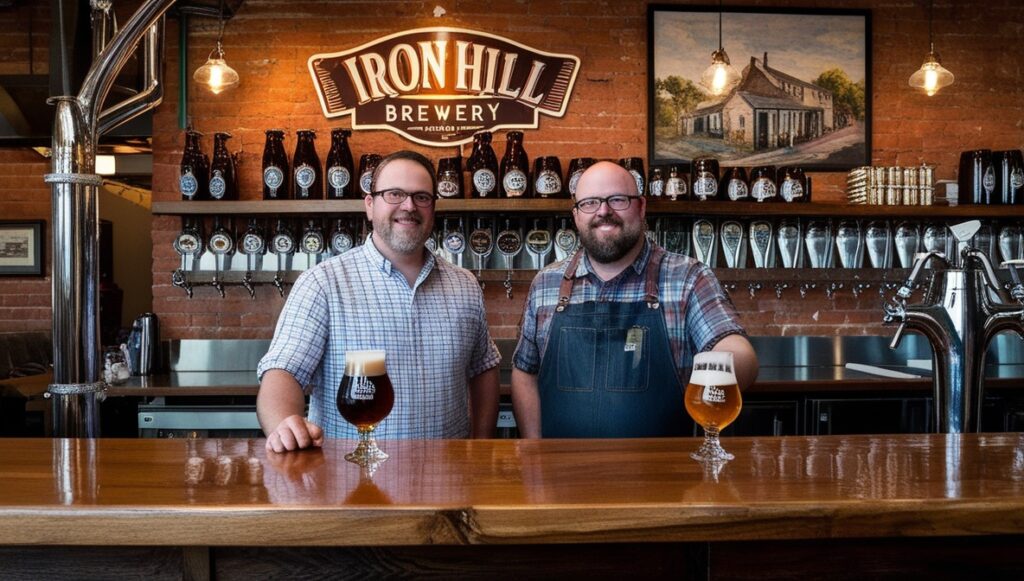
Here’s the part that actually surprised a lot of longtime fans: this story didn’t end with the shutdown. Just a few months later, word came out that a group of investors, including original co-founder Mark Edelson, had bought back the Iron Hill name and secured leases on five of the old locations through the bankruptcy process.
Edelson has been honest about what went wrong the first time — the chain grew fast, maybe too fast, and stretched itself thinner than it could sustain. This time, the plan is smaller on purpose. Five locations instead of twenty-two. Center City Philadelphia led the way, reopening in mid-April 2026, followed by Wilmington, Huntingdon Valley, Hershey, and Lancaster through the spring and early summer. Around 400 jobs are coming back with these reopenings, and some employees, like a longtime brewery operations director who’d spent months selling roofing after the shutdown, have already returned.
The new locations even brought back a beer with a name that says exactly what it means: Unfinished Business.
Where That Leaves North Wales
I won’t sugarcoat this part. North Wales was not among the five locations chosen for the comeback. As of mid-June 2026, the building at 1460 Bethlehem Pike was still sitting empty, listed on the market as available for a new tenant, alongside a handful of other former Iron Hill spots in Media, Phoenixville, Chestnut Hill, and Exton. Some other old locations found new life as different restaurants entirely — the Newtown spot became a P.J. Whelihan’s, and West Chester is turning into a Magerk’s Pub & Grill.
That doesn’t necessarily mean North Wales stays empty forever. Property owners have noted real interest in some of these spaces, partly because a few of them, North Wales included, come with something valuable in the suburbs: an actual parking lot. Whether it becomes another Iron Hill someday, a different restaurant, or something else entirely is still genuinely up in the air. If you’re a former regular hoping for a reopening announcement, the honest answer right now is: nothing has been confirmed either way.
Why This Story Matters Beyond One Building
It’s tempting to treat this as just a local restaurant closing, but there’s a bigger picture worth sitting with for a second. Craft brewing had an enormous boom over the past fifteen or twenty years, with small breweries popping up in nearly every town. That boom is settling now. Costs are higher, people are drinking a little less than they used to on average, and the middle-sized regional chains — too big to run cheap, too small to have the buying power of a giant brand — are feeling squeezed the hardest.
Iron Hill’s collapse and partial rebirth is a pretty clear snapshot of that whole shift. A beloved, genuinely well-run brand can still get caught by fast growth and rising costs. But it also shows something hopeful: when a brand has real community goodwill built up over decades, there’s often a path back, even if it’s smaller and slower than before.
Final Thoughts
If you’ve got memories of the North Wales Iron Hill — a birthday dinner, a first date, a random Tuesday burger with a co-worker — those memories are real and they matter, even if the building sits quiet right now. Restaurants close and reopen and change hands all the time, but the good ones leave a mark on the people who spent time there. This one clearly did.
I’d say keep an eye on the space. The company has shown it’s willing to fight for a second chance, and the building itself has qualities — a good location, a parking lot, name recognition in the area — that make it a reasonable candidate for something good to move in, whether that’s Iron Hill again or a fresh face carrying a similar spirit. For now, if you’re craving that brewpub feeling, Center City, Huntingdon Valley, Hershey, Lancaster, and Wilmington are open and pouring. It’s not quite the same as your old spot on Bethlehem Pike, but it’s the same brand, the same beer recipes, and a lot of the same people behind the bar.
FAQs
1. Is the Iron Hill Brewery in North Wales still open?
No. It closed in late September 2025 along with every other Iron Hill location, and as of mid-2026 the building has not reopened. It’s currently listed as available for a new tenant.
2. Why did Iron Hill Brewery close all of its locations?
The company filed for Chapter 7 bankruptcy, citing ongoing financial challenges. Reports pointed to roughly $20 million in accumulated debt, driven by rising costs for food, labor, and energy along with the strain of running a large chain of full-service brewpubs.
3. Is Iron Hill Brewery coming back at all?
Yes, partly. A new ownership group that includes original co-founder Mark Edelson won back the brand and five restaurant leases through the bankruptcy procedure. Several locations have already reopened.
4. Which Iron Hill locations have reopened so far?
- Center City, Philadelphia (reopened mid-April 2026)
- Wilmington, Delaware
- Huntingdon Valley, Pennsylvania
- Hershey, Pennsylvania
- Lancaster, Pennsylvania
5. Will the North Wales location reopen?
It’s not confirmed either way. As of June 2026, the building was listed as seeking a new tenant, with no announced plans for it to become an Iron Hill again.
6. What happened to the building at 1460 Bethlehem Pike?
It sits empty and is being marketed for lease. Property representatives have noted interest from other restaurant operators, partly because the site includes a parking lot.
7. What beers was the North Wales location known for?
Like other Iron Hill spots, it poured company staples such as Vienna Red Lager and Pig Iron Porter, alongside rotating specialty beers brewed on-site, including barrel-aged and seasonal releases.
8. Did Iron Hill win any awards for its beer?
Yes, quite a few. The company earned more than 80 medals at the Great American Beer Festival and additional honors at the World Beer Cup, with some totals putting the combined award count above 88.
9. What kind of food did Iron Hill serve?
Scratch-made American pub food — burgers, flatbreads, sandwiches, and shareable appetizers, often built around ingredients like smoked gouda, thick-cut bacon, and house sauces.
10. When was Iron Hill Brewery founded, and where?
It was founded in 1996 in Newark, Delaware, by Kevin Finn, Mark Edelson, and Kevin Davies.
11. How big did the Iron Hill chain get before it closed?
At its peak, it operated 22 locations across Pennsylvania, Delaware, New Jersey, South Carolina, and Georgia, employing more than 800 people.
12. Are old Iron Hill gift cards still usable?
Cards from before the bankruptcy generally are not usable at the reopened locations, since those operate under new ownership. Some reopened locations have offered goodwill perks, like a free beer or appetizer, to guests holding old cards. It’s worth calling a specific open location directly to ask about current policy.
13. What replaced some of the other closed Iron Hill locations?
A few became different restaurants entirely. The Newtown, Bucks County location reopened as a P.J. Magerk’s Pub & Grill is replacing Whelihan’s and the West Chester location.
14. Is the new Iron Hill the same company as before?
Legally, it’s a new entity, operating under a group called Rightlane LLC that includes original co-founder Mark Edelson. The recipes, brand name, and much of the spirit carried over, even though the ownership structure changed after bankruptcy.
15. Where’s the nearest open Iron Hill to North Wales right now?
Huntingdon Valley and Center City Philadelphia are the closest reopened locations to North Wales, both within a reasonable drive for most Montgomery County residents.
Every story matters—discover them all with Daily Narrative.