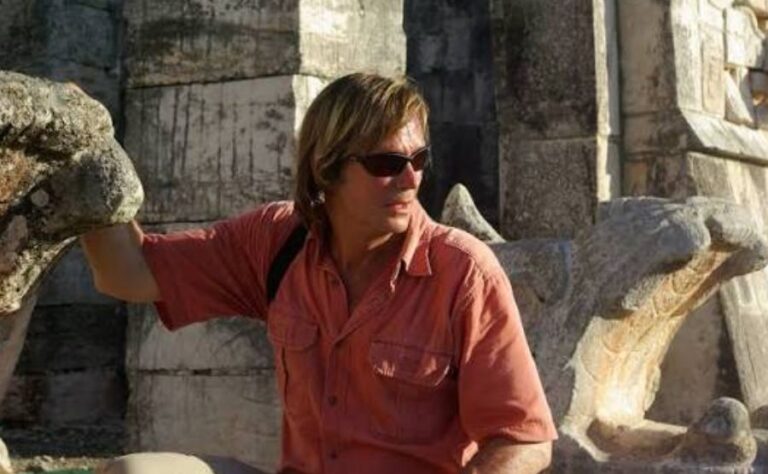
John Sugden: The Scholar Who Took the Field
At a moment when sport is simultaneously celebrated as a vehicle for peace and condemned as a theatre for corruption, John Sugden’s career stands as the most sustained attempt by any academic to grapple with both realities at once — and to do something practical about at least one of them.
Quick Facts
| Detail | Information |
| Full Name | John Peter Sugden |
| Nationality | British |
| Primary Roles | Sociologist; Professor; Author; Peace-Builder; Programme Director |
| Institutional Home | University of Brighton (Emeritus Professor of the Sociology of Sport) |
| Earlier Post | Lecturer, University of Ulster (Belfast) |
| Key Collaboration | Alan Tomlinson (co-author, FIFA investigations and sport sociology texts) |
| Major Books | Boxing and Society (1996); Badfellas (2003, with Tomlinson); Football, Corruption and Lies (2016); Sport and Peace-Building in Divided Societies (2017) |
| Programme Founded | Football 4 Peace International (2001, with Dr. Gary Stidder) |
| F4P Precursor | Belfast United (initiated in Northern Ireland, 1980s) |
| F4P Countries | Israel, Palestine, Jordan, Northern Ireland, Republic of Ireland, South Africa, The Gambia, South Korea, Colombia, Germany |
| F4P Reach | Over 8,000 children and 600 coaches by published accounts |
| UN Role | Expert adviser, Division for Social Policy and Development, UN Department of Economic and Social Affairs (2018) |
| Citation Count | 27+ research works with 418+ citations (ResearchGate) |
| Honours | Honoured (jointly with Alan Tomlinson) by the North American Society for the Sociology of Sport, 2017 |
| Research Framework | Investigative sociology; participant observation; critical realism; ethnography |
A Career Defined at the Margins of Sport
John Sugden is not a typical academic. He did not build his reputation by staying safely in the library. He built it by going to places most scholars preferred to read about — boxing gyms in Hartford, Connecticut and Havana, Cuba; sectarian Belfast during the Troubles; the committee rooms and back corridors of FIFA’s Swiss headquarters. He then wrote about what he found with the combined rigour of sociology and the urgency of investigative journalism.
The result is a body of work that occupies an unusual position in British academic life. It draws from ethnography, critical theory, and frontline practice. It has influenced global sport policy. It has drawn threats from one of the most powerful sporting organisations on earth. And it produced a grassroots football programme that has since crossed the planet, bringing Jewish and Arab children onto the same pitch, and Catholics and Protestants into the same coaching spaces.
See aslo “Ben Mitchell Eastenders: The Boy Walford Wouldn’t Let Heal”
Formation: Northern Ireland and the Crucible of Conflict
Sugden’s career falls into three interlocking chapters: the boxing ethnographer, the FIFA investigator, and the peace-builder. None of these phases was independent. Each informed the others.
Sugden came to the University of Ulster in Belfast as a lecturer during one of the most volatile periods in Northern Ireland’s modern history. The Troubles were not a backdrop; they were the immediate social reality of the city where he worked and the communities with whom he researched.
That context shaped his understanding of sport in fundamental ways. The received wisdom — that sport builds bridges and promotes harmony — looked very different from inside a society where sport was often one more arena for sectarian division. Catholic and Protestant communities in Belfast followed different sports, played in different clubs, and inhabited different leisure cultures. The bridge-building promise of sport, Sugden concluded, was not automatic. It required deliberate design.
His response was practical as well as theoretical. In the 1980s, he helped establish Belfast United, a cross-community sport programme that brought together young Protestants and Catholics in carefully structured shared activities.The focal point was a residential experience and athletic tour to the United States, which established circumstances for interaction unlikely to happen at home due to geographical and cultural displacement.
His 1991 paper in the Journal of Sport and Social Issues documented Belfast United’s results with measured honesty. Short-term attitudinal shifts were real and significant. Long-term change was harder to demonstrate. That tension — between genuine, observable impact and the stubborn persistence of structural division — would run through the next three decades of his work.
Boxing and Society: Entering the Gym
By the time Sugden published Boxing and Society: An International Analysis in 1996 through Manchester University Press, he had already spent years conducting participant observation research inside boxing clubs on three continents. The book was the first genuinely comparative sociological study of boxing’s subculture at international scale.
Sugden embedded himself in three sharply contrasting environments. The Charter Oak gym in Hartford, Connecticut served a predominantly Black inner-city population where boxing functioned as a structured alternative to the streets, and the book anatomised the ways economic disadvantage converted young men’s bodies into commercial assets for promoters and managers far above them in the food chain. In Belfast, the Holy Family Boxing Club brought young men from across the sectarian divide together under a discipline that the paramilitaries — whether loyalist or republican — implicitly respected, creating a kind of neutral ground rarely available elsewhere in the city. In Havana, under Fidel Castro’s government, Sugden found a radically different model: boxing as state-sponsored symbol of revolutionary virtue, producing world-class amateur athletes within a system that deliberately shielded them from professional commodification.
The methodological appendix — pointedly titled “The Perils of Ethnography” — became almost as influential as the case studies themselves. Sugden wrote with rare candour about the physical and ethical challenges of gaining access to closed communities, about the line between observation and participation, and about the researcher’s responsibility to subjects who trusted him with their lives. That appendix is now standard reading in postgraduate courses on qualitative research methods in sport and social science.
The book attracted 137 citations by scholarly measure — a substantial number for a work of qualitative sport sociology — and remains in use in university courses decades after publication.
The FIFA Investigations: Gonzo Sociology Meets World Football
Sugden’s sustained attention to FIFA, the world governing body of football, began in the 1990s and continued for more than two decades, largely in collaboration with his University of Brighton colleague Alan Tomlinson. Together, they produced a body of work on football governance that prefigured the FBI indictments and US Department of Justice interventions that would eventually shake the organisation to its foundations in 2015.
The key text in this strand of work was Badfellas, published in 2003. It documented the emergence and operation of what Sugden and Tomlinson characterised as a corrupt network under the stewardship of João Havelange and Sepp Blatter — a dynasty built on vote-trading, sponsorship manipulation, and the systematic exploitation of football’s global popularity for personal and factional enrichment.
FIFA and Blatter attempted to suppress the book. That attempt at intimidation by the institution became a part of the narrative and ultimately backfired horribly. When the FBI operation of May 2015 arrested multiple FIFA officials in Zurich, Badfellas was revisited as foundational evidence of what critical academic investigation had found years before law enforcement acted.
Sugden and Tomlinson reissued the material in 2016 as Football, Corruption and Lies: Revisiting ‘Badfellas’, the book FIFA tried to ban, adding 30,000 words of new analysis tracing the Blatter era’s full arc from its described foundations to its eventual collapse. One commentator observed that while the FBI had finally swooped on FIFA, Sugden and Tomlinson had been on the case for years before — combining the tools of critical sociology with the persistence of investigative journalism.
The partnership with Tomlinson produced several other significant works, including FIFA and the Contest for World Football (1998) and the edited collection Power Games: A Critical Sociology of Sport (2002). These cemented their reputation as the leading critical voices on the political economy of global sport governance.
In 2011, Sugden published a solo paper in the Journal of Qualitative Research in Sports Studies titled “Truth or Dare: Examining the Perils, Pains and Pitfalls of Investigative Methodologies in the Sociology of Sport.” The paper was a methodological manifesto — a sustained argument that the sociology of sport could not afford to confine itself to safe, university-sanctioned research designs if it intended to account for how power actually operated in sporting institutions.
Football 4 Peace: From Theory to Practice Across Conflict Zones
Sugden’s most visible contribution to the world beyond the academy is Football 4 Peace International — a values-based coaching and community relations programme that he co-founded in 2001 with Dr. Gary Stidder of the University of Brighton.
The immediate seed was planted by Geoffrey Whitfield, a retired Baptist minister who had read the 1995 book Sport, Sectarianism and Society in a Divided Ireland, co-authored by Sugden and Alan Bairner, and was inspired by the Belfast United work to explore whether a similar model might function in Israel. Whitfield brought the vision; Sugden and Stidder brought the methodology, the institutional infrastructure of the University of Brighton’s Chelsea School of sport, and Sugden’s hard-won experience of what cross-community sport required in practice.
The first programme ran in the summer of 2001, when seven people from Brighton travelled to Ibillin, a mixed Arab community in Israel, and ran a week-long coaching camp for approximately 100 Muslim Arab and Christian Arab children aged 10 to 14. The timing was precarious — a school bus bombing in the neighbourhood occurred in the days preceding the programme, and the planned Jewish partner community withdrew at the last moment. The project proceeded anyway. Jewish communities joined in 2002.
At its height in 2012, Football 4 Peace operated across 45 communities at 15 sites within Israel alone. The programme expanded into Palestine and Jordan in 2010, bringing in 100 children and 8 coaches in Palestine and 300 children and 16 coaches in Jordan in its first year of operation there. By the programme’s second decade, it had reached Northern Ireland, the Republic of Ireland, South Africa, The Gambia, South Korea, and Colombia. Over 8,000 children and 600 coaches have participated in total.
The methodology that Sugden brought to Football 4 Peace was not simply putting children from opposing communities on the same pitch. He was clear-eyed about the limits of that approach — sport played in its native cultural context, as he had observed in Belfast, could intensify division rather than dissolve it. The F4P model insisted on values-based coaching, deliberate mixing of teams, trained coaches from multiple community backgrounds, and structured moments of dialogue where participants had to move beyond sporting activity and engage with the human beings on the other side of the conflict.
In 2013, the Israeli Sports Authority formally adopted the Football 4 Peace programme, embedding its child-protection training as national policy. The Irish Football Association built elements of the F4P coaching methodology into its National Youth Strategy. The programme’s profile was elevated further when it was selected as one of three case studies for the University of Brighton’s submission to the 2014 Research Excellence Framework — contributing to the university’s ranking as 14th in the country for research impact.
Sugden was invited to the UK Prime Minister’s dinner at 10 Downing Street in December 2009, during the visit of Israeli President Shimon Peres. He presented at NATO on cultural relations and conflict prevention. The programme was addressed by Michael D. Higgins, President of the Republic of Ireland, during a 2013 residential camp in Derry/Londonderry.
The UN and Global Policy Recognition
In April 2018, by which point Sugden held the title of Emeritus Professor at Brighton, the University announced that he had been invited to join an expert group supporting the United Nations Division for Social Policy and Development. The group’s work fed into preparations for a report to the 73rd session of the United Nations General Assembly.
The meeting, held in New York in June 2018, carried the title “Strengthening the Global Framework for Leveraging Sport for Development and Peace.” Sugden’s presence reflected the extent to which Football 4 Peace had become a reference point for international sport-for-development policy — not merely an academic project but a practitioner model of demonstrated reach and evaluable impact.
Sugden’s public statement at the time was characteristically grounded. He framed the UN appointment not as personal recognition but as institutional recognition of everyone at Brighton who had built and sustained Football 4 Peace. He tied it, explicitly, to ongoing conflicts worldwide and to the need for practical tools, not rhetorical gestures.
Intellectual Legacy: The Investigative Sociologist
Sugden’s contribution to the methodology of sport sociology is as significant as his substantive findings. He championed what he called “investigative sociology” — a practice-based approach that borrowed the commitment to access and disclosure from investigative journalism while maintaining the analytical frameworks and ethical accountability of academic social science.
This was not a comfortable position. It exposed him to risks that conventional academic research does not: personal danger in conflict zones, legal threats from powerful sporting institutions, and the structural suspicion of university ethics committees unused to research that could not be pre-specified in every detail. His 2011 paper on investigative methodologies documented these tensions with unusual frankness.
The friction between his approach and mainstream academic culture is real. Participant observation at the level Sugden practised it — embedding in boxing gyms in revolutionary Cuba, manoeuvring through FIFA’s corridors — is methodologically demanding, personally costly, and difficult to fund through conventional research grant structures. His career was, in that sense, a sustained argument by example that the sociology of sport needed to risk discomfort in order to produce knowledge that mattered.
Together with Alan Tomlinson, Sugden was honoured in 2017 by the North American Society for the Sociology of Sport for what the organisation described as the high quality and sustained profile of their scholarship. The award acknowledged a partnership that had produced some of the most consequential critical writing on sport governance in the discipline’s history.
Personal Life and Private Commitments
Sugden’s personal biography is not extensively documented in public sources, which appears to reflect deliberate choice rather than an absence of private life. What is visible in his public work suggests a person of unusually sustained commitment — the Belfast United project, the Boxing ethnographies, the Football 4 Peace programme, and the FIFA investigation were not sequential projects but overlapping decades-long engagements.
The willingness to spend years inside boxing gyms in Hartford, Belfast, and Havana; to build a cross-community programme from scratch in post-Intifada Israel; to engage in sustained investigation of a powerful institution that eventually tried to suppress the results — these are not qualities that emerge from detachment. They suggest someone for whom intellectual and ethical commitments are continuous rather than compartmentalised.
His academic home at the University of Brighton, where Alan Tomlinson was also based, provided the institutional context for a partnership that sustained some of the most ambitious critical sport sociology of the past three decades. The University’s Chelsea School of Sport gave both the Football 4 Peace programme and the FIFA investigations the physical and reputational infrastructure they needed to operate at international scale.
Legacy and Relevance in Today’s World
Sugden’s work remains urgently relevant across all three of its major registers.
The FIFA corruption story — which he and Tomlinson pursued from the 1990s through Badfellas — has since become one of the defining governance scandals of 21st-century sport. The US Department of Justice investigation of 2015, the arrests, the resignation of Blatter: all of this vindicated the critical analysis Sugden and Tomlinson had conducted for over a decade before any law enforcement agency moved. As global sport governance continues to evolve, their framework for analysing how powerful sporting institutions capture and corrupt the democratic potential of mass sport remains a reference point for researchers and journalists alike.
The Football 4 Peace model has expanded to new conflict contexts continuously. As of the 2020s, the programme operates in Colombia, South Korea, and The Gambia alongside its original Middle Eastern and Northern Irish theatre. The adoption of F4P methodology by the Israeli Sports Authority and the Irish Football Association represents a form of policy impact rarely achieved by academic sport researchers.
His boxing work raised questions that remain genuinely unsettled: whether boxing can be ethically justified as sport; whether urban boxing gyms represent genuine protection for young men from marginalised communities or the sophisticated management of disadvantage; how state sport systems differ in their treatment of athletes’ bodies. Boxing and Society is still cited in PhD theses in sociology, anthropology, criminology, and sport studies.
His methodological writing on investigative sociology has influenced a generation of younger researchers who found in it permission to move outside the established protocols of academic research when the subject demanded it. In a discipline that can too easily retreat into theoretical abstraction, Sugden’s work modelled the value of going to where the action was.
Final wards
John Sugden does not fit easily into any single description. He is simultaneously a theorist of sport and a practitioner within it; an academic who has produced rigorously cited scholarship and a field-worker who has built programmes touching thousands of children’s lives; a critic of sport’s complicity in corruption and a believer in sport’s genuine potential for social repair.
That combination produces productive tension. The peace-builder might be accused of naivety about sport’s transformative power; the FIFA investigator might seem cynical about the very institutions that Football 4 Peace must navigate. Sugden’s position, articulated most clearly in his 2010 paper on “critical left-realism,” is that neither fatalism nor idealism is adequate. Sport does not automatically promote peace. It does not automatically corrupt. What matters is who controls it, how it is structured, and what values are deliberately embedded in its practice.
His most enduring legacy may be methodological as much as substantive: the demonstration that academic sociology could be both rigorous and urgent, both critical and constructive, both inside the institutions it studied and honest about what it found there. In a world still divided by the conflicts that shaped his career — sectarian, ethnic, political — that combination of qualities has not become any less necessary.
FAQs
1. Who is John Sugden (the sport sociologist)?
John Peter Sugden is a British sport sociologist, Emeritus Professor at the University of Brighton, and co-founder of Football 4 Peace International. He is best known for his investigative work on FIFA, his ethnographic study of boxing across three countries, and his decades-long commitment to using sport as a tool for conflict resolution in divided societies.
2. Is there another person named John Sugden?
Yes. John Sugden (born 1947, Hull) is a separate British historian and independent scholar who has written acclaimed biographies of Admiral Horatio Nelson and the Shawnee leader Tecumseh, among other naval and Native American historical works. The two John Sugdens share a nationality but are entirely distinct individuals with different careers and fields.
3. What is Football 4 Peace International?
It is a values-based sport and community relations programme co-founded by Sugden and Dr. Gary Stidder in 2001. It uses football coaching, deliberate cross-community team formation, and structured dialogue to promote contact and understanding between young people in conflict-affected societies. It began in Israel and Palestine and now operates across more than ten countries.
4. What was Belfast United?
Belfast United was a cross-community sport programme Sugden helped establish while lecturing at the University of Ulster in the 1980s, during the Troubles. It brought together Protestant and Catholic youth from Belfast for shared sporting activities, including residential visits to the United States. It was one of the earliest evidence-based programmes to test Allport’s contact hypothesis through sport.
5. What is Badfellas and why did FIFA try to ban it?
Badfellas (2003), co-authored by Sugden and Alan Tomlinson, documented systematic corruption within FIFA under presidents João Havelange and Sepp Blatter. FIFA and Blatter’s representatives sought to suppress its publication and distribution. The book was later vindicated by the US Department of Justice investigation of 2015, which resulted in the arrest of multiple FIFA officials.
6. What is Boxing and Society about?
Published in 1996 by Manchester University Press, Boxing and Society: An International Analysis is the first comparative sociological study of boxing’s subculture. Sugden conducted participant observation inside boxing gyms in Hartford (USA), Belfast (Northern Ireland), and Havana (Cuba), examining how boxing operates differently under conditions of urban deprivation, sectarian conflict, and state socialism.
7. What does “investigative sociology” mean in Sugden’s usage?
Sugden adopted the word to describe an approach to research that combines the immersion access-seeking methods of investigative journalism with the theoretical rigor and ethical obligation of academic social science.It requires the researcher to enter the environments being studied — rather than relying solely on secondary data — accepting the personal and institutional risks this entails.
8. What was Sugden’s role at the United Nations?
In 2018, as Emeritus Professor at Brighton, Sugden was appointed to a UN expert group supporting the Division for Social Policy and Development within the Department of Economic and Social Affairs. He participated in a June 2018 meeting in New York titled “Strengthening the Global Framework for Leveraging Sport for Development and Peace,” contributing to a report for the 73rd session of the UN General Assembly.
9. How was Football 4 Peace received by policy institutions?
The Israeli Sports Authority adopted the programme formally in 2013 and embedded its child-protection training as national policy. The Irish Football Association based elements of its National Youth Strategy on F4P coaching values. The programme was selected as a case study in the University of Brighton’s 2014 Research Excellence Framework submission. Sugden presented the programme’s approach at NATO.
10. How many children has Football 4 Peace reached?
By published programme accounts, more than 8,000 children and 600 coaches have participated across Israel, Palestine, Jordan, Northern Ireland, the Republic of Ireland, South Africa, The Gambia, South Korea, and Colombia.
11. Who is Alan Tomlinson, and what was his collaboration with Sugden?
Alan Tomlinson was Professor of Leisure Studies at the University of Brighton. He and Sugden co-authored multiple major works including Badfellas, FIFA and the Contest for World Football, and Power Games. Together they were honoured in 2017 by the North American Society for the Sociology of Sport for the quality and longevity of their scholarly contribution.
12. What is the significance of the methodological appendix in Boxing and Society?
The appendix, titled “The Perils of Ethnography,” became influential in qualitative methods teaching. Sugden wrote with candour about the physical risks, ethical dilemmas, and researcher vulnerabilities involved in deeply immersive fieldwork — rare honesty in a discipline where such accounts are typically absent from published work.
13. How was Sugden’s FIFA work received by critics following the arrests in 2015?
Observers across sport journalism and academic sport sociology noted that Sugden and Tomlinson had documented through critical ethnographic research exactly what the FBI would later confirm through criminal investigation. The 2016 reissue of their material as Football, Corruption and Lies was received as both a vindication of investigative sociology and a pointed commentary on how long institutional corruption can survive when those with formal enforcement powers choose not to act.
14. How does Sugden approach the tension between sport’s potential for peace and its susceptibility to corruption?
He articulated this in his 2010 paper on “critical left-realism,” arguing that neither optimistic idealism (sport automatically builds bridges) nor cynical fatalism (sport is merely a vehicle for power and capital) is accurate. The outcomes of sport depend on who controls it, what values are embedded in its design, and what social conditions surround its practice. Football 4 Peace embodies his argument that deliberate, values-driven design can realise positive potential that would not occur automatically.
15. What is Sugden’s current status and ongoing influence?
He holds the title of Emeritus Professor at the University of Brighton. Football 4 Peace International continues to operate globally, having been handed in part to the Israeli Sports Authority in 2013 while expanding to new countries. His books remain in academic circulation and are cited in research across sociology, sport studies, peace studies, ethnography, and governance. His methodological writing continues to influence researchers working in difficult access environments.
Every story matters—discover them all with Daily Narrative.