Ben Mitchell Eastenders: The Boy Walford Wouldn’t Let Heal
Few characters in British television have been asked to carry as much damage, for as long, as Ben Mitchell — a soap creation who has spent nearly three decades absorbing the sins of his father and the anxieties of his writers’ room in equal measure.
Ben Mitchell does not exist. He was born on a soundstage in Elstree, not a maternity ward in east London. And yet his fictional wounds — an abusive stepmother, a homophobic hate crime, a rape survived in silence — have done more to shape real conversations about masculinity, disability, and sexuality on British television than most flesh-and-blood public figures manage in a lifetime. That contradiction, between a character built to manufacture Monday-night drama and a character who genuinely altered what audiences expected soap opera to say, is the story worth telling.
Quick Facts
| Category | Details |
| Full name | Ben Mitchell (formerly billed as Ben Sullivan during his mother’s remarriage) |
| Show | EastEnders (BBC One) |
| First appearance | 21 March 1996 |
| Total episodes | Approximately 1,504, across seven separate stints |
| Actors who have played him | Matthew Silver (1996–98), Morgan Whittle (1999–2001), Charlie Jones (2006–10), Joshua Pascoe (2010–12), Harry Reid (2014–18), Max Bowden (2019–2024, guest 2025) |
| Parents (in-story) | Phil Mitchell and Kathy Beale |
| Key relationships | Callum Highway (husband, 2022–2025), Paul Coker (boyfriend, murdered 2016), Abi Branning (relationship, 2014–16), Luke Browning (relationship, 2017) |
| Child | Lexi Pearce, born 2013, mother Lola Pearce |
| Disability representation | Partially deaf since infancy, following meningitis; one of the first hearing-impaired regulars in British soap |
| Sexuality storyline | Came out as gay in 2011–12; one of the longest-running coming-out arcs in UK soap history |
| Major honors (real-world) | 2007 Inside Soap Award, Best Storyline (Stella abuse plot); multiple “Villain of the Year” nominations for Joshua Pascoe and Max Bowden |
| Notable milestones | First male rape storyline in EastEnders history (2022); marriage to Callum Highway (2022), one of the most-watched same-sex soap weddings on British TV |
A Character Assembled From Other People’s Trauma
Ben was never given the luxury of an ordinary childhood, even by soap standards. He arrived as an infant in 1996, and within a handful of storylines was diagnosed with meningitis that left him partially deaf in one ear.
That single medical detail did double duty. It gave the show one of its first recurring disabled characters, and it gave Phil Mitchell a permanent source of guilt. Kathy’s overprotectiveness afterward drove Phil toward drink and an affair, which ended the marriage entirely.
By age five, Ben had already been the fault line in his parents’ divorce. The pattern — child as collateral damage, child as narrative device — would repeat for twenty years.
See aslo “Dr. Ben Garfield: The Quiet Physician Behind a Famous Name“
The Stella Years: A Newspaper Story About a Ten-Year-Old
Ben’s return to Walford in 2006, now played by Charlie Jones, coincided with the storyline that still defines his early years: sustained abuse at the hands of Stella Crawford, his father’s fiancée.
Stella burned him with a hot spoon. She isolated him from his friend Abi Branning. She threatened, quietly and repeatedly, to kill his father if he told anyone. Ben kept the secret for months, finally breaking on Phil and Stella’s wedding day in July 2007 — a reveal timed for maximum theatrical devastation, and it worked.
The plot won Best Storyline at the 2007 Inside Soap Awards. It was also, notably, a hard watch for the child actor delivering it, since Jones was a hearing actor playing a deaf character — a casting choice that drew criticism from disability commentators who argued the BBC had used Ben’s deafness as representation without representation.
Grace Dent, writing acerbically in The Guardian, tracked the escalating punishment being inflicted on the character years later and joked, darkly, that Ben was on course to end up “on top of the community centre with a rifle.” It read as satire. It also wasn’t entirely wrong about the show’s appetite for putting him through it.

Custody, Prison, and the Making of a Harder Boy
Phil’s battle with his own half-brother Ian Beale for custody of Ben set the tone for the character’s adolescence: a tug-of-war between men who loved him and men who had no idea how to protect him.
By 2010, Ben — now short-tempered, bullied at school by a boy named Jordan Johnson — followed his father’s advice to “fight back.” He did, with a spanner, fracturing Jordan’s skull. He confessed.He spent eight months at a facility for juvenile criminals.
The prison stint mattered less for its plot mechanics than for what it revealed about inherited behavior. Phil, a man whose own father had abused him, told his son to solve a problem with violence. His son did. The show rarely stated the parallel outright; it simply let it sit there.
Coming Out in Real Time, Under Real Scrutiny
Ben’s sexuality storyline, which unfolded gradually from 2011 into 2012 under Joshua Pascoe, remains one of the more consequential LGBTQ+ arcs British soap has attempted — not because it was handled perfectly, but because of how publicly its imperfections were litigated.
In November 2011, a plot in which Ben falsely accused a gay family friend, Christian Clarke, of molestation — followed by Phil’s furious assault on the accused man — drew a public rebuke from singer George Michael, who called the storyline insulting to gay audiences. The BBC issued a defense, insisting the story was really about Phil’s fear, not a statement on gay men generally.
Critics were split. Lisa O’Connell of The Guardian welcomed the eventual coming-out plot as fertile dramatic ground; others felt the show had used a false accusation as a springboard for a queer storyline in a way that risked reinforcing exactly the stereotype it claimed to be dismantling.
What’s often lost in that debate is the practical outcome: Ben became, over the following decade, one of the most consistently portrayed gay characters in continuing British drama — not a single “issue episode,” but a character allowed to date, grieve, marry, and fail like anyone else.
Loss, Violence, and the Weight of Loving Ben
Under Harry Reid, from 2014, Ben’s adult relationships became the emotional core of the character. His romance with Paul Coker — the couple planning to take over Paul’s grandparents’ funeral parlor — offered something Ben had rarely had: stability.
It ended in 2016, when Paul was murdered in a homophobic attack that Ben survived. He testified against the killers. He watched them convicted. None of it brought Paul back.
His next relationship, with Luke Browning, collapsed under a darker revelation: Luke’s father, James Willmott-Brown, had raped Ben’s mother years earlier. When Ben threatened exposure, Luke attacked him. Phil’s response — arranging Luke’s kidnapping through criminal associate Aidan Maguire — ended in Luke’s death, a killing Phil hadn’t sanctioned but couldn’t undo.
Ben fled Walford in January 2018 with stolen money, Reid’s final storyline as the character. The actor said afterward he believed Ben had made the right call for the wrong reasons — a fair summary of most decisions Ben has made across thirty years of scripts.
Ballum: The Relationship That Outgrew the Storyline
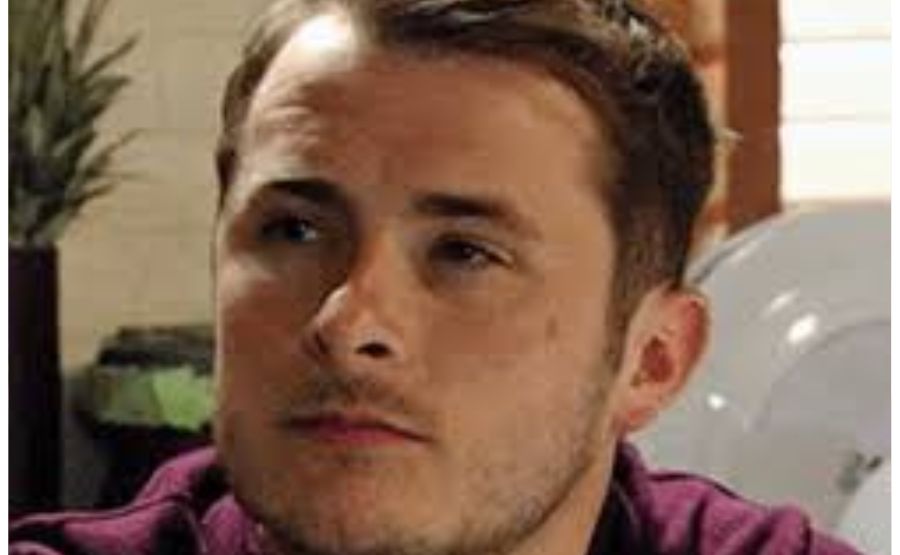
Ben’s return in 2019, now played by Max Bowden, brought the character his mostculturally visible arc: his relationship with Callum Highway.
Nicknamed “Ballum” by fans almost immediately, the pairing became one of the most-discussed same-sex relationships in British soap history, praised by outlets covering LGBTQ+ representation as a defining storyline of 2019 for how it depicted a closeted man’s slow, halting arrival at himself. The relationship survived a hostage crisis, a broken engagement between Callum and his former fiancée Whitney, and years of will-they-won’t-they tension before the couple married in 2022.
In 2022, the show also gave Ben its most sobering storyline yet: he was raped by Lewis Butler, becoming the first character in EastEnders history to anchor a male rape storyline. The arc drew a significant volume of viewer complaints — reportedly among the most complained-about scenes of the decade — not because it was gratuitous, but because of how starkly it depicted Ben’s silence afterward, and his subsequent struggle with bulimia, a detail rarely given to male characters on British television.
Fans described being emotionally “in bits” watching Ben’s vulnerability surface with Callum. It was, by most critical accounts, the character at his most fully realized: not a device for someone else’s grief, but a man finally allowed to be broken on his own terms and, slowly, put back together.
Personal Life: Fatherhood, Marriage, and a Family That Never Stops Failing Him
Ben’s private life has been defined less by romantic milestones than by the family structure surrounding them. He is the father of Lexi Pearce, born in 2013 to Lola Pearce, a relationship that began almost accidentally and matured into one of Ben’s more stable adult bonds, complicated later by custody disputes as Lola’s own life became increasingly difficult.
His half-siblings — Louise Mitchell, Ian Beale, Donna Ludlow, Raymond Fox, Albie Watts — form a sprawling, fractious extended family typical of the Mitchell-Beale dynasty, most of them tied to Ben not through affection but through the accident of shared blood.
His marriage to Callum Highway in 2022 stands as the character’s clearest adult achievement: a wedding built on years of hard-won honesty rather than soap opera spectacle. It did not, notably, insulate the marriage from strain — the union weathered further trials before Ben’s eventual 2024–25 departures from the Square, including his stint in a Manchester prison following the funeral of Callum’s father, Jonno Highway.
Across every iteration, one thread holds: Ben’s mental health — anxiety, trauma responses, disordered eating, a hardened exterior masking chronic vulnerability — has been treated by the show’s writers with increasing seriousness over time, a marked shift from the character’s earlier years, when trauma functioned mainly as plot fuel.
Legacy: Why a Fictional East Londoner Still Matters
Ben Mitchell’s influence outlives any single storyline because of what his thirty-year run accidentally proved: that a British soap audience would stay invested in a queer, disabled, repeatedly traumatized male lead, provided the writing treated him as a person rather than a symbol.
Six actors have now carried the role, an unusual level of recasting that turned Ben into something like a relay — each performer inheriting not just a character but a body of trauma to reinterpret. Charlie Jones gave him wounded fragility. Joshua Pascoe gave him simmering rage. Harry Reid gave him romantic yearning. Max Bowden gave him a hardened, self-destructive edge that finally cracked open in 2022.
His coming-out arc, imperfect as its 2011 execution was, helped normalize sustained gay storylines in mainstream British soap at a moment when many dramas still treated queerness as a single-episode event. His 2022 rape storyline pushed British television into territory it had almost entirely avoided: male sexual assault, told without procedural distance, centered on the survivor’s shame rather than the perpetrator’s punishment.
None of this makes Ben Mitchell an admirable person within the fiction. He has stolen, lied, assaulted, and fled his responsibilities more than once. That’s arguably the point. The show never asked audiences to like Ben uncritically — it asked them to keep watching a damaged man try, badly and then better, to become someone his son and husband could rely on.
Final words
Ben Mitchell is not a hero, and EastEnders never pretended otherwise. He is a study in what happens when a child is used as a battleground by adults who claim to love him, and what, if anything, a person can build from that wreckage as a grown man.
The character’s endurance — nearly thirty years, six actors, over 1,500 episodes — says as much about British television’s appetite for long-form suffering as it does about audience affection. Both things are true at once. Viewers stayed because the writers, however clumsily at times, kept insisting Ben’s pain had consequences, and that those consequences deserved years, not episodes, to resolve.
If Ben Mitchell matters beyond Walford, it’s because his worst moments — the abuse, the false accusation controversy, the murder of Paul, the rape by Lewis Butler — were rarely treated as shock value alone. They became arguments, made week after week to millions of viewers, that certain kinds of male suffering deserved to be shown honestly rather than skipped past. That’s a strange kind of legacy for a soap character. It’s also, on balance, an earned one.
FAQs
1. Is Ben Mitchell a real person?
No. He is a fictional character created for the BBC soap opera EastEnders, first appearing on 21 March 1996.
2. How many actors have played Ben Mitchell?
Six: Matthew Silver, Morgan Whittle, Charlie Jones, Joshua Pascoe, Harry Reid, and Max Bowden.
3. Who are Ben Mitchell’s parents in the show?
Phil Mitchell, Walford’s longtime criminal patriarch, and Kathy Beale, Phil’s second wife.
4. Why is Ben Mitchell partially deaf?
He contracted meningitis as an infant, which left him with partial hearing loss in one ear — one of the earliest disability storylines in the show’s history.
5. When did Ben come out as gay?
His coming-out storyline developed gradually between 2011 and 2012, under actor Joshua Pascoe.
6. Who is Callum Highway?
Callum is a former soldier and police officer who became Ben’s long-term partner and, in 2022, his husband. Their relationship is nicknamed “Ballum” by fans.
7. Did Ben Mitchell go to prison?
Yes, on more than one occasion — first as a teenager after attacking a bully with a spanner, and again as an adult tied to later criminal storylines.
8. Who is Lexi Pearce?
Lexi is Ben’s daughter, born in 2013 to Lola Pearce.
9. What happened to Ben’s boyfriend Paul Coker?
Paul was murdered in a homophobic attack in 2016, one of the most significant hate-crime storylines in the show’s history.
10. What was the 2011 controversy involving George Michael?
Singer George Michael publicly criticized a Ben Mitchell storyline involving a false molestation accusation, calling the plot insulting to the gay community; the BBC defended the story as being about Phil Mitchell’s character rather than a broader statement.
11. What storyline made Ben Mitchell the first of its kind in the show?
His 2022 rape by Lewis Butler made him the first character in EastEnders history to anchor a male rape storyline.
12. Did Ben struggle with an eating disorder?
Yes. Following the 2022 assault, the character was shown struggling with bulimia, a storyline praised for tackling disordered eating in men, an underrepresented subject on British television.
13. Is Ben Mitchell still in EastEnders?
As is common with long-running soap opera characters, he had sporadic departures and returns during his most recent run, which ended in 2025. Viewers can check current listings to see if he is still active.
14. What awards has the Ben Mitchell storyline won?
The 2007 storyline depicting his abuse by Stella Crawford won Best Storyline at the Inside Soap Awards; actors in the role have received multiple award nominations over the years.
15. Why is Ben Mitchell considered culturally significant?
His decades-long arc combining disability, sexuality, trauma, and fatherhood made him one of British soap’s most sustained explorations of male vulnerability, influencing how mainstream television approached similar storylines afterward.
Every story matters—discover them all with Daily Narrative.