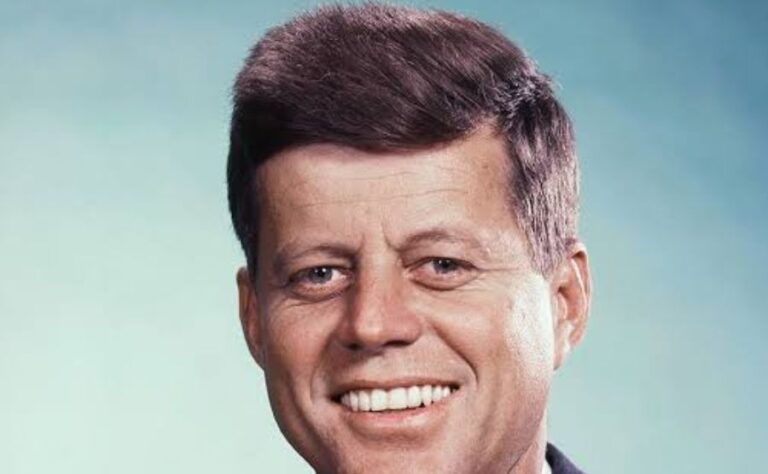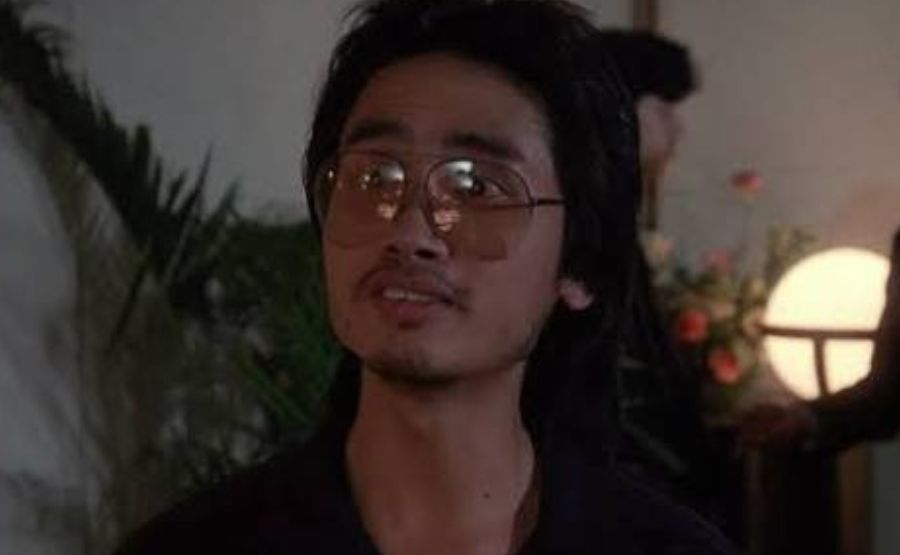
Ken Siu (Siu Wai-Keung): The Invisible Architect Behind Cinema’s Most Beloved Action Films
Ken Siu spent more than three decades making other people’s visions work — and in doing so, left his fingerprints on some of the most culturally enduring action films ever made.
Quick Facts
| Detail | Information |
| Full Name | Kenneth Siu / Siu Wai-Keung (蕭偉強) |
| Born | 1955 |
| Died | November 25, 2018 (age 63) |
| Nationality | Hong Kong |
| Primary Roles | Assistant Director, First Assistant Director, Second Unit Director, Occasional Actor, Director |
| Key Films (AD/2nd Unit) | Bloodsport (1988), Kickboxer (1989), Rush Hour (1998), In the Mood for Love (2000), Fearless (2006), The Forbidden Kingdom (2008) |
| Key Films (Director) | Tian Mi Shi Liu Sui (1986), Deadly Deal (1991), Outer Space in Blue (TV, 2011) |
| Acting Credits | Victor Lin in Bloodsport (1988), Plowboy in Off Limits (1988) |
| Also Known As | Kenneth Siu, Wai-Keung Siu, Siu Wai Keung |
| Career Span | 1984–2011 (active credits) |
| Notable Tribute | Jean-Claude Van Damme announced his death publicly via social media in November 2018 |
The Man Behind the Camera
The film industry runs on a paradox: its most essential workers are its least visible ones.
Ken Siu — also credited as Siu Wai-Keung, Kenneth Siu, and Wai-Keung Siu — embodied that paradox across a career spanning more than a quarter-century. He worked on films that grossed hundreds of millions of dollars. He coordinated sequences that fans still quote and replay.He served directors as disparate as Wong Kar-wai and Brett Ratner, absorbing the aesthetic demands of arthouse movie and Hollywood blockbuster alike. Yet his name rarely appeared in a headline, and only his death in November 2018 drew the kind of tribute that confirmed how wide his influence had stretched.
The story of Ken Siu is, in many ways, the story of Hong Kong cinema’s golden era itself — its explosive energy, its cross-cultural ambition, and its extraordinary capacity to bridge East and West at the precise moment the world was watching.
Origins and Early Career: Learning the Craft in a Booming Industry
Siu was born in 1955, entering adulthood at exactly the moment Hong Kong cinema was becoming a global force.
The late 1970s and early 1980s marked a period of extraordinary creative acceleration in Hong Kong film. The industry produced hundreds of pictures annually, operating at a pace that demanded logistical precision alongside artistic instinct. Into this environment, Siu began accumulating credits, starting as an assistant director on local productions — a role that demanded as much organizational acumen as cinematic knowledge.
His earliest documented credits date to 1984 with Long Feng Zhi Duo Xing, followed quickly by Ji Ren Tian Xiang and Xiao Hu Xian in 1985 — the latter of which saw him occupy both an acting role and an assistant director position simultaneously. This dual presence on set, in front of and behind the camera, would become a recurring feature of his early career. By 1986, he had stepped into the director’s chair for Tian Mi Shi Liu Sui (credited as Kenneth Siu), and was also serving as assistant director on Goodbye My Love that same year. He later worked as dialogue editor on Cheng Shi Li Ren in 1987 — a detail that reveals the breadth of his technical curiosity. Siu did not define himself by a single function. He learned the industry from multiple angles simultaneously.
1988: The Year That Defined a Legacy
No single year shaped Ken Siu’s public identity more decisively than 1988.
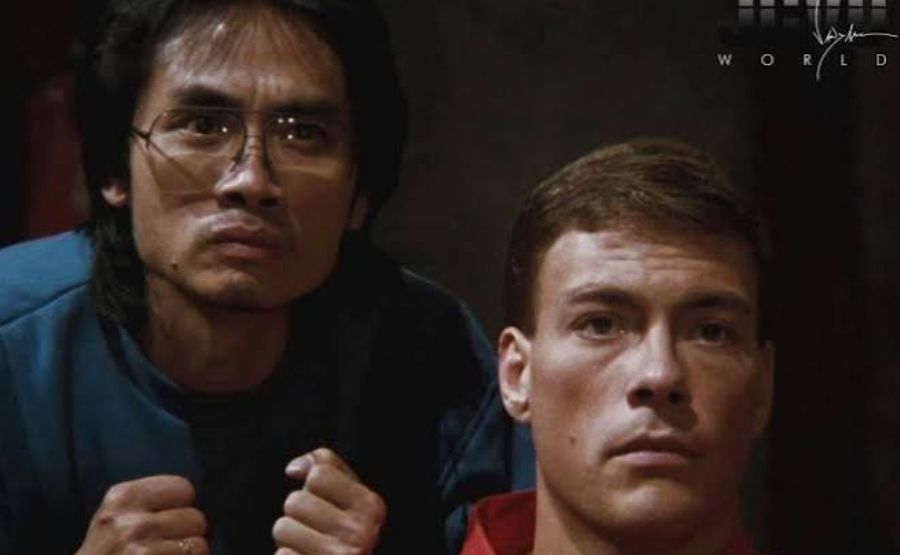
That year, the Cannon Films production Bloodsport arrived in American cinemas on February 26, and the world met both Jean-Claude Van Damme and, in a smaller but memorable capacity, Ken Siu. Directed by Newt Arnold, the film followed U.S. Army Captain Frank Dux — played by Van Damme — as he competed in the underground Kumite martial arts tournament in Hong Kong. Siu served as second assistant director on the production. He also appeared on screen as Victor Lin, the quick-witted, street-smart Hong Kong guide who shepherded the film’s Western protagonists through the city’s underworld. It was a supporting role — small in screen time, large in function — and Siu played it with a warmth and comic timing that lodged itself in the memory of anyone who saw the film.
Bloodsport earned $50 million worldwide against a budget of approximately $2.3 million, making it the Cannon Group’s most profitable release of that year. Critically dismissed at the time — the Los Angeles Times found it mired in cliché — it nonetheless became a genuine cultural landmark, a foundational text of 1980s action cinema and a film that, decades later, /Film would identify as one of the most influential martial arts movies ever made. It sparked Van Damme’s stardom. It contributed to the resurgence of the martial arts genre in American cinema. And it introduced Ken Siu to an international audience that would remember Victor Lin long after the credits had faded.
In the same year, Siu made his final acting appearance as “Plowboy” in the Thai-shot film Off Limits, which starred Willem Dafoe and Gregory Hines. credit. He also worked as assistant director on In the Line of Duty III, a Hong Kong action picture that demonstrated his continued deep roots in local cinema even as he expanded internationally. Nineteen eighty-eight was not the beginning of Siu’s career. But it was unquestionably its hinge point.
The Assistant Director’s Art: Between Vision and Execution
To understand Ken Siu’s contribution to cinema, one must understand what an assistant director actually does — because the title obscures more than it reveals.
A first assistant director is the operational backbone of any film set. The director holds the creative vision.That vision is made physically feasible by the assistant director. Siu’s job involved scheduling daily shoots, managing hundreds of crew members, coordinating stunts and action sequences, maintaining safety protocols, and serving as the primary communication link between the director and the production floor. On action films — which dominated his résumé — this role demanded particular skill. The timing of fight choreography, the positioning of cameras during live stunt work, the split-second decisions required when something went wrong: all of this fell to the first AD.
In 1989, Siu advanced to first assistant director on Kickboxer, another Van Damme vehicle produced by Mark Di Salle. The film followed Van Damme’s character seeking revenge against the Thai fighter who paralyzed his brother, with key sequences filmed in Thailand. Coordinating these productions — with their international crews, physical dangers, and compressed schedules — required exactly the kind of disciplined pragmatism that characterized Siu’s career. He also served as first AD on three episodes of the 1989 TV miniseries Around the World in 80 Days, demonstrating his capacity to work across formats.
Throughout the early 1990s, Siu continued directing and producing work in Hong Kong. His 1991 feature Deadly Deal — which he wrote with Kwok-Lok Yu and directed — starred Simon Yam, Ray Lui, and Elizabeth Lee. The film earned a 7.0 on IMDb, a respectable score for a fast-paced Hong Kong action picture, and critics noted its skillful blending of drama and action alongside an A-list local cast. Siu also co-wrote Ngoh Joi Gong Woo (1989) with Ga Ming Leung, adding another dimension to his creative output that formal credits alone rarely capture. He was not simply a logistics man. He was a storyteller who had chosen, for most of his career, to tell other people’s stories.
Cross-Cultural Fluency: From Cannon Films to Wong Kar-Wai
The arc of Ken Siu’s career traces one of cinema’s most fascinating cultural bridges — between Hong Kong’s kinetic genre traditions and the broader international film world.
By the mid-1990s, Siu had established himself firmly in the Hong Kong action circuit. He served as first assistant director on Hong Kong 97 (1994) and Spitfire (1995), both Hong Kong-unit productions. Then came Rush Hour in 1998, a film that crystallized everything the era represented. Director Brett Ratner’s buddy-action comedy paired Hong Kong star Jackie Chan with American comedian Chris Tucker, deliberately fusing two distinct cinematic cultures — the physically precise, stunt-driven tradition of Hong Kong action cinema with the rapid-fire verbal comedy of Hollywood. Siu served as assistant director for the Hong Kong unit. He was, in microcosm, the living embodiment of the film’s own premise: a Hong Kong professional navigating a Hollywood production with fluency and skill.
Rush Hour grossed $244 million worldwide and became one of 1998’s biggest hits. For many Western audiences, it was the accessible gateway to appreciating Jackie Chan’s physical comedy and the broader vocabulary of Hong Kong action filmmaking — a vocabulary Siu had helped build over the preceding decade and a half.
Then came a career turn that no one in the action-cinema world could have easily predicted. In 2000, Siu worked as assistant director on In the Mood for Love — Wong Kar-wai’s achingly beautiful, formally radical romantic drama, set in 1960s Hong Kong. The film earned an 8.0 on IMDb, held a Metacritic score of 87, and is routinely ranked among the greatest films ever made. Its world and Bloodsport’s world could scarcely be more different: one a frenetic, hyper-masculine American action fantasy; the other a slow, elliptical meditation on desire and restraint. That Siu worked skillfully in both spaces speaks to a professional adaptability that transcended genre. The assistant director who once managed fight choreography in a Kowloon tournament now helped manage the careful, exquisite visual poetry of a Wong Kar-wai production.
He also contributed to Wong’s short film The Follow in 2001 as an assistant, further deepening that creative relationship.
Later Career: Fearless and The Forbidden Kingdom
The 2000s brought Siu into the orbit of two more significant productions, each representing a distinct strand of international martial arts cinema.
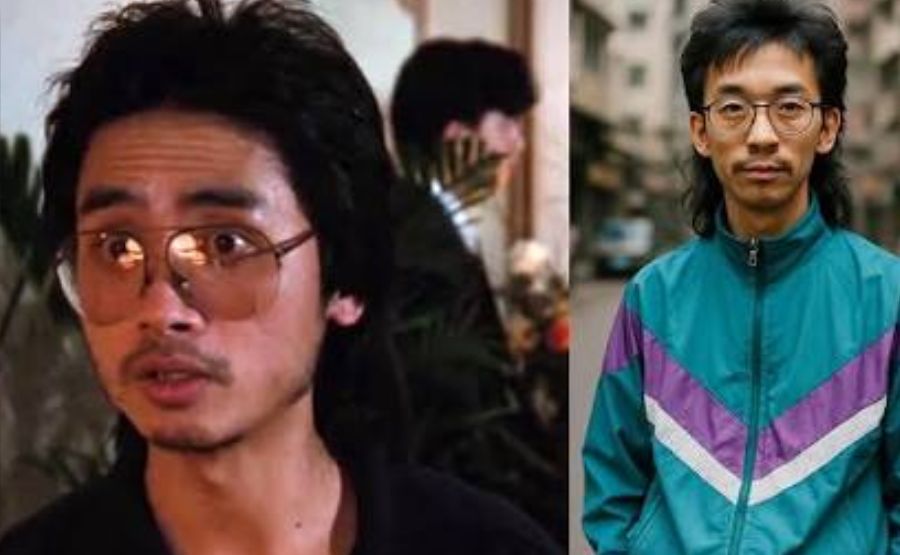
He served as first assistant director on Ronny Yu’s Fearless in 2006 — the Jet Li biographical epic about martial artist Huo Yuanjia — credited under his Cantonese name, Siu Wai Keung. The film carried real cultural weight: it was framed as Jet Li’s final wushu epic, exploring Chinese national identity through the story of a martial artist who challenged Western fighters at the turn of the twentieth century. Its Metacritic score of 70 reflected genuine critical respect. Two years later, Siu worked as first assistant director on The Forbidden Kingdom (2008), directed by Rob Minkoff — the film notable for featuring Jackie Chan and Jet Li together on screen for the first time.
In 2011, he directed six episodes of the television series Outer Space in Blue, which was his last significant directing credit. This late-career return to the director’s chair completed a body of work spanning nearly three decades. His IMDb credits run from 1984 to 2011 — a career of rare longevity in an industry that consumes its personnel at speed.
Personal Life
The private life of Ken Siu remains, by almost every available measure, genuinely private.
He was a Hong Kong professional of his generation — one who built his career in an era before social media dissolved the boundary between industry work and public persona. No interviews surfaced in which he discussed his family life, his upbringing, or his personal struggles. No profiles appeared in newspapers or magazines. His personal relationships remain unrecorded in any public source. What the historical record offers, instead, is a career that speaks quietly but eloquently about the man himself: someone who moved between the chaotic energy of an action set and the demanding precision of a Wong Kar-wai production with equal competence; someone who could direct his own films and write his own screenplays while spending most of his working life in service of other directors’ visions.
Reports in November 2018 noted that Siu had been seen hospitalized and on a breathing apparatus in the weeks before his death — details shared via social media by those who knew him and who were, it appears, alarmed by his deteriorating condition. The nature of his illness was not disclosed in any public account. He died on November 25, 2018, at the age of 63.
Legacy and Lasting Influence
Ken Siu’s legacy operates on two registers, and it is worth attending to both.
The first is his direct professional contribution. The films he worked on have not faded into archive obscurity. Bloodsport enjoys an actively engaged global fan base decades after its release — its sequences quoted, its soundtrack streamed, its Kumite tournament reimagined in video games and mixed martial arts culture. Writers at /Film have identified it as one of the most influential martial arts films in cinema history, and the UFC’s early format bore traceable debts to the tournament-style, no-holds-barred combat the film depicted. In the Mood for Love has only grown in critical stature since 2000, regularly appearing on lists of the greatest films ever made. Rush Hour remains a touchstone of late-1990s action comedy. Fearless and The Forbidden Kingdom continue to circulate internationally. Siu’s fingerprints are on all of them — not as their author, but as the professional who helped make their production physically possible.
The second register is more diffuse but no less real. The assistant director tradition in Hong Kong cinema — the army of skilled, anonymous professionals who kept one of the world’s most productive film industries running — remains largely uncelebrated in the popular history of the medium. Siu’s career stands as a representative record of what that tradition looked like at its best: versatile, disciplined, cross-culturally fluent, and quietly indispensable.
It is also worth noting the particular moment his career occupied. The period from the mid-1980s to the late 2000s was the era during which Hong Kong cinema exerted its greatest international influence. The action vocabulary pioneered there — the wirework, the choreographed stunt sequences, the kinetic camera movement — migrated into Hollywood and reshaped global popular cinema. Ken Siu was part of the cohort that built, refined, and exported that vocabulary. He did so not with a director’s credit or a star’s billing, but with something more fundamental: the daily, unglamorous, expert labor of making movies work.
Final Reflections
Ken Siu was not a household name, and he never sought to become one. That is perhaps the most important thing to understand about him.
His career followed a path that film history frequently ignores: the lengthy, fruitful life of a talented professional who worked at the nexus of Hong Kong and Hollywood without ever claiming the spotlight for himself. He served Newt Arnold and Wong Kar-wai, Brett Ratner and Ronny Yu — directors of radically different temperaments and ambitions — with equal professional fidelity. He stepped briefly into the frame of Bloodsport and created a character, Victor Lin, who outlasted the film’s critical reception by decades. He directed his own pictures when the opportunity arose, demonstrating that his capacities extended well beyond logistics.
The announcement of his death came not through a studio press release or an industry obituary, but through Jean-Claude Van Damme’s social media channels — a fitting, if modest, measure of his place in cinema’s ecosystem. Van Damme’s words were simple: he knew Ken Siu best as Victor. The fans who responded knew him the same way.
But the fuller portrait is richer than that single role suggests. Ken Siu was a craftsman of the highest order in the most literal sense: someone who built things, carefully and well, so that other people’s art could exist. In a medium that routinely mistakes visibility for value, his career offers a quiet but instructive corrective.
FAQs
1. Who was Ken Siu?
Ken Siu (also known as Siu Wai-Keung and Kenneth Siu) was a Hong Kong filmmaker born in 1955, best known as the assistant director on Bloodsport (1988), Kickboxer (1989), Rush Hour (1998), In the Mood for Love (2000), Fearless (2006), and The Forbidden Kingdom (2008). He also directed several films, including Deadly Deal (1991).
2. What was Ken Siu’s most famous acting role?
Victor Lin in Bloodsport (1988), where he played the charismatic Hong Kong guide and liaison for Frank Dux (Jean-Claude Van Damme) and Ray Jackson (Donald Gibb) during the Kumite tournament.
3. Did Ken Siu act in any other films besides Bloodsport?
Yes. He appeared in several Hong Kong films in the early-to-mid 1980s — including Long Feng Zhi Duo Xing (1984), Ji Ren Tian Xiang (1985), and Xiao Hu Xian (1985) — and played “Plowboy” in the American film Off Limits (1988), alongside Willem Dafoe and Gregory Hines.
4. What did Ken Siu do as an assistant director?
As an assistant director, and later first assistant director, Siu managed the operational day-to-day running of film sets: scheduling, crew coordination, managing stunt and action sequences, maintaining safety, and serving as the communication link between director and production crew.
5. Did Ken Siu ever direct his own films?
Yes. He directed Tian Mi Shi Liu Sui (1986), the Hong Kong action feature Deadly Deal (1991) — starring Simon Yam and Ray Lui — and six episodes of the television series Outer Space in Blue (2011).
6. What was Ken Siu’s connection to Wong Kar-wai?
Siu served as assistant director on Wong Kar-wai’s acclaimed romantic drama In the Mood for Love (2000) and also assisted on Wong’s short film The Follow (2001), demonstrating a capacity to work in very different cinematic registers from the action films that defined most of his career.
7. How did Ken Siu’s death become known publicly?
Jean-Claude Van Damme announced Siu’s passing on his social media accounts in late November 2018, calling him a friend and noting his best-remembered role as Victor in Bloodsport.
8. Was Ken Siu’s death cause announced?
The official reason of death was not made public.. Reports prior to his death noted he had been hospitalized and on a breathing apparatus in the weeks preceding his passing on November 25, 2018.
9. What is the cultural significance of Bloodsport, the film Ken Siu is most associated with?
Bloodsport earned $50 million worldwide against a budget of roughly $2.3 million, launched Van Damme’s international career, contributed to the revival of martial arts cinema in America, and has been credited with influencing the early format of the UFC. It remains a globally recognized cult classic.
10. How many films did Ken Siu work on as assistant director?
His documented credits include over fifteen productions in assistant directing or second unit directing roles across Hong Kong and international cinema, spanning from 1984 to 2008.
11. Was Ken Siu known by other names professionally?
Yes. He was credited variously as Ken Siu, Kenneth Siu, Siu Wai Keung, and Wai-Keung Siu across different productions. The use of multiple credits was common for Hong Kong professionals working across Hong Kong and Western productions during his era.
12. Did Ken Siu write any screenplays?
Yes. He co-wrote Ngoh Joi Gong Woo (1989) with Ga Ming Leung, and co-wrote Deadly Deal (1991) with Kwok-Lok Yu, the same film he directed.
13. What was Ken Siu’s role on The Forbidden Kingdom (2008)?
He served as first assistant director on the Rob Minkoff-directed film, which was notable for featuring Jackie Chan and Jet Li sharing the screen together for the first time.
14. How does Ken Siu’s career reflect the broader Hong Kong cinema industry?
His career mirrors the arc of Hong Kong cinema itself: beginning in the prolific, fast-paced local industry of the 1980s, expanding to international co-productions during the 1990s, and ultimately bridging genre action films with prestigious arthouse productions. He exemplified the cross-cultural versatility that defined the best Hong Kong film professionals of his generation.
15. How is Ken Siu remembered today?
Primarily through the enduring popularity of Bloodsport, where fans remember Victor Lin as one of the film’s most likeable supporting characters. Within the film industry, he is remembered as a dependable, skilled professional whose work spanned some of the most significant productions in action cinema history.
Every story matters—discover them all with Daily Narrative.