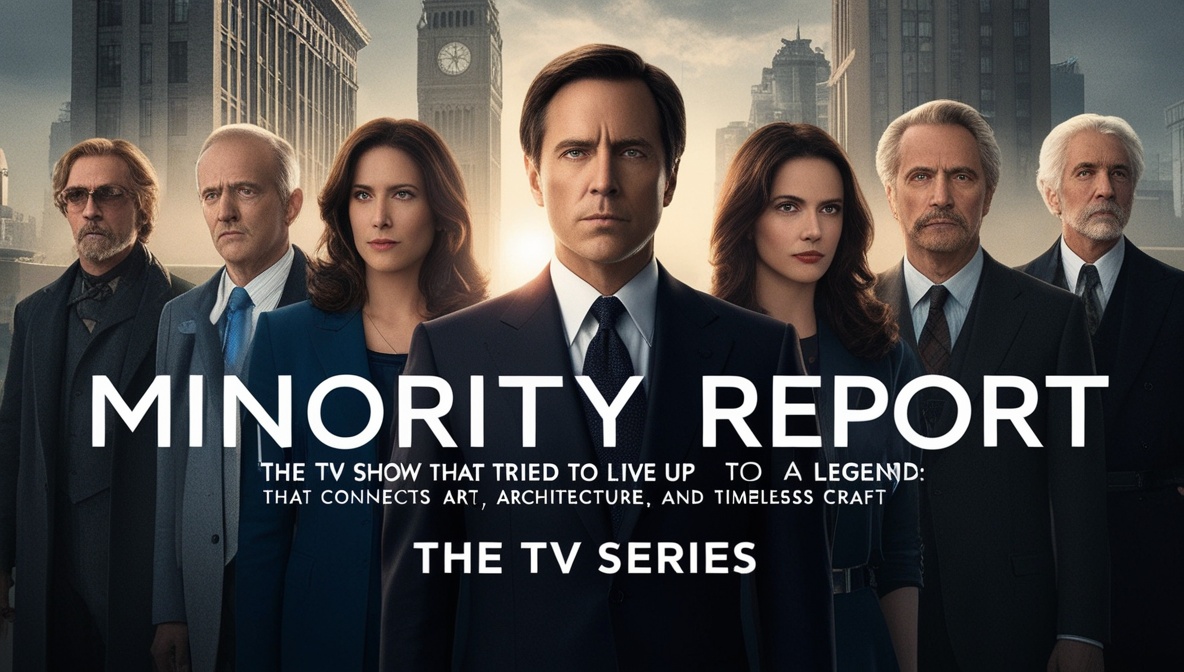
Minority Report Tv Series: The TV Show That Tried to Live Up to a Legend
Grab your coffee and settle in, because I want to tell you about a show that almost nobody remembers, and honestly, that’s a little sad. Back in 2015, Fox took one of the smartest sci-fi movies ever made and turned it into a weekly TV series. It didn’t last long. But the story behind it, why it worked in some places and completely fell apart in others, is actually pretty fascinating once you dig into it.
I’ve spent some time going through old reviews, cast interviews, ratings reports, and fan discussions about this show, and I want to walk you through all of it the way I’d explain it to a friend who just asked, “Wait, there was a Minority Report TV show?” Yes. There was. And there’s a lot more to it than you’d think.
Key Facts
| Detail | Information |
| Title | Minority Report |
| Network | Fox |
| Aired | September 21 – November 30, 2015 |
| Episodes | 10 (originally planned for 13) |
| Based on | The 2002 film, which was based on a 1956 short story by Philip K. Dick |
| Setting | Washington, D.C., the year 2065 |
| Lead characters | Dash (Stark Sands), Detective Lara Vega (Meagan Good), Arthur (Nick Zano) |
| Developed by | Max Borenstein |
| Studios | 20th Century Fox Television, Amblin Television, and Paramount Television |
| Rotten Tomatoes score | 29% |
| Metacritic score | 51 out of 100 |
| Status | Cancelled after one season, on May 13, 2016 |
Where the Story Actually Begins
Before we get to the TV show, we have to talk about where this whole idea came from. Philip K. Dick wrote a short story in 1956 called “The Minority Report.” It was about a police chief named John Anderton, who ran a division that used three people with strange gifts to stop murders before they happened. These people could see crimes ahead of time. The police would swoop in and arrest someone before they ever pulled the trigger.
This is the plot surprise that made the tale so memorable.. One day, Anderton’s own system predicts that he is going to murder someone he’s never even met. Suddenly the man who built this whole system is running from it.
Dick loved asking uncomfortable questions in his writing. Can we really trust a government that punishes people for things they haven’t done yet? Do we actually have free will, or is everything already decided? Those questions weren’t just decoration. They were the whole point of the story.
In 2002, Steven Spielberg turned that short story into a big, glossy action movie starring Tom Cruise. The movie changed a lot of details but kept that unsettling core idea. It did well, it made people think, and it’s still considered one of the smarter blockbusters of its era.
After watching that film thirteen years later, a Fox employee thought, “What if we kept going?”
See aslo” Iron Hill Brewery North Wales: The Story Behind One of the Suburbs’ Favorite Brewpubs“
So What Was the TV Show About?
The series picks up in the year 2065, about a decade after the events of the movie. Precrime, the program that arrested people before they committed murders, has been shut down. It turned out to be built on some pretty shaky ethical ground, and the public eventually learned the truth.
That leaves us with three “precogs,” people who can see snippets of the future. Their names are Dash, Arthur, and Agatha. Dash is quiet and a little haunted. He can’t quite let go of his old purpose, so he starts secretly helping a young detective named Lara Vega solve crimes using his visions. Arthur is more complicated and slippery, and Agatha mostly stays out of the spotlight for a while, carrying her own private wishes about what her siblings should do with their gifts.
It’s basically a police show wrapped around a science fiction idea. Every week, Dash gets a flash of a future crime, and he and Vega race against the clock to stop it before it happens.
Meeting the People Behind the Characters
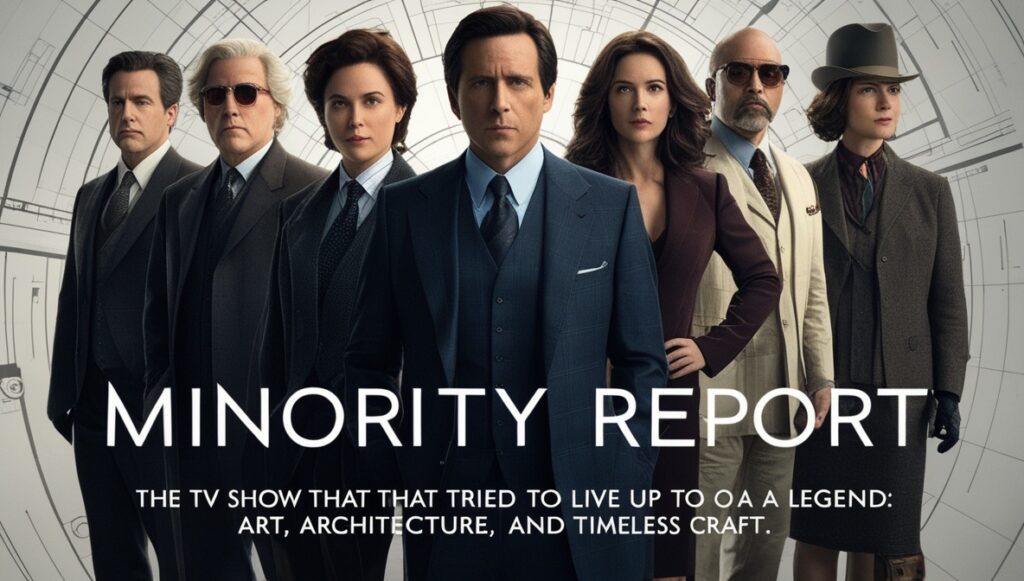
Stark Sands played Dash, and by most accounts, he brought a real sense of vulnerability to the role. Several reviewers pointed out that his eyes did a lot of the emotional work, carrying fear and pain even when the writing around him wasn’t giving him much to say.
Meagan Good played Detective Lara Vega. She got a mixed reception. Some viewers loved her energy and thought she brought warmth to a somewhat flat character. Others felt the writing let her down, giving her lines that felt more like a sitcom than a serious crime drama.
Nick Zano played Arthur, and interestingly, some fans and critics thought he had the most interesting material to work with, enough that a few even wondered if the show should have centered on him instead of Dash.
Wilmer Valderrama played Will Blake, Vega’s partner at the police department, who starts to suspect something isn’t quite right about how she’s solving her cases so easily.
Laura Regan played Agatha, the third precog, who spends much of the early episodes on the edges of the story before her role grows.
The World They Built
One thing almost everyone agrees on is that the show looked good. The production spent real money on the future version of Washington, D.C. Glass-walled buildings, screens you could read from either side, ships gliding through the sky. It captured that same “same world, shinier tech” feeling that a lot of Philip K. Dick adaptations go for.
There were some fun little predictions sprinkled through the show too. In one storyline, a Washington football team changes its name years before that same conversation happened in the real world. In nightclubs, people wear wristbands that calculate compatibility with other people in the room, like a dating app built into your jewelry.
A new surveillance program called Hawk-Eye also shows up during the season, tracking suspicious behavior across the city. It’s presented almost casually, like nobody in this future really questions it anymore. That’s actually one of the more thought-provoking choices the show made, even if it didn’t dig into it as deeply as it could have.
Where It Struggled
Now here’s where I have to be honest with you, the same way a friend would be honest over coffee. This show had a rough time connecting with people, and it wasn’t for lack of trying.
The biggest complaint, over and over again, was that it turned into a pretty standard cop show. Case of the week, wrap it up in forty minutes, move on. Meanwhile, the deeper questions that made the original story so powerful, questions about free will, about whether punishing someone for a crime they haven’t committed is ever okay, mostly sat in the background.
Some critics pointed out something interesting too. In this future world, people had learned that Precrime destroyed innocent lives. And yet, society just… moved on. No outrage. No reckoning. The public seemed comfortable trading a little bit of freedom for a little bit of safety, and the show never really pushed hard on how strange that should feel.
The dialogue took some hits as well. A few lines were singled out as clunky or trying too hard to sound edgy. And several reviewers felt the show introduced its world so quickly that it never gave the characters room to breathe before jumping into the next case.
Why It Got Cancelled
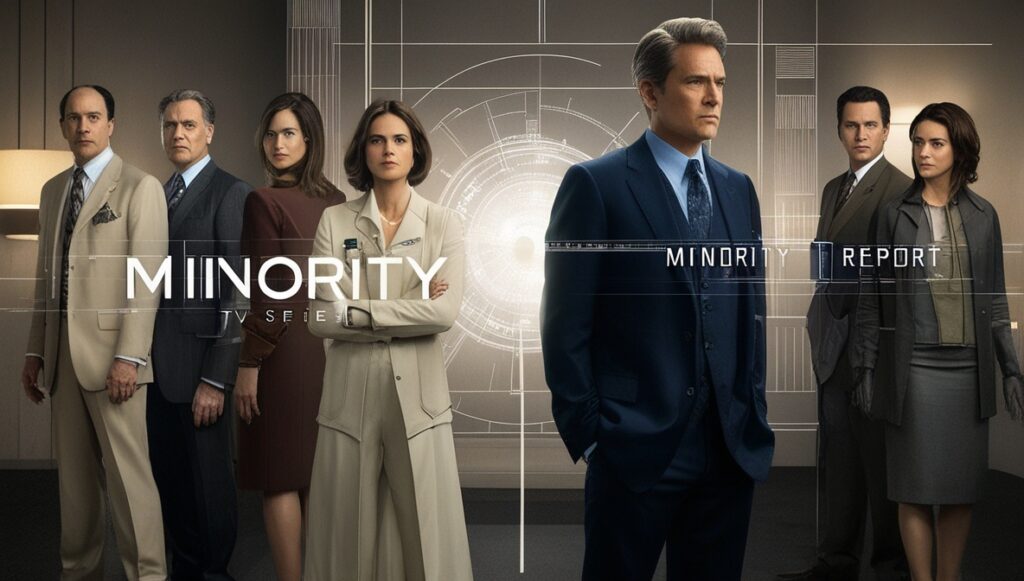
The ratings told the real story. What started as a promising fall premiere slot slipped fast. By its third airing, the show had dropped to a low rating among the audience advertisers care most about. Fox trimmed the original order from thirteen episodes down to ten, which meant the show never even got to tell the full story it had planned.
By May of 2016, Fox made it official. Minority Report wouldn’t be coming back for a second season. The tenth episode, which had been designed as a mid-season pause, ended up being the finale for the whole show.
It’s worth saying, this wasn’t some catastrophic failure. Fox didn’t slam the door immediately. They let the ten episodes finish airing, and there was a small window where people held out hope. But between a soft audience and reviews that ranged from lukewarm to pretty harsh, there wasn’t enough momentum to justify bringing it back.
What People Are Still Saying About It
If you go looking at fan discussions today, you’ll find a strange mix of opinions. Some people genuinely liked it and were sad to see it cancelled so fast. They point to the chemistry between Dash and Vega, the visual style, and the fact that it gave a beloved movie a second life, even a short one.
Others are much tougher on it. A common complaint is that it wasted the potential of its own premise. One thing several reviewers agreed on is that Arthur’s storyline, the twin brother with murkier motives, felt like it was building toward something genuinely interesting right as the show got cut short.
There’s also a quieter thread running through a lot of the commentary, a kind of “what if” feeling. What if the show had leaned harder into the moral questions instead of turning into a case-of-the-week format? What if it had been given a full season to find its footing instead of getting trimmed and rushed?
We’ll never really know. That’s part of what makes shows like this strangely memorable even in failure. They leave behind a version of themselves that never got to exist.
How It Compares to the Movie and the Original Story
It helps to line these three versions up side by side, because they’re surprisingly different from each other.
Philip K. Dick’s original short story is set in New York, and its Precrime chief, John Anderton, is an older, less glamorous character than the movie version. The precogs in the story are described as somewhat disabled and are treated by the system almost like tools rather than people, which is part of what made the story so uncomfortable to read.
The 2002 movie moved the setting to Washington, D.C., made Anderton younger and more of an action hero, and gave the story a more emotional throughline tied to a missing child. It kept the moral questions front and center, using a stylish, tense plot to explore them.
The TV series picks up after Precrime’s collapse and shifts focus onto the precogs themselves rather than a police chief. That’s actually a clever idea on paper. Following the people who used to be treated as instruments, now trying to live normal lives, has a lot of emotional potential. The show just didn’t always follow through on that potential the way it could have.
The Bigger Picture: Why This Kind of Story Keeps Coming Back
Take a moment to consider this. Stories about predicting crime before it happens keep showing up again and again, in books, movies, and shows, because the questions never really go away.
We live in a world now with predictive policing software, facial recognition cameras, and algorithms that claim to guess who might commit a crime based on data patterns. Some of that technology is already being used by real police departments. So a story like Minority Report isn’t just a fun “what if,” it’s uncomfortably close to conversations happening right now about surveillance, fairness, and how much power we’re willing to hand over in exchange for feeling safe.
That’s honestly the most interesting part of revisiting this old, mostly forgotten show. Even though it didn’t dig as deep as it could have, the questions sitting underneath it are more relevant today than they were in 2015.
Final Thoughts
I think shows like this deserve a second look, even the ones that didn’t quite land. Minority Report the series wasn’t a disaster. It had good actors doing their best with uneven material, a genuinely interesting premise, and a world that looked like real thought went into it. It just never quite figured out how to be both a fun weekly crime show and a thoughtful piece of science fiction at the same time.
Maybe that’s the real lesson here. Some ideas are so big and so philosophically loaded that they don’t fit comfortably into a forty-minute weekly format. The short story and the movie both took their time with the questions they were asking. The show, cut down before it even had a chance to grow, never really got that same luxury.
If you’re curious and you stumble across those ten episodes somewhere, it’s worth a watch, not because it’s a hidden masterpiece, but because it’s a genuinely interesting attempt at something ambitious that just didn’t quite come together. There’s something a little bit human about that too, honestly. Not every good idea gets the time it needs to become something great.
FAQs
1. Is the Minority Report TV series connected to the movie?
Yes. It is a sequel that takes place in the same imaginary world with the same basic background of the 2002 movie, roughly ten years after its events.the Precrime program.
2. Do I need to watch the movie before watching the show?
It helps, but it’s not required. The show explains the basics of what Precrime was and why it was shut down, though watching the movie first will make the emotional weight land better.
3. Is Tom Cruise in the TV series?
No. His character, John Anderton, is referenced as part of the backstory, but Cruise does not appear in the show at all, not even in a cameo.
4. How many seasons does the show have?
Just one. It ran for ten episodes before Fox cancelled it.
5. Why did Fox cancel Minority Report?
Low ratings were the main reason. The show struggled to hold onto viewers following its premiere, and the network chose not to continue further with a second season.
6. Is the show finished, or does it end on a cliffhanger?
The final episode was originally planned as a mid-season break, not a series finale. Because of that, some storylines feel unresolved, though the writers did try to give it a sense of closure once they learned it wouldn’t continue.
7. What are precogs in this story?
Precogs are people with the ability to see glimpses of crimes before they happen. In the show, there are three of them: Dash, Arthur, and Agatha.
8. Is the TV show based more on the short story or the movie?
It’s mostly built on the movie’s version of events, continuing from where that story left off, rather than going back to Philip K. Dick’s original 1956 short story.
9. What genre is the show?
It blends science fiction with a police procedural format, meaning each episode usually centers around solving or preventing a specific crime.
10. Where can I watch Minority Report the TV series?
Availability changes over time depending on streaming licenses, so it’s worth checking your preferred streaming service directly, since it has moved between platforms since it originally aired.
11. Did critics like the show?
Reception was mixed to negative overall. Many reviewers felt it didn’t live up to the depth of the original story or movie, though some enjoyed the cast and visual style.
12. What is Hawk-Eye in the show?
Hawk-Eye is a surveillance program introduced during the season that monitors suspicious behavior across the city, replacing some of what Precrime used to do.
13. Is the show appropriate for younger viewers?
It was rated TV-14, so it includes some violence and mature themes appropriate for teens and up, rather than being aimed at younger children.
14. Did the actors go on to other well-known projects?
Yes. Several cast members, including Wilmer Valderrama and Meagan Good, continued working steadily in television after the show ended.
15. Is it worth watching today?
Depending on what you’re searching for. If you enjoy police procedurals with a science fiction twist and don’t mind a show that doesn’t fully explore its own big questions, it’s a reasonably entertaining watch. If you’re hoping for something as thought-provoking as the movie, it may leave you wanting more.
Every story matters—discover them all with Daily Narrative.