John F. Kennedy: The Unfinished Presidency
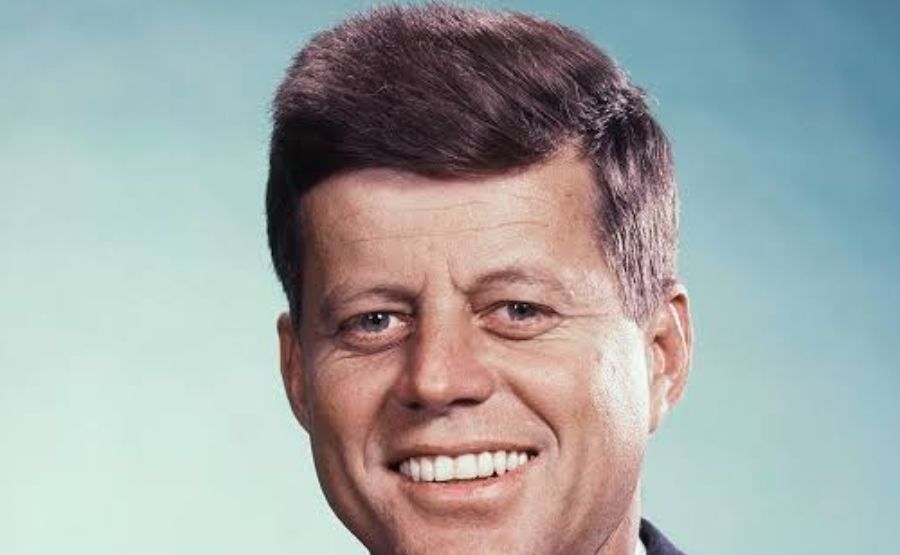
Six decades after a rifle shot in Dallas ended his life, John F. Kennedy still shapes how Americans imagine leadership itself — youthful, photogenic, articulate, and forever frozen at the edge of promise rather than the messiness of fulfillment. That freezing point is precisely why he remains so argued over. A president judged only on 1,036 days in office can be read as a martyr, a myth, or a case study in the gap between image and record — and serious people still disagree on which.
Quick Facts
| Category | Details |
| Full name | John Fitzgerald Kennedy |
| Born | May 29, 1917, Brookline, Massachusetts |
| Died | November 22, 1963, Dallas, Texas (assassinated) |
| Nationality | American |
| Education | Harvard University, B.S., 1940 |
| Military service | U.S. Navy Reserve, Lieutenant; commanded PT-109 in the Pacific, 1943 |
| Primary roles | U.S. Representative (MA, 1947–1953); U.S. Senator (MA, 1953–1960); 35th President of the United States (1961–1963) |
| Political party | Democratic Party |
| Spouse | Jacqueline Bouvier Kennedy (m. 1953) |
| Children | Caroline (b. 1957), John Jr. (b. 1960), Patrick (born and died 1963), plus a stillborn daughter (1956) |
| Key relationships | Father Joseph P. Kennedy Sr.; mother Rose Fitzgerald Kennedy; brother and Attorney General Robert F. Kennedy; brother Senator Edward “Ted” Kennedy |
| Major honors | Pulitzer Prize for Biography, 1957 (Profiles in Courage); Navy and Marine Corps Medal; Purple Heart |
| Notable milestones | Youngest elected U.S. president (age 43); first Roman Catholic president; launched the Peace Corps; navigated the Cuban Missile Crisis; proposed the Civil Rights Act of 1964; set the goal of a Moon landing |
A Childhood Built for Competition
Jack Kennedy was born the second of nine children into a family that treated life as a scoreboard. His father, Joseph P. Kennedy Sr., had built a fortune across banking, the stock market, and Hollywood, and he expected his children to win at everything, from sailing races to dinner-table debates.
Illness shadowed Jack almost from infancy. He nearly died of scarlet fever before he turned three, and childhood brought a steady parade of undiagnosed ailments that doctors struggled to name. His siblings joked that a mosquito biting Jack would poison itself; the joke concealed a real and lifelong fragility.
Rose Kennedy, disciplined and devout, ran the household with meticulous record-keeping, noting each child’s illnesses and milestones on index cards. Joe Sr., often absent on business, still dictated the family’s values from a distance: ambition, loyalty, and an almost religious devotion to winning.
At Choate, the elite Connecticut boarding school, Jack lived in the shadow of his older brother Joe Jr., the golden child groomed for the presidency their father coveted. Jack responded with rebellion rather than emulation, forming a mischief-making clique that called itself “The Muckers,” and graduated in 1935 an unremarkable student ranked 64th of 112.
Harvard, War, and an Unlikely Heroism
Kennedy’s Harvard years sharpened an intellect that had been obscured by sickness and mediocre grades. Working at his father’s side during Joseph Sr.’s tenure as U.S. ambassador to Britain, he developed the senior thesis that became his first book, Why England Slept (1940), an analysis of British unpreparedness for war that sold briskly and put his name before the public for the first time.
When the United States entered World War II, Kennedy’s chronic health problems nearly kept him out of uniform. His father’s intervention secured him a commission, and by 1943 Lieutenant Kennedy commanded PT-109, a small torpedo boat patrolling the Solomon Islands.
A Japanese destroyer sliced the boat in half in the dark on August 2, 1943. Two crewmen died instantly. Kennedy, despite a ruined back that would torment him for the rest of his life, towed an injured sailor to safety by gripping a life-vest strap in his teeth and swam for hours until his surviving men reached land.
The episode made him a bona fide war hero and later the subject of a Hollywood film. It also left him with a spine injury that no surgery ever fully repaired, and a physical burden he carried, largely concealed, into the presidency.
Tragedy soon reshaped the family’s ambitions. Joe Jr., the brother destined for politics, died in 1944 when his Navy bomber exploded over the English Channel. The Kennedy political mantle, and their father’s unrelenting expectations, fell to Jack by default.
From Congress to the Senate: A Deliberate Ascent
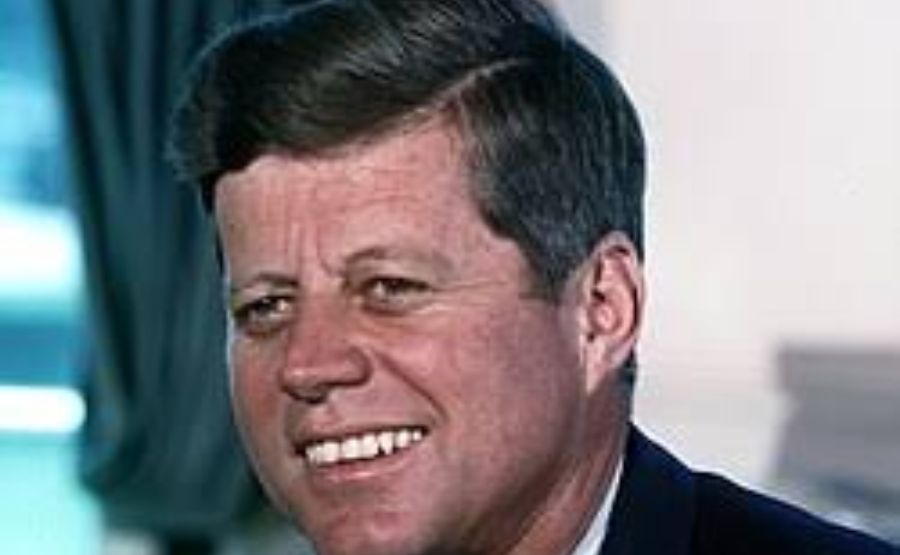
Kennedy’s entry into politics in 1946 was less a calling than a family project. Prodded by his father and aided by the family’s money and connections, he won a working-class Boston congressional district and served three terms in the House, compiling a record historians generally describe as unremarkable.
His attendance suffered from recurring back and abdominal trouble, much of it caused by an undiagnosed condition that would nearly kill him more than once. He was quietly given last rites on at least three occasions before the age of forty, a fact almost entirely unknown to voters at the time.
He defeated Henry Cabot Lodge Jr., the incumbent, in 1952.. for a U.S. Senate seat, a family rivalry decades in the making. The following year he married Jacqueline Bouvier, a Washington newspaperwoman twelve years his junior, whom he reportedly approached at a dinner party with characteristic charm.
A near-fatal 1954 spinal operation, followed by a second surgery in 1955, forced a long convalescence that Kennedy used productively. Drawing heavily on the research and drafting of aide Theodore Sorensen, he produced Profiles in Courage, a study of senators who defied their constituents for principle, which won the 1957 Pulitzer Prize for Biography and burnished his reputation as a serious intellectual.
A narrow loss for the 1956 vice-presidential nomination stung at the time but proved fortunate. It let Kennedy build a national following independent of Adlai Stevenson’s ticket, positioning him for a presidential run four years later.
The 1960 Campaign and a New Kind of Presidency
Kennedy’s 1960 race against Vice President Richard Nixon turned partly on television itself. Their first debate, watched by tens of millions, contrasted a tanned, composed Kennedy with a pale and visibly uneasy Nixon, and many viewers came away believing Kennedy had won on presence alone.
His Catholicism was a genuine liability in a country still wary of papal influence over a president, and he addressed the suspicion directly before Protestant ministers in Houston, insisting on an absolute separation of church and state. He won the popular vote by a margin so thin — roughly one-tenth of one percent — that recount disputes lingered in Illinois and Texas for years afterward.
At forty-three, he became the youngest man ever elected president and the first Catholic to hold the office. His inaugural address, delivered in freezing January air, produced the line that would outlive nearly everything else he said: an appeal for citizens to ask what they could do for their country rather than what their country could do for them.
Foreign Policy Under Fire: Failure, Crisis, and Recovery
Kennedy’s foreign policy record swings between one of the era’s worst blunders and one of its most consequential successes, separated by barely eighteen months. Both episodes concerned the same eighty-mile stretch of water between Florida and Cuba.
In April 1961, barely three months into office, Kennedy authorized a CIA-organized invasion of Cuba by anti-Castro exiles, a plan inherited from the Eisenhower administration. When the operation collapsed within three days at the Bay of Pigs, Kennedy’s decision to withhold promised air support left the invading force exposed, and the fiasco embarrassed the new administration on the world stage while pushing Cuba further into the Soviet orbit.
The failure, however, taught Kennedy a hard lesson about trusting expert consensus uncritically. He restructured how his administration made national-security decisions, relying more on a small circle of trusted advisers — chief among them his brother and Attorney General, Robert Kennedy — and institutionalized crisis management through what became the White House Situation Room.
That new discipline was tested in October 1962, when American reconnaissance photographs revealed Soviet nuclear missile sites under construction in Cuba. For thirteen days, Kennedy’s Executive Committee debated options ranging from airstrikes to full invasion, while the Joint Chiefs pressed for military action that risked direct nuclear confrontation.
Kennedy instead chose a naval quarantine of Cuba, paired with private diplomatic channels to Soviet Premier Nikita Khrushchev, and the two leaders negotiated a withdrawal of the missiles in exchange for a public U.S. pledge not to invade Cuba and a quiet, undisclosed removal of American missiles from Turkey. The crisis came astonishingly close to catastrophe — American officials later estimated the odds of nuclear war at nearly even — yet its peaceful resolution became the high-water mark of Kennedy’s presidency and led directly to a Washington-Moscow hotline and the 1963 Limited Test Ban Treaty.
Vietnam offered no comparable resolution. Kennedy expanded the number of American military advisers in South Vietnam from several hundred to more than sixteen thousand and tacitly supported the coup that toppled and killed South Vietnamese President Ngo Dinh Diem in November 1963, just weeks before his own death. Whether Kennedy intended to escalate further or withdraw remains one of the most contested counterfactuals in American historiography, debated by his own aides without agreement.
Civil Rights: Caution, Then Conviction
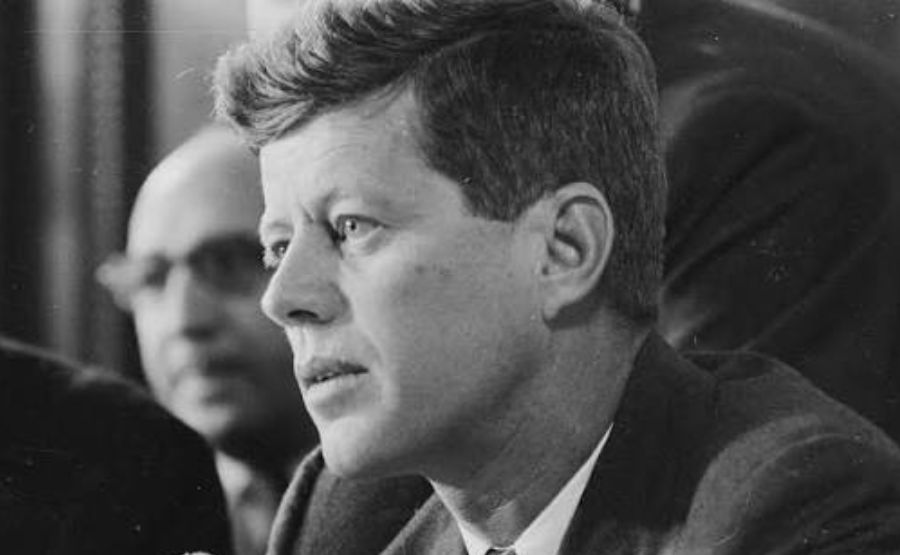
For most of his presidency, Kennedy approached civil rights as a legal and political problem to be managed rather than a moral cause to be championed. Wary of alienating Southern Democrats whose votes he needed for other legislation, he leaned on executive action and Justice Department lawsuits while avoiding a full legislative push.
Events eventually overtook his caution. Televised violence against Freedom Riders, the standoff over integrating the University of Mississippi in 1962, and Alabama Governor George Wallace’s symbolic “stand in the schoolhouse door” against two Black students at the University of Alabama in June 1963 made restraint look like complicity.
On the night of that Alabama standoff, Kennedy delivered a televised address recasting civil rights explicitly as a moral issue rather than merely a legal one, and days later sent Congress the bill that would become the Civil Rights Act of 1964. He acknowledged privately that the stance would cost him politically in the South, telling an interviewer he expected to lose votes there in 1964 and adding that he was prepared to accept it.
He did not live to sign the bill. The credit for the accomplishment has been disputed by historians ever since Lyndon Johnson pushed it through Congress the following year, in part by using Kennedy’s memory to garner support. — some crediting Kennedy’s late conversion, others crediting Johnson’s legislative skill for turning a stalled proposal into law.
Domestic Vision: The New Frontier
Kennedy branded his domestic agenda the “New Frontier,” a label meant to evoke pioneering ambition, but Congress blocked much of it. Federal aid to education, medical care for the elderly, and assistance to depressed regions all stalled against a conservative coalition of Republicans and Southern Democrats that Kennedy never fully overcame.
Where he succeeded, the achievements proved durable. The Peace Corps, created by executive order in March 1961 and led by his brother-in-law Sargent Shriver, sent tens of thousands of young Americans abroad in subsequent decades and became one of the most enduring symbols of his presidency.
His September 1962 speech at Rice University reframed the space race as a test of national character, arguing that America should go to the Moon “not because it is easy, but because it is hard.” The economy, meanwhile, grew steadily through his presidency, aided by planned tax cuts that were enacted posthumously in 1964.
Personal Life: Glamour, Illness, and Private Struggle
Behind the image of vigor that defined his public persona, Kennedy endured a body in near-constant revolt. He suffered from Addison’s disease, a hormonal disorder attacking the adrenal glands, and from degenerative back problems worsened by his wartime injury, requiring daily medication regimens that at timesincluded stimulants, painkillers, and anxiety medications given by a doctor known only as “Dr.Feelgood” for his liberal use of amphetamine injections.
His campaign and White House staff actively concealed this reality. When asked directly in 1959 whether he had Addison’s disease, Kennedy offered a carefully parsed denial, distinguishing “classic” tuberculosis-caused Addison’s from the autoimmune version he actually had — technically accurate, deliberately misleading, and effective enough to end the story.
His marriage to Jacqueline Bouvier combined genuine affection with recurring strain. The couple suffered a miscarriage in 1955 and a stillbirth in 1956 before Caroline and John Jr. were born, and in August 1963 their newborn son Patrick died just two days after a premature birth, a loss that visibly drew the couple closer in the final months before Dallas.
Kennedy’s infidelities, an open secret among Washington insiders but largely unreported by a more deferential press corps of that era, have since become one of the most examined aspects of his private life, including rumored liaisons with women connected to organized crime figures and with actress Marilyn Monroe. Historians differ on how to weigh this record against his public conduct, though most agree the press restraint of the period would be inconceivable today.
His relationship with his father remained a defining, complicated force throughout his adult life. Joseph Kennedy Sr. financed his campaigns, shaped his political instincts, and instilled the competitive drive that carried Jack past chronic illness into the presidency, even as the same father’s controversial business dealings and prewar isolationism occasionally became political liabilities his son had to navigate.
The Assassination and Its Long Shadow
On November 22, 1963, Kennedy was riding in an open-top motorcade through downtown Dallas when he was shot twice, once fatally in the head, in front of his wife and thousands of spectators. He was pronounced dead at Parkland Memorial Hospital shortly after 1:00 p.m., and Vice President Lyndon Johnson was sworn in aboard Air Force One within hours.
Police arrested Lee Harvey Oswald, a former Marine with pro-Castro sympathies, who was himself shot and killed two days later by Dallas nightclub owner Jack Ruby, live on national television, before he could stand trial. The killing of a suspect by another private citizen, broadcast in real time, deepened public suspicion that the full story remained untold.
President Johnson convened the Warren Commission, chaired by Chief Justice Earl Warren, which spent ten months and interviewed more than five hundred witnesses before concluding in September 1964 that Oswald acted alone and that no conspiracy, foreign or domestic, existed. Later government reviews, including a 1979 House committee, largely reaffirmed the core findings while leaving room for the persistent conspiracy theories that continue to shape public opinion on the assassination today.
Legacy and Relevance in the Modern World
Kennedy’s presidency lives on less through legislative accomplishment than through symbolism and unfulfilled potential, a fact that itself explains his durability in American memory. Historians and the public alike consistently rank him among the more admired presidents, even though scholars rate his actual policy record more modestly than his popular reputation suggests.
The institutions and rhetoric he built outlasted him by decades. The Peace Corps still sends volunteers abroad; the Moon landing his Rice University speech demanded arrived six years after his death and stands as one of the twentieth century’s defining achievements; and the hotline and test-ban treaty born from the missile crisis shaped Cold War arms control for a generation.
His handling of Cuba also offers a cautionary case study still taught in policy schools: a young administration nearly stumbled into nuclear war through overconfidence, then avoided it through deliberate skepticism of expert consensus and a willingness to let an adversary retreat with dignity. That template for crisis management — patience, restraint, and private diplomacy over public escalation — remains a touchstone for statecraft.
The posthumous unraveling of his concealed health problems and infidelities has also reshaped how the public and press treat political leaders’ private lives, contributing to today’s expectation of far greater candor about a candidate’s health and character. In that sense, Kennedy’s legacy includes not just what he achieved, but the transparency norms his era’s secrecy eventually provoked.
His assassination itself became a rupture point in American self-perception, a moment many Americans still describe as the end of a naive postwar optimism. The “Camelot” mythology his widow helped cultivate in the weeks after his death — comparing his administration to the chivalric court of Arthurian legend — has been picked apart by historians for decades, yet it persists in the public imagination almost undiminished.
Final Words
John F. Kennedy governed for less than three years, yet the questions his presidency raises about image, courage, and concealment have outlasted administrations that governed twice as long. He inherited extraordinary privilege and used it toward genuine public service, while simultaneously deceiving the public about his health in ways that would end a modern candidacy outright.
He blundered badly at the Bay of Pigs and then, chastened, managed the Cuban Missile Crisis with a discipline that likely spared the world a nuclear exchange. He moved slowly and reluctantly on civil rights before finally staking his political capital on it, a evolution incomplete at his death but consequential all the same.
None of this fits neatly into hero or villain. Kennedy is better understood as a man of real intelligence and real appetite, formed by a father’s relentless ambition and a body that betrayed him constantly, who rose to the largest moments of his presidency even as he concealed the smaller truths of his daily life. That contradiction, more than any single speech or crisis, is what keeps historians returning to him.
FAQS
1.How old was John F. Kennedy when he became president?
He was 43 years old when inaugurated on January 20, 1961, making him the youngest person ever elected to the presidency.
2.Was JFK the first Catholic president?
Yes. He remains the only Roman Catholic to have served as U.S. president.
3.What caused JFK’s chronic health problems?
He suffered from Addison’s disease, an adrenal hormone disorder, along with severe degenerative back pain worsened by a World War II combat injury.
4.Did the public know about his illnesses during his presidency?
No. His campaign and administration actively concealed the extent of his Addison’s disease and medication regimen, a fact that only became widely known through later historical research.
5.What happened during the Bay of Pigs invasion?
In April 1961, a CIA-backed force of Cuban exiles invaded Cuba to overthrow Fidel Castro; the operation collapsed within three days after Kennedy withheld further air support, becoming an early embarrassment for his administration.
6.How was the Cuban Missile Crisis resolved?
Kennedy imposed a naval quarantine on Cuba and negotiated privately with Khrushchev; the Soviets withdrew their missiles in exchange for a U.S. pledge not to invade Cuba and a secret removal of American missiles from Turkey.
7.What was the Peace Corps, and did Kennedy create it?
Yes. Kennedy established the Peace Corps by executive order in March 1961 to send American volunteers abroad for educational and development work; it continues to operate today.
8.Did JFK support civil rights legislation?
He proposed the bill that became the Civil Rights Act of 1964 in June 1963, after years of cautious, largely executive-level engagement with the issue, but he did not live to see it passed.
9.What was Kennedy’s role in the space race?
He set the goal, announced to Congress in 1961 and elaborated at Rice University in 1962, of landing an American on the Moon before the decade’s end — a goal achieved in 1969, after his death.
10.How did JFK die?
He was assassinated on November 22, 1963, while riding in a motorcade in Dallas, Texas, shot by Lee Harvey Oswald according to the official Warren Commission investigation.
11.What happened to Lee Harvey Oswald?
Oswald was arrested but shot and killed two days later by Jack Ruby before he could stand trial, an event broadcast live on television.
12.Did the Warren Commission find evidence of a conspiracy?
No. It concluded Oswald acted alone, a finding later reaffirmed with some caveats by subsequent government reviews, though public skepticism and conspiracy theories persist.
13.What is the “Camelot” myth associated with Kennedy?
It refers to a romanticized comparison, promoted by Jacqueline Kennedy shortly after his death, between his administration and the idealized court of Arthurian legend; historians view it as an effective but selective piece of image-making.
14.Who succeeded Kennedy as president?
Vice President Lyndon B. Johnson was sworn in aboard Air Force One within hours of Kennedy’s death and went on to shepherd much of Kennedy’s stalled legislative agenda into law.
15.How do historians generally rank Kennedy’s presidency?
He consistently polls among the more popular and admired presidents with the general public, though many historians rate his substantive policy record more modestly, citing the brevity of his term and the number of initiatives left unfinished.
Every story matters—discover them all with Daily Narrative.