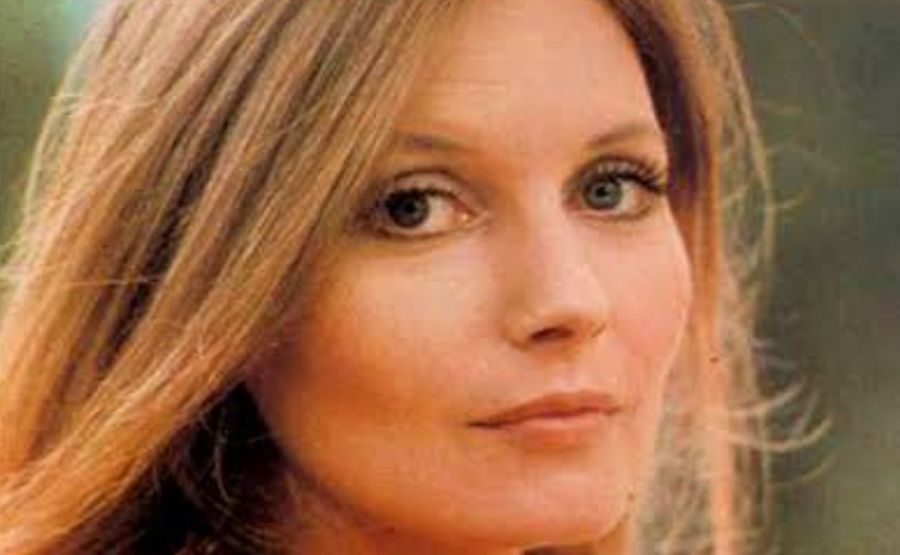
Actress Catherine Schell: The Aristocrat Who Became an Alien, and the Life That Outpaced Both
Catherine Schell’s enduring relevance lies not in any single role but in the paradox she embodies: a displaced noblewoman who found her truest home inside other people’s imaginations, and whose private story proved far stranger than any fiction she was ever asked to perform.
Quick Facts
| Detail | Information |
| Birth Name | Katherina Freiin Schell von Bauschlott |
| Born | July 17, 1944, Budapest, Hungary |
| Nationality | Hungarian-born British (resident in France) |
| Also Known As | Catherina von Schell (early career); Catherine Hays (married name) |
| Primary Roles | Actress (film and television), author, hotelier |
| Father | Baron Pál Schell von Bauschlott (1898–1979), Hungarian diplomat |
| Mother | Countess Katalin Mária Etelka Teleki de Szék (b. 1917) |
| First Husband | Actor William Marlowe (1930–2003); married 1968, divorced 1977 |
| Second Husband | Director Bill Hays (1938–2006); married December 1982 |
| Children | Two stepchildren (Joanna and Daniel Hays) |
| Film Debut | Lana, Queen of the Amazons (1964, as Catherina von Schell) |
| Notable Roles | Nancy – On Her Majesty’s Secret Service (1969); Lady Claudine Litton – The Return of the Pink Panther (1975); Maya – Space: 1999 (1976–77); Countess Scarlioni – Doctor Who: City of Death (1979) |
| Retirement | 1996 (from acting); opened Auberge Valentin guesthouse, Bonneval, Haute-Loire, France |
| Return to Screen | Dracula (BBC/Netflix, 2020); The Munsters (dir. Rob Zombie, 2022) |
| Autobiography | A Constant Alien (2016); When God Was Out For Lunch (2018) |
| Training | Munich’s Otto Falckenberg School of the Performing Arts |
Born Into War, Forged by Displacement
The city of Budapest in July 1944 was not a place of safe arrivals. Allied bombers flew overhead. The eastern front churned toward Hungary. Into this chaos, on July 17, Katherina Freiin Schell von Bauschlott entered the world — born, by her own later account, during an air raid.
Her parents were not ordinary people by any measure of the era. Her father, Baron Pál Schell von Bauschlott, descended from a German aristocratic family that had settled in Hungary generations before and accumulated considerable wealth and diplomatic standing. Her mother, Countess Katalin Teleki de Szék, came from one of Hungary’s most distinguished noble houses. The family estate at Bauschlott in Germany, which gave the family name its geographic identity, was a symbol of old European permanence.
The Nazis dismantled that permanence without ceremony. They confiscated the family’s estates during the Second World War, stripping the Schells of both property and security in a single bureaucratic stroke. The family retreated to Budapest, then fled again when the Soviet advance made staying untenable.
By 1948, the Schells had crossed into Austria and were living as stateless refugees in Vienna and Salzburg. The former diplomat’s daughter sold newspapers. The man who had once represented his country in formal proceedings sold goods at a Woolworths. Titles meant nothing. Capital was gone. What remained was family cohesion and the grim discipline of survival.
In 1950, Baron Schell made the decision that reshaped his family’s trajectory permanently. He renounced his aristocratic title — a legal requirement under American immigration rules — in exchange for United States citizenship. The family settled in the New York City borough of Staten Island, where young Katherina attended a strict Catholic convent school.
The renunciation of titles was not, for a man who had been a baron since birth, a trivial act. It was the last and most complete stripping of the old identity. For his daughter, it produced something unexpected: a girl growing up in New York, formed by Hungarian aristocracy, marked by Austrian refugee life, attending Catholic school on Staten Island — a person constructed entirely of contradictions, at home nowhere and curious about everything.
See aslo “Larry Hoover: King, Kingpin, and the Question That Won’t Close“
Munich, the Stage, and a Name
In 1957, her father secured a position with Radio Free Europe and relocated the family to Munich. Katherina was 13. She left the Staten Island convent school mid-education and enrolled in the American School in Munich, where she encountered school drama for the first time and discovered, almost by accident, that she could perform.
The interest hardened into ambition. She trained at the Otto Falckenberg School of the Performing Arts — one of Munich’s most respected theatrical institutions — and began auditioning for work in German-language productions. Her first screen credit came in 1967, a West German comedy called Till Eulenspiegel, in which she appeared under the name Katherina von Schell.
Her film debut had actually come three years earlier, in 1964. A German-language adventure called Lana, Queen of the Amazons, shot partly in Brazil, gave her the title role and her first experience of location filmmaking under genuinely demanding conditions. The production was arduous; the result was modest. However, it created a pattern: she would accept the employment, find it more physically and professionally demanding than she had imagined, and continue working nonetheless.
The decision to anglicize her name arrived with a practical rather than romantic logic. When she married British actor William Marlowe in 1968, she moved to London, began working primarily in British productions, and simplified her professional identity to Catherine Schell — clean, pronounceable, and adaptable across the European market where most of her early work was being generated.
1969 and the Currency of Cool
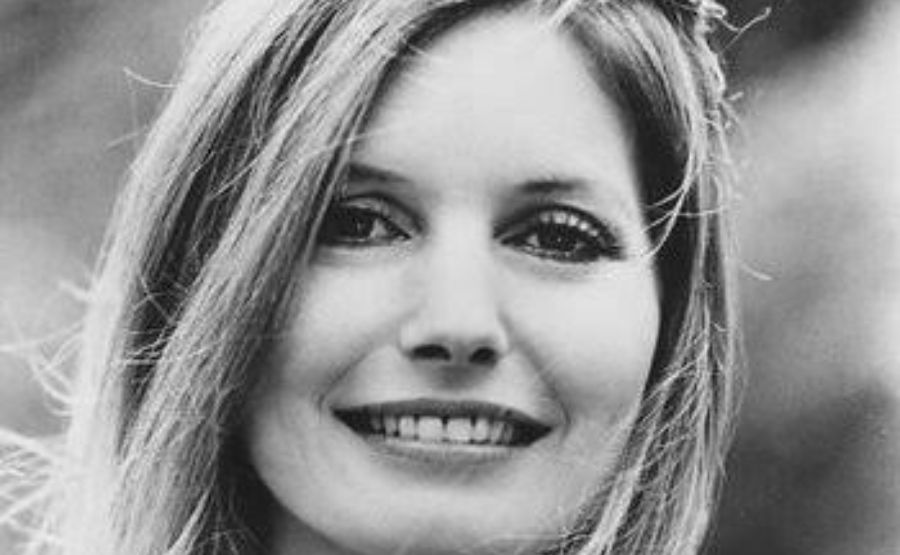
The year 1969 placed Catherine Schell in two productions that would define her recognizability across decades and continents, though she would downplay both at the time.
The first was On Her Majesty’s Secret Service, the sixth James Bond film, directed by Peter Hunt and featuring George Lazenby in his only appearance as 007. Schell played Nancy, one of several young women resident at Ernst Stavro Blofeld’s alpine allergy clinic at Piz Gloria in Switzerland — functionally a hypnotic sleeper-agent program concealed inside a luxury spa. The Bond girls collectively were called the “Angels of Death.”
The role was not large. It required elegance, a particular kind of contained screen presence, and the ability to register without dominating. Schell delivered all three. She later recalled the experience with characteristic directness: the location was spectacular, the social atmosphere pleasant, and the creative demands limited. She did not experience it as a major breakthrough in the way the production’s cultural weight might suggest. It was a proper part — lines included — in a very large machine.
The second 1969 production was the Hammer Films science-fiction thriller Moon Zero Two, directed by Roy Ward Baker. Schell played Clementine Taplin, a woman searching for her missing brother on a mining colony on the far side of the moon. The film was campy, cheerfully low-budget, and has since accumulated a minor cult following. At the time it was not a commercial success. It did, however, signal something important about Schell’s instincts: she was drawn to genre material, to the slightly unreal, to roles that offered transformation and strangeness over conventional glamour.
Peter Sellers, the Pink Panther, and the Pivot to Comedy
The year 1975 delivered Catherine Schell into the company of Peter Sellers, which was both a professional opportunity and a human education. The Return of the Pink Panther, directed by Blake Edwards, brought the bumbling Inspector Clouseau back to screens after a decade’s absence and matched him against Lady Claudine Litton — Schell’s character — a glamorous aristocrat entangled in the film’s diamond-theft plot.
Playing opposite Sellers required the kind of anchored, reactive precision that pure physical comedy demands. Sellers was a performer of extraordinary internal instability, capable of brilliant spontaneity and difficult volatility in equal measure. Schell navigated both with a composure that her colleagues later noted. The film was a massive commercial success internationally and re-established the Pink Panther franchise as a viable brand. Her performance brought sophisticated timing to what could have been a merely decorative role.
Sellers would return to her professional life in 1979, when she appeared alongside him again in The Prisoner of Zenda — one of the last films he completed before his death in 1980. By that point she and Sellers had developed a warm personal understanding. He was reportedly among the more trusted figures in her professional circle during the 1970s, a decade in which her personal life was considerably darker than her screen work suggested.
Maya and the Shape-Shifter’s Paradox
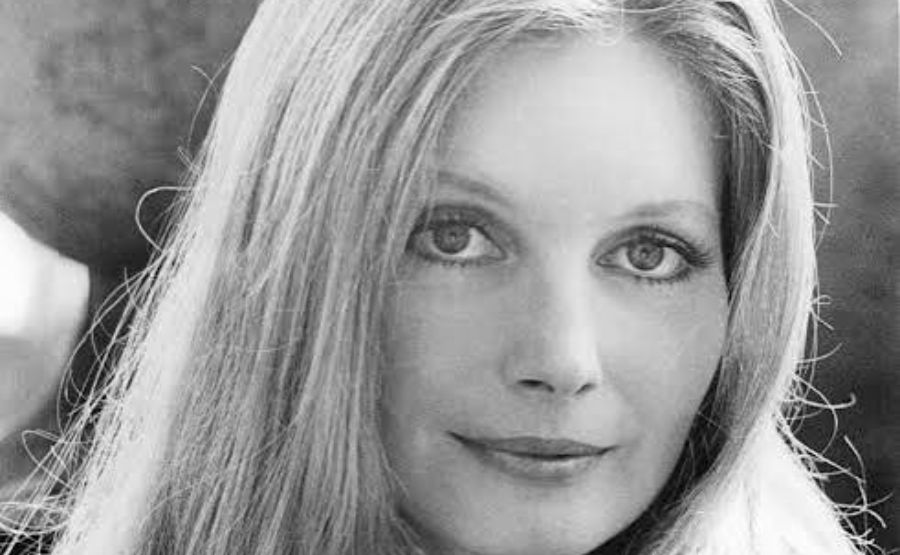
The role that most people associate most immediately with Catherine Schell arrived in 1976, when she joined the second season of Gerry Anderson’s science-fiction series Space: 1999 as Maya — the last surviving native of the planet Psychon, a “metamorph” capable of transforming her molecular structure into any living creature she had encountered.
The casting had not been straightforward. Producer Fred Freiberger’s first choice was Teresa Graves, who declined. Approximately forty women were then tested for the part before the American producer Abe Mandell suggested Schell, who had already appeared in the show’s first season in a smaller, unrelated role as the Servant of the Guardian in the episode “Guardian of Piri.” The producers had been impressed enough to retain her in their thinking, and the shape-shifting concept practically wrote itself around her particular combination of physical expressiveness and emotional depth.
Maya became the production’s creative and promotional centerpiece. The metamorphosis sequences — achieved through practical prosthetics, makeup, and early optical compositing — required Schell to sustain characterization through physically transformative processes that most actors never encounter. She brought the character something the role’s conceptual novelty could not guarantee: genuine interiority. Maya was not simply a special effect with dialogue. She was curious, warmly ironic, occasionally vulnerable, and romantically entangled with the series regular Tony Verdeschi — a relationship Schell played with a lightness that made it believable across 25 episodes.
The series ran for two seasons and ended in 1977. The character came close to receiving her own spin-off series, which Schell was informed about but which never materialized. The disappointment was real, though she absorbed it with the equanimity that characterized most of her professional relationships. Maya’s legacy, however, outlasted the production by decades. The character remains among the most discussed and analyzed female alien protagonists in 1970s television science fiction.
Doctor Who and the Douglas Adams Question
In 1979, Catherine Schell appeared in what many Doctor Who historians regard as the finest serial of the entire classic era: City of Death, a four-part story written — under the pseudonym David Agnew — by Douglas Adams and Graham Williams. Schell played Countess Heidi Scarlioni, a sophisticated Parisian socialite whose husband’s art-theft schemes conceal a secret of genuinely extraterrestrial dimensions.
Schell arrived at the production without much prior knowledge of Doctor Who and without preconceptions about its conventions. That ignorance may have served her. She played the Countess as a fully realized character rather than as a participant in a familiar genre ritual, which gave her scenes opposite Tom Baker’s Fourth Doctor a quality of genuine dramatic friction. The Countess is not simply a villain’s decorative partner; she is a woman of intelligence and autonomy whose world collapses around revelations she was never meant to survive.
The serial shot partly on location in Paris — an unusual luxury for the BBC of that period — and the combination of Adams’s wit, Baker’s controlled mania, and Schell’s composed elegance produced something that transcended genre television. City of Death attracted an audience of over 16 million viewers at its peak broadcast, a record for the classic series that held for many years. Schell later contributed to the Blu-ray audio commentary and associated documentaries, demonstrating an ongoing willingness to engage with the production’s cultural legacy long after the screens had gone dark.
Personal Life: The Private Architecture of Survival
Behind the succession of glamorous roles, Catherine Schell’s personal life navigated terrain considerably more demanding than anything her screenwork required.
Her first marriage, to British actor William Marlowe, began in 1968 on the set of Amsterdam Affair and ended in divorce in 1977. The marriage was not a quiet one. Schell addressed this directly in her autobiographies, describing a relationship marked by violence and emotional volatility — an abusive dynamic that she endured and eventually exited. The candor she brought to this subject in print was not retrospective score-settling but an honest accounting of how a woman of otherwise considerable self-possession can find herself trapped inside a destructive relationship.
The 1970s brought other complications: the declining health of both parents, a brother’s struggle with paranoid schizophrenia, the practical demands of supporting family members while managing a career that required constant professional maintenance. Her mother had been imprisoned briefly in 1956 for demonstrating against the Soviet invasion of Hungary — a fact that gives some sense of the force of personality from which Schell descended. A dominant, passionate woman with a capacity for public protest was not, as Schell documented, always a comfortable presence in a daughter’s life.
She met director Bill Hays in 1977 while working on Looking for Clancy. He had two children from a previous marriage: Joanna and Daniel. Schell and Hays married in December 1982 and collaborated professionally as well as personally, working together on a 1984 BBC television production of Ivan Turgenev’s A Month in the Country. The marriage brought her the stability and warmth that the previous decade had withheld. When Hays passed away in 2006, a lengthy chapter came to an end and a new one began.
Her father’s descent into Alzheimer’s disease in his final years added another layer to the caregiving demands she navigated quietly alongside her career. The title of her first autobiography — A Constant Alien — references both her defining screen role and her lifelong sense of never quite belonging: not in New York, not in Munich, not entirely in London, not entirely anywhere. It is the defining psychological condition of the permanently displaced, and Schell wrote about it with the precision of someone who had spent a lifetime observing herself from a slight distance.
France, Retirement, and the Unexpected Return
In 1996, Catherine Schell made a decision that many of her contemporaries found puzzling and that she has described as entirely natural: she stopped acting, moved to the Haute-Loire region In rural France, and she and her husband Bill Hays established Auberge Valentin, a modest guesthouse, near the village of Bonneval.
Regarding its owner’s past, the institution was neither theatrical nor self-consciously ironic.Guests occasionally arrived and were startled to discover that their host was Nancy from On Her Majesty’s Secret Service or Maya from Space: 1999. The French regional press documented the curiosity of a former Bond girl running a chambres d’hôtes in a village of a few hundred souls on the Massif Central plateau. Schell, by most accounts, regarded the enterprise with the same practical directness she had applied to everything else.
After Hays’s death in 2006, she continued in France. The acting work she took in later years — notably the role of Grand Duchess Valeria in the BBC One/Netflix Dracula miniseries (2020), directed by Damon Thomas, and the role of Zoya Krupp in Rob Zombie’s The Munsters (2022) — arrived not as career resurrection but as selective returns to a craft she had set aside without rancor.
She published her two-volume autobiography — A Constant Alien in 2016 and When God Was Out For Lunch in 2018, both from Fantom Films — which received warm critical and fan reception for their candor and literary quality. The books made clear that Schell had not merely survived her displacement but had made something genuinely interesting from it: a perspective on European history, British television’s golden era, and the internal life of an actress who, by her own frank admission, never found the craft to be her religion.
Legacy: What Remains When the Sets Come Down
Catherine Schell’s cultural footprint is simultaneously smaller and more durable than conventional celebrity metrics suggest.
She belongs to a specific, irreplaceable generation of European actresses who gave British television and film of the 1960s and 1970s their particular cosmopolitan texture. Women like Schell carried something the domestic talent pool could not entirely supply: an insider’s knowledge of displacement, a multilingual ease across registers, a beauty that read as somewhere rather than anywhere. That quality permeates her best performances, even in small roles.
As Maya in Space: 1999, she created one of the most technically and emotionally demanding regular female characters in British genre television of the decade — a character who has influenced subsequent portrayals of non-human protagonists and remains a touchstone for fans of 1970s science fiction across multiple generations. The shape-shifting concept, which could have been a prop, became a genuine dramatic device in her hands.
The City of Death serial, available across multiple platforms and consistently cited as essential Doctor Who, introduces her performance to new viewers continuously. The Countess Scarlioni remains among the most elegantly written and elegantly inhabited guest roles in the show’s history.
Her autobiographies have extended her reach into literary territory, bringing a perspective on postwar European displacement, the realities of domestic abuse, the texture of British television production, and the particular condition of the perpetual outsider that exceeds the biographical frame. They are read not merely by fans seeking behind-the-scenes anecdotes but by readers interested in a genuinely well-written life.
Schell has occasionally noted, with characteristic directness, that acting was never something she pursued with consuming passion — that it was work she did well and sometimes with great pleasure, but not her entire identity. That honesty makes her legacy oddly clarifying. She did not sacrifice everything for the craft. She had a life, including a brutal first marriage, a caring relationship with difficult parents, a move to rural France, and a guesthouse in a village. That wholeness is part of what her story offers.
Final wards
Catherine Schell’s life resists the standard biographical arc of the actress who rises, fades, and yearns for past glory. She rose, worked consistently across three decades, stepped away on her own terms, built something new in a French village, and returned briefly when the right invitations arrived. The arc is unusual because it is genuinely self-determined at each stage.
The displacement that structured her childhood — aristocratic origins, war, exile, poverty, emigration, and resettlement across four countries before she was a teenager — produced not a person of fragile nostalgia but one of considerable adaptability. She navigated a difficult first marriage without becoming defined by it. She cared for parents whose declining health placed serious demands on her time and emotional resources. She built a successful second relationship with a creative collaborator.
Her screen legacy rests in three cultural spaces that do not often overlap: the James Bond franchise, 1970s science fiction, and the classic Doctor Who canon. To be genuinely embedded in all three, across the same decade, and to have contributed memorable work to each, is an achievement that becomes clearer in retrospect than it appeared at the time.
She was, as her autobiography’s title suggests, a constant alien — never entirely native to any language, country, or genre. That condition, which she might once have experienced purely as loss, became in the end the most precise description of her gift.
FAQs
1. What is Catherine Schell’s full real name?
She was born Katherina Freiin Schell von Bauschlott on July 17, 1944, in Budapest, Hungary. “Freiin” is the female form of the German baronial title Freiherr; “von Bauschlott” indicates the location of the Schell family’s ancestral estate in Germany.
2. Why did her family leave Hungary?
The family fled in stages: first because the Nazis confiscated their estates during World War II, then because Soviet occupation of Hungary after 1945 made a return impossible. They lived as refugees in Vienna and Salzburg from 1948 before emigrating to the United States in 1950.
3. Where did she train as an actress?
She trained at the Otto Falckenberg School of the Performing Arts in Munich, after developing an interest in acting through school drama productions at the American School in Munich, where she enrolled in 1957 when her father joined Radio Free Europe.
4. What was her role in On Her Majesty’s Secret Service?
She played Nancy, one of Blofeld’s “Angels of Death” — young women residing at the villain’s alpine clinic at Piz Gloria in Switzerland. George Lazenby played Bond in that film. The role was modest but placed her within the Bond franchise’s international cultural footprint.
5. How did she get the role of Maya in Space: 1999?
Teresa Graves was initially offered the part by producer Fred Freiberger, but she turned him down. After testing approximately 40 actresses, producer Abe Mandell suggested Schell, who had already appeared in the show’s first season in a separate role. She was cast and joined the show for its entire second season (1976–77), appearing in 25 episodes.
6. Why was Maya an important television character?
Maya was the shape-shifting last survivor of the planet Psychon — a technically demanding role requiring Schell to sustain emotional continuity through elaborate prosthetic transformation sequences. She brought warmth and genuine interiority to a character that could have functioned as pure spectacle, making Maya one of the most discussed female alien protagonists of 1970s British science fiction.
7. What was her role in Doctor Who: City of Death?
She played Countess Heidi Scarlioni, a sophisticated Parisian aristocrat whose husband conceals an alien identity behind an art-theft operation. The serial was scripted by Douglas Adams and remains among the highest-rated and most critically admired stories in the classic Doctor Who canon.
8. What is her connection to Peter Sellers?
She appeared opposite Sellers in two films: The Return of the Pink Panther (1975), in which she played Lady Claudine Litton, and The Prisoner of Zenda (1979), one of Sellers’s final films. The two developed a genuine personal rapport during their collaborations.
9. What was her first marriage like?
She married British actor William Marlowe in 1968 after meeting him on the set of Amsterdam Affair. The marriage was marked by violence and emotional abuse, which she addressed candidly in her autobiographies. They divorced in 1977.
10. Who was her second husband?
Bill Hays (1938–2006), a television director she met in 1977 while he was directing her in the BBC series Looking for Clancy. They married in December 1982. Hays had two children from a previous marriage — Joanna and Daniel — who became Schell’s stepchildren. Hays died in 2006.
11. Why did she retire from acting in 1996?
She has described the decision as a natural one rather than a forced exit — the industry had changed, the volume of available work had declined, and she and Bill Hays chose to relocate to rural France and open a guesthouse together. The decision was self-determined.
12. What is Auberge Valentin?
It is a small guesthouse (auberge) that Schell opened in 1996 in Bonneval, a village in the Haute-Loire department of France. She and Bill Hays ran it together until his death in 2006. Guests occasionally discovered their host’s screen history with some surprise.
13. What are her autobiographies about?
A Constant Alien (2016) covers her early life, the war and displacement years, her entry into acting, and her career through the 1970s including her difficult first marriage. When God Was Out For Lunch (2018) continues the story, addressing her family’s health crises, her second marriage, and her later life in France. Both were published by Fantom Films.
14. Has she returned to acting in recent years?
Yes. She came out of retirement to play Grand Duchess Valeria in the BBC One/Netflix Dracula miniseries (2020), directed by Damon Thomas, and appeared as Zoya Krupp in Rob Zombie’s The Munsters (2022). Both were selective returns rather than a sustained comeback.
15. Is Catherine Schell related to actors Maximilian Schell or Maria Schell?
No. Despite sharing the surname, she has no family connection to Maximilian Schell, Maria Schell, Immy Schell, or Carl Schell. The coincidence of names has caused persistent public confusion. Her brother Paul von Schell was, however, the widower of German actress Hildegard Knef.
Every story matters—discover them all with Daily Narrative.