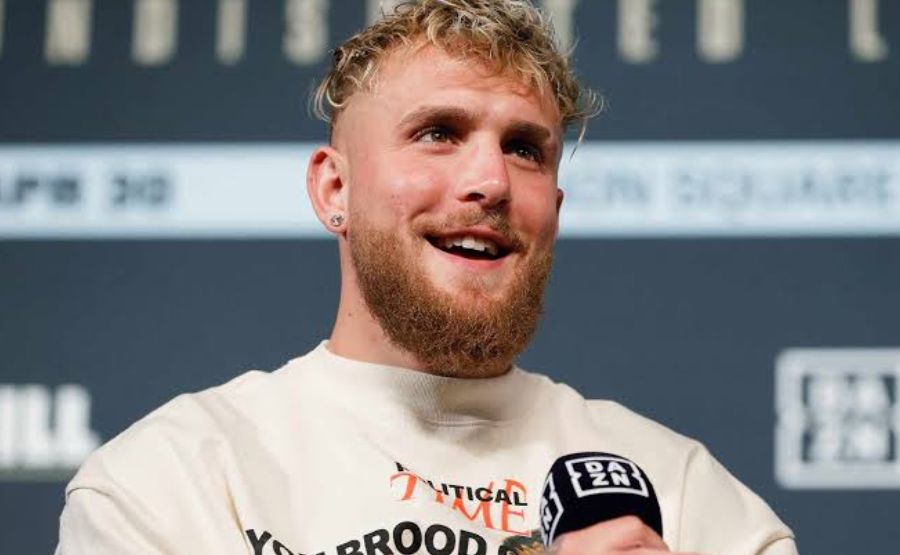
Jake Paul Net Worth 2025: From Viral Villain to Venture Capitalist
Jake Paul is proof that in the attention economy, the line between notoriety and net worth has all but disappeared — and that the people who understand this earliest tend to get very, very rich.
At 28, the boy from Westlake, Ohio, who once burned furniture in an empty swimming pool for YouTube views has become something few predicted: a legitimate businessperson. His $200 million fortune — built through boxing purses, a consumer brand in 4,000 Walmart stores, and seed-stage bets on companies now valued in the tens of billions — positions him, by most credible estimates, as the highest-earning creator-turned-entrepreneur of his generation. Whether you find that inspiring or alarming probably says more about your own assumptions than his.
Quick Facts
| Category | Details |
| Full name | Jake Joseph Paul |
| Born | January 17, 1997, Cleveland, Ohio |
| Raised in | Westlake, Ohio |
| Nationality | American |
| Primary roles | Professional boxer, entrepreneur, venture capitalist, former actor and social media creator |
| Estimated net worth (2025) | ~$200 million (Celebrity Net Worth; Forbes estimates $20M–$50M annual income) |
| Boxing record | 12 wins, 2 losses, 7 knockouts (as of late 2025) |
| Key business ventures | Anti Fund (VC firm), W by Jake Paul (men’s body care), Betr (sports betting app), Most Valuable Promotions (boxing promotion) |
| Notable investments | OpenAI, Anduril, Ramp, Cognition, SpaceX, Polymarket, Physical Intelligence |
| Real estate | $15.75M estate in Dorado Beach, Puerto Rico (2023); $39M Southlands plantation, Decatur County, Georgia (April 2025) |
| Major boxing payouts | ~$40M (vs. Mike Tyson, November 2024); ~$92–94M (vs. Anthony Joshua, December 2025) |
| Personal | Engaged to Dutch Olympic speed skater Jutta Leerdam (March 2025) |
| Family | Brother Logan Paul; parents Greg Paul and Pam Stepnick |
| Key recognition | Sports Illustrated 2021 Breakout Boxer of the Year; Forbes highest-paid creator lists, 2010s–2020s |
| Notable controversy | 2023 SEC settlement over unauthorized crypto promotion; fired from Disney’s Bizaardvark (2017) |
Ohio Roots and the Making of a Provocateur
Jake Paul did not have an unhappy childhood by most measures, but it was not uncomplicated. Born on January 17, 1997, in Cleveland and raised in the western suburb of Westlake, he grew up in a Christian household with his older brother Logan, a realtor father named Greg Paul, and a nurse mother, Pam Stepnick. At the age of seven, his parents separated.
Sports came early: football, wrestling, the physical grammar of competition. But the camera came earlier still. Jake and Logan began filming themselves when Jake was around ten, two kids in Ohio turning the mundane rhythms of suburban life into content before that word meant anything commercial.
Jake said that his father had physically abused him as a child in the 2023 Netflix documentary series Untold. This revelation came at his public reinvention as a boxer, adding psychological texture to a persona that had always traded on performed toughness. His parents have not formally responded to those claims in detail.
What is not disputed: Greg Paul pushed his sons to compete, to win, and to document everything. The discipline stuck, even when the behavior did not.
See aslo “Actress Catherine Schell: The Aristocrat Who Became an Alien, and the Life That Outpaced Both“
The Vine-to-Disney Pipeline
In September 2013, Jake Paul, then sixteen, posted his first video on Vine — a short-form video platform that allowed looping clips of up to six seconds. He was not the only one who did this. His understanding of the format’s pressure points—chaos, daring, brevity, and repetition—was exceptional.
By the time Twitter shut Vine down in 2017, Jake had accumulated 5.3 million followers and 2 billion views on the platform. His YouTube channel, launched on May 15, 2014, amplified the same sensibility — daily vlogs built on stunts, pranks, and the deliberate collapse of the line between entertainment and life.
The Disney Channel took notice. In 2016, Paul joined the cast of Bizaardvark, a family comedy series in which he played Dirk Mann, a stuntman who took dares from fans — essentially a fictional version of himself. He was the first celebrity on social media to host a Disney Channel show. The casting was deliberate platform strategy on Disney’s part, and it worked, until it didn’t.
In July 2017, mid-way through filming the second season, Disney terminated Paul’s contract. The immediate cause was a KTLA news report documenting the chaos surrounding his rented Beverly Grove home: noise violations, fire hazards created by furniture stunts, and fan crowds that overwhelmed the residential street. Neighbors had filed formal complaints. The liability calculus for a family-oriented network was straightforward.
Paul told The Hollywood Reporter years later that the dismissal was his own fault, that he lacked the acting range Disney needed and the self-discipline a studio set required. “I needed probably four to five years more acting experience,” he said. What he did not lack was an alternative plan.
Building the Chaos Brand: Team 10 and the Attention Thesis
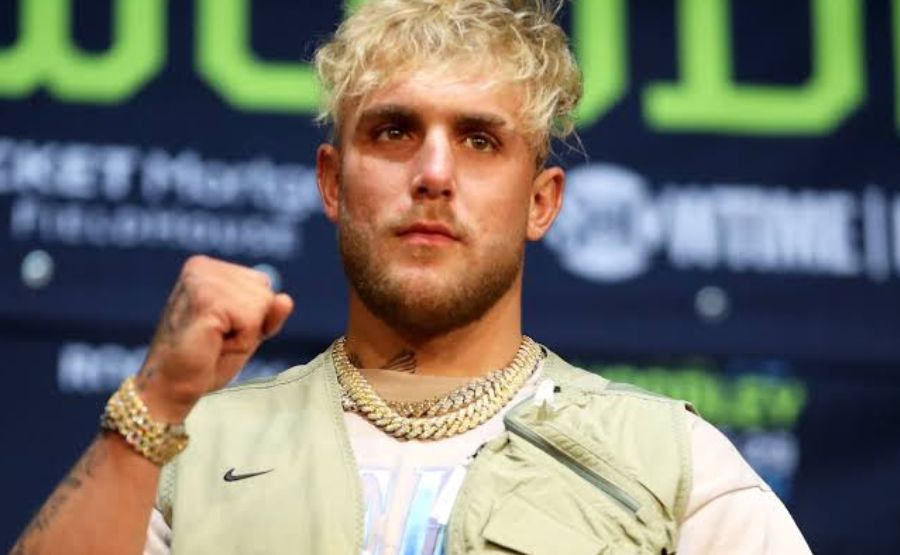
The year of his Disney exit, Paul launched Team 10, an influencer collective and talent management venture designed to turn the lessons of his own rise into a repeatable system. The concept was to recruit rising social media personalities, house them together, build collaborative content, and monetize the combined audience.
It generated controversy almost immediately. Former members alleged bullying and financial exploitation within the group. Paul’s song “It’s Everyday Bro,” released in June 2017, cracked the Billboard Hot 100 and drew 300 million views — while simultaneously becoming a cultural punchline. The mockery, he later argued, was beside the point. Every view was a view.
The episode clarified something Paul would later build an entire investment thesis around: in the attention economy, negative attention and positive attention are functionally identical until the bill comes due. The people who burn brightest in a controversy often emerge wealthier from it, provided they have something real to sell on the other side.
Boxing: The Unlikely Legitimization
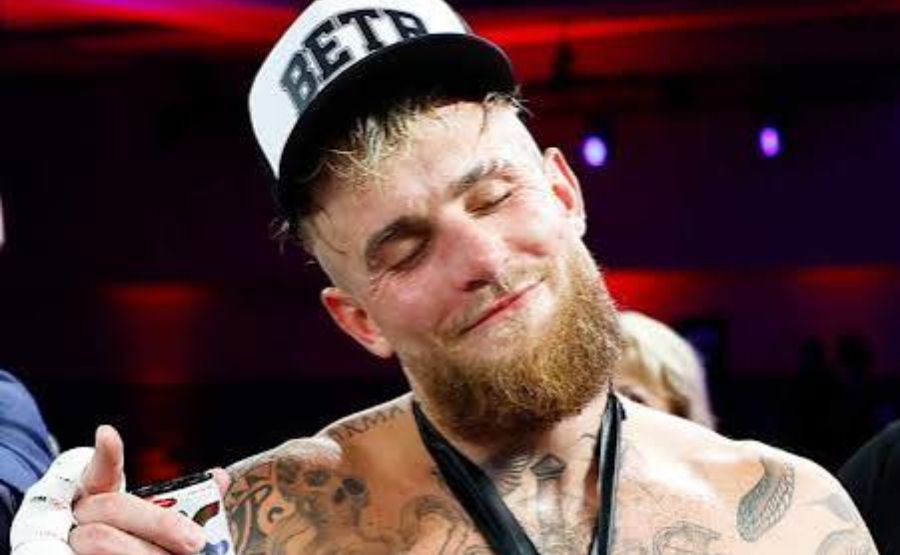
Paul’s first boxing match took place in August 2018, an exhibition bout against fellow YouTuber Deji Olatunji at the Manchester Arena. In the sixth round, he prevailed via technical knockout. Few boxing observers took particular notice.
His professional debut followed on January 20, 2020, in Miami, a first-round TKO victory over fellow social media personality AnEsonGib. The opponent was unimpressive. The business around it was not.
Paul fought retired NBA player Nate Robinson in November 2020, then former MMA champion Ben Askren and twice-over boxing champion Tyron Woodley in 2021, pocketing an estimated $45 million across those engagements through a combination of purses and pay-per-view revenue. Forbes placed him in the top three of its highest-paid creators list that year. The mainstream sports press, which had dismissed him as a novelty, began paying closer attention.
Critics argued his opponents were too far past their prime to constitute a real test. The argument had merit in the ring. It had less merit commercially: Paul had found a format in which the controversy itself drove the revenue, and in which his own improvement as a fighter was visible enough to sustain audience belief across multiple fights.
His record stood at 12 wins and 2 losses by late 2025, with the losses coming from Tommy Fury in February 2023 and Anthony Joshua in December of that year. The Joshua fight, streamed on Netflix to what the platform reported as one of its largest sports audiences, netted Paul a guaranteed purse of approximately $92 to $94 million — even in defeat, even against a two-time world heavyweight champion — a figure that underscored how thoroughly he had restructured the economics of boxing promotion around his own brand.
Most Valuable Promotions: Rewriting the Promoter’s Cut
Central to Paul’s boxing empire is Most Valuable Promotions, the company he co-founded with Nakisa Bidarian. The firm promotes Paul’s own fights but also operates as a broader promotional entity, with a business model that has attracted fighters seeking terms that rival traditional promoters cannot match.
The Netflix partnership has been particularly consequential. The Mike Tyson fight in November 2024 drew 108 million viewers globally — the largest boxing audience for a non-Las Vegas event in American history, according to Netflix’s own figures. Paul earned approximately $40 million for that night. Tyson earned $20 million.
What Paul understood before most traditional boxing figures did was that the distribution problem in the sport was not fundamentally about cable TV or pay-per-view platforms. It was about attention scarcity. He had spent a decade engineering attention at scale. Boxing was simply the arena he chose to apply that skill in.
The Investor Nobody Expected
The most quietly significant chapter of Jake Paul’s financial story has almost nothing to do with boxing. In 2021, he co-founded Anti Fund alongside Geoffrey Woo, a Stanford computer science graduate who previously founded and sold the startup Glassmap to Groupon.
The firm’s investment thesis was direct: capital had become a commodity in venture markets, but attention remained scarce. Anti Fund would offer startups both — small first-checks of $100,000 to $500,000 for meaningful early ownership stakes, and growth-stage checks of $10 million or more into companies that had already broken out. Paul’s social reach of 20 million YouTube subscribers and tens of millions of social media followers became, in this framing, a distribution asset that could lower customer acquisition costs for portfolio companies in ways no traditional venture firm could replicate.
The portfolio that resulted is not what anyone who knew Paul only from “It’s Everyday Bro” would have predicted. Anti Fund holds early stakes in OpenAI, Anduril (the defense technology company backed by Peter Thiel and valued at $60 billion by March 2026), Ramp (a corporate card and finance automation platform valued at $32 billion), Cognition (an applied AI coding firm), SpaceX, Polymarket, and Physical Intelligence. A seed-stage check in Chronosphere, a cloud observability platform Paul backed in 2019 when it was worth roughly $50 million, returned significant gains when Palo Alto Networks acquired the company for $3.35 billion in late 2025.
In December 2025, Anti Fund announced the close of an oversubscribed $30 million Fund I, bringing total assets under management above $65 million. Logan Paul joined as a General Partner the same month. By mid-2026, the firm had raised an additional $100 million growth vehicle, with limited partners including Aquarian Holdings, a $27.1 billion investment firm, alongside prominent venture capitalists Marc Andreessen and Chris Dixon.
Paul has stated his goal plainly: to be regarded as the best celebrity investor of his generation. By the paper value of Anti Fund’s holdings, the aspiration is no longer implausible.
W Body Care, Betr, and the Operating Businesses
Beyond boxing and venture capital, Paul has built a portfolio of operating companies that diversify his income further. W by Jake Paul, a men’s body care brand launched in 2024, went directly into over 4,000 Walmart stores at price points of $6 to $8 — deliberately undercutting premium competitors to capture market share through volume. The brand hit a reported $150 million valuation within its first month of operation, and completed an $11 million Series A raise in July 2024.
Betr, a sports betting application Paul co-founded in 2022, raised $50 million in early funding and targets younger bettors with micro-betting features designed for mobile-first consumption. Anti Fund lists Betr among its portfolio investments.
The common thread across these ventures is the same competitive advantage Paul identified in boxing and venture capital: his own audience. Every business he builds receives marketing that, at comparable commercial reach, would cost competitors tens of millions of dollars. His YouTube channel’s 20 million subscribers become, in effect, a permanent customer acquisition mechanism that no paid advertising budget can efficiently replicate.
Real Estate and the Puerto Rico Move
Paul’s decision to relocate to Puerto Rico in 2023 was financial as much as aesthetic. He purchased a 12,000-square-foot oceanfront estate in Dorado Beach for $15.75 million from retired MLB catcher Yadier Molina. The property includes an infinity pool, private dock, gym, and recording studio. Puerto Rico’s tax structure, which offers significant advantages to qualifying high-income transplants under Act 60, made the relocation economically rational for someone generating tens of millions annually.
In April 2025, Paul made his most ambitious real estate purchase to date. He acquired Southlands, a 5,700-acre sporting plantation in Decatur County, Georgia, for $39 million — one of the largest recreational land transactions in the state’s history, according to reporting at the time.
The scale of the purchase reflects less a lifestyle indulgence than a pattern: Paul consistently buys assets at the upper boundary of what his current net worth can support, betting that his income trajectory will make the purchase conservative in retrospect.
Personal Life, Relationships, and Private Struggles
Paul’s personal life has been shaped by the same paradox that defines his public one: everything is visible, nothing is entirely knowable.
He went public with his relationship with Jutta Leerdam, a Dutch Olympic speed skater who won gold and silver medals at the 2026 Winter Olympics, in April 2023 after the couple was first spotted together in Miami the previous month. He proposed on March 21, 2025, during a vacation at his Puerto Rico estate, decorating the setting with white flowers and candles. They announced the engagement jointly on Instagram the following day. He described being as nervous before the proposal as before a major fight.
In April 2026, Dutch media personality Yvonne Coldeweijer alleged the engagement had been called off. Paul denied the claims publicly on X, calling the reports false and urging Dutch media to stop spreading misinformation about Leerdam. As of May 2026, the couple remained engaged, though the episode illustrated the relentless scrutiny their relationship has attracted.
His father’s alleged abuse, disclosed in the Netflix documentary in 2023, remains the most significant publicly stated detail of his private psychological landscape. His childhood, in his own telling, combined strict expectations with instability. Whether that context explains his persistent need to perform dominance publicly — in fights, in feuds, in business declarations — is a question he has gestured toward but not definitively answered.
The Paul brothers’ relationship, complicated by decade-long competition and occasional public friction, has increasingly become a collaborative one. Logan’s addition as General Partner at Anti Fund in December 2025 converted a sibling rivalry into an institutional alliance.
Controversies That Cost Him, and Some That Didn’t
Not every controversy has been costless. In 2023, Paul reached a settlement with the U.S. Securities and Exchange Commission over charges that he had illegally promoted a cryptocurrency without disclosing he was being paid to do so. The settlement’s terms were not publicly disclosed in full.
His 2020 Calabasas mansion was the subject of an FBI-involved raid in August of that year as part of an investigation into looting allegations tied to protests in Scottsdale, Arizona. No charges were filed in Paul’s name specifically, but the spectacle reinforced a media narrative of recklessness that followed him into each new business chapter.
His 2025 social media post calling Bad Bunny a “fake American” ahead of the musician’s Super Bowl halftime show drew criticism from across the political spectrum, including from his own brother. He walked the comment back.
The pattern across these episodes is consistent: Paul generates a controversy, absorbs the reputational cost, and continues building. His detractors remain attentive enough to keep his name in circulation. His enterprises survive and often grow in spite of — or because of — the noise.
Legacy and Relevance in 2025
What Jake Paul has actually built, stripped of the persona, is a model for how attention accumulated on social media can be systematically converted into durable financial assets. He did not invent this idea. But he has executed it at a scale and across a range of industries — sports, consumer goods, venture capital — that no creator-entrepreneur before him has matched precisely.
His boxing career forced traditional sports business to reckon with a new kind of promoter: one who brings his own audience rather than relying on an inherited fan base. His Netflix partnership with Most Valuable Promotions changed what streaming companies believed boxing could deliver in terms of concurrent viewers. His Anti Fund, with stakes in some of the most valuable private companies in the world, may ultimately generate more wealth than all his boxing purses combined.
Fortune magazine noted in early 2026 that Paul and his brother occupy a position as significant nodes in a broader cultural-entrepreneurial network that links influencer culture, cryptocurrency, venture capital, and right-leaning digital media — a network that is reshaping American institutions in ways that extend well beyond their individual net worth.
At 28, he is not yet close to the ceiling of what his financial architecture can produce. If Ramp goes public at or above its current valuation, his seed-stage stake alone could be worth more than his entire boxing income. If Anduril lists publicly, similar math applies.
The more interesting question is not whether Jake Paul becomes a billionaire. It is what the creation of a Jake Paul tells us about the systems that made him possible.
Final wards
Jake Paul is a genuinely difficult figure to assess with fairness, because the tools we typically use to assess public figures — accomplishment in a recognized field, contribution to a discipline, durability of achievement — keep shifting when applied to him. He has been a content creator, actor, boxer, promoter, consumer brand founder, and venture capitalist, sometimes simultaneously, none of them in entirely conventional ways.
What holds across every iteration is a quality that his critics reliably underestimate: he learns. The Disney dismissal produced Team 10 and a harder understanding of institutional dependency. The boxing losses against Tommy Fury and Anthony Joshua produced better training camps, clearer self-assessment, and larger guaranteed purses negotiated before the first punch was thrown. The SEC settlement produced greater caution — or at least greater legal review — around financial promotion.
He has done harm too. used his influence carelessly on several occasions, marketed financial items in an opaque manner, and occasionally behaved recklessly toward others—a trait that his money has mostly shielded him from. facing at its full consequence. These facts do not dissolve because his investment portfolio is impressive.
The net picture is of a person who arrived at adulthood with unusual instincts for attention, an extremely high tolerance for public failure, and the discipline to convert both into structural financial advantage — faster, and in more industries, than almost anyone thought possible when they were dismissing him as a clown with a YouTube channel.
What Jake Paul will build in the next decade is genuinely unknown. That uncertainty is, perhaps, the most interesting thing about him.
FAQs
1. What is Jake Paul’s net worth in 2025?
Estimates range from $100 million to $200 million, with Celebrity Net Worth placing the figure at approximately $200 million after accounting for his $92–94 million payout from the December 2025 Anthony Joshua fight and the appreciating value of his venture capital holdings.
2. How does Jake Paul make most of his money?
His income derives from multiple streams: boxing purses and pay-per-view revenue, his W body care brand sold at Walmart, the Betr sports betting app, his promotion company Most Valuable Promotions, social media sponsorships, and the appreciating paper value of his stakes in Anti Fund’s portfolio companies including OpenAI and Ramp.
3. What is Anti Fund?
Jake Paul and Geoffrey Woo co-founded the venture capital firm Anti Fund in 2021.The firm invests in AI, defense, fintech, and consumer technology companies, with a portfolio that includes OpenAI, Anduril, Ramp, Cognition, SpaceX, and Polymarket. As of 2026, the firm manages approximately $180 million in assets.
4. How much did Jake Paul earn from the Anthony Joshua fight?
Paul earned a guaranteed purse of approximately $92 to $94 million for the December 19, 2025 fight in Miami, which was streamed on Netflix. He lost the fight by sixth-round knockout.
5. How much did Jake Paul earn from the Mike Tyson fight?
Paul earned approximately $40 million for his November 2024 Netflix fight against Mike Tyson. The event drew 108 million viewers, making it the largest boxing audience for a non-Las Vegas event in American history by Netflix’s figures.
6. What is Jake Paul’s boxing record?
As of late 2025, Paul holds a professional record of 12 wins and 2 losses, with 7 knockouts. His losses came against Tommy Fury in February 2023 and Anthony Joshua in December 2025.
7. What is W by Jake Paul?
W by Jake Paul is a men’s body care brand launched in 2024, sold primarily through Walmart at price points of $6 to $8. The brand reached a reported $150 million valuation within its first month of launch and completed an $11 million Series A funding round in July 2024.
8. Why did Jake Paul move to Puerto Rico?
Paul purchased a $15.75 million oceanfront estate in Dorado Beach, Puerto Rico in 2023. Beyond the lifestyle appeal, Puerto Rico’s Act 60 tax incentives offer substantial benefits to high-income residents, making the relocation financially advantageous given his earnings scale.
9. What controversy did Jake Paul have with the SEC?
In 2023, Paul reached a settlement with the U.S. Securities and Exchange Commission over allegations that he had illegally promoted a cryptocurrency without disclosing he was being paid to endorse it. The financial terms of the settlement were not fully disclosed publicly.
10. Who is Jake Paul engaged to?
Paul is engaged to Jutta Leerdam, a Dutch professional speed skater and two-time Olympic medalist at the 2026 Winter Olympics. He proposed on March 21, 2025, at his Puerto Rico estate. Their relationship went public in April 2023.
11. Did Jake Paul grow up wealthy?
Not particularly. His father Greg Paul was a real estate agent and commercial roofer; his mother Pam Stepnick worked as a nurse. The family was middle-class and lived in Westlake, Ohio, a suburb of Cleveland. At the age of seven, his parents separated.
12. What did Jake Paul do at Disney?
Paul played the character Dirk Mann in the Disney Channel comedy series Bizaardvark from 2016 until mid-2017. Disney dismissed him partway through filming the second season, following neighbor complaints and media coverage of chaotic behavior at his rented Beverly Hills home.
13. How is Logan Paul involved in Anti Fund?
Logan Paul, Jake’s older brother, was named a General Partner at Anti Fund in December 2025 when the firm announced the close of its oversubscribed $30 million Fund I. Logan brings his own platform and entrepreneurial track record, including co-founding the Prime Hydration beverage brand.
14. Could Jake Paul become a billionaire?
Multiple financial analysts and publications have raised this as a realistic scenario, contingent primarily on Anti Fund’s portfolio companies reaching liquidity through IPOs or acquisitions. His seed-stage stake in Ramp alone — if the company lists publicly at or above its current $32 billion valuation — could be worth hundreds of millions of dollars.
15. What has Jake Paul said about his own motivations?
He has stated publicly that he finds investing intellectually engaging in ways that social media and boxing do not fully provide. Describing Anti Fund meetings, he said he loves “meeting really smart people who are changing the shape of the world and learning about the frontier of American capitalism.” He has also stated his explicit goal of becoming the most respected celebrity investor of his generation.
Every story matters—discover them all with Daily Narrative.