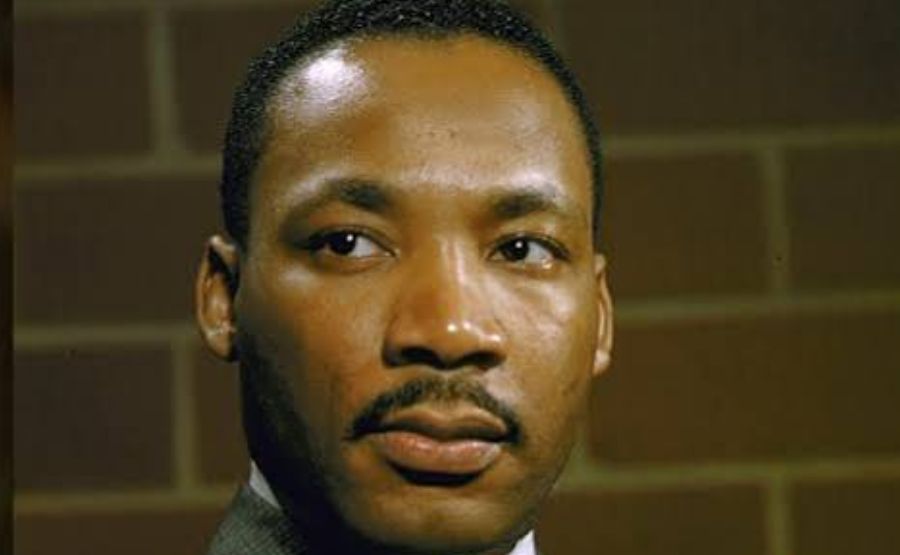
Martin Luther King Jr.: Prophet of the Possible
The reason Martin Luther King Jr. remains a living force in global politics is not that he succeeded entirely, but that he identified precisely the faultlines — race, poverty, and militarism — along which American democracy still fractures.
Quick Facts
| Detail | Information |
| Full Name at Birth | Michael King Jr. |
| Known As | Martin Luther King Jr. |
| Born | January 15, 1929, Atlanta, Georgia |
| Died | April 4, 1968, Memphis, Tennessee (age 39) |
| Nationality | American |
| Primary Roles | Baptist Minister, Civil Rights Leader, Author, Orator |
| Education | Morehouse College (B.A., Sociology, 1948); Crozer Theological Seminary (B.Div., 1951); Boston University (Ph.D., Systematic Theology, 1955) |
| Spouse | Coretta Scott King (married June 18, 1953) |
| Children | Bernice Albertine, Dexter Scott, Yolanda Denise, and Martin Luther |
| Key Organizations | Montgomery Improvement Association (President); Southern Christian Leadership Conference (Founder & President, 1957–1968) |
| Major Awards | Nobel Peace Prize (1964); Presidential Medal of Freedom (posthumous, 1977); Congressional Gold Medal (posthumous, 2003) |
| Times Arrested | 29 |
| Key Legislation Influenced | Voting Rights Act (1965), Fair Housing Act (1968), and Civil Rights Act (1964) |
| Assassin | James Earl Ray, convicted 1969 |
| Notable Writings | Letter from Birmingham Jail (1963); Stride Toward Freedom (1958); Why We Can’t Wait (1964); Where Do We Go from Here: Chaos or Community? (1967) |
The Roots of a Revolutionary
King entered the world at noon on January 15, 1929, in a two-story house on Auburn Avenue in Atlanta, Georgia. He was born to the Reverend Martin Luther King Sr. — originally named Michael King — and Alberta Williams King, a former schoolteacher. His paternal grandparents had been sharecroppers in Stockbridge, Georgia. His maternal grandfather, the Reverend Adam Daniel Williams, had built Ebenezer Baptist Church into one of Atlanta’s most respected Black congregations.
The family’s name itself carried a deliberate act of historical imagination. After King Sr. traveled to Germany in 1934 and encountered the legacy of the Protestant reformer Martin Luther, he formally changed his own name and that of his five-year-old son. The boy born Michael became Martin Luther King Jr. — a transformation that folded the weight of Reformation history into a Georgia household.
In contrast to Black Atlanta, King claimed to have grown up in material comfort. His father commanded respect in the community, managed the family’s finances with discipline, and shielded his children from the worst brutalities of segregation through sheer force of personality. Yet the architecture of Jim Crow was inescapable. King recalled the particular wound of being told, at age six, that his white friends could no longer play with him. That rejection — rational from the perspective of white parents enforcing a social code, utterly irrational from the perspective of a child — planted something in him that never dislodged.
He was precocious in the sort that sometimes leads to conceit and, more often than not, to intense curiosity. He entered Booker T. Washington High School and qualified to skip two grades. At fifteen, he enrolled at Morehouse College, his father’s alma mater, initially drawn toward medicine and law. His intellectual mentor there was Morehouse president Benjamin Mays, a theologian who argued that Black churches wasted their moral authority by fixating on the afterlife instead of confronting injustice in the present. That argument never left King.
By his senior year at Morehouse, he had decided to follow his father into the ministry. He graduated in 1948, enrolled at Crozer Theological Seminary in Chester, Pennsylvania, and earned his Bachelor of Divinity in 1951. At Crozer, he encountered Gandhi’s philosophy of nonviolent resistance. The framework clicked into place. He began doctoral studies at Boston University the same year, writing his dissertation in systematic theology and receiving his Ph.D. in 1955 at age twenty-five.
See aslo “Jake Paul Net Worth 2025: From Viral Villain to Venture Capitalist“
Coretta and the Architecture of a Marriage
In Boston, a friend arranged a phone call between King and Coretta Scott, a young Alabamian studying voice and performance at the New England Conservatory of Music. Coretta was, by multiple accounts, more artistically sophisticated than King expected and more politically formed than he was comfortable admitting. She had been committed to racial justice before they met. King reportedly told her on their first date that she had everything he had been looking for in a wife. The confidence was characteristic.
They married on June 18, 1953, at her parents’ home in Marion, Alabama. Coretta’s father, Obadiah Scott, had built enough self-sufficiency in rural Alabama to attract the resentment of white neighbors; his sawmill was burned to the ground. The woman King married understood that Black dignity had a price, and she had seen her family pay it.
Their four children — Yolanda, Martin Luther III, Dexter Scott, and Bernice — were born between 1955 and 1963, years in which King was rarely home and almost constantly in danger. The pressures of movement leadership distorted the marriage in ways King’s associates acknowledged privately and historians have since documented. He was absent, sometimes unfaithful, and carrying psychological burdens he rarely expressed directly. Coretta, rather than receding into the role of movement backdrop, built her own public identity as a peace activist and artist, and after 1968, became a formidable figure in her own right, founding the King Center in Atlanta and advocating for the federal holiday that bore her husband’s name. She died on January 30, 2006.
Montgomery and the Accidental Leader
In late 1954, King accepted the pastorate of Dexter Avenue Baptist Church in Montgomery, Alabama. He was twenty-five. He had planned to build a solid ministry while completing his dissertation, then perhaps transition into academia. Montgomery had other plans.
On December 1, 1955, Rosa Parks — a respected, strategically experienced NAACP activist — was arrested for refusing to yield her bus seat to a white passenger under Alabama’s segregation code. Montgomery’s Black community had been watching for a catalyst. Within days, community leaders asked King if Dexter Avenue Baptist could host an organizational meeting. He hesitated, citing the demands on a new minister. He agreed.
At that meeting, he was elected president of the newly formed Montgomery Improvement Association. He had not sought the position. He had not been in the city long enough to accumulate enemies in the fractious world of Black community politics — a quality that, paradoxically, made him the safest choice. He was given twenty minutes to prepare his first major address.
The Montgomery Bus Boycott lasted 381 days. Black residents of Montgomery, constituting the majority of the bus company’s paying ridership, walked, carpooled, and organized through an Alabama winter and a scorching summer. King’s house was firebombed on January 30, 1956. He stood on his porch that evening, calmed an angry crowd on the verge of armed response, and delivered an improvised speech about nonviolent resistance. He was twenty-seven years old. On December 20, 1956, the United States Supreme Court’s ruling in Browder v. Gayle desegregated Montgomery’s buses. The boycott ended in victory.
The Philosophy That Made the Movement
The organizing principle King carried into every campaign was deceptively simple and strategically complex. Nonviolent direct action, rooted in Gandhi’s satyagraha and amplified by the American tradition of civil disobedience from Thoreau forward, was not passivity. It was confrontation without the consent to violence. The aim was to expose injustice so graphically that the moral costs of maintaining it became unbearable to those with the power to change it.
King formalized these ideas in the Southern Christian Leadership Conference, which he co-founded in January 1957 as a coordinating body for civil rights activism anchored in the Black church. The SCLC gave the movement institutional memory and a vehicle for training activists in the discipline of nonviolent resistance.
The philosophy was not universally embraced within the movement. Younger activists in the Student Nonviolent Coordinating Committee grew impatient with King’s deliberate pace and his willingness to negotiate compromises with the Kennedy and Johnson administrations. Malcolm X dismissed nonviolence as accommodation. From the other direction, moderate white allies and government officials urged King to slow down, to wait for court rulings, to trust the legislative process. The “Letter from Birmingham Jail” was, among other things, a systematic dismantling of that argument.
Birmingham, the Letter, and the Moral Architecture of Protest
In the spring of 1963, the SCLC targeted Birmingham, Alabama — a city whose Public Safety Commissioner, Eugene “Bull” Connor, combined spectacular cruelty with spectacular political stupidity. The strategy was calculated: make Connor’s violence the story. The campaign began April 3 with coordinated sit-ins and marches. The city obtained a court injunction against the protestsKing chose, deliberately and publicly, to violate it.
On April 12, Good Friday, he was arrested for the thirteenth time in his life and placed in solitary confinement. A newspaper smuggled into his cell contained a statement from eight white Alabama clergymen — men who considered themselves moderate — condemning the protest tactics as provocative and ill-timed.
King began writing on the margins of that newspaper. He wrote in pencil on scraps of paper passed to his lawyers. The Reverend Wyatt Walker assembled the fragments at movement headquarters. The final version, dated April 16, ran to more than seven thousand words.
The letter made a distinction that would echo through subsequent generations of social thought: the difference between a just law and an unjust one. A just law, King argued, was one that aligned human enactment with moral law. An unjust law was one that degraded human personality. He held his critics — specifically the white moderates who wanted the movement to wait — in sharper contempt than he held overt segregationists. The segregationist at least acknowledged the conflict. The moderate preferred a fiction of order to the discomfort of justice.
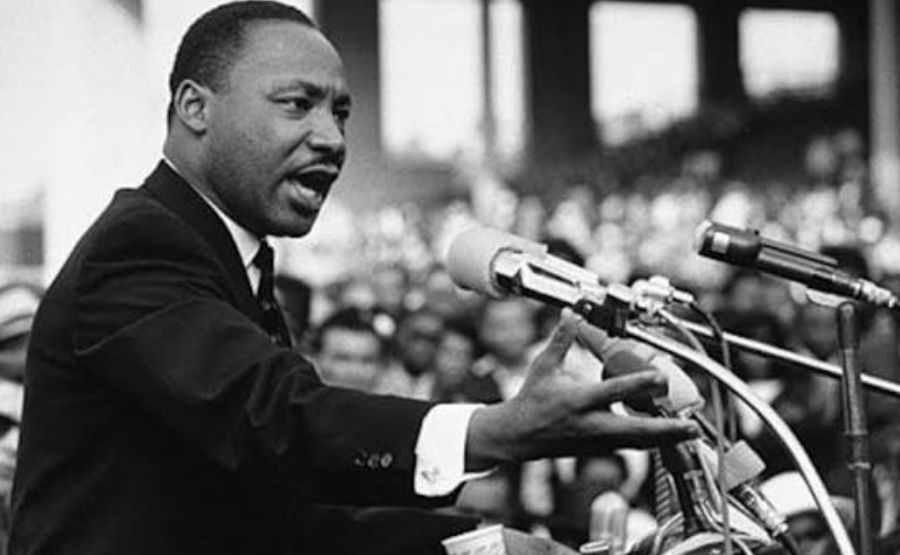
By early May, Birmingham’s Police Department had turned fire hoses and police dogs on child marchers. Television cameras recorded it. National opinion shifted. President Kennedy sent federal civil rights legislation to Congress. The Birmingham campaign, tactically imperfect and at times chaotic, had succeeded at its strategic purpose. Over 250,000 people gathered at Washington’s Lincoln Memorial on August 28, 1963. King delivered the address now known as “I Have a Dream.”
The Widening Circle: War, Poverty, and Dissent
The Civil Rights Act passed in July 1964. King received the Nobel Peace Prize in Oslo in December of the same year, at thirty-five the youngest recipient of the award to that point. He donated the entire $54,000 prize to the civil rights movement.
The Voting Rights Act of 1965, which followed a campaign in Selma, Alabama, culminating in the televised brutality of Bloody Sunday on the Edmund Pettus Bridge on March 7, 1965, dismantled the apparatus of Black disenfranchisement in the South. In those two pieces of legislation, the formal legal structure of Jim Crow was broken. What remained — and what King had always argued would remain — was the economic scaffolding of inequality.
From 1966 onward, King expanded his analysis in directions that alienated nearly everyone who had previously supported him. He moved the SCLC’s operations into Chicago to confront segregated housing in the urban North, discovering that Northern white resistance to integrated neighborhoods was at least as fierce as Southern resistance to integrated lunch counters. He called for guaranteed annual income, for the redistribution of economic power. He became increasingly critical of what he called “monopolistic capitalism.” He argued that the anti-poverty programs of Johnson’s Great Society were inadequate — not because the impulse was wrong, but because the investment was insufficient relative to what the country spent on its military.
On April 4, 1967 — exactly one year before his death — King delivered “Beyond Vietnam: A Time to Break Silence” at Riverside Church in New York. He condemned the war not only as a moral catastrophe but as a direct theft from domestic social programs. His description of the US government as “the greatest purveyor of violence in the world today” broke many friendships. Contact was cut off by President Johnson. Life magazine called the speech demagogic. Former civil rights allies distanced themselves.
At the time of his death, a Harris poll found that only about 25 percent of white Americans held a favorable view of King, and only 52 percent of Black Americans. His approval ratings had declined steadily since 1966. He was not the safely beloved figure of the national holiday that would later carry his name. He was a man who was no longer useful.
The State Against a Citizen
The Federal Bureau of Investigation began monitoring King in December 1955. FBI Director J. Edgar Hoover, whose obsession with communism had become a career-defining pathology, convinced himself that King’s inner circle harbored Soviet agents. There was never any proof of this. The surveillance was expanded anyway.
By 1963, the FBI had installed wiretaps at King’s Atlanta home and in SCLC offices, with the formal approval of Attorney General Robert Kennedy — approval Kennedy would later express regret over. Within months, the Bureau’s focus shifted from ideology to personal behavior. Hotel rooms were bugged. Tapes were made.
In November 1964, a package arrived at the SCLC offices containing a recording allegedly documenting King’s extramarital activities and an anonymous letter that King and his colleagues interpreted as urging him to commit suicide before his Nobel Peace Prize acceptance — or face public exposure. Coretta Scott King later described the tapes as largely incomprehensible. King correctly identified the letter’s authors as the FBI. This was confirmed decades later when historian Beverly Gage discovered an unredacted copy in J. Edgar Hoover’s files.
The Church Committee, which investigated intelligence agency abuses in 1975 and 1976, concluded explicitly that the FBI had no evidence King himself was a communist sympathizer. The Bureau had attempted to destroy the leader of the civil rights movement because Hoover found him personally and politically threatening. FBI surveillance recordings from this period remain sealed until 2027.
That a man operating under this level of state pressure — bomb threats, actual bombings, twenty-nine arrests, federal wiretaps, a letter urging his suicide — continued to organize, write, and preach reflects something about his psychological endurance. His autopsy, according to biographer Taylor Branch, found that his heart showed the wear typically associated with a man of sixty. He was thirty-nine.
The Final Campaign
In early 1968, King was organizing the Poor People’s Campaign, an interracial coalition he intended to bring to Washington, D.C., for a sustained occupation demanding economic reform. The campaign was to be his most radical political act: a multi-week, multi-racial encampment on the National Mall that would refuse to leave until Congress addressed poverty directly.
He traveled to Memphis in March and early April to support a strike by Black sanitation workers, who labored under conditions that amounted to organized humiliation. The Memphis campaign gave King’s final weeks a particular moral clarity. These were not college students performing civil disobedience at lunch counters. They were men who emptied garbage for subsistence wages in a city that refused to see their humanity.
On the evening of April 3, in a thunderstorm, King delivered what became known as his “Mountaintop” speech at Mason Temple. He spoke with an urgency that those present described as almost visionary. He said he had been to the mountaintop, that he had seen the promised land, that he might not get there with his audience.
At 6:01 p.m. on April 4, 1968, as King stood on the second-floor balcony of the Lorraine Motel, a rifle bullet struck him in the right cheek. He died at St. Joseph’s Hospital at 7:05 p.m. James Earl Ray was arrested in London on June 8, 1968, and subsequently pleaded guilty to the murder, receiving a ninety-nine-year sentence. In almost a hundred American cities, riots broke out
Legacy: The Incomplete Work
King’s death produced the Fair Housing Act of 1968, passed within days of his assassination. His birthday, January 15, became a federal holiday in 1983, first observed nationally in 1986. The memorial on the National Mall in Washington, D.C., was dedicated in October 2011. The Lorraine Motel is now the National Civil Rights Museum.
These are the institutional monuments. The living legacy is more complicated. King’s work directly inspired the anti-apartheid movement in South Africa, where Albert Luthuli, the ANC leader and Nobel Peace Prize laureate, cited King as a formative influence. John Hume credited King’s methods as central to the Northern Ireland peace process and the Good Friday Agreement. The founders of Black Lives Matter, the most significant American racial justice movement of the early twenty-first century, have explicitly invoked King’s analysis of systemic inequality while sometimes departing from his tactical commitments to nonviolence — a tension that reflects genuine debates within the civil rights tradition itself.
What is frequently flattened in public memory is the breadth and radicalism of King’s later program. The King invoked by politicians across the ideological spectrum to counsel patience and unity is a selective construction. The King who described the triple threat of racism, poverty, and militarism as interconnected systems requiring structural dismantling — who called for a guaranteed income, who condemned American military spending as a moral betrayal of the poor — that King remains politically inconvenient for much of the establishment that now honors him.
His economic analysis, dismissed as naive or extreme in 1967 and 1968, has acquired renewed attention in an era of extreme wealth concentration. His opposition to military adventurism at the expense of domestic welfare reads differently in the context of protracted foreign conflicts. His insistence that political rights without economic rights constitute an incomplete freedom anticipated arguments now central to progressive politics worldwide.
Final Words
King was, at his core, a minister who believed in redemption — not only personal salvation but the redemption of political systems through moral pressure and organized love. He carried this belief into contexts that might have extinguished it in a less resilient person. He was surveilled, threatened, jailed twenty-nine times, bombed, and finally killed.
He was also a man with human contradictions. He could be domineering with colleagues, inconsistent in his personal commitments, and occasionally prone to the ego that afflicts anyone who becomes a symbol before forty. Those who worked most closely with him — Ralph Abernathy, Andrew Young, James Bevel, Wyatt Walker — described a leader capable of paralyzing self-doubt before major decisions, a man who sometimes needed convincing to take the risks history now celebrates him for taking.
What makes King genuinely complex, rather than simply heroic, is that he saw further than the movement allowed him to act. He understood by 1967 that legal desegregation was necessary but not sufficient. He understood that the problem was not only racial animus but economic structure. He was preparing to push further than the consensus of his own coalition when the bullet found him on the balcony.
The question his life poses to every subsequent generation is not simply whether his dream has been achieved. It is whether the generation in question has the courage to identify accurately where the injustice actually lives — not in safely distant history, but in present arrangements — and to act on that identification at personal cost. King did. The measuring stick he leaves behind is not comfortable.
FAQs
1. What was Martin Luther King Jr.’s birth name?
He was born Michael King Jr. on January 15, 1929. His father changed both their names to Martin Luther King in 1934, following a trip to Germany and an encounter with the legacy of the Protestant Reformer Martin Luther.
2. How did King decide to become a minister rather than a doctor or lawyer?
He entered Morehouse College inclined toward medicine or law. His senior-year mentor, Morehouse president Benjamin Mays, convinced him that the Black church was the institution with the moral authority and organizational infrastructure to lead social transformation. King graduated in 1948 and enrolled at Crozer Theological Seminary.
3. What was King’s academic background?
He earned a B.A. in Sociology from Morehouse College (1948), a Bachelor of Divinity from Crozer Theological Seminary in Chester, Pennsylvania (1951), and a Ph.D.in Boston University’s Systematic Theology (1955). He was twenty-five when he received his doctorate.
4. Why was the Montgomery Bus Boycott significant beyond its immediate outcome?
The 381-day boycott proved that nonviolent economic pressure could defeat institutionalized segregation. It elevated King to national leadership and demonstrated that Black communities, when organized, possessed sufficient collective economic power to force systemic change. It became the template for subsequent campaigns.
5. What was the “Letter from Birmingham Jail” and why does it matter?
Written in April 1963 from a Birmingham jail cell, where King was held for violating an anti-protest injunction, the letter responded to eight white Alabama clergymen who called the protests untimely. King used it to articulate his theory of just and unjust law, to criticize the “white moderate” who preferred orderly injustice to disruptive justice, and to defend nonviolent direct action. It is now studied in universities across the world and considered one of the great texts of American political philosophy.
6. What was King’s relationship with President Lyndon Johnson?
It was productive and ultimately bitter. Johnson signed the Civil Rights Act of 1964 and the Voting Rights Act of 1965 — legislative victories King had fought for — but King’s public opposition to the Vietnam War in 1967 severed the relationship. Johnson viewed King’s antiwar position as a personal betrayal. They never reconciled.
7. Why did the FBI target King?
Director J. Edgar Hoover believed, without credible evidence, that communists had infiltrated King’s circle and that King was susceptible to Soviet influence. Surveillance began in 1955. By 1964, the Bureau’s focus had shifted to gathering evidence of King’s extramarital activities in order to discredit and destabilize him. In November 1964, the FBI sent King an anonymous package containing recordings and a letter widely interpreted as urging him to commit suicide. No communist influence was ever documented.
8. What was King’s position on the Vietnam War?
He opposed it unequivocally from 1967 forward. His speech at Riverside Church in New York on April 4, 1967, argued that the war diverted resources from domestic anti-poverty programs, killed disproportionate numbers of Black soldiers, and contradicted the nonviolent principles he preached at home. The speech cost him significant white support and strained his relationship with the Johnson administration.
9. What was the Poor People’s Campaign?
King’s planned 1968 initiative to bring a multiracial coalition of poor Americans to Washington, D.C., for a sustained encampment demanding economic reform, including a guaranteed annual income and structural changes to address poverty. He was assassinated before it could be fully organized. The campaign proceeded after his death but without comparable leadership or impact.
10. How did Coretta Scott King shape the legacy after his death?
She founded the Martin Luther King Jr. Center for Nonviolent Social Change in Atlanta in 1969. She led the campaign for a federal holiday in King’s honor, which was signed into law in 1983 and first observed nationally in 1986. She remained a prominent peace activist and civil rights advocate until her death on January 30, 2006.
11. What were King’s views on economic justice?
From approximately 1966 onward, King increasingly argued that racial equality without economic equality was insufficient. He called for a guaranteed annual income, criticized what he termed “monopolistic capitalism,” and argued for a radical redistribution of wealth and power. These positions were unpopular with many former allies and are frequently omitted from commemorative accounts of his life.
12. How does the Black Lives Matter movement relate to King’s legacy?
The founders of the Black Lives Matter movement, formed in 2013 following the acquittal of Trayvon Martin’s killer, explicitly invoked King’s analysis of structural racism and economic inequality. The movement drew on his tradition while also critically engaging it, particularly around the question of whether nonviolence remains the appropriate tactical framework in confronting police violence.
13. Was King widely popular at the time of his death?
No. A Harris poll conducted shortly before his assassination found that approximately 75 percent of white Americans and nearly half of Black Americans held an unfavorable view of him. His public approval had declined steadily since 1966, largely due to his antiwar stance and his shift toward economic radicalism. The broadly beloved popular image was, in significant part, constructed posthumously.
14. What happened to James Earl Ray after King’s assassination?
Ray was arrested in London on June 8, 1968, extradited to the United States, and pleaded guilty to King’s murder on March 9, 1969. He received a ninety-nine-year sentence and was never tried by jury. He subsequently recanted his confession and claimed innocence, alleging a broader conspiracy, but no alternative perpetrator was ever established. He died in prison in 1998.
15. Why does King’s heart, according to his autopsy, show signs of aging far beyond his thirty-nine years?
Biographer Taylor Branch reported that King’s autopsy revealed cardiovascular deterioration consistent with a man of approximately sixty. The most credible explanation is chronic, unrelenting stress — twenty-nine arrests, repeated death threats and bombings against his home and family, constant travel, the psychological weight of FBI surveillance and harassment, and the unceasing pressure of leading a mass movement through one of America’s most contested periods.
Every story matters—discover them all with Daily Narrative.