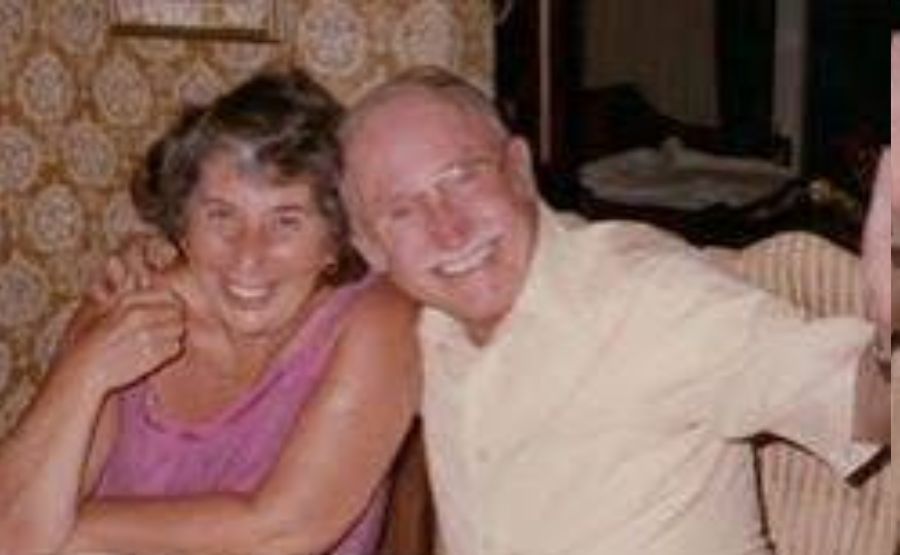
Kálmán Seinfeld: The Sign Painter Who Raised a Comedian
Kálmán Seinfeld never performed on a stage, never appeared on television, and left no body of work beyond the hand-lettered signs that decorated storefronts across Long Island — yet his influence on American comedy may be more direct and more measurable than that of almost anyone who actually worked in the industry.
Quick Facts
| Full name | Kálmán Seinfeld (also spelled Kalmen; nickname “Kal”) |
| Born | October 20, 1918, New York City (to Hungarian-Jewish immigrant parents) |
| Died | January 31, 1985, Delray Beach, Palm Beach County, Florida |
| Age at death | 66 |
| Nationality | American |
| Ethnicity/religion | Hungarian-Jewish; practicing Jewish faith |
| Paternal grandfather | Jonas Seinfeld |
| Father | Shimshon “Simon” Seinfeld (from Stanislau, Austro-Hungarian Empire, now Ukraine) |
| Mother | Celia Seinfeld (died when Kálmán was young) |
| Spouse | Betty Seinfeld, née Hosni (married c. 1950; she lived 1917–2014) |
| Children | Carolyn Liebling (born October 12, 1952); Jerry Seinfeld (born April 29, 1954) |
| Profession | Sign painter; owner, Kal Signfeld Signs, Massapequa, New York |
| Military service | U.S. Army, World War II (Pacific theater) |
| Religious community | Temple Beth Solomon, Amityville, New York |
| Civic contributions | Donated hundreds of signs to police and fire departments, the Jewish War Veterans, and the Veterans of Foreign Wars |
| Notable milestone | Drove a van through Massapequa advertising Jerry’s first Tonight Show appearance; placed a local newspaper notice calling his son someone who “dared to dream the impossible dream” |
| Buried | New York County, New York |
The World He Came From
To know Kálmán Seinfeld, you must first understand the world his family escaped and the one they built in its place.
His father, Shimshon Seinfeld — known as Simon — came from Stanislau, a city in what was then the Austro-Hungarian Empire and is today the western Ukrainian city of Ivano-Frankivsk. Stanislau had a substantial Jewish population in the late nineteenth and early twentieth centuries, a community that was among the most devastated in all of Europe by the Holocaust. Shimshon left before that catastrophe, crossing the Atlantic as part of the great wave of Eastern European Jewish immigration that filled the tenements of New York City in the early 1900s.
Kálmán was born on October 20, 1918, in New York City — the child of that migration, born on American soil but shaped by its memory. He was the youngest child in the family, and his early years were marked by the kind of compounding hardship that defined immigrant households of the era. His mother, Celia, died while he was still young. His father subsequently remarried. The household Kálmán grew up in was fractured and financially precarious, a family navigating grief, poverty, and the Depression with whatever tools were at hand.
What those tools included, it turns out, was humor. The record does not preserve the specific jokes that circulated in the Seinfeld household in Queens or Brooklyn during the 1920s and 1930s. What it does preserve, through Jerry Seinfeld’s own testimony, is the fact that humor was treated in that family as a serious matter — not frivolous, not merely entertaining, but functional. It helped people get through things.
See aslo “DeCarlo Griner: The Architecture of Loyalt“
The Craftsman’s Life: Signs, Precision, and Community
After the Second World War, Kálmán settled into a trade that suited him: sign painting. He established a business in Massapequa, a suburban community on Long Island’s south shore, that he named Kal Signfeld Signs. The name was a small, deliberate joke — a play on his own surname that bent the family name into the name of the craft. It was exactly the kind of wordplay that his son would later spend decades refining at a professional level.
Sign painting in the postwar decades was a skilled trade. It required a steady hand, an eye for proportion, a knowledge of paint chemistry and weather resistance, and the ability to satisfy customers who needed their business’s identity rendered legibly and attractively on a surface that might be read from a moving car. Kálmán was good at it. His daughter Carolyn Liebling, who grew up in Massapequa, recalled that if you lived in that town you would have seen signs reading “compliments of Kal Signfeld Signs” — a reflection of the hundreds of signs he donated without charge to police and fire departments, to the Jewish War Veterans, and to the Veterans of Foreign Wars. The company was more than a means of subsistence. It was a form of civic participation.
He was also active at Temple Beth Solomon in Amityville, one of the central institutions of Jewish communal life in that part of Long Island. The combination — the donated signs, the synagogue involvement, the veteran’s organization memberships — paints a picture not of a man who compartmentalised his identity but of one who folded all its dimensions together into the work of daily life.
Jerry Seinfeld has noted, in at least one public interview, that because his father was a sign maker, he himself became a lifelong “sign watcher” — someone who notices and reads signs with the attention others might give to paintings. The observation is not merely anecdotal. It illuminates how a parent’s trade can become a child’s mode of perception.
The Soldier and His Box of Jokes
Kálmán was drafted or enlisted during World War II and served in the United States Army in the Pacific theater. The details of his specific service — his unit, his campaigns, the places he was stationed — are not part of the public record. What is documented, through Jerry Seinfeld’s direct testimony, is a habit his father developed during the war that became one of the more remarkable small facts in the biography of American comedy.
Kálmán kept a file — a physical collection, probably a box — of jokes. Every joke he heard during his service in the Pacific, he wrote down and preserved. He carried it home with him.
This was not a joke-writing exercise. Kálmán was not trying to become a comedian. The compulsion was something older and more instinctive than professional ambition: the knowledge, acquired in the specific crucible of wartime, that humor was not decoration but equipment. Soldiers in combat zones have long understood that the ability to make each other laugh provides something that neither weapons nor doctrine can supply. Kálmán appears to have grasped this with unusual deliberateness, and to have memorialised it in a system.
He heralded the debut of his son by driving his van around town with a sign announcing Jerry’s first appearance on the Tonight Show, a detail that connects the two disciplines of his life — the sign trade and the joke file — in a single gesture. The man who collected humor during wartime and built a sign business from craft and community used both, at the end, to celebrate the son who would make a career from everything his father had modeled.
Jerry has said plainly that what he inherited from his father was “humour and joy of life.” He has added that his father was “very funny” — a characterisation not of someone who tried to be funny but of someone who simply was. The box of wartime jokes suggests that Kálmán understood the architecture of humor before his son ever set foot on a stage.
Marriage, Family, and the Household That Made the Comedian
Kálmán married Betty Seinfeld, née Hosni, around 1950. He was approximately thirty-two; she was in her early thirties. By the standards of the era, they were late to marry — a fact that speaks to the disruption the war had imposed on the normal rhythms of domestic life for an entire generation.
Betty came from a profoundly different cultural background than her husband. Her parents, Selim and Salha Hosni, were Sephardic Jews from Aleppo, Syria, who had immigrated to the United States when Syria was under Ottoman rule. Betty herself had grown up in difficult circumstances — sources indicate she spent time in foster care after losing her mother to the Spanish flu. Like Kálmán, she had learned early that family was something you built rather than something you received.
The household they created in Massapequa was a convergence of two very different strands of Jewish diaspora experience: the Ashkenazi world of Hungary and the Sephardic world of Syria, arriving simultaneously at a suburban Long Island address sometime in the early 1950s. Their daughter Carolyn was born October 12, 1952. Their son Jerry — Jerome Allen Seinfeld — was born April 29, 1954, in Brooklyn.
Jerry has characterised his parents’ approach to child-rearing with characteristic directness: hands-off, independent, non-interventionist. “They were loners,” he has recalled. When he told them he wanted to be a comedian, they offered no resistance and little guidance, simply noting that they looked forward to hearing how it went. This was not indifference. It was a particular philosophy of parenthood, rooted in the hard-won independence that both Kálmán and Betty had developed as young people who had navigated serious hardship without much help from anyone.
The Massapequa house was not wealthy, but it was stable. Kálmán ran his sign business. Betty worked as a tailor. The family attended Temple Beth Solomon in Amityville. They raised two children who both went on to build full adult lives — Carolyn in the Bellmore area of Long Island, where she had a family, and Jerry in New York City and beyond.
The Father’s Pride: A Van, an Advertisement, and One Perfect Line
Kálmán Seinfeld died on January 31, 1985, in Delray Beach, Florida. He was sixty-six years old. The Seinfeld television series — the show that would make his son’s name synonymous with American comedy — would not air until 1989. Kálmán never saw it.
What he did see was Jerry’s ascent through the stand-up comedy circuit, culminating in an appearance on The Tonight Show that, in the early 1980s, represented the most visible platform a comedian could reach. Kálmán’s response to that milestone is documented, and it is one of the more charming authenticated stories in the public record of his life.
He drove his van around Massapequa with a sign announcing Jerry’s Tonight Show appearance, and he placed an advertisement in a local newspaper declaring that his son “dared to dream the impossible dream.” He then told his son, directly: “It has nothing to do with you being my son.I simply find your work enjoyable.
The sentence is near-perfect. It is simultaneously a declaration of genuine appreciation and a refusal of sentimentality — the exact move a natural comedian makes, the pivot from the expected emotion to the wry adjacent truth. Kálmán Seinfeld may have been a sign painter rather than a performer, but in that one line he demonstrated an instinct for the structure of a good joke: setup, reversal, precision. His son spent the next forty years doing exactly the same thing at considerably greater scale.
Later, a subdued homage was included in the television series Seinfeld. A sign for “Kal Signs” appeared in the background of outdoor scenes on the show’s exterior sets. The prop man and set decorator Thomas Azzari confirmed in an interview with Entertainment Weekly that the sign was placed there as an homage to Jerry’s late father.
Personal Life: Two Orphans Who Built Something Whole
The most striking biographical fact about Kálmán Seinfeld’s private life is one that requires holding two trajectories together: both he and his wife Betty grew up, in different ways, in the absence of stable parental homes.
Kálmán lost his mother Celia young. His father remarried. He grew up in what multiple sources describe as a “broken home” — a term that in this context means less dramatic dysfunction than the structural instability that follows early loss in a family with limited economic resources. He learned to rely on himself because the alternative was less reliable.
Betty’s path was starker. After losing her mother, she was placed in foster care. She raised herself, essentially, in the foster system.
What is remarkable is what they chose to build together. The Massapequa household was, by all available accounts, warm and functional — full of storytelling, humor, and the kind of domestic stability that both of them had lacked as children. Jerry Seinfeld has described his parents as “loners,” but loners who had created something together that neither could have created alone.
The marriage lasted until Kálmán’s death — approximately thirty-five years. Betty survived him by nearly three decades, dying on April 18, 2014, in Palm Beach Gardens, Florida, at approximately ninety-seven years old. She watched her son become the most commercially successful comedian in American history and the creator of one of the most beloved television series ever made.
Kálmán saw none of that. He died four years before Seinfeld premiered. He left behind a daughter, a son still grinding through stand-up clubs, a wife, and a grandson.
He also left behind the box of jokes.
Legacy and Lasting Influence
The legacy of Kálmán Seinfeld operates on two levels: the private and the cultural, and they are inextricable from each other.
At the private level, he transmitted something to his son that cannot be taught in a classroom or a writing room. He modelled the collection and preservation of humor as a disciplined act. He demonstrated that jokes were worth writing down, worth keeping, worth protecting. Jerry Seinfeld has spent his entire professional life doing exactly that — workshopping single bits for years, shaving letters off words to improve timing, treating comedy as a craft requiring the same precision and care that sign painting required. The methodology was inherited.
At the cultural level, Kálmán represents something larger than one family’s story. He is one of millions of Hungarian-Jewish immigrants and their descendants who shaped American urban and suburban life in the twentieth century — who brought with them a particular tradition of sardonic wit, communal resilience, and the use of humor as a survival mechanism. The tradition has deep roots: Hungarian Jewish humor, in particular, carried a specific flavour of ironic understatement and dark comedy that emigrated westward with its practitioners and found new expression in American popular culture.
The “Kal Signs” background prop in the Seinfeld television series is, in miniature, the most visible monument to that legacy. A son who loved his father placed the father’s trade name into the most-watched situation comedy in American television history, where it appeared quietly in the background of scene after scene for nine seasons. Tens of millions of people walked past it without noticing. Those who did notice found, in that small act of tribute, something that the show itself was full of: the profound embedded in the ordinary.
Kálmán Seinfeld never became famous. He ran a sign business on Long Island, collected jokes during a war, drove a van around his town to celebrate his son, and died four years too early to see what that son became. His influence, though, is everywhere in the culture his son made — in the commitment to precision, the refusal of sentimentality, the insistence that everyday observation is worth examining carefully, and the conviction that a well-constructed joke is a durable thing worth keeping.
Final Words
It would be easy, and somewhat dishonest, to romanticise Kálmán Seinfeld. The available record does not reveal a saint or a titan. It reveals a man who grew up without his mother, built a trade out of craft and care, served his country, attended his synagogue, donated signs to his community’s institutions, married a woman who had also grown up without enough, and raised two children in the modest stability of a Long Island suburb.
He told good jokes. He kept a file of them. He drove his van around town when his son made television history.
And he told that son, with impeccable timing: “It has nothing to do with you being my son. I simply find your work enjoyable.
That is enough. That is, in fact, everything. The sentence contains the core of the comedic philosophy that shaped Jerry Seinfeld’s entire career: the precision, the pivot, the refusal of easy emotion, the replacement of sentimentality with something truer and funnier. It was not written for an audience. It was said to a son, by a sign painter, in Massapequa. It is one of the best-constructed lines in the history of American comedy.
Kálmán Seinfeld deserves to be known not as a footnote to his son’s biography but as a figure in his own right: a Hungarian-Jewish immigrant’s child who made something solid from challenging materials, who took comedy seriously, and who taught the next generation both the technique and the instinct.
FAQs
1. Who was Kálmán Seinfeld?
He was an American sign painter, small business owner, World War II Army veteran, and the father of comedian and television producer Jerry Seinfeld. He lived from October 20, 1918, to January 31, 1985.
2. Where was Kálmán Seinfeld born?
He was born in New York City on October 20, 1918, to Hungarian-Jewish immigrant parents. His father, Shimshon “Simon” Seinfeld, came from Stanislau in the Austro-Hungarian Empire (now Ivano-Frankivsk, Ukraine).
3. What was his business?
He owned and operated Kal Signfeld Signs, a sign painting and sign-making business based in Massapequa, New York. His daughter Carolyn recalled that the signs were ubiquitous throughout the community.
4. Did Kálmán serve in World War II?
Yes. He served in the U.S. Army in the Pacific theater. During his service he developed the habit of writing down every joke he heard, which he preserved in a collected file he brought home after the war.
5. Who was Betty Seinfeld?
Betty Seinfeld, née Hosni (1917–2014), was Kálmán’s wife. She was the daughter of Sephardic Jewish immigrants from Aleppo, Syria. She worked as a tailor and grew up in foster care after losing her mother. She and Kálmán married around 1950 and remained together until his death in 1985. She died on April 18, 2014, in Palm Beach Gardens, Florida.
6. How many children did Kálmán have?
Two. His daughter Carolyn Liebling was born October 12, 1952. His son Jerry Seinfeld was born April 29, 1954, in Brooklyn.
7. What was Kálmán’s most famous quote?
After seeing his son perform, he told Jerry: “It has nothing to do with you being my son.I simply find your work enjoyable. The line is widely regarded as demonstrating the precise comic sensibility Kálmán passed to his son.
8. How did Kálmán react to Jerry’s Tonight Show debut?
He drove his van through Massapequa with a sign advertising Jerry’s appearance, and placed a newspaper advertisement declaring his son “dared to dream the impossible dream.”
9. Was Kálmán involved in his community?
Yes. He donated hundreds of signs free of charge to police and fire departments, the Jewish War Veterans, and the Veterans of Foreign Wars. He was also an active member of Temple Beth Solomon in Amityville, New York.
10. Did Kálmán see his son become famous?
No. He died on January 31, 1985, in Delray Beach, Florida — four years before the Seinfeld television series premiered in 1989. He saw Jerry establish himself as a stand-up comedian but not his eventual global success.
11. How is Kálmán honoured in the Seinfeld TV series?
Set decorator Thomas Azzari confirmed to Entertainment Weekly that a sign reading “Kal Signs” was placed in the background of the show’s exterior street sets as a tribute to Jerry’s late father.
12. What was Kálmán’s cultural heritage?
He was of Hungarian-Jewish descent, part of a community with centuries of history in Hungary and the surrounding regions of the Austro-Hungarian Empire. His family immigrated to the United States in the early twentieth century.
13. How did Kálmán’s joke file influence Jerry Seinfeld?
Jerry has cited his father’s wartime joke collection as direct evidence of the family approach to humor: that jokes were worth preserving, studying, and keeping. Jerry has spent his career treating comedy with exactly that archival seriousness.
14. What is known about the circumstances of Kálmán’s death?
He died on January 31, 1985, in Delray Beach, Palm Beach County, Florida. The cause of death is not confirmed in primary sources; some secondary sources suggest a heart attack, but this is not verified by a contemporary documented source. He was sixty-six years old.
15. Why does Kálmán Seinfeld matter outside of his son’s fame?
He represents the broader story of Hungarian-Jewish immigration to America — a story of displacement, adaptation, craft, community service, and the transmission of cultural values across generations. His insistence on treating humor as a serious discipline, rooted in his wartime experience, placed him at the origin point of one of the most influential comedic careers in American history.
Every story matters—discover them all with Daily Narrative.