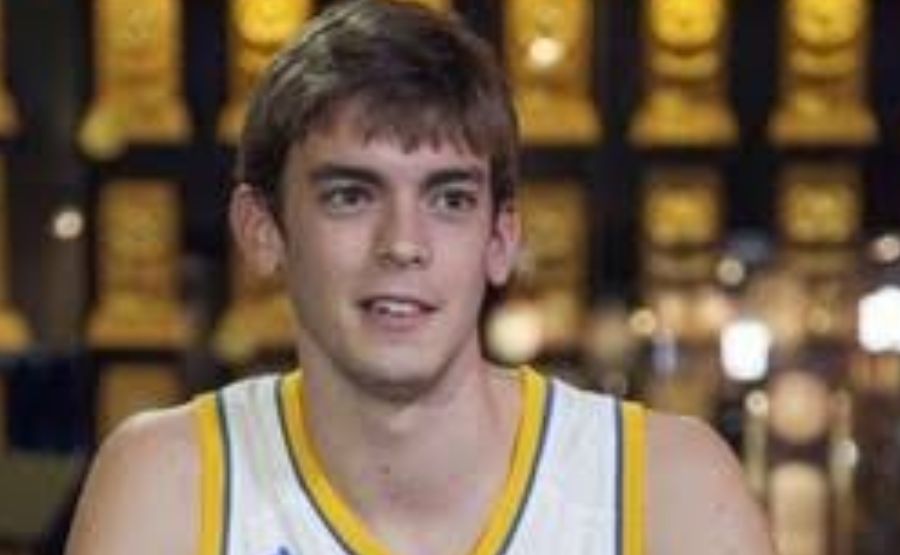
Adrià Gasol BasketBall: Playing in the Longest Shadow
The Gasol name is the most decorated surname in the history of international basketball — and Adrià Gasol, the youngest of the three brothers, has spent his entire life learning what it costs to carry it without being defined by it.
Quick Facts
| Detail | Information |
| Full Name | Adrià Gasol Sáez |
| Date of Birth | October 5, 1993 |
| Place of Birth | Barcelona, Spain |
| Hometown | Sant Boi de Llobregat, Catalonia, Spain |
| Nationality | Spanish |
| Height / Weight | 6’10” (208 cm) / 220 lbs (100 kg) |
| Position | Center |
| Brothers | Pau Gasol (NBA Hall of Famer, b. 1980); Marc Gasol (NBA Champion, b. 1985) |
| Parents | Agustí Gasol (nurse administrator); Marisa Sáez (medical doctor) |
| Education | Lausanne Collegiate School, Memphis, TN; Sant Joan Despí (Spain); UCLA (enrolled 2012) |
| College | UCLA Bruins (walk-on, redshirt; 2012–2013) |
| Pro Career | CB Santfeliuenc / Ciutat de les Roses, Spanish EBA (fourth-tier league) |
| NBA Draft Status | Entered 2016 NBA Draft; went undrafted |
| Major Awards | None on record |
| Interests | Medicine, physics, reading (Howard Zinn, Jared Diamond), miniature figure painting |
The Weight of a Name Before You Choose It
Adrià Gasol did not choose basketball. He was chosen by basketball in the same manner that a nation selects its national sport: via pressure, repetition, and the gradual buildup of an overwhelming background.
By the time Adrià was old enough to form preferences, his oldest brother Pau was already a star at FC Barcelona’s senior team. By the time Adrià entered adolescence, Marc had developed into an NBA player in Memphis. Their parents — Agustí, a nurse administrator standing six feet three, and Marisa, a medical doctor standing six feet one — had both played basketball in organized leagues. The family’s genetic inheritance and its social gravity pointed in one direction.
Adrià, for a long time, pointed elsewhere.
See aslo “Wil Bakula: Building an Identity in the Shadow of Fame“
A Childhood Orbit Around Someone Else’s Game
The Gasol family’s biography crosses continents. Pau’s career took the family first to Barcelona’s elite youth system, then eventually to Memphis, Tennessee, where the Vancouver Grizzlies — who had drafted Pau third overall in 2001 — relocated and became the Memphis Grizzlies.
When Marc and Adrià were enrolled in Lausanne Collegiate School in the Memphis suburb of Germantown, the basketball world paid attention to Marc. Adrià was an afterthought. He played sparingly as a freshman and sophomore on Lausanne’s junior varsity team. He showed no exceptional aptitude. He was not particularly interested.
“It was always basketball,” Pau later said. “My turn. Marc’s. He would have to go to all the games. It was tough for a kid to go through that — game after game, always basketball, basketball, basketball.”
Those closest to Pau believed Adrià simply wanted a life that had nothing to do with the sport consuming his family. The ambition was not absence of desire — it was desire for something else entirely. He loved reading. He was drawn to medicine and physics. He painted miniature figurines and kept them in his room. He was, in other words, a different kind of Gasol than the ones the world had already seen.
A Beach Town, a Three-on-Three Game, and a Conversion
The moment that changed Adrià Gasol’s relationship with basketball arrived not in a gymnasium but in Calafell, a small coastal town less than an hour west of Barcelona. His grandmother owned a house there, near beaches clean enough to have earned a European environmental designation.
The summer before his first year of high school, his friends decided to enter a local three-on-three tournament — the kind Marc had frequented at the same location. Adrià was not enthusiastic. He went anyway.
He won two of the four games he played that day. He lost the last one badly, overwhelmed by a larger, older player he could neither outmaneuver nor outmuscle. He had never learned the game’s fundamentals. He had never wanted to.
But he had fun. For the first time he could recall, basketball gave him something rather than taking something from him. The sport had previously meant sitting in stands at his brothers’ games. Calafell meant playing, without obligation, in the summer light.
“Just going out there, playing basketball, enjoying myself,” Adrià said years later.”I experienced a growth in myself that I had never experienced before. I saw what the game was like. I saw what could happen. I saw what the game had to offer to me.”
The conversion was genuine, but it came late — too late to follow the developmental trajectory that had made his brothers exceptional.
The Late Developer and the Expert Consensus
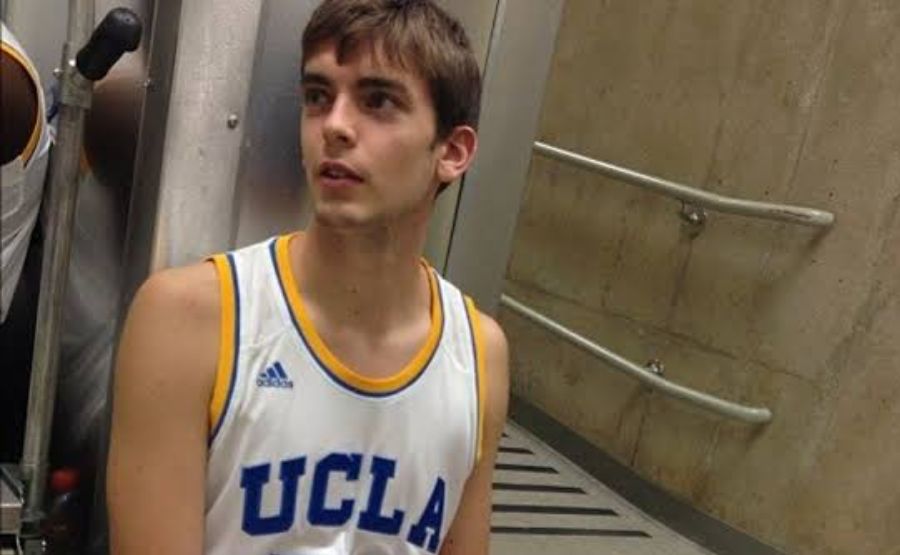
When word reached scouts and journalists that the youngest Gasol had enrolled at UCLA as a walk-on in August 2012, the assessment was measured at best and skeptical at worst.
Rafal Juc, a Poland-based scout working for EuroHopes.com, offered the candid evaluation that the industry shared but rarely stated so directly. He described Adrià as a typical late-developing prospect — long and lean, quick enough, but fundamentally lost on the court. The scouts who had tracked him reported limited basketball IQ, deficient fundamentals, and a body still learning how to function at competitive speed. He had tried out for the Spanish under-18 national team the previous summer and failed to make the roster.
The comparison to his brothers at the same age was not favorable. Pau at eighteen had been a phenom at FC Barcelona’s senior team, already drawing professional attention. Marc at the same stage had been overweight and unremarkable — but had returned to Barcelona and undergone a transformation so complete it produced an NBA Defensive Player of the Year award and a championship ring. The scouts acknowledged the possibility that Adrià might follow a similar late arc. But the raw material was, they said, less promising.
“His basketball IQ is limited,” Juc noted. “He shows serious lack of basketball fundamentals and struggles due to many injuries. But in my opinion it’s a smart move by UCLA to get the kid a place on the basketball team.”
The subtext was clear: UCLA gained celebrity adjacency at no cost. Adrià gained access to a serious program’s infrastructure and the chance to develop in proximity to his brother Pau, then playing for the Los Angeles Lakers.
UCLA: The Scholar-Athlete Who Never Quite Got There
Adrià Gasol’s time at UCLA illuminates a central tension of his story: an obviously intelligent person who arrived at basketball too late to fully bridge the gap between potential and performance.
He redshirted during his first season, 2012–13, as UCLA’s roster was packed with recruited high school All-Americans. He was the only player on the team attending class five days a week. His intellectual appetite extended to Howard Zinn’s A People’s History of the United States and Jared Diamond’s Guns, Germs and Steel. He wanted to take a class with Diamond, who was a professor at UCLA. His career ambitions at that point genuinely wavered between basketball and medicine or physics.
The walk-on status was not symbolic. He earned no athletic scholarship. He trained with a team whose recruits had been projected as NBA prospects since high school. The gap between Adrià and his teammates was not merely physical — it was developmental, a function of years spent reading and painting miniatures while they had been in gyms.
Pau was measured in his public expectations. When asked about Adrià’s prospects, he said his brother “has a lot of room to grow” — a phrase that sports families deploy when optimism has to be rationed carefully. He acknowledged there was little time for individual instruction during the season and that Adrià did not yet have a car to make trips across Los Angeles easier.
The social dynamic was telling. When Adrià spent time with Pau, he was “happy to attract less attention.” The weight of the name was real, and he preferred to stand in the shadow when the alternative was being measured against it.
Professional Career: The EBA and the Honest Arc
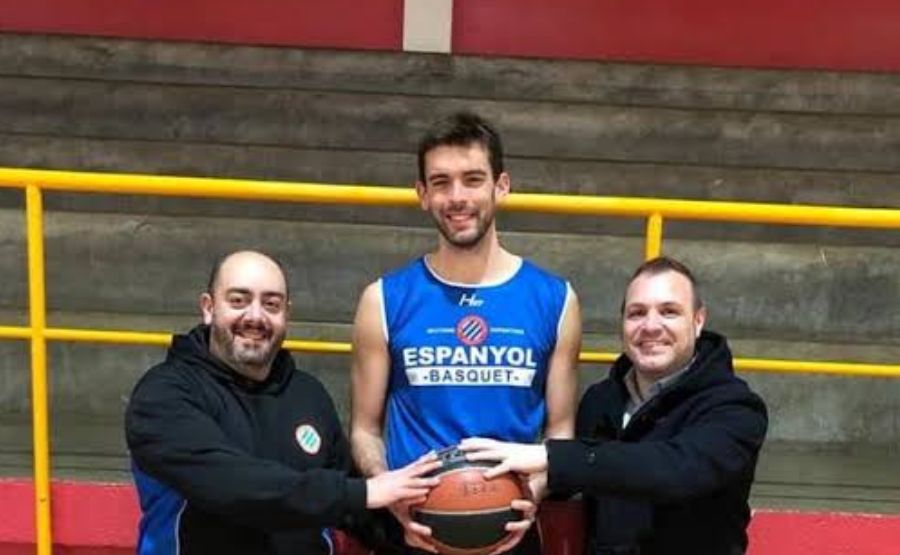
After his time at UCLA concluded — Eurobasket records show a 2013 graduation notation — Adrià returned to Spain and entered the professional structure. His most documented placement came with CB Santfeliuenc, later associated with Ciutat de les Roses, competing in the Spanish EBA: the fourth tier of Spanish basketball, below Liga ACB (first tier), LEB Gold (second tier), and LEB Plata (third tier).
This is not a minor distinction. The EBA is a regional, semi-professional level. Players at this level are not household names even within Spain. For context: Pau won the ACB championship and Copa del Rey MVP honors at age eighteen. Marc developed into an NBA All-Star. Adrià competed in the EBA — a placement that represents genuine participation in organized basketball but exists in an entirely different professional universe from his brothers.
He entered the 2016 NBA Draft and went undrafted. The outcome was expected. No credible scouting report at the time suggested NBA-level readiness.
None of this represents failure on any normal human scale. Most people who attempt organized professional basketball never play at any level with a league structure, coaching staff, and competitive travel schedule. Adrià Gasol did. He was a real basketball player — not a famous one, not a decorated one, but a legitimate participant in a sport that had initially imposed itself on him and that he had eventually chosen freely.
The Family Context: What Brotherhood Actually Looks Like
The Gasol family story is one of the most remarkable in sports history, and Adrià’s place within it requires careful framing.
Pau won two NBA championships with the Los Angeles Lakers, in 2009 and 2010. He was a six-time NBA All-Star. He led Spain to the 2006 FIBA World Championship and won three EuroBasket titles. He became the EuroBasket’s all-time leading scorer. In 2023, he was inducted into the Naismith Memorial Basketball Hall of Fame. Along with Marc, he founded the Gasol Foundation in 2013, focused on childhood obesity and community health.
Marc won the 2013 NBA Defensive Player of the Year award and an NBA championship with the Toronto Raptors in 2019. He won an NBA title.
Adrià grew up watching this unfold from the inside. The games he attended as a reluctant child were not abstract sporting events — they were his brothers’ professional lives, played out in front of thousands of strangers who cheered names that were also his name. The psychological complexity of that position is easy to underestimate.
A Lausanne coach’s assessment — “he’s built like Pau, with a mean streak like Marc” — captured both the hope and the burden. The physical resemblance invited projection. The family name generated media attention he had not sought and could not avoid.
The most honest reading of Adrià’s relationship with basketball is that it was his own — chosen belatedly, pursued honestly, and measured against a familial standard no ordinary analysis could accommodate.
The Intellectual Life Alongside the Athletic One
Adrià Gasol’s interior life, as glimpsed in the most detailed profile written about him during his UCLA years, was more complex than the “youngest Gasol brother” narrative typically allowed for.
He was, by his own account, an avid reader whose range ran from American progressive history to evolutionary biology. He aspired toward medicine or physics as career alternatives to basketball. He painted miniature figurines — a hobby requiring patience, fine motor control, and sustained attention that bears no relationship to the high-stimulus world of competitive sport. He navigated Reddit threads about everything from NBA analysis to interpersonal relationships.
When a Reddit user commented that he was “not very good,” Adrià engaged with the criticism directly — not with rage, but with a kind of self-aware defensiveness that later embarrassed him. He acknowledged it, described his response as “marking territory,” and said he regretted getting defensive. That small episode reveals something important: a young man processing public evaluation with more self-awareness than most twenty-year-old athletes, professional or otherwise, manage to demonstrate.
This intellectual texture makes the biographical question about Adrià Gasol more interesting than a simple sporting narrative allows. What happens when someone with genuine intellectual ambition enters a sport late, attaches to it with real feeling, and discovers — over several years of honest effort — that elite performance requires a developmental head start he never had?
The answer, in Adrià’s case, appears to be: you play at the level you can reach, you continue, and you remain your own person alongside the basketball.
Legacy and Influence: What the Story Actually Teaches
Adrià Gasol’s legacy is not measured in championships, draft positions, or league tiers. It exists in a different register — one that sports culture rarely knows how to value but that deserves honest examination.
His story offers a corrective to the mythology of athletic dynasties. The assumption that exceptional sporting genetics and family environment produce elite athletes generation after generation is simply wrong. Pau and Marc were exceptional partly through talent, partly through early commitment, partly through circumstances that included timing, geography, and developmental resources available at critical ages. Adrià received similar genetics and a similar family environment, but came to serious basketball five years later than either brother and did so on his own terms rather than under compulsion.
The result was a player who competed honestly at the level he could reach — not a cautionary tale, and not a triumph of overcoming limitation, but something more ordinary and more human: a person who found a late passion, pursued it with sincerity, attended a major American university, and played professional basketball in Spain.
The Gasol Foundation, which Pau and Marc established in 2013 and which moved its headquarters to Sant Boi de Llobregat in 2017, addresses childhood obesity and physical inactivity among Spanish youth. Adrià’s own intellectual interests in medicine and public health align with those values, even if his specific contribution to the Foundation’s work is not publicly documented.
In a culture that treats athletic legacy as binary — greatness or irrelevance — Adrià Gasol occupies the honest middle: a real person who played real basketball, surrounded by an extraordinary family, and who appears to have made peace with both.
Final Reflections: On Expectations and Authentic Choice
The story of Adrià Gasol resists the narrative shapes that sports biography prefers. There is no championship moment, no breakthrough game, no draft night triumph. There is also no tragedy — no career ended by injury, no downward spiral, no public failure.
What there is, instead, is the genuinely rare story of a person who encountered a sport as an obligation, walked away from it, rediscovered it on his own terms at a beach tournament in Calafell, and pursued it with enough dedication to reach professional play — even if that professional play was at the fourth tier of the Spanish league system.
The complexity of growing up as the youngest sibling in the most accomplished basketball family in international sports history deserves acknowledgment without sentimentality. Adrià Gasol was not defined by his brothers’ achievements, even though the outside world consistently attempted that definition. He pursued a life that was genuinely his own — curious, bookish, athletic by choice rather than compulsion, and ultimately honest about where talent and timing placed him.
The Gasol name, for Adrià, was never a guarantee. It was a context. What he did within that context — the late conversion, the American university, the walk-on status, the Spanish professional leagues — represents the authentic shape of one man’s relationship with a sport and a family that both, in different ways, made enormous claims on his identity.
In comparison to the youngest sibling in any high-pressure family, he handled those claims with more self-possession.That, more than any statistic, is the most interesting thing about him.
FAQs
1. Who is Adrià Gasol?
Adrià Gasol Sáez is a Spanish basketball player born on October 5, 1993, in Barcelona. He is the youngest of three brothers in the Gasol family — the others being Pau Gasol (NBA Hall of Famer) and Marc Gasol (NBA champion). He played as a walk-on at UCLA and later competed professionally in Spain’s fourth-tier EBA league.
2. How is Adrià Gasol related to Pau and Marc Gasol?
He is the youngest of three brothers. Pau, born in 1980, is the oldest. Marc, born in 1985, is the middle brother. Adrià, born in 1993, is eight years younger than Marc and thirteen years younger than Pau.
3. What position does Adrià Gasol play?
He plays center. He stands 6 feet 10 inches (208 cm) and competed at approximately 220 pounds (100 kg).
4. When did Adrià Gasol start playing basketball seriously?
He came to basketball very late by elite sporting standards. He discovered genuine enjoyment of the sport during a three-on-three tournament in Calafell, Spain, the summer before he turned fourteen — years after both his brothers had established themselves in professional play.
5. Where did Adrià Gasol attend high school?
He attended Lausanne Collegiate School in Germantown, Tennessee (a suburb of Memphis), where his family had relocated when Pau signed with the Memphis Grizzlies. He later returned to Spain and attended Sant Joan Despí for his final two high school years.
6. What was Adrià Gasol’s role at UCLA?
He enrolled at UCLA in August 2012 as a walk-on — meaning he received no athletic scholarship. He redshirted his first season (2012–13), meaning he practiced with the team but did not play in games. He was one of the very few players on the roster attending class five full days per week.
7. Did Adrià Gasol get drafted into the NBA?
No. He entered the 2016 NBA Draft and went undrafted. No NBA team selected him. He remained an unrestricted free agent and returned to professional play in Spain.
8. What league did Adrià Gasol play in professionally?
His most documented professional placement was with CB Santfeliuenc (also referenced as Ciutat de les Roses) in the Spanish EBA — the fourth tier of Spanish basketball, below the Liga ACB (first), LEB Gold (second), and LEB Plata (third).
9. Did Adrià Gasol play for the Spanish national team?
There is no verified record of Adrià Gasol competing for the Spanish senior national team. He tried out for the Spanish under-18 team in 2011 or 2012 and did not make the roster, according to contemporary reports.
10. What were Adrià Gasol’s academic and intellectual interests?
His documented interests include medicine, physics, history, and evolutionary biology. His favorite books during his UCLA years included Howard Zinn’s A People’s History of the United States and Jared Diamond’s Guns, Germs and Steel. He also painted miniature figurines and expressed interest in taking a class with Diamond, who was a UCLA professor.
11. How did scouts assess Adrià Gasol’s basketball skills?
Contemporary scouting assessments were cautious. Poland-based EuroHopes scout Rafal Juc described him in 2012 as a “typical late-developing kid — long, skinny, fast but lost on the court,” citing limited basketball IQ, deficient fundamentals, and a history of injuries. The consensus was that he was well behind his brothers’ developmental timelines.
12. How did Adrià Gasol’s UCLA teammates and coaching staff view him?
He was not expected to contribute significantly and did not play in regular-season games during his redshirt year. Pau, speaking during Adrià’s first UCLA season, acknowledged his brother had “a lot of room to grow” and expressed uncertainty about how quickly he would develop.
13. Is the Gasol Foundation connected to Adrià Gasol?
The Gasol Foundation was established in 2013 by Pau and Marc Gasol to promote community health and address childhood obesity among Spanish youth. Its headquarters moved to Sant Boi de Llobregat in 2017. Adrià’s specific role in the Foundation’s work is not publicly documented, though his stated interest in medicine aligns with its public health mission.
14. Are some online biographies of Adrià Gasol accurate?
No. Several aggregator websites contain fabricated claims — including ACB League All-Star selections (2022, 2023), an ACB League MVP award (2023), a FIBA Europe Cup MVP (2022), and ongoing Spanish national team participation. None of these claims appear in any credible basketball database. FIBA, EuroBasket, and RealGM records show no such honors.
15. What is the broader significance of Adrià Gasol’s story?
His story challenges the assumption that athletic dynasties produce elite performers across generations by default. Despite identical genetics, family environment, and access to elite basketball culture, Adrià’s late start and personal inclinations produced a fundamentally different sporting outcome than his brothers experienced. His trajectory — late discovery, honest effort, professional participation at a lower tier — represents the authentic shape of genuine individual choice within an extraordinary family context.
Every story matters—discover them all with Daily Narrative.