Jill Diven: The Woman Who Refused the Spotlight
In an era when proximity to celebrity is routinely monetized, Jill Diven represents a genuinely countercultural act — the deliberate, sustained refusal to let someone else’s fame define or diminish her.
Quick Facts
| Full Name | Jill Diven |
| Date of Birth | c. 1964, United States |
| Nationality | American |
| Ethnicity | White American |
| Known For | Former wife of actor Brad Garrett; mother of Maxwell and Hope Garrett |
| Occupation | Private individual; previously worked as a cocktail waitress in Las Vegas |
| Meeting Brad Garrett | Mid-to-late 1990s, Las Vegas |
| Engagement | On the set of Everybody Loves Raymond in August of 1998 |
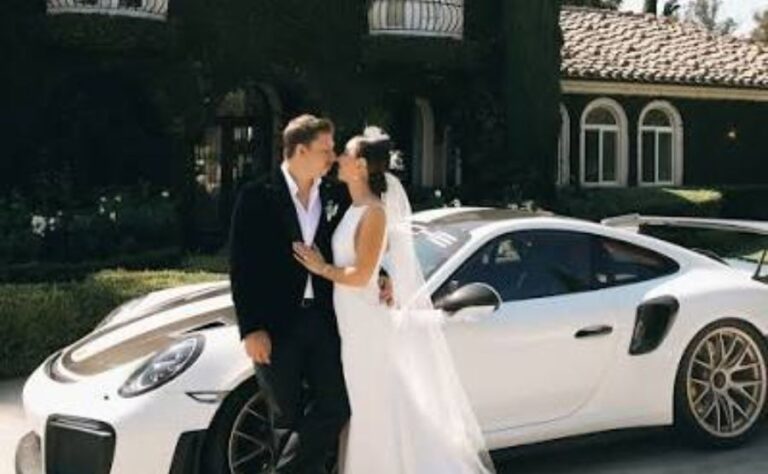
| Marriage Date | May 18, 1999 |
| Separation | April 2005/2006 |
| Divorce Finalized | November 2, 2007 |
| Children | Maxwell Bradley Garrett (b. October 14, 1998); Hope Violet Garrett (b. January 2000) |
| Divorce Settlement | $35,000/month spousal support (until December 2018); $20,000/month child support; half of Everybody Loves Raymond residuals; half proceeds from Hidden Hills home sale; two luxury vehicles |
| Post-Divorce Status | Private; no public profile, no confirmed remarriage |
| Notable Quote | “We both came to the realization that we are and will always be best friends.People grow apart.” — 2006, USA Today |
Before the Cameras Found Her
The details of Jill Diven’s early years are, by her own design, largely unrecorded.
She was born in the United States around 1964. Her parents’ identities, her childhood city, and her educational background have never entered the public record — not because the information does not exist, but because she has never chosen to offer it. That consistency, maintained across two decades of heightened public scrutiny, is itself a form of self-definition.
What is documented is where she eventually landed: Las Vegas, Nevada, where she worked as a cocktail waitress. Las Vegas in the 1990s was a particular kind of American crossroads — a city where the service economy meets spectacular wealth, where ordinary workers absorb the ambient energy of celebrity without becoming part of it. Jill moved through that world quietly.
She had no intention of becoming an entertainer. She was not networking her way toward an audition. She was working a job in a city full of famous people, and she was not particularly interested in becoming one of them.
That disposition — a preference for the peripheral over the central, for the real over the performed — would define everything that followed.
See also “Jon Eicholtz: The Architect Who Built More Than Buildings“
The Proposal That Made the Front Page
The moment Jill Diven became publicly legible occurred in August 1998, on a television set she had no professional connection to.
Brad Garrett — born Brad H. On April 14, 1960, in Oxnard, California, Gerstenfeld had already become a true celebrity.His role as Robert Barone, the tall, perpetually aggrieved older brother on CBS’s Everybody Loves Raymond, had made him one of the most recognized faces in American television comedy. The show, which debuted in 1996, was already a ratings phenomenon.
Garrett had met Jill in Las Vegas in the mid-to-late 1990s, likely around 1996 or 1997.He later claimed in his memoir When the Balls Drop (Simon & Schuster, October 2015) that he had been sober for almost half a year prior to meeting her. He was, by his own description, navigating life after years of self-destructive habits. Jill was working, stable, and thoroughly unimpressed by his industry credentials in the way that industry people tend to be impressed by them.
Their relationship moved with striking speed. Within three months, according to Garrett’s memoir, Jill was pregnant with their first child. The couple’s arc — from meeting to parenthood — compressed into a span shorter than most people’s apartment leases.
Garrett proposed in August 1998, on the Everybody Loves Raymond set. The cast, the crew, and the studio audience were present. It was, by any measure, a maximally public proposal — the complete inverse of Jill’s stated preference for privacy.
She said yes anyway.
Marriage in the Glare
On October 14, 1998, Maxwell Bradley Garrett was born. His parents married on May 18, 1999. Hope Violet Garrett arrived in January 2000.
By the time Hope was born, Brad Garrett was earning between $150,000 and $160,000 per episode of Everybody Loves Raymond. The family lived in a Hidden Hills home valued, at the time of its eventual sale, at $9,495,000. They owned eight cars.
Jill was a mother of two, living in one of the most expensive properties in the Los Angeles area, married to a man who was simultaneously appearing on one of the most-watched shows in American television and performing stand-up on Broadway alongside Nathan Lane and Matthew Broderick.
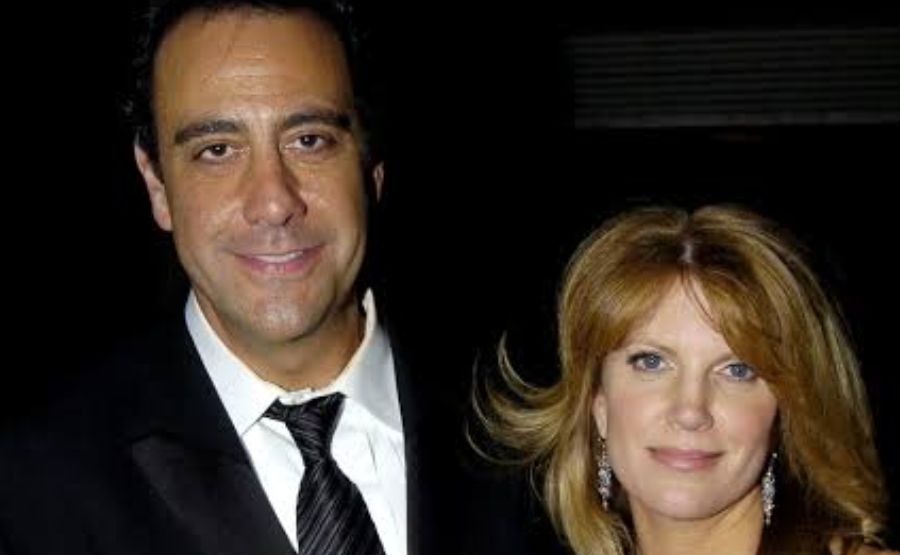
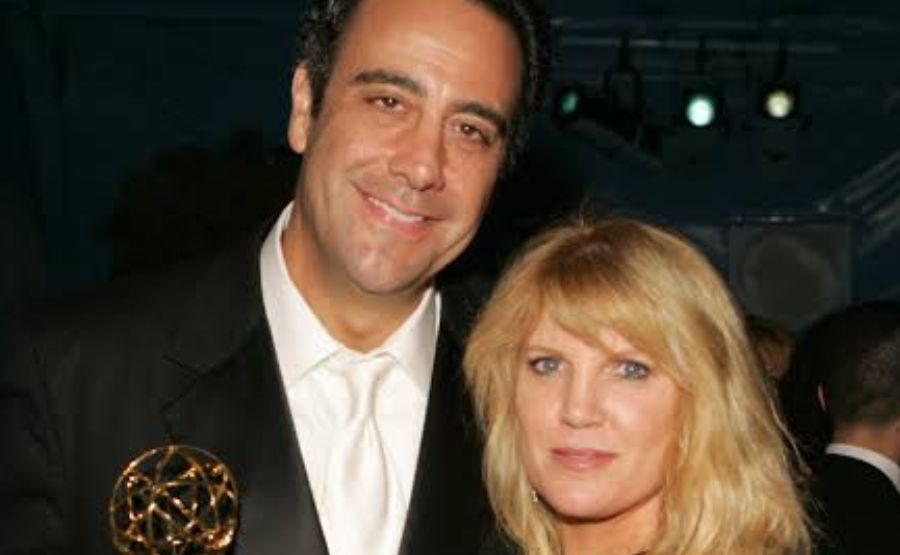
She attended award ceremonies with Brad. She appeared, occasionally, on red carpets. She was photographed at the 56th and 57th Annual Emmy Awards in 2004 and 2005.
And then she stepped back into the background.
What the cameras captured of her during those years was always minimal: a poised presence alongside a physically imposing man in what were, evidently, genuinely happy early years. What they missed was the increasing difficulty that neither party was broadcasting.
What the Public Didn’t See
Brad Garrett’s memoir is the primary — and, in important ways, the only — substantial account of what happened inside the marriage.
Unusually candid for a celebrity biography, he claimed that the union started exhibiting significant fissures during the fourth year. That would place the turning point somewhere around 2002 or 2003, precisely when Everybody Loves Raymond was approaching its peak ratings and Garrett was accumulating Emmy nominations. He described the marriage in its later years as feeling like a relationship between strangers who had been together for three decades — the emotional distance of long estrangement without the years to justify it.
He admitted infidelity. He described mutual apathy. He called them both “decent people who just didn’t belong together.” The language is notably unglamorous for a Hollywood divorce narrative. There is no villain constructed. There is no victim positioned. There are two people who rushed into a permanent arrangement on the momentum of an unexpected pregnancy and discovered, gradually, that the foundation was not what either had imagined.
Jill’s public response to the breakdown was exactly what one would expect from her: silence, followed by one brief, measured sentence in a 2006 USA Today interview. She called Brad her best friend. She said people grow apart. She declined to elaborate.
That sentence is, in its restraint, more revealing than anything she could have said at length.
The Divorce: Architecture of Discretion
The couple separated in April 2005 — weeks, according to some accounts, before Everybody Loves Raymond filmed its final episode in May of that year. They kept the separation private for roughly a year.
Jill filed for divorce in July 2006. The stated grounds: irreconcilable differences, the legal language that covers everything and explains nothing. The divorce was finalized on November 2, 2007.
The settlement, made public through court documents, reflected the full weight of Garrett’s television earnings. Jill received $35,000 per month in spousal support, scheduled to continue through December 2018 unless she remarried or either party died. She received $20,000 per month in child support — broken down as $7,400 for Maxwell and $12,600 for Hope — until each child turned 19 or finished high school. She received half of Garrett’s Everybody Loves Raymond residual income. She received half the proceeds from the Hidden Hills home sale. She received half of two bank account balances and half of all retirement assets. She took two cars from the family’s fleet: a 2007 Mercedes and a 2005 Cadillac Escalade.
The settlement was substantial and the proceedings were, by Hollywood standards, remarkably undramatic. No competing legal teams issued press releases. Neither party gave interviews to exploit the other’s vulnerabilities. The financial terms were large; the noise was minimal.
That asymmetry — large settlement, small spectacle — says something about both of them.
Personal Life: On Her Own Terms
The central fact of Jill Diven’s personal life, post-divorce, is that it remains genuinely private.
She has not remarried.There is no confirmed public record that links her to a long-term relationship later on. She doesn’t appear to be active on social media. She does not attend entertainment industry events. She has not written a book, given a podcast interview, or appeared in a documentary about Everybody Loves Raymond.
Her children, Maxwell and Hope, are now in their mid-twenties. Garrett has shared birthday messages for both on his Instagram — “Happy 21st Birthday, Max! We’re all so proud of you,” he wrote in October 2019; a similarly warm tribute to Hope appeared in February 2021 — but Jill has not used those milestones as occasions for public self-presentation.
Co-parenting appears to have worked. Diven and Garrett have both stated as much, both in public and with a level of believability that faked remarks seldom attain.Garrett described telling his children about the separation as the most painful day of his life. He wrote in his memoir that he had dreaded repeating what he experienced in his own childhood — his parents’ divorce — and found himself doing exactly that. The guilt in those pages reads as genuine.
That the two adults managed to convert that wreckage into something functional for their children’s sake is, in its quiet way, a significant achievement. It required both of them to behave well. The record suggests both of them did.
The Mechanics of Invisibility
Jill Diven has been, since 2007, one of the more genuinely invisible figures in the ecosystem of celebrity-adjacent public life.
This is harder to accomplish than it appears. The ex-spouses of major television stars are surrounded by incentives to remain visible. Tabloids offer money for interviews. Podcast producers offer platforms for “the real story.” Book publishers offer deals for memoirs. Social media offers the infrastructure to build an independent audience entirely on the strength of an association with someone famous.
Jill Diven has declined all of it — or, at minimum, none of it has materialized with her involvement.
The absence of controversy around her is itself notable. There are no reported disputes with Garrett over custody or finances since the divorce was finalized. There are no tabloid stories, no public grievances, no leaked communications. The silence is clean and deliberate.
The paradox this creates is significant: Jill Diven attracts sustained online search traffic precisely because so little is known about her. Her privacy, rather than satisfying curiosity, has generated it. She has become, in the media ecosystem, a kind of mystery — not because her life is extraordinary, but because she has consistently refused to render it available.
Brad Garrett: The Context She Inhabited
Understanding Jill’s story requires briefly understanding what she was adjacent to.
Garrett won three Primetime Emmy Awards for his work on Everybody Loves Raymond. He performed stand-up that opened for Frank Sinatra, Liza Minnelli, and Diana Ross. He won the $100,000 grand prize in the comedy category of Star Search in 1984, then became, at 23, one of the youngest stand-up comedians to appear on The Tonight Show Starring Johnny Carson. He owns Brad Garrett’s Comedy Club at the MGM Grand in Las Vegas.
His memoir describes a man who was simultaneously professionally triumphant and personally in freefall during the mid-2000s — three Emmy Awards, a Broadway run, career-peak earnings, and a collapsing marriage. He wrote that he was “dying inside” while his career was at its apex.
Jill appears in that account not as a villain or a saint but as someone who was, ultimately, incompatible with him. He acknowledges the asymmetry of their temperaments. He takes responsibility for his infidelity. He does not ask the reader to blame her.
The only words on record from Jill about the marriage are those few careful sentences from 2006. In their restraint, they match his honesty without competing with it. Together, the two accounts produce a coherent, unglamorous picture of a marriage that simply ran out of structural integrity.
Legacy and Lasting Influence
Jill Diven does not have a legacy in the conventional sense of that word. She has not founded an organization, produced a body of work, or given a public speech. She has not used her position to advocate for causes, even causes that her experience might have given her credible standing to address — the pressures of celebrity marriage, the challenges of co-parenting after a high-profile divorce, the particular difficulties faced by private individuals pulled into public life against their preferences.
What she has is something quieter and arguably more durable: the demonstrated example of a person who chose, repeatedly and against significant financial and cultural incentive, not to convert her private life into public currency.
The two children she and Garrett raised have grown into adults who, by all available evidence, prefer privacy in the way their mother does. Maxwell and Hope are not social media presences. They do not trade on their father’s fame or their family’s history on a popular television show. The values that shaped their upbringing appear to have taken hold.
Garrett himself called Jill “an extraordinary woman” and “the greatest mom in the world” in public statements after the divorce. Those words, coming from the only person who observed her closely during the years in question, carry more weight than a publicist’s description.
Her relevance in the contemporary moment is, ironically, also her method. In an era when the celebrity-adjacent are expected to monetize proximity, manage personal brands, and perform authenticity for audiences, Jill Diven has simply refused. That refusal is not dramatic. It is not a manifesto. It is a sustained, quiet act repeated over nearly two decades. And it raises a question the current media environment struggles to answer: whether the most meaningful response to unwanted fame is not the strategic management of it, but its simple rejection.
Final Words
The instinct to call Jill Diven’s story “inspiring” is understandable, but it also misses something.
She did not choose privacy as a performance of virtue. She did not reject the spotlight to make a point about celebrity culture. She appears to have simply been, throughout her adult life, a person who does not want to be watched. The spotlight found her through circumstances — a relationship, a proposal on a television set, a divorce with financial terms that made news — and she did what she had always done: declined to extend the invitation.
There are real limits to what can be known about her. The biographical record of Jill Diven is, by design, thin. The details that are confirmed — her birth year, her children’s names and birth dates, the financial terms of a divorce settlement, one brief quote to USA Today in 2006 — leave enormous stretches of her inner life and daily reality invisible.
That invisibility is the story. Not because privacy is inherently noble, but because the sustained maintenance of it, in the particular environment she navigated, required something. Call it resolve. Call it self-possession. Call it, in the most literal sense, a clear understanding of what she was and was not willing to give.
She was a cocktail waitress in Las Vegas who said yes to a famous man’s proposal in front of a live studio audience, married him, had two children with him, stayed through years of compounding difficulty, filed for divorce when she had decided it was time, negotiated a substantial settlement without public acrimony, and then returned to the private life she had never really abandoned.
That is the biography. It does not require inflation. It is, on its own terms, enough.
FAQs
1. Who is Jill Diven?
Jill Diven is an American woman born around 1964. She is primarily known as the former wife of actor and comedian Brad Garrett, famous for his role as Robert Barone on the CBS sitcom Everybody Loves Raymond. She is also the mother of Maxwell and Hope Garrett.
2. Where did Jill Diven grow up?
Her childhood location and family background have never been publicly confirmed. She maintained strict privacy about her upbringing throughout her marriage and after her divorce.
3. How did Brad Garrett and Jill Diven meet?
They met in Las Vegas in the mid-to-late 1990s, where Jill was working as a cocktail waitress. Garrett was performing in Las Vegas as part of his stand-up comedy career and had recently achieved sobriety, a detail he later discussed in his memoir.
4. When did Brad Garrett propose to Jill Diven?
Garrett proposed in August 1998, on the set of Everybody Loves Raymond, in front of the cast, crew, and studio audience. It was a notably public moment for a woman who consistently preferred privacy.
5. When did Jill Diven and Brad Garrett get married?
They married on May 18, 1999, in California. Their son Maxwell had already been born in October 1998, preceding the wedding.
6. How many children do Jill Diven and Brad Garrett have?
Two. Maxwell Bradley Garrett was born on October 14, 1998. January 2000 saw the birth of Hope Violet Garrett. Both parents share joint legal and physical custody.
7. Why did Jill Diven and Brad Garrett divorce?
They separated in April 2005/2006, and Jill filed for divorce in July 2006. Court documents cited irreconcilable differences. In his memoir, Garrett acknowledged infidelity on his part and described a gradual emotional estrangement that began around the marriage’s fourth year.
8. When was the divorce finalized?
The divorce was finalized on November 2, 2007.
9. What were the financial terms of the divorce?
Jill received $35,000 per month in spousal support through December 2018 (unless she remarried); $20,000 per month in child support; half of Garrett’s Everybody Loves Raymond residual income; half the proceeds from the sale of their Hidden Hills home; half of two bank accounts; half of retirement assets; and two luxury vehicles (a 2007 Mercedes and a 2005 Cadillac Escalade).
10. Did Jill and Brad maintain a civil relationship after the divorce?
Yes. Both described each other with genuine warmth in public statements. Jill called Brad her best friend in a 2006 USA Today interview. Garrett publicly called her an extraordinary woman and the greatest mother his children could have.
11. Did Jill Diven remarry after the divorce?
There is no public record of her remarrying. The spousal support arrangement included a provision that payments would end if she remarried, but no such remarriage has been publicly confirmed.
12. Does Jill Diven have social media accounts?
There is no documented public social media presence.She has maintained digital privacy consistent with her overall approach to public life.
13. What is Jill Diven’s estimated net worth?
Her personal net worth is not publicly disclosed. The divorce settlement provided substantial financial resources, including over a decade of monthly spousal support and a share of Garrett’s considerable television residuals.
14. What are Maxwell and Hope Garrett doing now?
Both are in their mid-twenties as of 2026. They maintain low public profiles. Their father has shared birthday tributes on Instagram, but neither appears to have pursued public careers or public-facing social media presences.
15. Why does public interest in Jill Diven persist?
Precisely because so little is known about her. Her sustained privacy, in an environment that rewards celebrity-adjacent disclosure, generates curiosity rather than satisfying it. She represents an unusual figure: someone directly connected to major Hollywood fame who has declined every opportunity to participate in or profit from it.
Every story matters—discover them all with Daily Narrative.