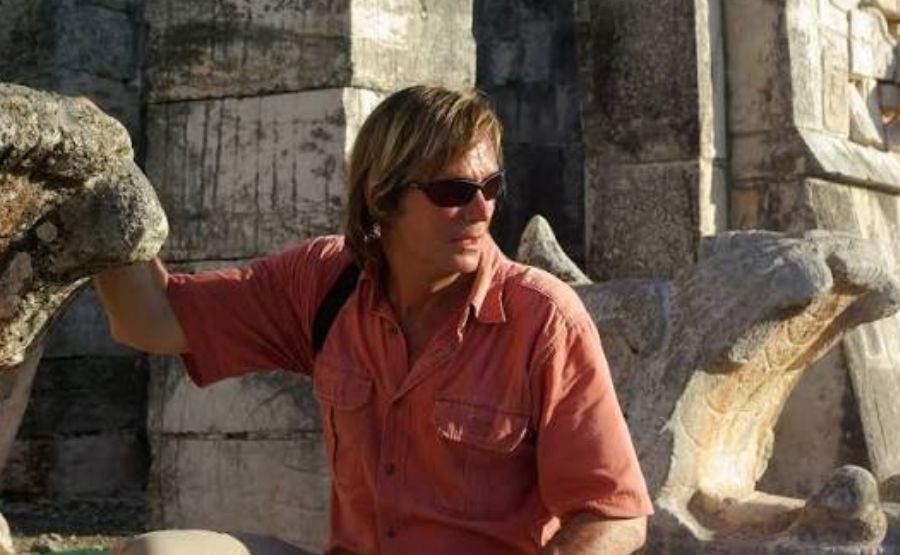
Austin Stevens: The Snakemaster Who Turned Obsession into a Life’s Work
Austin Stevens matters today not simply because he spent 107 days inside a glass cage with some of the most lethal animals on earth, but because his life illustrates what happens when obsession, discipline, and a willingness to risk everything are aimed at something genuinely worth doing.
Quick Facts
| Category | Details |
| Full Name | Austin James Stevens |
| Born | 19 May 1950, Pretoria, Transvaal, South Africa |
| Nationality | South African-born Australian |
| Occupations | Herpetologist, naturalist, wildlife photographer, documentary filmmaker, television host, author |
| Education | Pretoria Boys High School; self-taught herpetologist |
| Career Milestones | Curator, Transvaal Snake Park (six years); Curator, Nordharzer Schlangenfarm, Germany; Curator, Hartebeespoort Dam Snake and Animal Park |
| Guinness World Record | 107 days and nights in a glass enclosure with 36 venomous snakes (Hartebeespoort Dam Snake and Animal Park, 1986) |
| TV Series | Austin Stevens: Snakemaster / Most Dangerous (Animal Planet, 2004–2009), 28 episodes |
| Books | Snakes in My Bed (Penguin, 1992); The Last Snake Man (Noir Publishing, 2007); Snakemaster (2018); Running Wild (Austin Macauley) |
| Documentary Film | Die Natur der Schlange (1997/1998, aired ZDF/NDR; nominated for FRAPNA award, 14th Grenoble International Film Festival of Nature and Environment) |
| Major Personal Events | Married second wife Amy Wilcher, December 2007; relocated to Queensland, Australia |
| Health | Parkinson’s disease diagnosis announced September 2016; basal cell skin cancer surgery, 2023 (successful) |
| Notable Ancestor | Grandfather Austin James Stevens, co-founder of the AJS Motorbike Corporation, Bristol, England |
Pretoria Boy: The Making of an Unconventional Mind
Pretoria in the 1950s was a city on the edge of an enormous continent of wild things. Austin Stevens was born there on 19 May 1950, and grew up on the city’s outskirts, where the surrounding bushveld offered a child with the right instincts a living classroom.
His home life was modest. His father operated a little typewriter repair company.. His mother had lost a lung in a car accident early in life, suffered chronic illness throughout Austin’s childhood, and died when he was in his thirties. The family, by his own description, was conventional — parents who tolerated their son’s peculiarities mostly because they had little choice.
Stevens was twelve when he caught his first snake, a harmless house snake he kept under his bed. His parents were not enthusiastic. But they were apparently proud enough to tell people about it.
By the time he completed his secondary education at Pretoria Boys High School, his private collection had grown into something unusual by any measure — venomous and non-venomous reptiles that few institutions would willingly house. He was seventeen years old and already knew what he wanted.
The adventurous gene had roots. Stevens traces it to his grandfather — also named Austin James Stevens — who had emigrated from Bristol, England to Africa and who had been a co-founder of the AJS Motorbike Corporation. The old man had crossed an ocean to start something new. The grandson would do something similar, though his ocean was made of a different kind of danger.
See also”Amy Johnston: The Stuntwoman Who Refused to Stay Invisible“
The Military Years: Angola and a Near-Fatal Beginning
At the end of his schooling, Stevens had no time to pursue a career of his choosing. The South African Defence Force operated on compulsory conscription, and he was called up.
The army, perhaps recognizing a useful skill when it found one, put his reptile knowledge to work immediately. During operations in the then-active Angolan war zone, Stevens was regularly tasked with removing venomous snakes from tents, latrines, trenches, and observation posts — the mundane but genuinely dangerous work of keeping soldiers safe from non-human threats while they worried about human ones.
It was during one of these operations that Stevens sustained a critical puff adder bite. What followed was a race that he barely survived. He was evacuated by vehicle across several hundred kilometres of rough Angolan bush, then airlifted roughly eight hundred kilometres by Cessna to Windhoek, Namibia, with an emergency landing made directly in front of a hospital. He remained in a coma for five days. Surgeons worked for more than three months to save his hand from amputation. They succeeded, mostly — but Stevens lost part of a finger to the venom’s destructive effects.
He had been a teenager with a passion for snakes. Now he was a young man who had nearly been killed by one and kept the scars to prove it. The experience did not diminish his interest. If anything, it appears to have reinforced something he already suspected: that these animals demanded — and rewarded — complete respect.
The Wilderness Years: Motorcycles, Near-Destruction, and Redemption
After military service, Stevens found himself without direction. What followed was a period he has described with characteristic self-awareness: years of motorcycles, gangs, and self-destruction, cycling through identities that had nothing to do with wildlife. He gave up motorcycles entirely in 1974 after a near-fatal racing accident.
The thing that pulled him out of this drift was almost accidental. He was offered a job at the Transvaal Snake Park near Johannesburg. He took it.
The six years Stevens spent at the Transvaal Snake Park were formative in the precise sense. He qualified as a herpetologist through intensive hands-on training — working daily with cobras, puff adders, black mambas, and dozens of other species. He developed the observation skills, physical confidence, and theoretical grounding that no classroom could have given him in quite the same way.
From Transvaal, he moved to Germany to take up the position of Curator of Herpetology at the Nordharzer Schlangenfarm — a park he helped design and bring into operation. The German posting produced its own kind of education: a South African working with foreign staff, unfamiliar bureaucracies, and an audience that had little prior context for his expertise. He later wrote about this period with humor in his first book, finding comedy in the cultural dislocation even as he was learning to communicate complex ideas about animals across a language barrier.
He returned to Africa and took the curator’s role at the Hartebeespoort Dam Snake and Animal Park. His life had a structure now. He had traded chaos for craft.
107 Days: The Record That Defined a Career
In 1986, at the Hartebeespoort Dam Snake and Animal Park, Austin Stevens climbed into a glass enclosure measuring roughly four by three meters and began what would become the defining act of his public life.
The stated purposes were specific: to raise funds and awareness for the conservation of endangered African gorillas. The method was specific too — he would share the enclosure with 36 of Africa’s most venomous snakes, including Egyptian cobras and puff adders, and he would remain there until he had beaten the existing Guinness World Record.
He had already attempted smaller versions of this feat. Records suggest a 52-day sit-in at the same park in 1980, and a subsequent extension attempt in 1982. By 1986, he understood precisely what he was undertaking.
For 95 days, he managed. On day 96, a cobra bit him.
What happened next is the part of the story that cuts through whatever skepticism one might bring to the exercise. Stevens refused to leave the enclosure. Physicians treated him inside the glass cage. He was seriously ill. He stayed. On day 107, he walked out to a crowd of spectators, journalists, and television crews, completing the record that now stands in the Guinness Book of Animal Records.
It has never been broken. Attempts have been made under varying conditions, with different species and different configurations, but the original record — 107 days, 36 venomous snakes, one cobra bite, no exit — remains.
The record launched Stevens into public consciousness in a way that his curatorial work alone never could have. It also demonstrated something about his character that would define his subsequent career: the capacity to hold steady in conditions that would rationally demand retreat.
The Filmmaker and Photographer: Namibia and the Self-Made Career
After the world record, Stevens moved to Namibia. The decision was deliberate. He had become interested in wildlife photography and documentary filmmaking, and the Namib Desert — one of the world’s oldest and most demanding environments — offered subjects that few other naturalists were pursuing with the same depth.
He taught himself everything. Stevens has been explicit about the absence of formal training in photography: he learned through practice, through failure, through years of working in the field alone. He spent roughly eight months in relative isolation in the sand dunes of the Namib, filming the little-known Namaqua chameleon for what would become Dragons of the Namib, a documentary about desert-adapted reptile life.
His 16mm film of snake behavior across southern Africa, produced after fourteen months in the field, became Die Natur der Schlange — released for NDR television in Germany in 1997 and 1998, and nominated for a FRAPNA award at the 14th Grenoble International Film Festival of Nature and Environment. The nomination was meaningful in context: it placed a self-taught South African naturalist in the same conversation as established European nature filmmakers.
He was also writing during this period. By the early 1990s, he had published more than 100 articles across wildlife and travel magazines internationally — work that integrated his own photography with clear, accessible prose about reptile behavior and ecology. His first book, Snakes in My Bed, published by Penguin in 1992, covered the world record and the German curatorship with a tone that surprised many readers: wry, self-deprecating, and funny. It sold well. The photo work, meanwhile, earned him stock placement through Animals Animals/Earth Scenes, reaching educational and scientific audiences he couldn’t have reached through television alone.
Television and the Global Audience: Snakemaster and Its Legacy
When Austin Stevens: Snakemaster launched on Animal Planet in 2004, it arrived into a specific cultural moment. The success of Steve Irwin’s The Crocodile Hunter had demonstrated that television audiences would follow a charismatic naturalist into dangerous situations if the naturalist seemed genuinely committed — not performing danger, but actually inside it.
Stevens was genuinely inside it. The show ran from 2004 to 2009, broadcast on Animal Planet in the United States and Channel 5 in the United Kingdom, eventually producing 28 episodes across its run. Its second season was rebranded Austin Stevens Adventures and expanded beyond snakes to include encounters with rhinos, hyenas, and other African megafauna. The series was also broadcast in high definition — an early commitment to image quality that reflected Stevens’s photographic instincts.
While the format shared structural DNA with other Animal Planet productions of the era, Stevens brought something most hosts in the genre lacked: a genuine scientific career predating the camera. The encounters with black mambas or king cobras that viewers watched were not first encounters arranged for effect. They were extensions of decades of fieldwork. Whether this distinction mattered to average viewers is uncertain. It mattered to Stevens, who has been careful throughout his public life to describe himself as a herpetologist first.
The show aired in formats and under multiple titles internationally — Austin Stevens: Most Dangerous in some markets — and the cumulative viewership was substantial. For a generation of young people interested in reptiles or wildlife, Stevens became one of a small number of figures who made herpetology seem accessible and even exciting.
The Books: A Parallel Record of a Complex Life
Stevens has published four books across roughly three decades, each covering a different period or dimension of the same life.
Snakes in My Bed (Penguin, 1992) focused on the world record sit-in and his time in Germany, written with a lightness that belied the physical and psychological demands of both experiences. The Last Snake Man (Noir Publishing, 2007) was a visually rich semi-autobiography, featuring more than 300 of his own photographs, covering his transition from South Africa to Namibia and the development of his filmmaking career.
Snakemaster (2018) was written explicitly for the American market and the television audience, compiling his most extraordinary animal encounters — a reticulated python, a Gaboon viper bite, a king cobra in India — with an emphasis on the sensory immediacy that his best wildlife encounters carried.
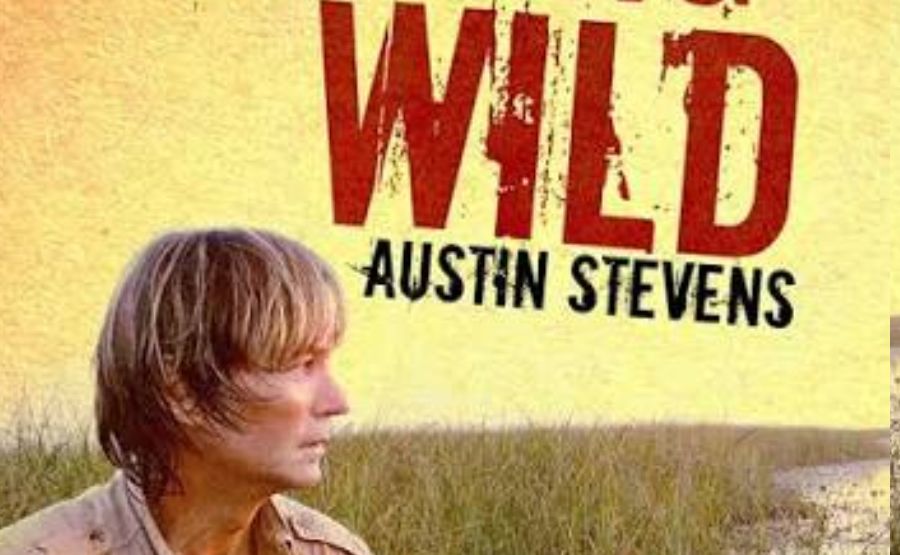
His fourth book, Running Wild (Austin Macauley), is the most personal. Written with the knowledge that Parkinson’s disease had entered his life, it covers ground the earlier books deliberately avoided: relationships, depression following severe personal misfortune — including a serious car accident and a violent knife attack — and the private dimensions of a life that public audiences had always seen only through the lens of his most dramatic professional moments. Stevens has said that his wife Amy encouraged him to write it, and that completing it required recovering material from years of notes that had never previously seen print.
Personal Life, Health, and Late Chapter
In December 2007, Stevens married Amy Wilcher, a wildlife enthusiast and python keeper from Australia who was 34 years his junior. The marriage led to his relocation to Queensland, Australia, where he has since been based.
His personal site and published interviews indicate a man who has consistently found ways to maintain his physical edge. During his years in Namibia, he practiced nunchaku martial arts, crediting it with keeping his reflexes sharp for snake handling — a detail that suggests both the seriousness of his occupational hazard calculations and a certain characteristic eccentricity.
On 5 September 2016, Stevens publicly disclosed a Parkinson’s disease diagnosis. The announcement was characteristically direct. He had, he noted, no way to accurately predict how long he could continue on his chosen path, and saw no reason to withhold that reality from the audience that had followed him for decades. In June 2023, he revealed successful surgery to remove a basal cell skin cancer from his right brow.
The health disclosures represent a kind of accounting — an acknowledgment that the physical instrument at the center of his career has its own limits, and that honesty about those limits is part of the same discipline that made his fieldwork credible.
Legacy, Influence, and the Question of What He Built
Austin Stevens occupies a specific and not easily replicated position in the history of wildlife communication. He arrived before the current generation of digital naturalists, in an era when television was still the primary vehicle for public science education. His influence on herpetology as a field of public interest is genuine but difficult to quantify precisely.
What is quantifiable: his Guinness World Record remains intact after more than three decades, which is itself an unusual fact in a category where challengers regularly appear. His filmmaking work — particularly Die Natur der Schlange — earned institutional recognition at an international level. His photography reached scientific repositories like ARKive. His books, particularly the first, introduced many readers to snakes as complex organisms rather than symbols of fear.
The more contested question is whether the television format he helped popularize — the charismatic white naturalist from Africa encountering dangerous animals for camera effect — contributed as much to conservation as it did to entertainment. Stevens has maintained throughout his career that education and awareness are foundational to protection, and that reaching large audiences requires meeting them where they are. Critics of the genre have argued that the spectacle can overwhelm the science. Both positions contain truth, and Stevens’s career sits precisely at that tension.
What is harder to dismiss is the personal integrity he demonstrated in his public scientific life. He never performed expertise he didn’t have. He walked into situations he had spent decades preparing for. The cobra bite on day 96 of the world record sit-in is not the story of a man playing at danger. It is the story of a man who had assessed the risk, accepted it, and when it materialized, absorbed it rather than retreat.
Final Reflections
Austin Stevens does not fit neatly into any single category the modern world uses to sort people: he is not simply a television personality, not simply a scientist, not simply an adventurer or a photographer or a writer. He is all of these, formed across a long and genuinely eventful life that moved from Pretoria’s fringes through military operations in Angola, motorcycle gangs, German curatorship, Namibian sand dunes, international television, and finally Queensland — where he continues to live with the added weight of Parkinson’s disease and the additional clarity that weight often brings.
His biography contains contradictions that resist simple resolution. A man who spent his early adulthood in near-reckless self-destruction became one of the most disciplined field herpetologists of his generation. A man who never received formal training in photography produced work recognized at European film festivals. A man whose professional identity was built around physical prowess now faces a progressive neurological condition with what appears to be the same pragmatic honesty he brought to cobras and puff adders.
The record he set in 1986 — 107 days, 36 snakes, one bite, no exit — is a useful metaphor for the career that followed it. He found a thing worth doing. He put more effort into it than was comfortable.. And when something unexpected happened, he stayed.
Whether that constitutes wisdom or stubbornness is, perhaps, a distinction without a difference in the life of Austin Stevens.
FAQs
1. Where and when was Austin Stevens born?
Stevens was born on 19 May 1950 in Pretoria, Transvaal, South Africa.
2. How did he develop his interest in snakes?
His interest began at age twelve while growing up on the outskirts of Pretoria. He caught a house snake and kept it under his bed. By the time he left school, he maintained one of the most significant private reptile collections in South Africa.
3. Did Austin Stevens receive formal herpetology training?
He did not attend a university herpetology program. He qualified as a herpetologist through six years of intensive hands-on work as Curator of Reptiles at the Transvaal Snake Park near Johannesburg.
4. What was the Guinness World Record he set, and when?
In 1986, Stevens spent 107 days and nights inside a glass enclosure roughly four by three meters in size, shared with 36 venomous snakes including Egyptian cobras and puff adders, at the Hartebeespoort Dam Snake and Animal Park. The record is documented in the Guinness Book of Animal Records.
5. Was he bitten during the world record attempt?
Yes. On day 96 of the 107-day sit-in, a cobra bit him. He refused to leave the enclosure. Medical personnel treated him inside the cage. He completed the remaining days and emerged on day 107.
6. Has the record been broken?
No. As of the available record, no one has matched or surpassed the original conditions. Subsequent attempts have involved different snake species, different configurations, or different durations.
7. What was the purpose of the snake sit-in?
The stated purpose was to raise public awareness and generate funds for the conservation of endangered African gorillas — a cause unrelated to snakes themselves, which illustrates the degree to which Stevens used his unusual skills to support broader conservation goals.
8. What happened to him during military service in Angola?
Stevens was deployed to the Angolan conflict zone, where the South African Defence Force used his snake-handling skills to remove venomous reptiles from military positions. During one such removal, he was bitten by a puff adder, fell into a coma for five days after emergency evacuation, and spent more than three months in medical care. He lost part of a finger to the venom.
9. Did he receive formal photography training?
No. Stevens has stated explicitly that he is entirely self-taught as a photographer. He has nonetheless placed work in scientific archives and earned a film festival nomination for his documentary work.
10. What is Austin Stevens: Snakemaster, and where did it air?
It was a nature documentary series hosted by Stevens and broadcast on Animal Planet in the United States and Channel 5 in the United Kingdom from 2004 to 2009. Its second season was renamed Austin Stevens Adventures and expanded to cover animals beyond snakes. The show ran 28 episodes in total.
11. How many books has he written?
Four: Snakes in My Bed (Penguin, 1992), The Last Snake Man (Noir Publishing, 2007), Snakemaster (2018), and Running Wild (Austin Macauley). He has also published Kindle editions reworking earlier material.
12. When did he disclose his Parkinson’s disease diagnosis?
Stevens publicly disclosed the diagnosis on 5 September 2016.
13. Who is his second wife, and when did they marry?
Amy Wilcher, an Australian wildlife enthusiast and python keeper. They married in December 2007. She is 34 years younger than Stevens. The marriage prompted his relocation to Queensland, Australia.
14. What connection does he have to the AJS Motorbike Corporation?
His maternal grandfather — also named Austin James Stevens — emigrated from Bristol, England to Africa and was a co-founder of the AJS Motorbike Corporation.
15. Is Austin Stevens still alive as of this writing?
Yes. As of mid-2026, Austin Stevens is alive and resident in Queensland, Australia.
Every story matters—discover them all with Daily Narrative.