Sharon Tate: The Life Before the Legend
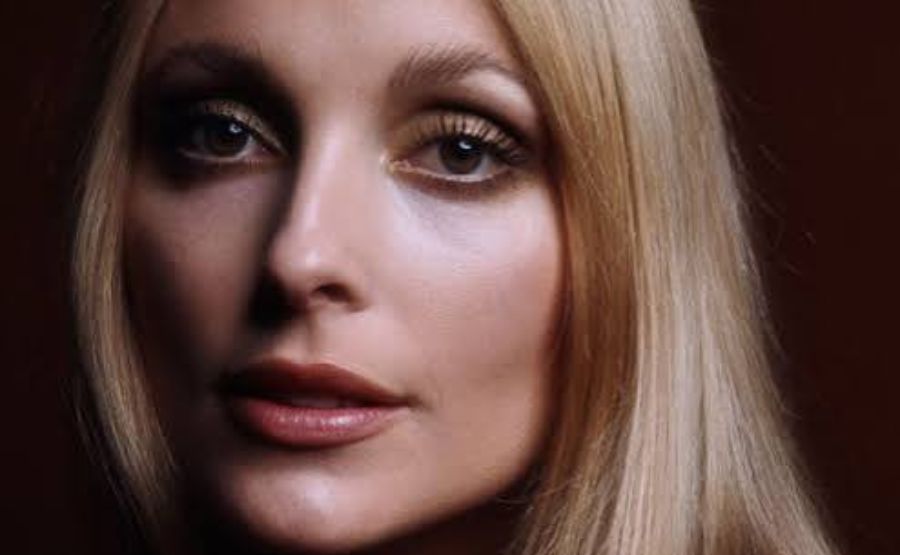
Sharon Tate remains one of the rare figures in American culture whose brief, real life keeps getting rediscovered underneath the myth that swallowed it. More than half a century after her death, she is still cited in debates about victims‘ rights, true-crime obsession, and how Hollywood consumes young women — proof that a life cut short at 26 can still shape the present.
Quick Facts
| Category | Details |
| Full name | Sharon Marie Tate |
| Born | January 24, 1943, Dallas, Texas |
| Died | August 9, 1969 (age 26), Los Angeles, California |
| Nationality | American |
| Primary roles | Actress, model |
| Notable films | Eye of the Devil (1966), Don’t Make Waves (1967), Valley of the Dolls (1967), The Fearless Vampire Killers (1967), The Wrecking Crew (1968), 12+1 (1970, posthumous) |
| Major honors | Golden Globe nominee, New Star of the Year, 1968; Golden Laurel Award, Female New Face, 1968 |
| Key relationships | Married Roman Polanski, January 20, 1968; previously engaged to hairstylist Jay Sebring |
| Parents | Col. Paul James Tate (U.S. Army intelligence) and Doris Gwendolyn Tate |
| Siblings | Debra Tate, Patricia “Patti” Tate |
| Notable milestones | Face associated with the 1971 launch of Malibu Barbie; her murder led directly to California’s first victim-impact-statement law |
| Cause of death | Murdered by members of the Manson Family at 10050 Cielo Drive, Los Angeles |
A Childhood Built on Departures
Sharon Tate was born the eldest of three daughters to an Army intelligence officer whose postings never stayed still. By the time she turned sixteen, she had already lived in six different cities.
That instability shaped her. Relatives and childhood friends remembered her as quiet, self-conscious, and slow to trust new people. She later explained that her reserve was often misread as coldness by strangers who simply hadn’t stayed around long enough to know her.
One image cracked that pattern open. In 1960, a photograph of a teenage Tate in a swimsuit and cowboy hat, straddling a missile at a Washington State military installation, ran in the armed forces newspaper Stars and Stripes. It circulated internationally. Suddenly a shy military kid was minor celebrity, recognized by strangers thousands of miles from home.
The recognition followed her to Italy the next year, when her father was reassigned to Verona. At an American school near Vicenza, Tate found something she had rarely had: friends who understood the particular loneliness of growing up rootless. It was also in Italy, working as a film extra alongside actors like Paul Newman and Jack Palance, that she first glimpsed acting as something more than a hobby.
See aslo “Gypsy Rose Blanchard: A Life Invented, Then Reclaimed”
“The Year Sharon Tate Happens” to Extra
Tate’s path into Hollywood was neither instant nor accidental. When her family returned to the United States in the early 1960s, she made her own way toward Los Angeles and met with an agent whose card an actor she’d worked with in Italy had passed along.
Producer Martin Ransohoff signed her to a long-term studio contract, betting on her look before her craft was proven. Her earliest paid work was almost anonymous by design: she played a recurring bank secretary on The Beverly Hillbillies, hidden under a dark wig so audiences wouldn’t connect the television bit player to the film star the studio hoped to build.
The strategy paid off slowly, then quickly. A supporting role in the 1966 occult thriller Eye of the Devil drew attention from director J. Lee Thompson, who said she projected genuine star quality on screen. By 1967, Tate had three films in release, and the entertainment press was calling it, without irony, the year she “happened.”
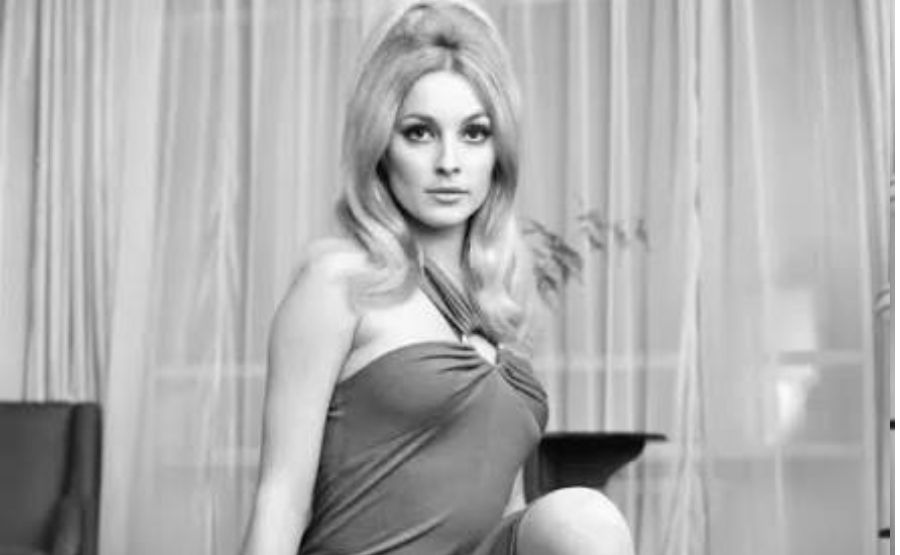
That same year brought her most enduring screen credit: Valley of the Dolls, adapted from Jacqueline Susann’s bestselling novel about ambition and addiction inside the entertainment industry. Critics were divided on the film itself, but Tate’s presence — polished, wounded, glamorous — became one of its lasting images.
The Films Critics Underrated, and Later Reconsidered
Tate’s filmography is short. She made roughly a dozen credited screen appearances before her death, and only a handful carried real weight. For decades, that brevity fed a narrative that she was primarily a beauty, not a performer.
That narrative has softened with time. Film historians revisiting her comic timing in Don’t Make Waves and her breezy confidence in the spy spoof The Wrecking Crew have argued these, not her more dramatic roles, showed where her career was actually headed. Her character in The Wrecking Crew is widely credited as an influence on later comic-spy heroines in film.
There is a strange irony in Tate’s cultural footprint: her Don’t Make Waves character, a laid-back California surfer named Malibu, is frequently linked to the 1971 launch of Mattel’s Malibu Barbie — meaning a piece of her image outlived her as a children’s toy, largely disconnected from the films themselves.
Polanski, Sebring, and a Marriage Under Public Watch
Before Roman Polanski, there was Jay Sebring, the celebrity hairstylist credited with reshaping men’s grooming in 1960s Hollywood. Tate and Sebring were engaged for a period, and though the romance ended, their friendship did not. That friendship would matter tragically later.
Tate met Polanski in 1967, on the set of his horror comedy The Fearless Vampire Killers, in which she played the female lead. Their courtship moved quickly against a backdrop of European film sets and London social life. They married in London on January 20, 1968, with Tate’s Valley of the Dolls co-star Barbara Parkins serving as maid of honor.
Friends who knew the couple described a marriage that was glamorous in public and complicated in private. Tate’s close friend, actress Joanna Pettet, later described Polanski as exacting about Tate’s appearance — down to her clothing and makeup — and biographers have documented tension when Tate became pregnant in early 1969, a pregnancy Polanski reportedly did not initially welcome with enthusiasm. {REWRITE}
Whatever the private friction, Tate did not publicly abandon the marriage, and by mid-1969 she was preparing, both professionally and domestically, for the arrival of their first child.
Personal Life, Family, and Private Struggles
Tate’s inner circle was smaller than her public profile suggested. She counted actresses Patty Duke and Barbara Parkins among her closest Hollywood friends, alongside Mia Farrow, whom she’d met through the overlapping worlds of Polanski and Farrow’s then-husband, Frank Sinatra’s social circle.
Her family remained central to her, even at a physical distance. Tate’s sisters, Debra and Patricia “Patti,” described a bond forged by their itinerant childhood — a closeness born less of choice than of necessity, since constant relocation left few other lasting friendships available.
Tate’s relationship with fame itself was ambivalent. In a 1966 interview, before her breakout year, she remarked that she had essentially given up a personal life in exchange for the acting, voice, and physical training the studio required of her — three years of near-constant preparation with little room for anything else. {REWRITE}
She was, by multiple accounts, unusually superstitious and fatalistic, prone to saying that her life had never followed any plan she’d made herself, but had instead simply unfolded according to forces beyond her control. That fatalism, in hindsight, reads as unbearably poignant.

The Night of August 8–9, 1969
By July 1969, Tate was more than eight months pregnant and living at 10050 Cielo Drive in Benedict Canyon, a rented house she shared with Polanski, who remained in London finishing production work. The property had a prior tenant with an unrelated but consequential connection: record producer Terry Melcher, whom Charles Manson had once tried, unsuccessfully, to court for a recording contract.
On the evening of August 8, Tate had dinner with Jay Sebring and two houseguests, coffee-fortune heiress Abigail Folger and her partner, writer Wojciech “Voytek” Frykowski. Later that night, members of Manson’s group entered the property. Eighteen-year-old Steven Parent, a visitor to the estate’s caretaker, was killed in his car near the gate before ever reaching the house.
Tate was killed inside, along with Folger, Frykowski, and Sebring.She was stabbed sixteen times. Multiple accounts describe her pleading for the life of her unborn child in her final moments. The killers used her blood to write a word on the home’s front door before leaving.
Tate and her unborn son, who would have been named Paul Richard Polanski after her father, were buried together at Holy Cross Cemetery in Culver City. The tombstone bears both names.
Trial, Conviction, and an Unfinished Sentence
Charles Manson and several followers, including Charles “Tex” Watson, Susan Atkins, and Patricia Krenwinkel, were tried and convicted for the Tate murders along with the killings of Leno and Rosemary LaBianca the following night. They received a death sentence in 1971.
That sentence never carried out. In 1972, the California Supreme Court temporarily abolished the state’s death penalty, and the convictions were automatically commuted to life imprisonment. Susan Atkins died in custody in 2009. Charles Manson died in prison in November 2017. Watson and Krenwinkel have remained incarcerated, repeatedly denied parole at hearings their victims’ family members have attended for decades.
Roman Polanski, devastated, later called the period before Tate’s death the happiest of his life and gave away most of his and Tate’s shared possessions afterward, unable to keep reminders of what had been lost.
Doris Tate and the Birth of the Victim-Impact Statement
The most consequential part of Sharon Tate’s legacy did not come from her films. It came from her mother.
For more than a decade after the murders, Doris Tate lived in near-total withdrawal, unable to discuss her daughter’s death publicly. That changed in 1982, when she learned that Manson follower Leslie Van Houten had gathered several hundred signatures supporting her bid for parole. Doris Tate responded by collecting hundreds of thousands of signatures in opposition, working in part through a national tabloid that printed petition coupons for readers to mail in.
The campaign succeeded, and it launched Doris Tate into full-time victims’ advocacy. In 1984, addressing Charles Watson directly at his parole hearing, she asked what mercy he had shown her daughter as she begged for her life — a moment now recognized as the first formal victim-impact statement delivered in a California parole proceeding.
Doris Tate helped push through California’s 1982 Victims’ Bill of Rights, which formally established the right of victims and their families to address the court during sentencing and parole proceedings — a legal mechanism that has since spread far beyond California and shaped how the American justice system treats survivors nationwide.
She founded the Coalition on Victims’ Equal Rights, and after her death from a brain tumor in 1992, a foundation carrying her name continued the work. Her daughters Patti and later Debra Tate inherited the role of family representative at parole hearings, a duty Debra continues to this day.
Legacy, Influence, and Relevance Today
Sharon Tate occupies an unusual position in American cultural memory: she is simultaneously underrepresented as an artist and overrepresented as a victim. Her filmography is thin enough that casual audiences rarely encounter her work outside of retrospectives, yet her death is referenced constantly, in true-crime documentaries, campus film courses, and pop culture at large.
That imbalance has started to correct itself. Contemporary critics have reassessed her comic performances with more generosity than her contemporaries offered. Restoration efforts on films like The Fearless Vampire Killers have revealed a more assured performer than the murder narrative allowed audiences to see for decades.
Her image also persists commercially and artistically in ways disconnected from her acting entirely — from the Malibu Barbie connection to fashion retrospectives built around her personal wardrobe, including a 2009 exhibition organized with her family’s cooperation. Directors have continued returning to her story: Quentin Tarantino’s 2019 film Once Upon a Time in Hollywood, with Margot Robbie in the role, reimagined her final summer with an alternate, non-violent ending — a choice that drew both praise for its tenderness and criticism for how little dialogue it actually gave her.
Perhaps her most durable legacy, though, is procedural rather than cinematic. Every time a crime victim’s family member speaks in an American courtroom before sentencing, they are exercising a right that traces directly back to a grieving mother’s decision, thirteen years after her daughter’s murder, to stop staying silent.
Final Words
Sharon Tate’s story resists easy categorization. She was neither the passive ingenue of tabloid shorthand nor the fully self-directed artist some retrospective accounts want her to be. She was a working actress, still building her craft, inside a studio system that controlled far more of her career than it controlled of her male peers’.
Her marriage to Polanski was both a genuine partnership and, by several close accounts, an unequal one, marked by real affection and real control in uncomfortable proportion. Neither fact cancels the other.
What is not ambiguous is the scale of what was lost, and what her family built from that loss. Tate did not choose to become a symbol of victims’ rights; that was her mother’s doing, forged from grief with almost no institutional support behind her. The two legacies — the actress and the advocacy movement her murder inadvertently created — remain intertwined, and neither is complete without the other.
Judged purely on the films she left behind, Sharon Tate was a promising performer whose range was never fully tested.Considering everything that transpired after her passing, she ended up being something she never intended to be: a permanent fixture in the way victims are heard by the American justice system.
FAQs
1. How old was Sharon Tate when she died?
She was 26, having been born January 24, 1943, and murdered August 9, 1969.
2. Was Sharon Tate pregnant when she was murdered?
Yes. She was more than eight months pregnant with her and Roman Polanski’s first child, a son they planned to name Paul Richard.
3. Who killed Sharon Tate?
Members of the Manson Family — Charles “Tex” Watson, Susan Atkins, and Patricia Krenwinkel — carried out the killings on the instructions of cult leader Charles Manson.
4. Was Charles Manson present at the murder scene? N
o. Manson did not physically enter the Cielo Drive property that evening, but he did direct the killings.
5. What happened to Sharon Tate’s killers?
They were convicted and sentenced to death in 1971; the sentences were commuted to life imprisonment in 1972 after California temporarily abolished capital punishment. Watson and Krenwinkel remain incarcerated; Atkins died in prison in 2009.
6. Is Charles Manson still alive?
No. He died in prison on November 19, 2017.
7. What was Sharon Tate’s most famous film role?
Her starring role in Valley of the Dolls (1967) remains her best-known credit.
8. Did Sharon Tate know Roman Polanski before they married?
They met in 1967 on the set of The Fearless Vampire Killers, in which she starred, and married in January 1968.
9. Where is Sharon Tate buried?
At Holy Cross Cemetery in Culver City, California, alongside her unborn son.
10. Did Sharon Tate’s death change any laws?
Indirectly, yes. Her mother Doris Tate’s activism helped establish California’s Victims’ Bill of Rights in 1982, which introduced the victim-impact statement now used nationwide.
11. Who inspired the Malibu Barbie doll?
Tate’s character in Don’t Make Waves (1967) is widely cited as an inspiration for the 1971 Malibu Barbie, though this connection is more cultural legend than an official Mattel credit.
12. Has Sharon Tate been portrayed in film or television since her death?
Yes, multiple times, including by Margot Robbie in Once Upon a Time in Hollywood (2019), Hilary Duff in The Haunting of Sharon Tate (2019), and Grace Van Dien in Charlie Says (2018).
13. Did Sharon Tate have siblings?
Yes, two younger sisters, Debra and Patricia “Patti” Tate. Patti died of breast cancer in 2000.
14. Was Sharon Tate’s father involved in the investigation of her murder?
Yes. Colonel Paul Tate, frustrated with the pace of the official investigation, conducted his own inquiry into his daughter’s death before eventually retiring from military service.
15. Does Sharon Tate have a star on the Hollywood Walk of Fame?
No. Her sister Debra has lobbied for one for years without success.
Every story matters—discover them all with Daily Narrative.