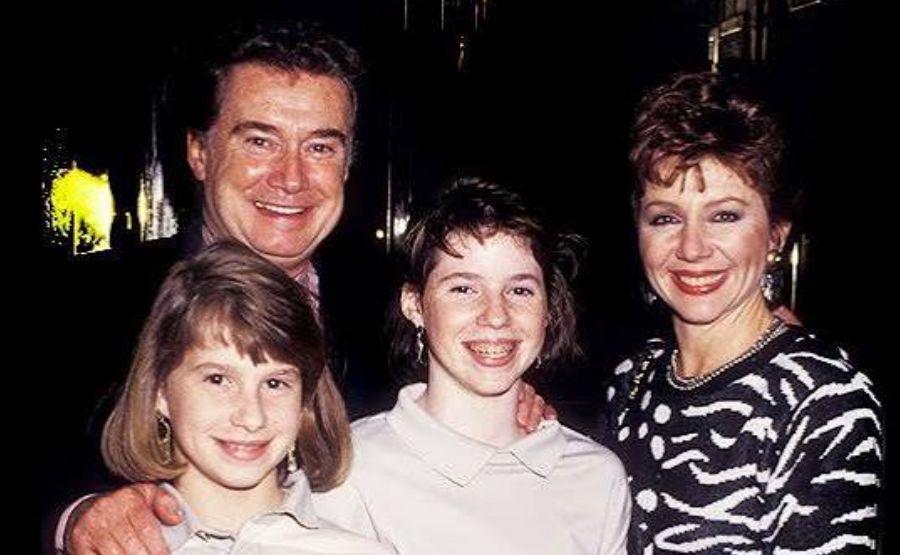
Amy Philbin: A Quiet Life in Regis’s Long Shadow
Amy Philbin matters to the cultural record not because she sought fame but because she refused it — becoming, through that refusal, one of American television’s most persistent unanswered questions.
Quick Facts
| Detail | Information |
| Full Name | Amy Philbin (later Amy Ferguson) |
| Born | Approximately 1959 or 1961 (conflicting sources; People, 1991, implies c. 1957–59 by describing her as “34” at the time of publication) |
| Nationality | American |
| Father | Regis Francis Xavier Philbin (August 25, 1931 – July 25, 2020), television host and entertainer |
| Mother | Catherine “Kay” Faylen (born July 9, 1929), actress; daughter of actor Frank Faylen |
| Maternal Grandparents | Frank Faylen (character actor) and Carol Hughes (actress) |
| Brother | Daniel Philbin (1967–November 7, 2014), died of natural causes at 49 |
| Half-Sisters | Joanna Philbin (b. March 19, 1973, novelist); Jennifer “J.J.” Philbin (b. August 30, 1974, television writer/producer) |
| Husband | Dan Ferguson, musician |
| Son | Mack Ferguson |
| Residence | Studio City, California |
| Career | Pursued a singing career (confirmed by multiple credible secondary sources); scope unverifiable |
| Notable context | Rarely mentioned by her father publicly; largely absent from his television career’s public narrative |
| Father’s death | July 25, 2020, Greenwich, Connecticut, of heart disease |
The Family That Television Built — and Fractured
To understand Amy Philbin, one must first understand the particular shape of Regis Philbin’s family life. It was not the seamless, warm domestic story his morning television persona implied.
Regis married Catherine “Kay” Faylen in 1955 — the same year he began his entertainment career as a page at The Tonight Show. Kay was herself a product of Hollywood royalty in a modest register: her father, Frank Faylen, was a prolific character actor who worked from the 1930s through the 1970s. Her mother, Carol Hughes, was also a working actress. Kay appeared in a handful of television productions in the mid-1950s — Highway Patrol, Science Fiction Theatre, Perry Mason — before stepping away from the screen entirely by 1957, a few years before to the birth of her first kid.
Amy arrived in 1961, six years into that marriage. The birth happened just as Regis was beginning to find his footing in local television in Los Angeles, hosting early versions of what would eventually become his signature talk format. The family existed in the early, unglamorous phase of a career that would eventually span six decades and earn its patriarch a Guinness World Record.
Daniel followed six years later, in 1967, born with a congenital spinal cord defect that would require the amputation of both legs and shape the trajectory of his entire life.
The marriage collapsed in 1968. Regis, speaking to People magazine in 1991, described it without elaboration as “a marriage that didn’t work or last.” It is one of the few documented statements he ever made about his first family. He married Joy Senese two years later, in 1970, and the second marriage produced two daughters — Joanna and Jennifer (J.J.) — who would grow up in the full glare of their father’s nationally syndicated celebrity.
Amy and Daniel grew up in the wake of that departure.
Childhood at the Edge of Two Worlds
Amy Philbin came of age during one of the stranger bifurcations possible in mid-century American life. Her father was becoming, by measured degrees, one of the most recognizable faces on daytime television. Her mother had withdrawn entirely from entertainment. Amy and Daniel occupied a first family that the public-facing Regis Philbin rarely acknowledged.
According to several reliable sources, Amy was “not seen around Regis very often growing up.” Closer Weekly made a direct note of this absence. The nature of the rift — whether it reflected Regis’s preoccupation with a new family, a mutual distance, or some specific breach — has never been publicly explained. Regis did not discuss it on air. Amy has never discussed it at all.
Daniel’s situation created an additional dimension of childhood complexity. He spent substantial portions of his early years at the Angel View Crippled Children’s Foundation in Desert Hot Springs, California. He and his father reportedly had a strained relationship — one that, per Radar Online’s reporting, was eventually mended before Daniel’s death. Whether Amy navigated a parallel estrangement from her father, or a different relationship altogether, remains undocumented.
What is evident is that two children grew up knowing their father largely from a distance — his face increasingly visible on screens across the country while his presence in their daily lives was limited.
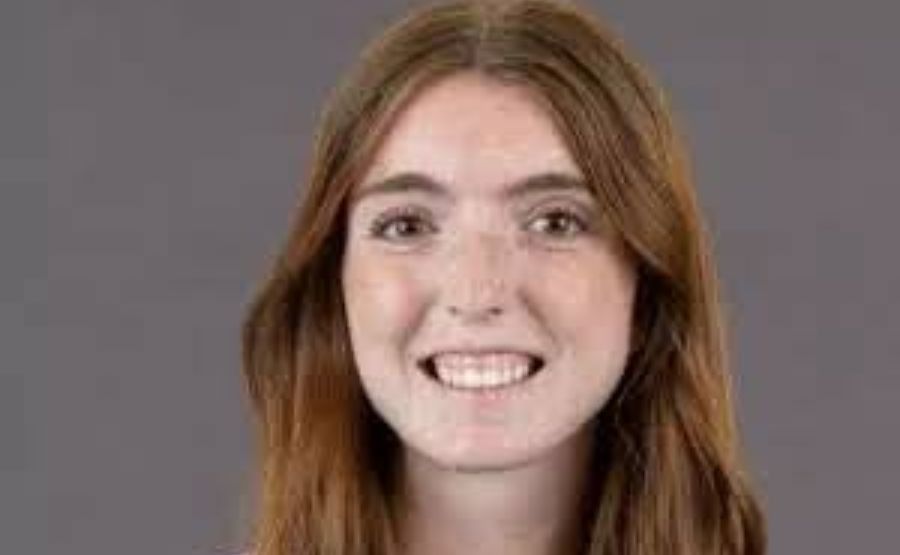
Catherine Faylen: The Mother Who Stepped Back
The figure who most directly shaped Amy’s daily upbringing is also the most thoroughly erased from the public record. Catherine “Kay” Faylen Philbin stopped acting in 1957. She divorced Regis in 1968. She has not given interviews. She has not published memoirs. She has not resurfaced in the decades of media attention that swirled around her ex-husband.
Kay came from a lineage that understood entertainment intimately — her father Frank Faylen was a genuinely accomplished character actor, best remembered as Ernie, the cab driver, in Frank Capra’s It’s a Wonderful Life (1946). Her mother Carol Hughes had her own screen career.Kay had grown up in the field, given it a go, and then—possibly on purpose—left it.
She raised Amy and, to the extent possible given his institutionalization, maintained a relationship with Daniel. She did so without the financial and social infrastructure of a second powerful marriage, without the television platform her ex-husband deployed to narrate his life publicly, and without any apparent desire for recognition.
That Amy emerged from this household choosing a life of similar privacy may not be coincidental. The template was set before Amy could have consciously chosen it.
The Singing Career: Documented but Undocumented
The one consistent professional claim about Amy Philbin across credible sources is this: she pursued a career in singing. Closer Weekly reported it. The entry for Regis Philbin in Encyclopedia.com lists Amy as “Amy Ferguson (a musician)” in his children’s section. Multiple secondary sources corroborate the general claim.
What no credible source has documented: the specific scope of that career. No album titles, label affiliations, release dates, chart positions, or performance venues appear in any verifiable primary source. One aggregator site (BlogHalt) claims specific song titles and collaborators but offers no sourcing. Those claims are not repeated here.
What can be reasonably inferred from the available evidence: Amy pursued music seriously enough to be identified as a musician in reference sources, married a man named Dan Ferguson who is himself described consistently as a musician, and has continued to live in Studio City, California — an area with deep roots in Los Angeles’s music industry infrastructure. Whether that career produced commercial releases, limited local work, session performances, or some combination is genuinely unknown.
“Amy was a singer” and “here is what Amy sang” are not the same thing.It is the essential fact of her public biography: she did something, in a field adjacent to her father’s world of entertainment, and she did it without his platform, his promotional machinery, or apparently his assistance.
The Husband and the Household
Amy married Dan Ferguson, described across multiple secondary sources as an American musician.Mack is the name of the couple’s son.he cou The family lives in Studio City, California — a community in the San Fernando Valley that has been home to musicians, producers, and entertainment industry workers for decades.
One source (SociallyKeeda) describes their marriage as occurring “in the 90s.” Another (BlogHalt) claims a 1986 wedding date and additional children. The 1986 claim appears once, in a source with a history of unverifiable specifics, and is not repeated in other sources. The details most consistently reported — musician husband, one son named Mack, Studio City residence — appear across multiple independent sites and carry reasonable credibility.
A court record reference that appears in at least one source describes a “marriage dissolution lawsuit against Philbin Ferguson, Amy Regina” filed in Los Angeles County Superior Court’s Chatsworth courthouse. The bare existence of this filing, if accurately reported, would suggest a period of marital difficulty. No further documentation of its resolution or outcome appears anywhere in the available record.

Daniel: The Brother Who Built His Own Legacy
Amy’s brother Daniel Philbin deserves particular attention in any account of Amy’s life because his story illuminates the family’s capacity for resilience — and because his public absence paralleled hers in striking ways.
Born in 1967 with a congenital spinal cord defect, Daniel had both legs amputated and spent much of his childhood at the Angel View Crippled Children’s Foundation in Desert Hot Springs, California. He attended Quartz Hill High School in Los Angeles. He earned a degree in political science from California State University at Northridge. He went on to complete graduate work in world politics at The Catholic University of America in Washington, D.C.
He then went to work for the Department of Defense’s Public Affairs Office in the Pentagon.
On September 11, 2001, Daniel was at his desk when a hijacked Boeing 757 struck the western facade of the building. He evacuated, pushed himself in his wheelchair approximately a mile to a nearby gas station where the Office of the Secretary of Defense Public Affairs had established a command post, and helped coordinate the department’s media response while the building burned. He returned to the Pentagon that evening to assist with a press conference.
In 2002, Daniel was among sixteen people with disabilities honored by the Department of Defense for outstanding contributions to its workforce — specifically for his actions on and after September 11.
His father, speaking to Esquire in 1994, called Daniel “my hero in life.” Regis described his son’s capacity to overcome severe physical limitation and build a meaningful career as “dynamite, a remarkable kid.”
Daniel Philbin died of natural causes on November 7, 2014, at the age of 49. His death was not publicly announced until March 2015.
For Amy, the loss of her brother — a man who had faced extraordinary obstacles and built something genuine out of them — arrived six years before their father’s death. She lost the only other person who had grown up in the same bifurcated Philbin household, who had known the same absent father from the same distance, who had been raised by the same quietly determined mother.
She has said nothing publicly about any of it.
Personal Life: Grief, Privacy, and Continuity
In the decade between 2014 and 2024, Amy Philbin lost her brother and her father. Both deaths occurred without Amy making any public statement, granting any interview, or entering the media ecosystem that surrounded both men’s lives and passings.
When Regis Philbin died on July 25, 2020 — one month shy of his 89th birthday, of heart disease, at a hospital in Greenwich, Connecticut — his family released a statement through People magazine. The statement was issued in the name of his second wife Joy, and their daughters Joanna and J.J. Amy was not listed as a contributor to the statement.
Multiple credible news outlets — Fox News, the Boston Globe, CBC — reported that Regis was “survived by” Amy, specifically identifying her as his daughter with his first wife Catherine Faylen. She appeared in the obituaries as a fact of his biography. She did not appear as a voice within it.
The funeral was held at the Basilica of the Sacred Heart at the University of Notre Dame, Regis’s alma mater. He was buried at Cedar Grove Cemetery on the same campus. Whether Amy attended, what she felt, what she said privately to her half-sisters or her father’s widow — none of this has been documented or disclosed.
The silence is consistent. It has been consistent for decades. It is not the silence of someone who lacks words. It is the silence of someone who has decided that certain things belong to her.
Legacy and Lasting Influence
Amy Philbin does not have a legacy in the conventional sense — no documented body of work, no institution built in her name, no public platform from which she has shaped culture or discourse.
What she represents, in the broader American story her father dominated for sixty years, is more subtle and more durable.
Regis Philbin made a career of radical self-disclosure. He narrated his marriage, his health crises, his restaurant complaints, his friendships, his minor irritations, and his major joys on television, for decades, to millions of viewers who came to feel they knew him personally. He was the Guinness record-holder for on-screen hours specifically because he gave so much of himself to the camera.
He gave almost nothing of Amy.
That erasure — whether by mutual agreement, by distance, by estrangement, by Amy’s choice, by Regis’s, or by some combination — raises questions about the limits of even the most confessional public persona. It suggests that there can be entire chapters of a famous person’s life that the audience never receives, despite the impression of total access that morning television carefully constructs.
Amy’s half-sister J.J. Philbin went on to write for Saturday Night Live, produce The O.C. and New Girl, and create the sitcom Single Parents. She married Michael Schur, creator of Parks and Recreation, Brooklyn Nine-Nine, and The Good Place. Joanna Philbin became a novelist, holding degrees from Brown University, the University of Notre Dame Law School, and Notre Dame’s MFA program.
The second family built, in public, an impressive creative dynasty.
The first family — Amy and Daniel — built something quieter, less catalogued, and more obscure. Daniel built a career of genuine public service and heroism, largely invisible until researchers went looking after his death. Amy built a private life in Studio City, with a musician husband and a son, away from the machinery that made her father famous.
Neither path is lesser. Both deserve acknowledgment.
Final Words
Amy Philbin is, at approximately sixty-five years old, a woman whose entire adult life has unfolded outside the public record that bears her name. She was born into a marriage that failed before she reached adolescence. She grew up alongside a disabled brother who built a heroic life in Washington’s bureaucratic trenches. She pursued a career in music that left almost no documented trace. She married, had a child, and settled in Southern California’s entertainment corridor without once engaging the media apparatus her father personified.
The most honest thing that can be said about Amy Philbin is that the most important facts about her are unavailable — not because she is insignificant, but because she has been deliberate and consistent in keeping them that way.
What is available is enough to sketch a life shaped by displacement, by the particular loneliness of a first family superseded by a second, by the loss of a brother who deserved more attention than he received in life, and by the loss of a father whose public warmth apparently did not extend, at least not visibly, to the daughter he rarely mentioned.
Regis Philbin once told Esquire: “It’s a tricky piece of business, being a father. Each child is different, has a different sensibility. However, you adore them all and wish them the best.”It is a generous sentiment. It raises the question of whether Amy Philbin felt the truth of it.
She has not answered. The silence, after sixty-five years, is its own kind of answer.
FAQs
1. Who is Amy Philbin?
Amy Philbin is the eldest child of the late television host Regis Philbin and his first wife, actress Catherine “Kay” Faylen. She has pursued a singing career and lived a deliberately private life in Studio City, California.
2. When was Amy Philbin born?
Sources conflict: aggregator sites cite 1961; a 1991 People magazine article described her as 34 years old, implying a birth year closer to 1957–59. No birth certificate or other primary record has been made public. Both 1959 and 1961 circulate widely in secondary sources.
3. Who were Amy Philbin’s parents?
Her father was Regis Francis Xavier Philbin (August 25, 1931 – July 25, 2020), the television host who held the Guinness World Record for most hours on American television. Her mother is character actor Frank Faylen’s daughter, Catherine “Kay” Faylen, a former actress.
4. Why did Regis Philbin rarely mention Amy publicly?
No definitive answer exists. Credible sources confirm that Amy was not often seen around her father while growing up following the 1968 divorce. The nature of any estrangement has never been explained publicly by either party.
5. What happened to Amy’s brother Daniel?
Daniel Philbin was born in 1967 with a congenital spinal cord defect requiring the amputation of both legs. He became a public affairs official at the Pentagon, was present during the September 11, 2001 attacks and helped coordinate media response, and was subsequently honored by the Department of Defense for his contributions. He died of natural causes on November 7, 2014, at the age of 49.
6. Who is Amy Philbin’s husband?
Dan Ferguson, described across multiple secondary sources as a musician. The couple has one son named Mack. The family resides in California’s Studio City.
7. Did Amy have a relationship with her half-sisters Joanna and J.J. Philbin?
No verified public information documents the nature of her relationship with Joanna or J.J. Philbin, who are her half-siblings through Regis’s second marriage to Joy Senese.
8. Was Amy Philbin mentioned in Regis’s death statement?
The official family statement following Regis’s death on July 25, 2020, was issued in the names of Joy Philbin and daughters Joanna and J.J. Multiple media outlets — Fox News, the Boston Globe, CBC — identified Amy separately as a surviving daughter.She didn’t say anything in public.
9. What is known about Amy’s singing career?
Credible sources — including Closer Weekly and the Encyclopedia.com entry for Regis Philbin, which lists her as “Amy Ferguson (a musician)” — confirm she pursued a music career. No specific albums, labels, release dates, or chart records have been documented in verifiable sources.
10. Did Regis Philbin acknowledge Amy publicly?
Rarely. His morning television program frequently featured Joy Philbin and their daughters Joanna and J.J. References to Amy and Daniel — his children from his first marriage — were almost entirely absent from his public persona.
11. Who are Amy’s maternal grandparents?
Frank Faylen, a prolific Hollywood character actor best known for It’s a Wonderful Life (1946) and the TV series The Many Loves of Dobie Gillis, and Carol Hughes, an actress. Both were active in Hollywood from the 1930s onward.
12. Did Amy attend Regis’s funeral?
No public record confirms or denies her attendance at the funeral, which was held at the Basilica of the Sacred Heart at the University of Notre Dame.
13. Does Amy Philbin have social media?
No verified public social media accounts are linked to her. She maintains no documented public digital presence.
14. What is Amy’s estimated net worth?
Various aggregator sites cite figures ranging from $5 million to $9 million, often implying inheritance or shared marital wealth from her father. These figures are unverified and speculative. No independent financial documentation has been published.
15. What is Amy Philbin’s significance in understanding Regis Philbin’s full story?
Amy represents the chapter of Regis Philbin’s life that his television persona deliberately omitted. Understanding that his famous warmth and apparent openness coexisted with decades of near-silence about his first family adds necessary complexity to the public record of one of American television’s most prominent figures.
Every story matters—discover them all with Daily Narrative.