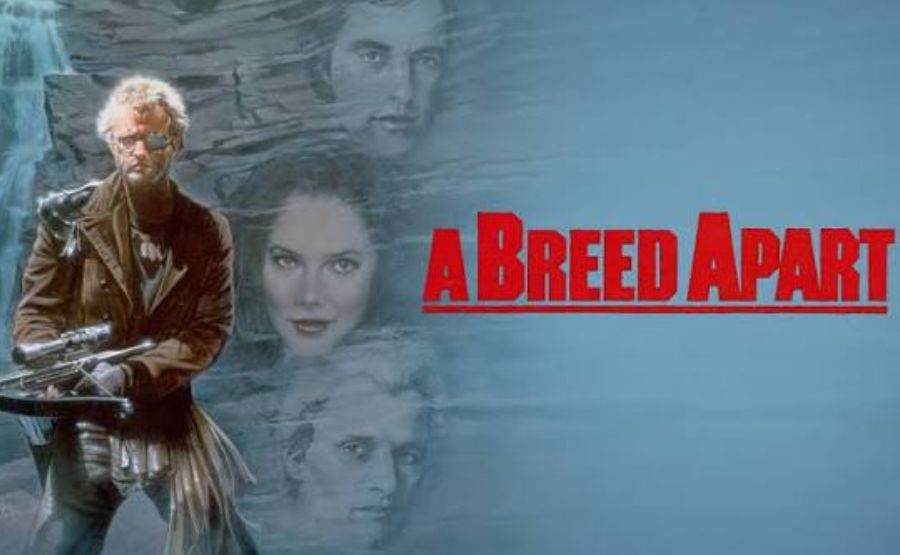
Rutger Hauer a Breed Apart: The Strange, Sweet, Unfinished-Feeling Rutger Hauer Film Nobody Talks About
Let’s talk about a movie that almost nobody remembers, but that a small group of film lovers absolutely adore. It’s called A Breed Apart, and it came out in 1984, right smack in the middle of Rutger Hauer’s most exciting years as an actor. If you’ve never heard of it, don’t worry. Most people haven’t.
But that’s exactly what makes it worth digging into. This is one of those movies that got a little unlucky, then got a little strange behind the scenes, and somehow still ended up charming a small pocket of devoted fans decades later. Grab your coffee. This one’s a fun story.
Key Facts
| Detail | Information |
| Title | A Breed Apart |
| Release year | 1984 |
| Director | Philippe Mora |
| Writer | Paul Wheeler |
| Runtime | Around 95 to 101 minutes, depending on the version |
| Lead actor | Rutger Hauer as Jim Malden |
| Also starring | Kathleen Turner, Powers Boothe, Donald Pleasence, Brion James |
| Setting | A private island in the Blue Ridge Mountains, North Carolina |
| Genre | Action drama with environmental themes |
| Studios | Sagittarius Productions and Hemdale |
| Distributor | Orion Pictures (US) |
| Composer | Maurice Gibb, of Bee Gees fame |
| Production issue | One full reel of film went missing in transit and was never recovered |
| Rutger Hauer’s real-life connection | He was a genuine environmentalist, later serving on the board of the Sea Shepherd Conservation Society |
What Is This Movie Actually About?
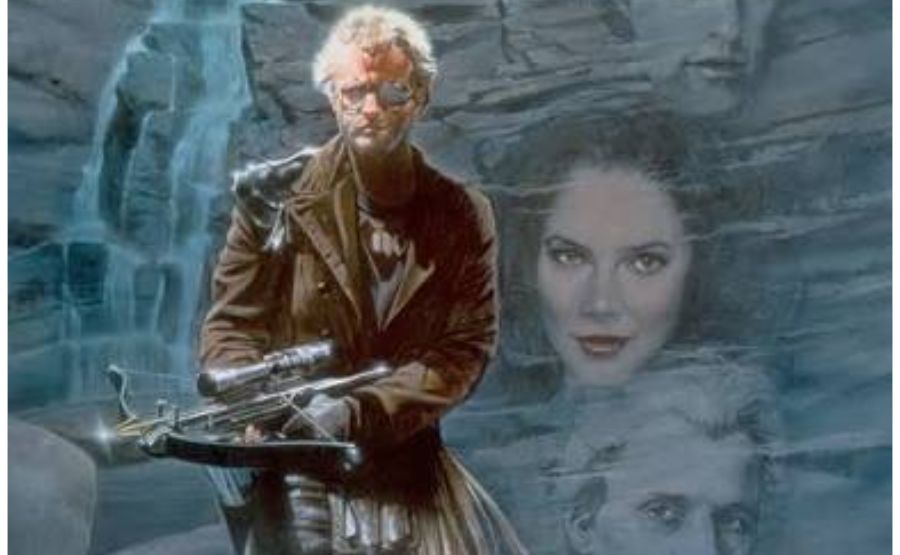
Here’s the setup, in plain, simple words. Rutger Hauer plays a man named Jim Malden. He’s a Vietnam veteran who lost his wife and child, and now he lives almost entirely alone on a private island covered in rare wildlife.
The one thing Jim really cares about anymore is protecting the animals on that island, especially a pair of very rare bald eagles nesting there. He’s fierce about it, almost obsessively so.
Into this quiet, guarded life walks Mike Walker, played by Powers Boothe, a skilled mountain climber. Mike pretends he’s just a nature photographer, but he’s actually been hired by a wealthy, obsessive egg collector named J.P. Whittier, played chillingly by Donald Pleasence, to steal the eagle eggs before they hatch.
Add in Kathleen Turner as Stella Clayton, a local widow who runs the general store and has feelings for Jim that he doesn’t quite know how to handle, and you’ve got the emotional center of the whole story. What follows is a mix of quiet romance, environmental urgency, and honestly, a fair bit of old-fashioned 1980s action.
See aslo” Wings of Apache: Looking Back at Hollywood’s Helicopter Answer to Top Gun“
Why Rutger Hauer Playing This Role Feels So Meaningful
Here’s something that really struck me while learning about this film. Rutger Hauer wasn’t just acting the part of a passionate conservationist. In real life, he genuinely cared about protecting animals and the environment.
Later in his life, he actually served on the board of the Sea Shepherd Conservation Society, an organization dedicated to protecting marine wildlife. So there’s something quietly moving about watching him play a character whose entire life revolves around saving endangered birds, knowing that off screen, this wasn’t just a performance to him.
That little detail changes how the movie feels once you know it. Jim Malden’s fierce devotion to those eagles doesn’t feel like empty movie dialogue. It feels like something closer to Hauer’s own heart.
Rutger Hauer’s Career at the Time
To really appreciate A Breed Apart, it helps to understand exactly where Rutger Hauer stood in his career when he made it. This wasn’t some random early role. This was right in the middle of an incredible creative streak.
Just two years earlier, Hauer had delivered his most famous performance ever, playing the replicant Roy Batty in Blade Runner. That role, especially his unforgettable closing monologue, would go on to become one of the most quoted moments in science fiction history. Before that, he’d already built a name for himself in Dutch cinema and then crossed into American films with Nighthawks, acting alongside Sylvester Stallone.
Around the same period as A Breed Apart, he was also involved with Eureka and The Osterman Weekend, and not long after, he’d go on to star in Ladyhawke opposite Michelle Pfeiffer. So A Breed Apart landed right in the middle of what might be considered Hauer’s golden run of the 1980s, sandwiched between some genuinely major films.
Given that timing, it’s honestly a little surprising this particular movie faded into such obscurity. But as we’re about to get into, there’s a very specific reason for that.
The Strange Story of the Missing Film Reel
Okay, here’s the part of this story that always gets people’s attention, because it sounds almost too unbelievable to be true. After filming wrapped in North Carolina, the completed reels of footage were shipped back to Los Angeles for editing.
Somewhere along the way, one full reel out of four never arrived. It simply vanished, and to this day, nobody seems to know exactly what happened to it.
Instead of scrapping the entire project or reshooting everything from scratch, director Philippe Mora and his editing team made the difficult decision to rebuild the film using only the three reels they actually had. That meant restructuring scenes, cutting around gaps, and trying to stitch together a coherent story missing a real chunk of its footage.
You can imagine how that might affect a finished film. Several viewers over the years have pointed out that certain character motivations feel unclear, some subplots seem to trail off without resolution, and the overall pacing feels a little scattered in places. Once you know about the missing reel, a lot of that confusion suddenly makes a lot more sense.
A Small Miracle It Turned Out Watchable At All
Given everything working against it, missing footage, a tight budget, and a genre mash-up that doesn’t always blend smoothly, it’s honestly a little impressive that A Breed Apart holds together as well as it does.
Several reviewers over the years have noted this exact thing. The film shouldn’t really work as well as it sometimes does, considering how much was stitched together after the fact. Yet there’s still an emotional core running through it that manages to survive the editing room chaos.
That’s largely thanks to the cast. When you’ve got performers as talented as Hauer, Turner, Boothe, and Pleasence, even a somewhat patchy story can still land some genuine emotional moments.
The Cast: A Genuinely Stacked Lineup for Such an Overlooked Film
Let’s take a moment to really appreciate who’s actually in this movie, because it’s a genuinely impressive group for a film so few people know about today.
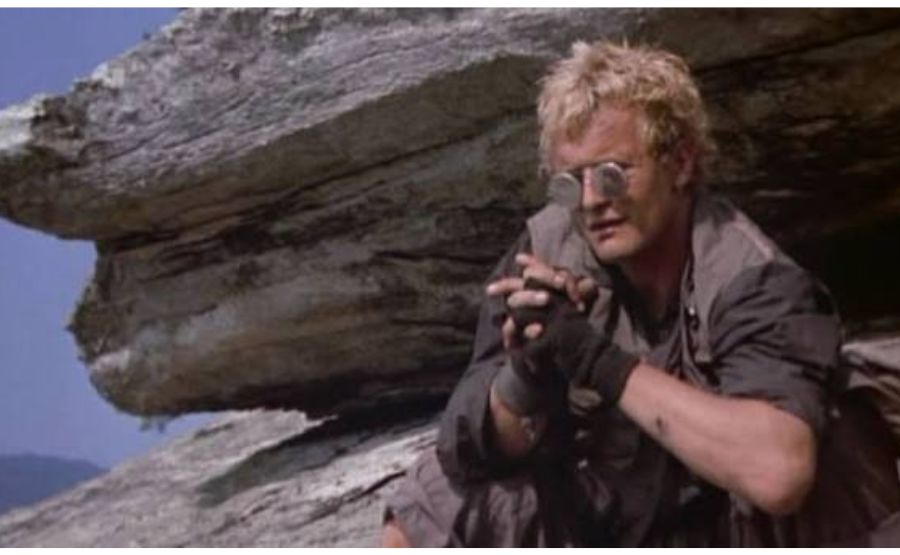
Rutger Hauer anchors the whole thing as Jim, playing him as intense, a little unpredictable, but ultimately someone you end up rooting for. Several reviewers described his performance using words like brusque but sympathetic, someone whose rough edges hide real tenderness underneath.
Kathleen Turner, fresh off major roles that would soon make her a huge star, brings warmth and a bit of heartbreak to Stella, a woman quietly hoping Jim might let someone back into his life. Powers Boothe plays Mike with a complicated mix of ambition and guilt, someone who isn’t purely good or purely bad, but caught between the two. And Donald Pleasence, even in a relatively small role, brings that same eerie, memorable presence he was famous for in other films.
Brion James also shows up as one of the film’s more straightforwardly villainous poachers, giving the film an extra dose of old-school 80s conflict alongside its quieter emotional moments.
The Environmental Message Baked Into the Story
Here’s something genuinely unusual about this movie for its time. Back in 1984, action movies weren’t exactly known for caring deeply about environmental themes. Yet A Breed Apart puts conservation right at the center of its plot.
The entire conflict revolves around protecting a rare, fictional breed of bald eagle from being wiped out by a wealthy collector’s greed. That’s a surprisingly thoughtful hook for an action-adventure film from this era, and more than one reviewer has pointed out how ahead of its time that focus feels, especially compared to other action movies from the same decade that leaned much harder into pure spectacle.
It’s not a preachy movie about the environment, exactly. But its heart clearly cares about the birds at the center of the story, and by extension, about the real-world importance of protecting endangered species.
Where the Movie Was Filmed
The film’s setting adds a lot to its overall mood, and it’s worth appreciating on its own. Much of A Breed Apart was shot in the Blue Ridge Mountains of North Carolina, a genuinely beautiful part of the American landscape.
Multiple reviewers specifically praised the cinematography for capturing that scenery well, calling out the colorful, natural backdrop as one of the film’s clear strengths, even among critics who weren’t fans of the story overall. There’s something fitting about filming a movie all about protecting nature in a place that’s this naturally striking.
The Music: A Surprising Name Behind the Score
Here’s a fun little detail a lot of people miss completely. The film’s score was composed by Maurice Gibb, one of the members of the Bee Gees, working alongside his brother Barry Gibb on parts of the music.
That’s a genuinely unexpected pairing, disco-era pop royalty scoring a rugged, nature-focused action drama set in the Appalachian mountains. It’s one of those small historical footnotes that makes you appreciate just how many unexpected creative combinations happened during this era of filmmaking.
How Critics and Audiences Responded
Reception for A Breed Apart was mixed, though genuinely more thoughtful than a simple thumbs up or thumbs down. Many reviewers acknowledged real ambition and good intentions in the story, even while admitting the finished film doesn’t always fully deliver on that promise.
One frequently repeated sentiment describes the movie as more admirable for what it was trying to do than for what it actually managed to pull off. That’s a fair, honest way to sum up a film that clearly wanted to say something meaningful about nature and obsession, but got tangled up in its own production troubles along the way.
Average ratings across various sites tend to land in the middling range, somewhere around five or six out of ten. That’s not a glowing score, but it’s also far from a total dismissal. For a film with this history, that feels about right.
The Small, Devoted Fanbase It’s Built Over Time
Despite its rocky reputation, A Breed Apart has quietly earned itself a little pocket of genuine fans over the decades, especially among people who love digging up forgotten gems from the 1980s.
Some fans specifically praise the film’s willingness to combine genuinely tender family drama with old-school action beats, appreciating that the fight scenes feel motivated by the story rather than existing just to fill screen time. Others are drawn purely by the cast, delighted to discover such a stacked lineup of talented actors in something so obscure.
There’s also a certain nostalgic charm some viewers find in its rougher edges. Rather than feeling embarrassed by the choppy pacing caused by that missing reel, some fans have grown to see it as part of the film’s strange, scrappy personality.
Challenges the Film Faced
Let’s be honest about where things went wrong, because there’s real value in understanding the full picture.
Beyond the missing reel disaster, several reviewers pointed out that the fictional premise, a brand-new subspecies of giant bald eagle, feels a little far-fetched even by movie standards. The pacing issues caused by the editing challenges make certain character motivations genuinely hard to follow at times.
There’s also a tonal balancing act the film doesn’t always pull off gracefully, jumping between quiet small-town romance, wilderness survival, and outright action-thriller beats. Not every transition between those moods lands smoothly.
Why This Film Still Matters Today
Even with its flaws, A Breed Apart offers something genuinely valuable as a piece of film history. It captures Rutger Hauer during an incredibly rich creative period, playing a role that reflected his real personal values rather than just another action-hero archetype.
It also stands as an early, sincere attempt to blend genuine environmental concern into mainstream action filmmaking, years before conservation themes became more common in movies aimed at wider audiences. And its bizarre production story, an entire reel of film vanishing without explanation, gives it a strange, almost folklore-like place among behind-the-scenes movie disasters.
Personal Reflections on Watching It Now
If you go into this film expecting a polished, tightly plotted 1980s classic, you might come away a little frustrated. But if you approach it with patience and curiosity, treating its rough patches as part of its story rather than simple flaws, there’s real warmth to be found here.
Watching Rutger Hauer pour genuine feeling into a role so close to his real values feels quietly special, especially now that we know how much he cared about these same causes throughout his life. It’s the kind of movie where knowing the background context genuinely deepens your appreciation for what’s happening on screen.
Final Words
I think A Breed Apart deserves a little more kindness than it usually gets. It wasn’t trying to be a slick, perfectly engineered blockbuster. It was trying to say something honest about obsession, grief, and the quiet, fierce need some people feel to protect the natural world around them.
It got unlucky along the way, missing footage, tricky editing choices, mixed reviews, and it never quite found the audience it maybe deserved. But there’s something touching about revisiting it now, especially knowing how much Rutger Hauer’s own life echoed the values his character fought so hard for.
If you ever come across it while exploring older, lesser-known films, give it a gentle chance. Bring some patience, enjoy the gorgeous mountain scenery, and let yourself appreciate a genuinely stacked cast doing their best with a story that almost, but not quite, came together perfectly.
FAQs
1. Is A Breed Apart based on a true story?
No, the story itself is fictional, including the specific subspecies of giant bald eagle at the center of the plot, though it reflects real environmental concerns about endangered species.
2. Why does the movie feel a bit disjointed in places?
One full reel of footage was lost in transit after filming wrapped, forcing the editing team to rebuild the story around the missing scenes, which affected the overall pacing and clarity.
3. Who plays the main character, Jim Malden?
Rutger Hauer plays Jim, a Vietnam veteran and devoted conservationist living alone on a private island full of rare wildlife.
4. Was Rutger Hauer actually an environmentalist in real life?
Yes, he genuinely cared about wildlife and conservation, later serving on the board of the Sea Shepherd Conservation Society.
5. Who composed the film’s music?
Maurice Gibb of the Bee Gees composed the score, with some contributions from his brother Barry Gibb.
6. Where was A Breed Apart filmed?
Much of it was shot in the Blue Ridge Mountains of North Carolina, and the natural scenery is frequently praised by reviewers.
7. Is A Breed Apart considered a good movie?
Reception has always been mixed. Many reviewers admire its ambition and good intentions, while acknowledging the story doesn’t always come together smoothly.
8. What other well-known actors appear in the film?
Kathleen Turner, Powers Boothe, Donald Pleasence, and Brion James all appear alongside Rutger Hauer in significant roles.
9. What genre does A Breed Apart fall into?
It blends action, drama, and environmental themes, mixing quiet romance and family drama with wilderness survival and thriller elements.
10. Did this movie do well when it was released?
It didn’t make a major cultural splash and has remained relatively obscure over the decades, especially compared to Hauer’s more famous films from the same era.
11. Why is this film considered ahead of its time?
Its focus on conservation and protecting an endangered species was unusual for an action-adventure movie in 1984, a genre not typically associated with environmental themes at the time.
12. What happened to the missing film reel?
It was never recovered. The footage vanished during transport from North Carolina to Los Angeles, and the filmmakers had to work around its absence during editing.
13. Is A Breed Apart connected to Rutger Hauer’s role in Blade Runner?
Not directly in story, but it came out just two years after Blade Runner, during the same rich stretch of Hauer’s early 1980s career.
14. Does the film contain mature content?
Yes, it includes some nudity, adult language, and violence, making it geared toward older teen and adult audiences.
15. Where can someone watch A Breed Apart today?
It’s available through several digital rental and purchase platforms, along with physical Blu-ray and DVD releases for collectors of older films.
Every story matters—discover them all with Daily Narrative.