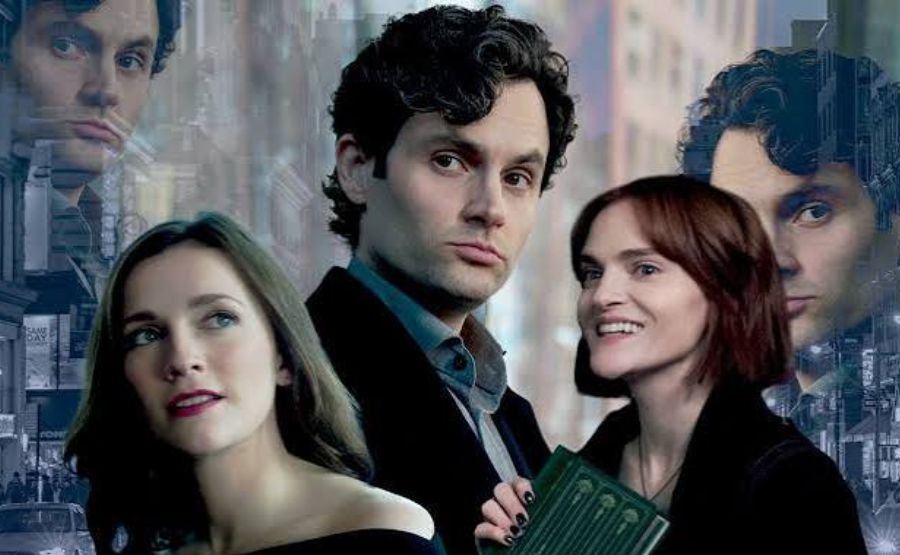
You Cast: Inside Netflix’s Most Unsettling Love Story
There is something almost sneaky about the way You got under everyone’s skin. It started quietly on a cable channel most people weren’t watching, about a bookstore manager who read a lot and seemed like a decent guy. Then Netflix picked it up and, almost overnight, millions of people found themselves rooting for a man they absolutely should not have been rooting for. That’s the trick, really. That’s what makes the cast of You so worth talking about.
This show ran from 2018 to 2025. It crossed five seasons, moved cities, changed countries, and burned through more than a few characters along the way. The actors who brought it to life had one of the strangest jobs in television — playing people who either do terrible things, or have terrible things done to them, all wrapped up in the language of romance. Let’s talk about who they are, what they did, and why the whole thing worked as well as it did.
Key Facts
| Detail | Information |
| Show Title | You |
| Based On | Novels by Caroline Kepnes (You, Hidden Bodies, You Love Me, For You and Only You) |
| Original Network | Lifetime (Season 1, 2018) |
| Streaming Home | Netflix (Seasons 2–5) |
| Total Seasons | 5 |
| Total Episodes | 50 |
| Lead Actor | Penn Badgley as Joe Goldberg |
| Creators | Greg Berlanti and Sera Gamble |
| Season 1 Premiere | September 9, 2018 |
| Final Season Release | April 24, 2025 |
| Genre | Psychological thriller |
| Season 2 Notable Cast | Victoria Pedretti, James Scully, Jenna Ortega, und Carmela Zumbado |
| Final Season Setting | New York City |
Where It All Started — A Book, a Network, and a Villain No One Was Ready For
Before any actor ever stepped in front of a camera, there was a novel. Caroline Kepnes published You in 2014, and it was a strange, unsettling piece of work. It told the story of a bookshop manager obsessed with a woman he’d just met, and it was written entirely in his voice — addressed directly to her, like a love letter from someone who has no idea what love actually is. Kepnes has said she didn’t even realize she’d written about a serial killer until a friend pointed it out after reading the finished draft. That tells you something about how gently the darkness is sewn in.
Greg Berlanti and Sera Gamble began developing a TV version as early as 2015. They tried Showtime first — no luck. They even went to Netflix twice and got turned away both times. Eventually, Lifetime picked it up, and the first season premiered in September 2018. The audience was modest. The reviews were warm. And then Netflix added it to their library on January 1, 2019, and everything changed. Within weeks it had become one of the most-discussed shows on the platform, with tens of millions of viewers suddenly very interested in a man who spent his free time stalking women and locking people in basement cages.
See aslo “PaybyPlatema: The Quiet Little System That Changed How Massachusetts Drivers Pay Tolls“
Penn Badgley — The Man Who Didn’t Want the Role
Penn Badgley is the heart of this whole thing, and that comes with some real weight. He plays Joe Goldberg across all five seasons — a man who is charming, well-read, thoughtful in many ways, and also a murderer who justifies everything through the language of devotion. Before he signed on, Badgley told interviewers he nearly said no. He called the role “too much” and said he wrestled with what it meant to play someone like this in a story framed as a love story.
What changed his mind was a series of conversations with the creators about what the show was actually trying to say. Joe isn’t a hero. He’s a mirror. He mirrors something uneasy regarding our discourse on romantic obsession and the notion that a profound love for someone entitles you to claim ownership over them. Badgley grasped that, and it is evident in his performance. He makes Joe feel real — not glamorized, not monstrous in an obvious way, just… plausible. That’s the scariest part.
What’s funny, in a slightly painful way, is that Badgley then spent years on social media trying to get fans to stop falling for his character. When someone tweeted something adoring about Joe, Badgley replied simply: “He is a murderer.” He said it over and over. He went on talk shows about it. The fans kept swooning anyway.This tension—between the show’s intended message and the interpretations some viewers opted for—became embedded in the cultural discourse surrounding You.
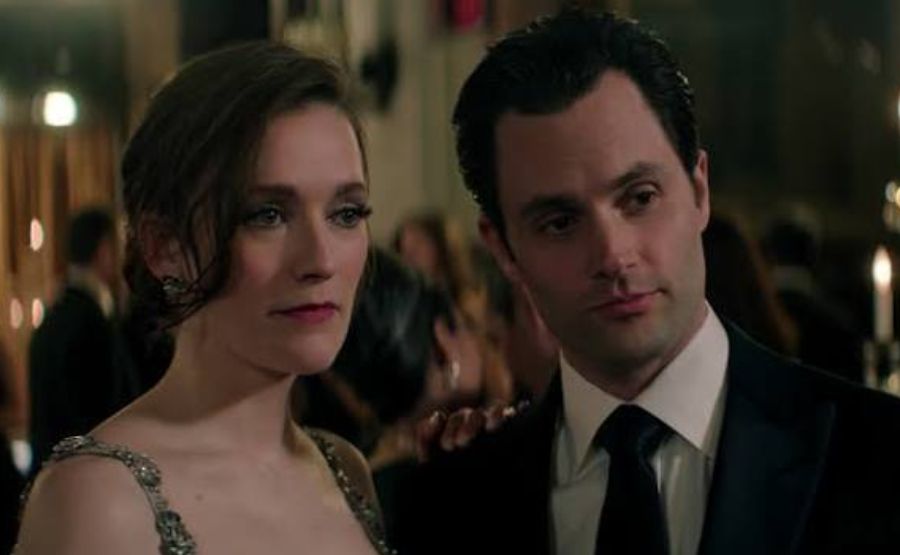
Season 1’s Cast — New York, Beck, and the Glass Cage
The first season is set in New York, in and around a bookshop in the West Village. Joe meets Guinevere Beck — everyone calls her Beck — and that’s when the trouble starts.
Elizabeth Lail played Beck, and her job was genuinely tricky. Beck is the show’s first major victim, but she’s also a full person — complicated, flawed, trying to figure out her life, not just a passive object of someone else’s desire. Lail had to hold onto that even while the story kept filtering her through Joe’s warped point of view. She had appeared in Once Upon a Time before this, but You introduced her to a much wider audience. Beck’s fate at the end of season one is dark, and Lail’s performance in those final scenes is quietly devastating.
Shay Mitchell played Peach Salinger, Beck’s wealthy, controlling best friend. Peach is the one character in season one who actually sees through Joe — or at least senses that something is off. Mitchell, who many people knew from Pretty Little Liars, brought a layer of entitled intensity to the role that made Peach simultaneously irritating and fascinating. You almost want her to win.
Luca Padovan played Paco, the young boy who lives next door to Joe in his apartment building. Paco is in a difficult home situation, and Joe’s genuine tenderness toward him is one of the things that makes the show so disorienting. You see Joe be kind, and you almost forget everything else. That’s the point.
Zach Cherry played Ethan, Joe’s coworker at the bookshop. Ethan is the show’s comic relief in some ways — cheerful, oblivious, a little odd — and Cherry brings real warmth to the role. He shows up across multiple seasons, a small thread of normalcy in a very abnormal story.
John Stamos also had a notable recurring role as Dr. Nicky, Beck’s therapist, whose professional ethics leave quite a bit to be desired.
Season 2 — Los Angeles and a New Kind of Obsession
By the time Joe moves to Los Angeles, having fled New York under grim circumstances, the show had already become a Netflix phenomenon. The second season brought in a whole new group of actors, and it also changed the game by giving Joe someone who could actually match him.
Victoria Pedretti joined as Love Quinn, a local chef from a wealthy family. Love is warm and direct and seems, on the surface, like exactly the kind of person who might help Joe become better. She doesn’t. What You does with Love’s character is one of the most satisfying narrative turns in the series — a reversal that reframes everything that came before it. Pedretti, who was also appearing in The Haunting of Hill House at around the same time, plays Love with a particular kind of bright-eyed intensity that makes her dark side land all the harder. She became one of the most beloved characters in the show’s history.
James Scully played Forty Quinn, Love’s twin brother. Forty is one of those characters who is tragic and infuriating in equal measure — a man drowning in privilege and trauma, desperately trying to make something of himself. Scully played him with enough vulnerability that you feel for Forty even at his worst.
Jenna Ortega played Ellie Alves, a sharp teenager who lives in Joe’s apartment building. Ellie is observant and clever, and Ortega — years before Wednesday made her a household name — gave the role a real edge. Ellie is one of the few people in the show who isn’t entirely fooled by Joe.
Carmela Zumbado played Delilah Alves, Ellie’s older sister, a journalist trying to expose the dark side of the LA entertainment world. Delilah becomes entangled in Joe’s life in ways that are both inevitable and awful, and Zumbado handles the role with real dignity.
Season 3 — Suburbia, Marriage, and a Shared Darkness
The third season moved Joe and Love to a quiet suburb, newly married, raising a baby, trying to be normal. It sounds almost comical. It is, in a way — but it’s also one of the sharpest seasons in terms of what it says about the performance of domestic happiness. Both Joe and Love are killers at this point, and the show watches them try to maintain a life that looks perfectly ordinary from the outside.
Pedretti returned for this season and gave perhaps her best performance in the role. Love as a wife and mother — still dangerous, still impulsive, deeply loving in her own destructive way — is one of the more original characters in recent thriller television.
New faces included Shalita Grant and Travis Van Winkle as Sherry and Cary Conrad, a relentlessly cheerful influencer couple who become entangled with Joe and Love. They are played for satire — a sharp-edged joke about wellness culture and social media performance — and both actors leaned into the absurdity with obvious relish.
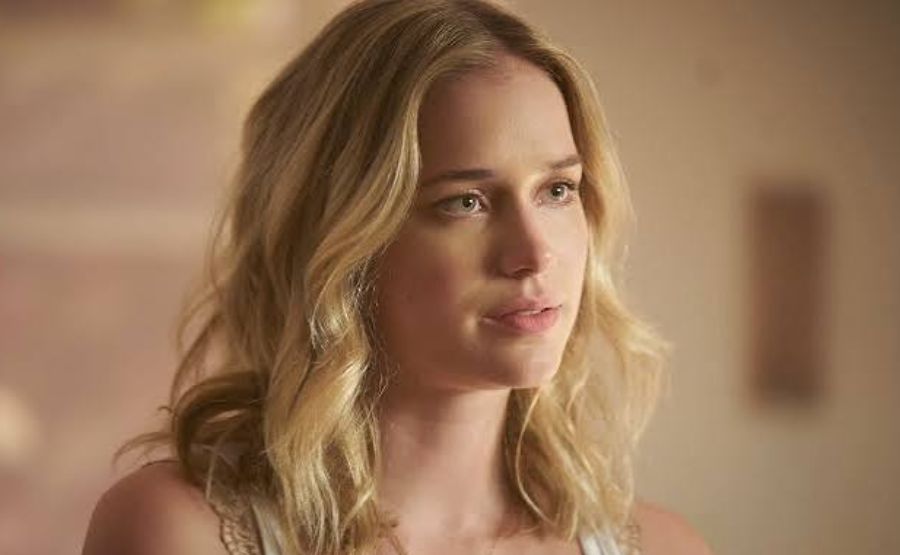
Season 4 — London, Reinvention, and Whodunit
For the fourth season, You did something unexpected. It sent Joe to London, gave him a false identity as a university professor, and turned the show into something resembling a murder mystery. Joe, for once, wasn’t the only person doing terrible things — he found himself being blackmailed by someone who seemed to know everything about him.
Charlotte Ritchie joined as Kate Lockwood, an art gallery director with her own complicated family history. Ritchie had been known largely for UK comedies and brought a precise, intelligent quality to Kate — someone who is capable of seeing through people but still gets drawn into Joe’s orbit. She would carry over into the final season as well, eventually as Joe’s wife.
Ed Speleers appeared as the charming, darkly witty Rhys Montrose, and his scenes with Badgley crackled with an energy unlike anything the show had done before. Season four divided some viewers — the London setting felt different, the tone campier — but the performances were strong.
Season 5 — Home, Justice, and a Final Reckoning
The fifth and final season brought Joe back to New York. He had money now, a wife, a son, a bookshop. He was trying to be finished with the worst of himself. He was, predictably, not finished.
Madeline Brewer joined as the key new character, a woman Joe knows as Bronte but who is actually named Louise Flannery — a former student of Beck’s who came looking for answers about her teacher’s death. The cat-and-mouse dynamic between Joe and Bronte gave the final season much of its energy, and Brewer played the character with a careful, shifting quality — someone who is hunting and who is also, uncomplicatedly, a person.
Anna Camp joined as twins Reagan and Maddie — yes, one actress playing two characters — and brought a gleeful, precise comic energy that many critics singled out as a highlight.
The show ended with Joe in prison, reading fan letters from women who still found him romantic. His final voiceover asked, quietly and directly, whether the real problem was the audience. Whether the problem, as the title has always suggested, is you. It was a bold way to close out seven years of television. Not everyone found it satisfying. Most agreed it was honest.
The Bigger Picture — What This Show Was Really About
You ran for five seasons and 50 episodes, and the conversation it started never really quieted down.It prompted reflection on the extent of personal information people share online and the ease with which such information can be exploited by those with malicious motives.. It made people uncomfortable about which characters they were sympathizing with, and why. It raised questions about how fiction presents dangerous men — whether showing a stalker as charming and intelligent romanticizes the behavior or exposes it.
The show’s creators always maintained they were doing the latter. Gamble described their intention as making every scene feel simultaneously like a love story and a horror film. Kepnes, the author, said she wanted to take the classic romantic hero archetype and follow it to its logical, uncomfortable conclusion.
Penn Badgley, throughout the whole run, was the show’s most vocal critic of its own ability to seduce viewers. He found it troubling that so many people watched the same episodes he was in and came away wanting to be loved the way Joe loves — even knowing what that actually looks like. It’s a question the show leaves open. Maybe that’s right.
Final Words
What you get from You, when you sit with it, is something more than a thriller about a charming criminal. You get a long, sometimes messy, often brilliant examination of how stories shape the way we see people. The cast brought all of it to life — Penn Badgley holding the center across five seasons with remarkable consistency, and a rotating group of talented actors filling the world around him with people who felt real.
Some characters were victims. Some were survivors. Some were both. The show never made it easy to sort them into neat categories, which is probably its greatest achievement. If you haven’t watched it, it’s worth your time — just maybe keep an eye on what you’re posting while you do.
FAQs
1. Where can I watch You right now?
All five seasons are available for streaming on Netflix right now.
2. Is You based on real events?
No. It’s based on a series of novels by Caroline Kepnes. Kepnes found her inspiration in fiction — particularly the internal monologue style of American Psycho — rather than real events. Some viewers have drawn comparisons to Ted Bundy, but the character of Joe Goldberg is entirely fictional.
3. Why did Penn Badgley almost say no to the role?
He found the character morally difficult. He worried that playing a stalker and killer as the lead of a romantic drama sent the wrong message. He was eventually convinced by deep conversations with the creators about the show’s intent to critique, not celebrate, Joe’s behavior.
4. Did the show ever romanticize Joe Goldberg?
This is one of the most debated questions around the series. The creators said no — they intended the show as a critique of romantic obsession. But the show’s structure, told entirely from Joe’s perspective, made it easy for some viewers to identify with him anyway. Penn Badgley himself spent years publicly pushing back against fans who found Joe appealing.
5. How closely does the show follow the books?
Season 1 is a fairly close adaptation of Kepnes’ first novel. After that, the show takes increasing creative liberties. By season 4, the story had moved into completely original territory not found in the books at all.
6. What happened to Joe Goldberg at the end of the series?
Joe ended up in prison, convicted for his crimes. In a final scene, he reads fan letters from people who still find him attractive — and delivers a monologue questioning whether society, not just Joe himself, has a problem. It’s an intentionally provocative ending.
7. What did Penn Badgley think about playing Joe for so many years?
He’s described it as “profound” and said that staying with a character for that long forces you to find new dimensions. He was also clearly relieved when it ended, and has spoken honestly about the psychological weight of inhabiting someone whose worldview he finds genuinely troubling.
8. Who is Victoria Pedretti’s Love Quinn, and why did fans love her so much?
Love Quinn is Joe’s love interest in seasons 2 and 3 — and then, unexpectedly, revealed to share some of his darkest qualities. Fans responded to Love partly because Pedretti played her with such warmth that the reveal hit hard, and partly because Love was written as a complex, three-dimensional person rather than just a victim or a villain.
9. Is Jenna Ortega’s character in You connected to her role in Wednesday?
They’re completely separate characters on completely separate shows. Ellie Alves in You and Wednesday Addams are both sharp, observant young women, but that’s more a reflection of Ortega’s strengths as an actor than any connection between the roles.
10. Why did the show move from Lifetime to Netflix?
Lifetime renewed it for a second season, then changed course and passed on it. Netflix had actually turned the show down twice before picking it up — and once season 1 landed on their platform and became a viral hit, they moved quickly to bring season 2 there exclusively.
11. Did the creators of You think the ending was the right call?
Yes. The showrunners for the final season said they built the entire season around that last scene — Joe in prison, still making excuses, still not fully reckoning with himself, and the show pointing its finger back at the audience. They wanted closure that felt honest, not cathartic in a simple way.
12. Is there any connection between Caroline Kepnes’ books and the show going forward?
A prequel novel called You First was anticipated for 2026. The TV series is finished, but Kepnes continues to write in this world.As the show and the books have diverged significantly in later storylines, the prequel may provide a different perspective on Joe’s origins.
13. What made You stand out from other psychological thrillers?
The voiceover. Hearing Joe’s inner thoughts — his rationalizations, his tenderness, his justifications — puts viewers inside his head in an uncomfortable way. Most thrillers keep the villain at arm’s length. You makes the villain the narrator, which forces you to examine your own reactions to what he says.
14. Did the show have any real-world impact on how people think about online privacy?
Yes, noticeably. Many viewers reported changing their social media settings to private after watching season 1, after seeing how easily Joe used publicly available information to track Beck. The show raised awareness — in a popular, accessible way — about how much personal information people share without thinking.
15. Was Penn Badgley involved creatively in the final season?
Yes. He served as an executive producer on season 5, which gave him more say in how Joe’s story concluded. He’s spoken about the importance of Joe ending up alive in prison — because death, he argued, would have let Joe off the hook.
Every story matters—discover them all with Daily Narrative.