War Machine (2026) Reviews: Everything You Need to Know About Netflix’s Biggest Surprise Hit
Sometimes a movie sneaks up on you. You’re scrolling Netflix on a quiet Friday night, you click something without much expectation, and 106 minutes later you realize you’ve barely moved. That’s the experience a lot of people had with War Machine in early 2026. Nobody was calling it the film of the year. Critics were divided. But viewers? Viewers showed up in staggering numbers, and now the conversation about this film — what it gets right, what it fumbles, and why it connects with so many people — is one worth having properly.
So let’s have a seat and discuss it.All of it.
Key Facts
| Detail | Info |
| Title | War Machine |
| Release Date | March 6, 2026 (Netflix worldwide); February 12, 2026 (limited Australia) |
| Director | Patrick Hughes |
| Written by | Patrick Hughes & James Beaufort |
| Lead Actor | Alan Ritchson as “81” |
| Supporting Cast | Daniel Webber, Keiynan Lonsdale, Esai Morales, Jai Courtney, Stephan James, and Dennis Quaid |
| Runtime | 1 hour, 46 minutes |
| Rating | R |
| Genre | Military Sci-Fi Action Thriller |
| Budget | ~$73 million (AU); approx. $80 million USD |
| Netflix Views (first 5 weeks) | 118+ million |
| Total Netflix Views (as of June 2026) | 139 million+ |
| Rotten Tomatoes Score | 66% critics; audience score mixed |
| Metacritic Score | 54/100 |
| IMDB Score | 6.4 |
| Sequel Status | Confirmed in development (June 2026) |
| Filmed | Victoria & Queensland, Australia; Queenstown, New Zealand |
What This Film Actually Is
Before we get into reviews and opinions, let’s make sure we’re on the same page about what War Machine actually is.
The story opens with a soldier — we never learn his name — losing his brother in an ambush in Afghanistan. To honor his brother’s dying wish, the surviving soldier enlists in RASP: the Ranger Assessment Selection Program, one of the most demanding military training programs in the world. He’s assigned the candidate number 81, and for the purposes of the entire film, that’s all we call him.
The first third of the movie is a military training film at heart. Grueling exercises, brutal instructors, candidates pushing past what they thought their bodies could do. Think the early scenes of Full Metal Jacket mixed with a genuine respect for what Army Ranger selection actually looks like.
Then — somewhere around the 30-minute mark — everything changes.
Out on a remote training exercise in the wilderness, the candidates encounter something they absolutely were not trained for: a massive, towering alien killing machine that begins hunting them one by one. The film shifts from military drama into something more like Predator meets a survival horror story, and it barely pauses for breath until the credits roll.
See also”Blindspot Season 5: The Final Chapter of Jane Doe’s Extraordinary Journey“
Who Made This and Why It Matters
Patrick Hughes is an Australian filmmaker who has built his career on big, physical action movies. He directed The Expendables 3 and both Hitman’s Bodyguard films. He knows how to stage a chase, frame an explosion, and keep energy moving forward. He’s not the kind of director who spends 20 minutes on character dialogue when he could be showing you something spectacular instead.
The idea for War Machine came to Hughes way back in 2017 — almost nine years before the film arrived on Netflix. It went through development at Lionsgate before eventually landing in Netflix’s hands, where the streaming service’s appetite for big, broad action films made it a natural home.
Alan Ritchson came aboard in March 2024. The rest of the cast — Dennis Quaid, Stephan James, Jai Courtney, Esai Morales — joined in September 2024. Filming started that same month, primarily in the lush mountain landscapes of regional Victoria and the dramatic terrain around Queenstown, New Zealand. They wrapped in December 2024 — a remarkably tight 13-week shoot.
The film required a brief Australian theatrical release starting February 12, 2026 — playing on just 52 screens — to qualify for Australian production tax rebates. That tiny box-office run earned about A$82,000. Then Netflix launched it globally on March 6, and the real story began
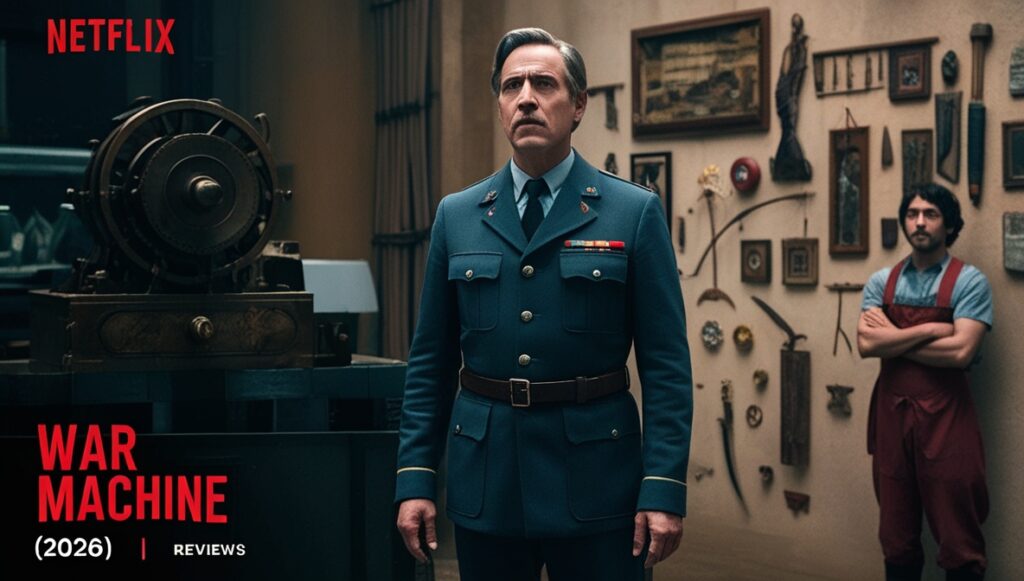
Alan Ritchson: What Critics Said About the Man Himself
Here’s the thing nearly every reviewer agreed on, whether they liked the film or not: Alan Ritchson is perfect for this role.
If you’ve watched Reacher on Prime Video, you already know what Ritchson brings to a role like this. He’s enormous, physically, but he’s not playing a cartoon. There’s something quieter underneath — a man carrying grief, holding it together through sheer will, unwilling to let people in. Empire magazine called him a “walking meat mountain,” which sounds like an insult but was actually meant affectionately. Common Sense Media compared his character to a Ranger version of Top Gun‘s Maverick, noting that while the film doesn’t give 81 quite the depth Cruise had, Ritchson makes the steely resolve feel believable.
The Hollywood Reporter talked directly with Ritchson about how physically punishing the shoot was. He admitted it was the hardest thing he’d ever done professionally — and that there were moments he genuinely doubted he’d make it through. One underwater sequence required him to hold his breath for up to two minutes at a time. He also got a tattoo of “81” on his arm before filming had even been fully greenlit, simply because he connected so strongly with the character’s spirit.
That kind of commitment shows on screen. Even critics who didn’t love the film found themselves warming to Ritchson’s performance.
What the Critics Said: The Good
Let’s be fair: reviews were genuinely mixed, and the divide is interesting.
On the positive side, Empire magazine landed on what became the most-quoted defense of the film: yes, it’s deeply silly, but it’s also genuinely entertaining. Their review called it “an unapologetic ode to those straight-to-video sci-fis” from the VHS era — except with an actual budget and a committed star. They concluded it’s “far more fun than it has any right to be.”
The Action Elite website gave a warm review, praising the pacing (the film clocks in at under two hours and doesn’t waste a minute), the percussive score by Dmitri Golovko, and the sense of spectacle Hughes brings to the action sequences. They noted the film feels like a deliberate mash of Predator, Battle: Los Angeles, and even hints of RoboCop‘s ED-209 — and that for fans of that kind of action, it delivers exactly what it promises.
Rotten Tomatoes’ critical consensus settled on something positive: the film gives Ritchson a great vehicle for his physical charisma, and while it struggles with character depth, the action spectacle is satisfying. Sixty-six percent of critics gave it a positive rating.
The RogerEbert.com review (written by Monica Castillo, not Ebert himself, who passed away in 2013) made the interesting observation that the film comes alive precisely when it stops trying to be a serious military drama and leans into the absurdity of its premise. Once the alien machine shows up and the movie stops making polite excuses for itself, it becomes genuinely tense and entertaining.
What the Critics Said: The Less Good
Now, the other side.
In Review Online took a harder line, calling the film “worthless, warmed-over genre pap” that assembles spare parts from better movies — Predator, Aliens, Full Metal Jacket, War of the Worlds — without adding anything meaningfully new. Their sharpest criticism: the film is so familiar that you could half-watch it while checking your phone and not miss a beat. That’s a specific kind of damning.
One persistent complaint across several reviews: giving characters numbers instead of names is a neat idea in theory, but in practice it makes it hard to care when someone dies. When 57 or 44 gets killed, you may not even remember which one they were. One IMDB reviewer put it dryly: by the end of the film, he couldn’t remember “which corpse was which.”
Common Sense Media drew the Top Gun comparison in a way that pointed out the film’s weakness: Netflix may have hoped Ritchson could do for the Army Rangers what Tom Cruise did for Navy pilots. The problem is that Top Gun spent real time building characters around Maverick. Here, 81 is basically the only fully developed person in the story. Everyone else exists to be endangered, motivated, or eliminated.
The Metacritic score of 54 — “mixed or average” — probably captures the critical reality better than either extreme: this is a film that people will respond to very differently depending on what they want from a Friday night.
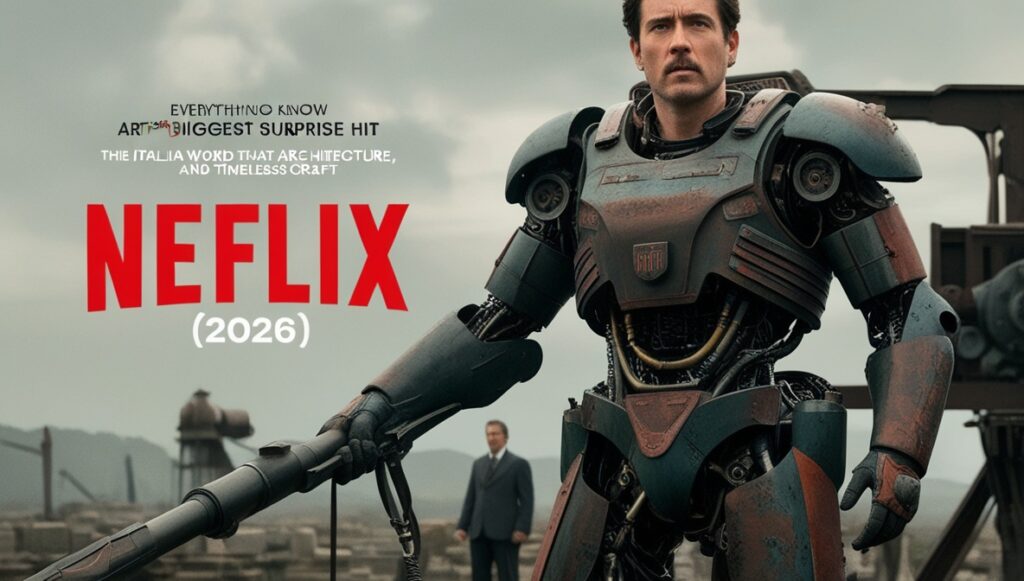
The Numbers That Tell a Different Story
Here’s where things get genuinely surprising.
War Machine debuted at #1 on Netflix globally on March 6, 2026. It held that position for two full weeks. It reached the top ten in 93 countries and claimed the number one spot in 87 of them. In its first five weeks, it crossed 118 million views. By the time Netflix confirmed a sequel in June 2026, the total had grown to 139 million views — placing it among the ten most popular original films in Netflix’s history.
For context: that’s more views in five weeks than Guillermo del Toro’s critically acclaimed, Oscar-winning Frankenstein managed in eight weeks.
The film had a budget of around $80 million USD (much of it spent in Australia, which triggered roughly $7.3 million in tax rebates through a strategic limited theatrical release). By Netflix’s internal metrics, it represented much better efficiency than The Gray Man at $200 million, and slightly outperformed Chris Hemsworth’s Extraction 2 on a similar budget.
Critics may be split. Audiences are not.
Why It Connects: The Emotional Core Most Reviews Overlooked
Something a lot of reviews glossed over is the film’s actual emotional engine.
Before the alien machine ever appears, we get a story about grief, promise-keeping, and the question of what it means to honor someone you’ve lost. 81 isn’t doing this training because he loves the military. He’s doing it because his brother did, and his brother is gone, and this is the only way left to be close to him.
Hughes described the film in interviews as being about the difference between physical toughness and genuine strength — the idea that a real warrior isn’t just someone who can run faster or lift more, but someone who keeps going when everything inside them says stop. That theme runs quietly through the whole film, even when explosions are happening around it.
Ritchson has spoken about connecting deeply to that spirit. He got the tattoo before filming. He said he wanted to be reminded of 81’s perseverance every day. That’s not something you do for a paycheck role. That’s something you do when a character means something to you.
The Production: Horror in the Mountains
One of the most interesting things about how War Machine was made is the approach Hughes took to the alien threat.
In his earliest draft, the machine wasn’t mentioned at all in the script. It was going to be a pure left-field surprise — no trailers, no hints. The film was designed as a military drama that suddenly became something else entirely. That approach shifted once it became a major Netflix production with marketing obligations, but the original instinct tells you a lot about what Hughes was going for.
Hughes described his approach in interviews as treating the survival sequences “like a horror movie.” The Ranger candidates are stripped of communication, weapons, and any sense of where they are. They have nothing except what their training gave them. And something massive and lethal is hunting them.
The production was described by everyone involved as grueling. Real ex-Rangers served as military advisers. The cast underwent physical preparation to look and move credibly as soldiers. The Department of Defense gave the production its sign-off. And most of the action sequences were executed practically, with visual effects added afterward to complete the alien machine — not the other way around.
The Alien Machine Itself
The design of the enemy is something most reviews agree on: it’s genuinely effective.
It’s enormous. It scans for targets before locking on, its laser shifting from blue to red as a warning sign (one critic cheekily compared this to the water-ripple warning system in Jurassic Park). It scrambles communications and makes compasses spin uselessly. It can jump ahead of fleeing victims to cut off escape routes.
The comparison to a T. rex — lumbering but overwhelming, capable of sudden bursts of terrifying speed — keeps coming up in reviews, and it’s apt. The machine doesn’t feel like a video game enemy. It feels like a natural disaster you happen to be able to shoot at.
How 81 eventually defeats it — by figuring out that the machine has a ventilation system and exploiting that weakness — has divided audiences. Some felt it was clever. Others felt it was too convenient. But the reveal does echo the kind of logical ingenuity that made Predator‘s ending work back in 1987.
The Ending and What Comes Next
The film ends on an intentionally open note. We learn that the single machine 81 destroyed was just a scout. There is an army of these things. They’ve started a global war.
And then the credits roll.
Hughes was unapologetic about this choice. He wanted audiences to feel the same disorientation that real people would feel in the first 24 hours of an alien attack — no answers, no neat resolution, just the terrifying realization that something bigger is coming. He called it “shock-and-awe storytelling.”
Netflix greenlit a sequel in June 2026. Hughes and James Beaufort are returning as writers, and Hughes as director. Alan Ritchson is expected to return. Both Ritchson and Hughes have described having extensive plans for where the story goes — Hughes even mentioned a larger universe-building arc across multiple films.
The two have already matched tattoos. Hughes called getting his first tattoo ever — the War Machine logo Ritchson designed — a sign of how much this project changed him.
Final Thoughts
War Machine is exactly the kind of film that teaches you something about yourself as a viewer.
If you go in wanting Aliens or Predator but newer and more personal, you’ll probably leave happy. If you go in expecting original storytelling, deep characters, and something you’ve never seen before, you’ll be frustrated.
What the film does well is harder to articulate than what it doesn’t. It gives you action that feels earned, a performance from Ritchson that lands with surprising emotional weight, and a premise that — however familiar — it executes with real enthusiasm and physical commitment.
The numbers don’t lie. Over 139 million people watched this in the first few months. Not because they were tricked. But because sometimes, on a Friday night, you just want to watch someone who never quits go up against something that should be unbeatable — and win.
There’s nothing wrong with that. There’s actually something quietly wonderful about it.
If you haven’t watched War Machine yet, give it a try. And if you have — well, the sequel is coming. We still don’t know 81’s real name, and apparently that’s intentional.
FAQs
1. Is War Machine (2026) on Netflix?
Yes. It launched globally on Netflix on March 6, 2026. As of mid-2026 it remains on the platform, and a sequel is already in development there.
2. What is the plot of War Machine?
A soldier enrolls in Army Ranger selection to honor his late brother’s dream. During a final wilderness training exercise, his group encounters a towering alien killing machine and must survive with nothing but their training and whatever courage they can find.
3. Who plays “81” and what is his real name in the film?
Alan Ritchson plays the central character, known only as 81 throughout the film. His real name is deliberately never revealed — a creative choice that has divided viewers. The sequel is expected to address this.
4. Who directed War Machine (2026) and what else has he made?
Patrick Hughes, an Australian filmmaker, directed it. He previously made The Expendables 3, The Hitman’s Bodyguard, and its sequel. He is also attached to a Netflix remake of The Raid.
5. How did critics receive War Machine?
Mixed. Rotten Tomatoes sits at 66% positive from critics. Metacritic scores it 54/100. Most praised the action and Ritchson’s performance; most criticized the lack of character depth and the familiar storyline.
6. Why did the film get a brief theatrical release in Australia?
To qualify for a 40% Australian government tax rebate on local production spending, the film needed a minimum five-week theatrical run. That run earned about A$82,000 at the box office — but unlocked roughly $7.3 million in tax rebates for the producers.
7. What are people on the internet saying about it?
Audience reactions range from enthusiastic (“one of the best movies I’ve ever seen”) to dismissive (“garbage not worth watching”). Most people fall somewhere in the middle — entertained but not blown away. The film consistently trends positive among action fans and those who enjoy 1980s-style genre films.
8. What movies is War Machine most compared to?
Nearly every reviewer mentioned Predator. Battle: Los Angeles, Full Metal Jacket, Aliens, and War of the Worlds also come up frequently. Some compared it to Top Gun in terms of its military-as-hero framing.
9. How violent is the film?
It’s rated R and is genuinely gory. Reviews mention broken limbs, burned skin, dismemberment, and graphic deaths. Common Sense Media flagged this clearly for parents. Not appropriate for young children.
10. How many views did War Machine get on Netflix?
In its first five weeks: over 118 million views. Total views by June 2026: approximately 139 million, making it one of the ten most-watched original films in Netflix history.
11. Is a sequel confirmed?
Yes. As of June 2, 2026, Netflix announced a sequel is in development. Patrick Hughes is returning as writer and director. Ritchson is expected to star. The story will expand the alien invasion begun at the end of the first film.
12. Did Alan Ritchson do his own stunts?
Many of them, yes. He performed extended underwater breath-hold sequences of up to two minutes. He and director Hughes both described the shoot as the most physically demanding of their careers.
13. What is the score like?
Dmitri Golovko composed the music. Multiple reviews praised it specifically, noting its heavy percussion drives the action scenes forward and creates genuine tension. Common Sense Media compared its atmosphere to the award-winning score from All Quiet on the Western Front.
14. Is the film anti-military or pro-military?
Mostly pro-military, with a few caveats. It portrays Rangers as heroes and the selection process as honorable. Dark Horizons and others flagged the film’s strongly pro-military messaging as a point of critical concern. It also briefly touches on topics like PTSD and mental health, though critics noted these themes were underdeveloped.
15. Should I watch it if I’m not usually into action films?
Probably not as your entry point into the genre. But if you enjoy survival films, military stories, or solid lead performances — and you don’t mind familiar plotting — it’s an easy, genuinely entertaining 106 minutes.
Every story matters—discover them all with Daily Narrative.